Best Whey Protein for Body Recomposition: 2026 Guide
Last Updated: July 24, 2026
What Is Body Recomposition and Why Whey Protein Matters
Body recomposition is losing fat while building lean muscle simultaneously. Combine a caloric deficit with adequate protein intake and resistance training, and your body builds muscle while shedding fat. The key variable is protein.
Whey protein accelerates this because it triggers muscle protein synthesis more efficiently than other sources. The branched-chain amino acids (BCAAs), particularly leucine, signal your muscles to grow even in a deficit.
Pro TipMost lifters undershoot protein intake during body recomposition. Aim for 1 gram per pound of target body weight, not current body weight. If you weigh 200 pounds but want to be 180, shoot for 180 grams daily.
How We Evaluated the Best Whey Protein for Body Recomposition
We analyzed products across five critical dimensions: protein content per serving, amino acid profile (specifically leucine and total BCAAs), bioavailability and digestion speed, third-party testing certifications, and cost efficiency.
Our recommended products meet these standards: minimum 20 grams of protein per serving, at least 2.5 grams of leucine per serving, and verification through third-party testing from NSF Certified for Sport or Informed Choice. These certifications confirm the label matches what's actually in the container, critical when relying on protein for body recomposition.
We prioritized whey isolate and hydrolyzed whey because they deliver faster absorption and minimal lactose, reducing bloating during a deficit when your digestive system is already stressed.
Product
Protein Per Serving
Leucine Content
Type
Third-Party Tested
Nutrex IsoFit
25g
2.8g
Isolate
Yes
Dymatize ISO100
25g
2.7g
Hydrolyzed Isolate
Yes
Transparent Labs Grass-Fed
28g
3.1g
Isolate
Yes
Optimum Nutrition Gold Standard
24g
2.6g
Isolate/Concentrate Blend
Yes
Ghost Whey
25g
2.7g
Isolate/Concentrate/Hydrolysate Blend
No
Cost-Per-Gram Analysis and Real-World Pricing
Price matters when buying protein consistently for months during body recomposition. Calculate your true cost this way: take the total price, divide by total grams of protein, and multiply by 100. That's your cost per gram in cents. Small per-gram differences compound significantly over a 12-16 week phase.
The cheapest option isn't always best value. A concentrate at low cost might leave you bloated and unable to hit your daily protein target. A hydrolyzed isolate might be worth more because it absorbs faster and causes zero digestive issues.
Third-Party Testing and Supplement Transparency
Third-party testing is insurance. The supplement industry has minimal FDA oversight, meaning companies can claim anything without verification. Third-party testing from NSF Certified for Sport or Informed Choice independently verifies label accuracy and the absence of banned substances.
This matters because you need to trust your protein delivers the amino acid profile you're counting on. If a product claims 25 grams but contains 18 grams, your daily protein target is off by 21 percent, enough to stall muscle growth during a deficit.
Look for NSF Certified for Sport, Informed Choice, and USP Verified. Products without third-party testing aren't automatically bad, but they're riskier.
Whey Protein Isolate vs. Whey Concentrate for Body Recomposition
Whey concentrate is 70-80 percent protein by weight and retains more lactose and fat. Whey isolate is 90 percent or higher protein with most lactose removed through additional filtration.
For body recomposition, isolate wins because it delivers more protein per serving without digestive side effects. When eating in a deficit, your gut is already stressed. Adding lactose from concentrate causes bloating and discomfort that makes hitting your protein target harder.
Hydrolyzed whey breaks protein chains into smaller peptides for even faster absorption, the fastest-digesting option and best for post-workout nutrition.
Bioavailability, Lactose Content, and Digestive Comfort
Whey isolate has higher bioavailability than concentrate because it's more concentrated and contains fewer compounds that slow digestion. A standard whey concentrate serving contains 1-2 grams of lactose. For anyone with sensitivity, it's the difference between a smooth day and hours of discomfort.
Hydrolyzed whey isolate eliminates this problem entirely. The hydrolysis process breaks down lactose along with protein chains, making it the gentlest option. The tradeoff is cost, hydrolyzed isolates typically cost 20-30 percent more than standard isolates.
Watch OutIf you experience bloating, gas, or cramping from whey concentrate, switching to isolate will likely solve it. Don't assume lactose intolerance until you've tested isolate.
Protein Intake for Body Recomposition: How Much You Actually Need
The standard 0.8 grams per pound recommendation is outdated for body recomposition. Research supports 1 gram per pound of target body weight when in a deficit and training hard.
Protein preserves muscle during a deficit. When calories drop, your body wants to break down muscle for energy. Adequate protein tells your body to spare muscle and burn fat instead. If you weigh 200 pounds but your goal is 180 pounds at lower body fat, target 180 grams of protein daily.
Whey protein makes hitting this target realistic without eating six meals daily. To dial in your exact macronutrient targets based on your body type and goals, use FREE TOOLS & FITNESS CALCULATORS to determine your precise protein, carb, and fat needs for body recomposition.
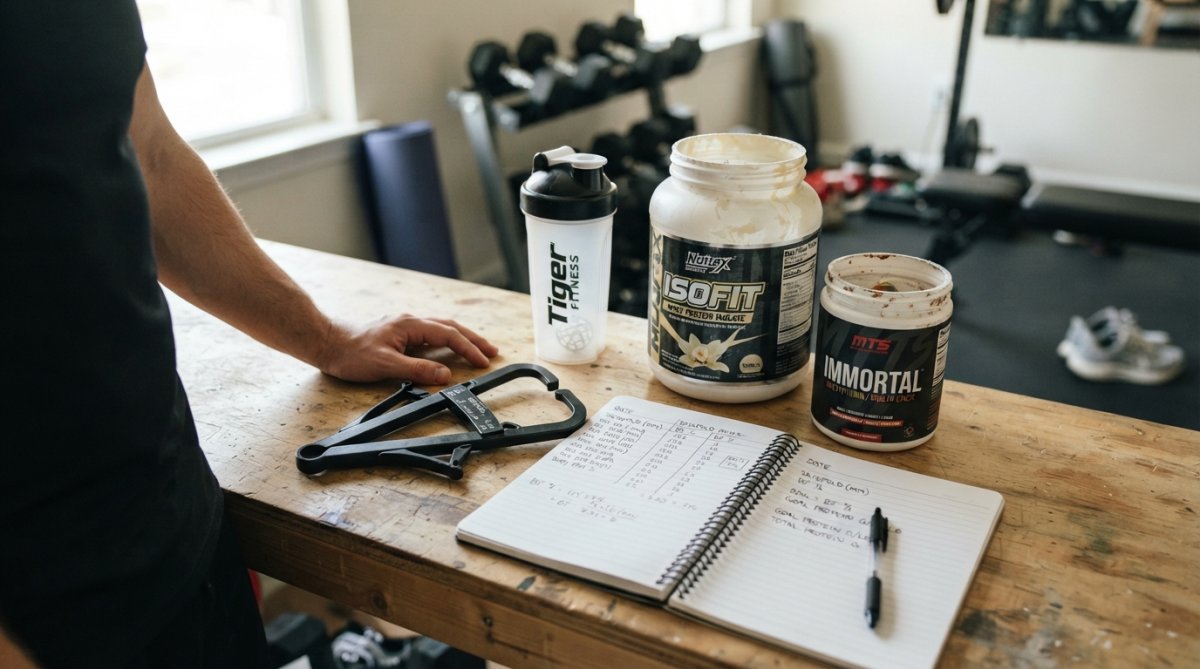
Fit athlete measuring body composition with calipers, tracking progress with a notebook and supplement containers nearby on a wooden desk with natural window lighting
Macronutrient Breakdown by Body Type
Your body type affects how aggressively you can deficit and how much protein you need to preserve muscle.
Ectomorphs (naturally lean, fast metabolism): Run a moderate deficit (300-500 calories below maintenance). Protein needs are 0.9 grams per pound of target weight. Focus whey protein around workouts and fill other meals with whole food.
Mesomorphs (naturally muscular, moderate metabolism): Respond well to moderate deficits (400-600 calories) and need closer to 1 gram per pound of target weight. Use whey protein 2-3 servings daily, distributed across meals.
Endomorphs (naturally carry more fat, slower metabolism): Need deeper deficits (500-800 calories) and higher protein, 1.1 grams per pound of target weight minimum. Whey isolate becomes critical because muscle preservation is harder.
Whey Protein Timing for Body Recomposition and Performance
The "anabolic window" myth says you must consume protein within 30 minutes post-workout or muscle growth stops. Total daily protein intake matters far more than timing of individual servings.
Post-workout nutrition does matter for body recomposition because it supports recovery and performance in your next session. Consuming whey protein and carbohydrates within 2 hours post-workout optimizes muscle protein synthesis and replenishes glycogen.
The practical approach: consume whey protein post-workout if convenient. Hit your daily protein target, and timing matters far less than consistency.
Post-Workout Nutrition and Intermittent Fasting Considerations
If practicing intermittent fasting during body recomposition, whey protein becomes even more valuable. When compressing your eating window into 6-8 hours, fitting adequate protein is harder. Whey lets you hit your target without bloating yourself with food volume.
Break your fast with a whey protein shake containing 25-30 grams of protein and carbohydrates. This triggers muscle protein synthesis after fasting and provides training energy. Whey isolate is preferable to concentrate during intermittent fasting because it digests faster.
Key TakeawayIntermittent fasting works for body recomposition, but only if you hit your protein target during your eating window. Whey protein makes this feasible without requiring five large meals.
Casein Protein for Body Recomposition: When to Use It Alongside Whey
Casein is a slower-digesting milk protein that releases amino acids over 6-8 hours. Use casein before bed or before extended periods without food. The slow digestion provides steady amino acids while you sleep, supporting muscle recovery and reducing muscle breakdown during the night.
Use whey for most daily protein intake and add one casein serving before bed if your budget allows. Hitting your daily protein target with whey alone is sufficient for excellent results.
Top Whey Protein Products That Deliver Results
Premium Isolate Option: Nutrex IsoFit
Nutrex IsoFit is an ultra-pure whey isolate delivering 25 grams of protein per serving with a clean amino acid profile. The standout feature is the ingredient list: no artificial sweeteners, no fillers, no proprietary blends. Every ingredient serves a purpose.
IsoFit mixes well with water or milk. The flavor options are authentic without being gimmicky. This is a straightforward, no-nonsense product for focused body recomposition.
Pros:
Clean, transparent ingredient profile
25g protein per serving with strong amino acid profile
Dymatize ISO100 is a hydrolyzed whey protein isolate prioritizing fast absorption and digestive comfort. At 25 grams of protein per serving with only 1 gram of sugar and minimal lactose, this is built for body recomposition.
The hydrolyzed format means protein is pre-broken into smaller peptides, absorbing faster than standard isolate. ISO100 comes in many flavors that taste genuinely good with excellent mixability.
Transparent Labs represents the clean-label movement. This whey isolate comes from grass-fed cattle, contains no artificial sweeteners (using stevia instead), and discloses every ingredient with exact dosages.
The protein content is higher at 28 grams per serving with 3.1 grams of leucine per serving. For body recomposition, the higher leucine content is meaningful, it's the primary amino acid triggering muscle protein synthesis.
Pros:
Highest protein content (28g per serving)
Grass-fed sourcing
No artificial sweeteners
Complete ingredient transparency
Third-party tested
Cons:
Premium pricing
Stevia flavor takes adjustment if used to sucralose
Trusted All-Around Performer: Optimum Nutrition Gold Standard
Optimum Nutrition Gold Standard is the industry standard for good reason. This blend of whey isolate and concentrate delivers 24 grams of protein per serving with 5.5 grams of BCAAs, supporting muscle synthesis during body recomposition.
Gold Standard isn't flashy, it's consistent. Flavor options are extensive and reliable with no weird aftertastes. Mixability is excellent whether using water or milk. For someone starting body recomposition, Gold Standard is a safe, proven choice.
Pros:
Consistent quality and taste
Wide flavor selection
Excellent mixability
Proven track record
Good price-to-quality ratio
Third-party tested
Cons:
Blend of isolate and concentrate, not pure isolate
Contains more lactose than pure isolate options
Key Ingredients to Look For in Whey Protein
BCAAs, Leucine, and Amino Acid Profile Explained
Branched-chain amino acids (BCAAs) are three amino acids, leucine, isoleucine, and valine, that your body cannot produce. During body recomposition, BCAAs matter because they directly stimulate muscle protein synthesis, especially leucine.
Leucine is critical. Research shows 2.5-3 grams of leucine per serving is the threshold for maximizing muscle protein synthesis. A quality whey protein for body recomposition should contain 5-6 grams of total BCAAs per serving, with at least 2.5 grams of leucine specifically.
Whey contains all nine essential amino acids. Products using whey isolate have a more complete profile than concentrate because isolate is more concentrated.
Digestive Enzymes and Ingredients to Avoid
Some whey proteins include digestive enzymes like protease, amylase, and lipase. In practice, the evidence is weak. Your body produces these enzymes naturally, and adding them doesn't meaningfully improve digestion.
Avoid these ingredients:
Sucralose in high amounts: Some research suggests high artificial sweetener consumption may affect gut bacteria.
Proprietary blends: These hide actual ingredient amounts. You can't verify the amino acid profile.
Dextrose or maltodextrin as primary ingredients: These are cheap fillers adding carbs without nutrition.
Soy lecithin in excess: Some people have sensitivity. Look for sunflower lecithin as an alternative.
Quality whey protein has a short ingredient list: whey protein isolate/concentrate, natural flavors, sweetener, and thickener.
Building lean muscle while losing fat is possible, and whey protein is the most efficient tool for supporting this goal. Start with one of the products we've covered, Nutrex IsoFit for premium quality, Dymatize ISO100 for budget-conscious lifters, or Transparent Labs for clean ingredients, and commit to hitting your daily protein target for 12 weeks. That's the real variable that drives body recomposition results.
Frequently Asked Questions
What type of whey protein is best for body recomposition?
Whey protein isolate is generally superior for body recomposition because it delivers 90%+ protein content with minimal fat and lactose. This means more amino acids per serving, faster protein synthesis, and less bloating during a caloric deficit. Hydrolyzed whey isolate offers even faster absorption. Whey concentrate works too, but you're paying for carbs and fats you don't need during recomposition. Choose based on your digestive tolerance and budget.
How much protein do I need daily for body recomposition?
Aim for 0.8-1.0 grams of protein per pound of body weight. If you weigh 200 pounds, that's 160-200 grams daily. This higher intake preserves lean muscle mass while you're in a caloric deficit and supports muscle protein synthesis during training. Whey protein makes hitting this target easier since one scoop typically delivers 20-28 grams of complete amino acids with all nine essential amino acids your body needs.
When should I take whey protein for body recomposition?
Post-workout is ideal, within 1-2 hours after training, your muscles are primed for protein synthesis. But timing is less critical than total daily intake. If you practice intermittent fasting, whey isolate works well because it won't spike insulin, making it easier to stay in your fasting window. Take it whenever it fits your schedule and helps you hit your daily protein target. Consistency matters more than the clock.
Is whey isolate better than whey concentrate for body recomposition?
Yes, whey isolate is superior for body recomposition. Isolates contain 90%+ protein with minimal lactose and fat, meaning more amino acids per serving and fewer calories from non-protein sources. This matters when you're in a caloric deficit trying to preserve muscle. Concentrates are cheaper but contain more carbs and fat per scoop. If you're lactose-intolerant or bloat easily, isolate is essential. Cost-per-gram comparison often favors isolate despite higher upfront pricing.
Can I use casein protein alongside whey for body recomposition?
Absolutely. Casein digests slowly and is excellent before bed or between meals because it provides sustained amino acid release over 6-8 hours. Use whey post-workout for fast absorption, and casein before sleep or as a meal replacement. This combination keeps muscle protein synthesis elevated throughout the day and night, supporting your recomposition goals. Just count casein toward your daily protein total, don't add it on top without adjusting other sources.