



Diet Guides for Bodybuilders: Nutrition & Supplements
Table of Contents
- Why Diet Guides Matter for Bodybuilders and Athletes
- How to Calculate Daily Protein Intake for Muscle Growth
- Macronutrients and Micronutrients: The Foundation of Performance
- Pre-Workout Nutrition Timing and Fueling Strategies
- Post-Workout Muscle Recovery and the Anabolic Window
- Evaluating Supplement Safety and Third-Party Testing
- Understanding the USADA Prohibited Substance List
- Building Your Personal Nutrition Protocol
Last Updated: August 23, 2026
Why Diet Guides Matter for Bodybuilders and Athletes
The sports nutrition category grew 23% in 2025, significantly outpacing the overall supplement market's 12% growth Nutraceuticals World 2026 report. That growth tells you something: athletes are finally getting serious about nutrition instead of guessing.
Most people training hard have no idea what they're actually eating. According to research from the Journal of the International Society of Sports Nutrition, sports nutrition knowledge among NCAA collegiate athletes is dangerously low, leading to inappropriate macro and micronutrient intake. You can't build muscle on bad information.
At Tiger Fitness, we've built diet guides and nutrition calculators specifically for this reason. You need a framework that accounts for your training style, body composition goals, and recovery capacity. That's what separates results from spinning your wheels.
Pro Tip Most athletes focus on protein and ignore everything else. Your diet guide needs to address macronutrient balance, micronutrient timing, energy availability, and supplement selection in one coherent system.
How to Calculate Daily Protein Intake for Muscle Growth
Daily protein intake is the foundation of muscle building. You need 1.2 to 1.6 grams of protein per kilogram of body weight per day for muscle protein synthesis. That's what the 2026 Dietary Guidelines now recommend for athletes U.S. Dietary Guidelines Advisory Committee 2026.
Take your body weight in pounds and divide by 2.2 to get kilograms. Then multiply by 1.4 (middle of the range). A 200-pound athlete needs roughly 127 grams of protein daily minimum. Most lifters should aim for 150-180 grams.
Spread protein across 4-5 meals. Your body can only synthesize about 40 grams of protein per meal effectively. Eating 150 grams at breakfast and nothing else doesn't work.
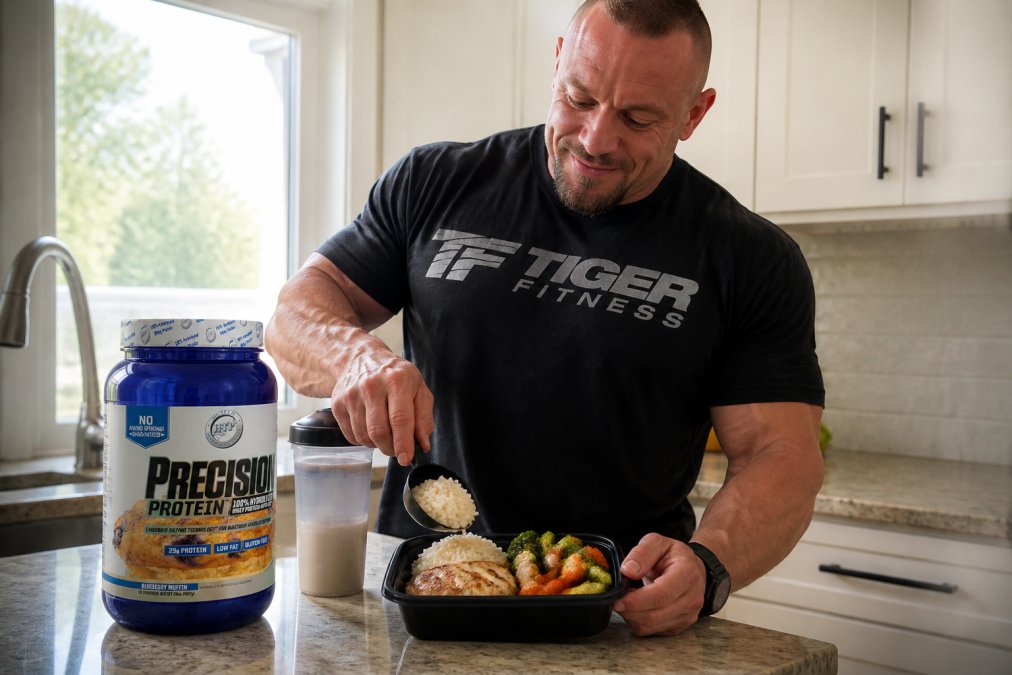
Protein sources matter. Complete proteins (containing all nine essential amino acids) should be your primary focus: chicken, beef, fish, eggs, and quality whey protein isolate. If using plant-based sources, combine them: rice and beans together, or add a complete amino acid profile supplement.
Key Takeaway A 200-pound lifter needs 127-180 grams of protein daily, spread across 4-5 meals. This is the single biggest variable that determines whether you build muscle or waste your training.
Macronutrients and Micronutrients: The Foundation of Performance
Macronutrients are your fuel. Protein builds and repairs tissue. Carbohydrates replenish glycogen and provide training energy. Fats support hormone production and nutrient absorption. You need all three in the right ratios for your specific goal and training phase.
Energy Availability and Caloric Demands
Energy availability is the real constraint most athletes miss. You can't build muscle in a caloric deficit. Your body needs surplus calories to support muscle protein synthesis and recovery. The minimum is typically 300-500 calories above maintenance.
Calculate your maintenance calories first: body weight in pounds × 14-16 (for moderate activity level).
Example: A 200-pound lifter with moderate activity burns roughly 2,800-3,200 calories daily at maintenance.
Then adjust for your goal:
- Muscle building phase: Add 400-500 calories above maintenance (3,200-3,700 calories for the 200-pound example).
- Fat loss phase: Subtract 300-500 calories below maintenance (2,300-2,900 calories for the 200-pound example).
- Maintenance phase: Stay at calculated maintenance (2,800-3,200 calories for the 200-pound example).
Most athletes underestimate how much they need during a building phase. They eat 2,500 calories thinking it's "clean bulking" and wonder why they're not gaining. You have to eat.
Watch Out Training hard in a caloric deficit burns muscle, not just fat. If you're in a deficit, you're in a preservation phase, not a building phase. Know which one you're doing and adjust your expectations accordingly.
Calculating Your Macronutrient Targets by Training Phase
Once you know your total daily calories, distribute them across protein, carbs, and fat based on your training phase.
Muscle Building Phase (Bulking):
- Protein: 1.2-1.6g per kilogram of body weight
- Carbs: 4-7g per kilogram of body weight
- Fat: 0.5-1.5g per kilogram of body weight
Example for a 200-pound (90.7kg) lifter building muscle:
- Protein: 150g
- Carbs: 500g
- Fat: 80g
- Total: 3,480 calories
Fat Loss Phase (Cutting):
- Protein: 1.6-2.2g per kilogram of body weight (higher to preserve muscle in a deficit)
- Carbs: 2-4g per kilogram of body weight (lower to create caloric deficit)
- Fat: 0.5-1.0g per kilogram of body weight personalized supplement routines.
Example for a 200-pound (90.7kg) lifter losing fat:
- Protein: 180g
- Carbs: 250g
- Fat: 60g
- Total: 2,420 calories
Maintenance Phase:
- Protein: 1.2-1.6g per kilogram of body weight
- Carbs: 3-5g per kilogram of body weight
- Fat: 0.8-1.2g per kilogram of body weight
Example for a 200-pound (90.7kg) lifter maintaining:
- Protein: 130g
- Carbs: 350g
- Fat: 90g
- Total: 3,020 calories
Micronutrient Requirements for Recovery and Performance
Micronutrients aren't glamorous, but deficiency tanks your recovery and strength.
Magnesium (400-500mg daily): Supports muscle relaxation, sleep quality, and energy production. Training depletes magnesium stores.
Zinc (25-30mg daily): Critical for testosterone production, immune function, and protein synthesis. Training suppresses immune response; zinc protects against illness.
Iron (18mg daily): Oxygen transport and energy production. Low iron means fatigue and poor performance.
Vitamin D (2,000-4,000 IU daily): Bone health, immune function, mood, and testosterone production. Most people are deficient.
Calcium (1,000-1,200mg daily): Bone density and muscle contraction. Critical for long-term joint health.
B-Complex Vitamins: Support energy metabolism, muscle recovery, and nervous system function.
A quality multivitamin covers most of these. Prioritize getting calories, protein, and carbs right first. Micronutrients are the fine-tuning that prevents deficiency and optimizes recovery.
Pre-Workout Nutrition Timing and Fueling Strategies
What you eat before training determines how hard you can actually train. Proper pre-workout fueling increases strength, endurance, and mental focus.
Eat 2-3 hours before training: a balanced meal with protein, carbs, and moderate fat. Chicken, rice, and vegetables. Steak and sweet potato.
90 minutes before: a smaller snack if needed. Banana and almond butter. Greek yogurt with granola.
15-30 minutes before: fast-digesting carbs and caffeine if you want an extra boost. White rice cakes or a sports drink. Caffeine at 3-6mg per kilogram of body weight improves strength and power output International Olympic Committee 2024 supplement position stand.
The goal is stable blood sugar and available energy. Training on an empty stomach is ego.
Post-Workout Muscle Recovery and the Anabolic Window
The "anabolic window" isn't a myth, but it's narrower than most people think. You don't need to chug a protein shake within 30 seconds of your last rep. But you do need protein and carbs within 2 hours post-training.
Post-workout nutrition serves two purposes: replenish glycogen and provide amino acids for muscle protein synthesis. Carbs matter here. You just depleted your muscle glycogen.
A practical post-workout meal: 40-50 grams of protein, 60-80 grams of carbs, minimal fat. Lean ground beef with white rice and broccoli. Salmon with sweet potato. Whey protein with oats and banana.
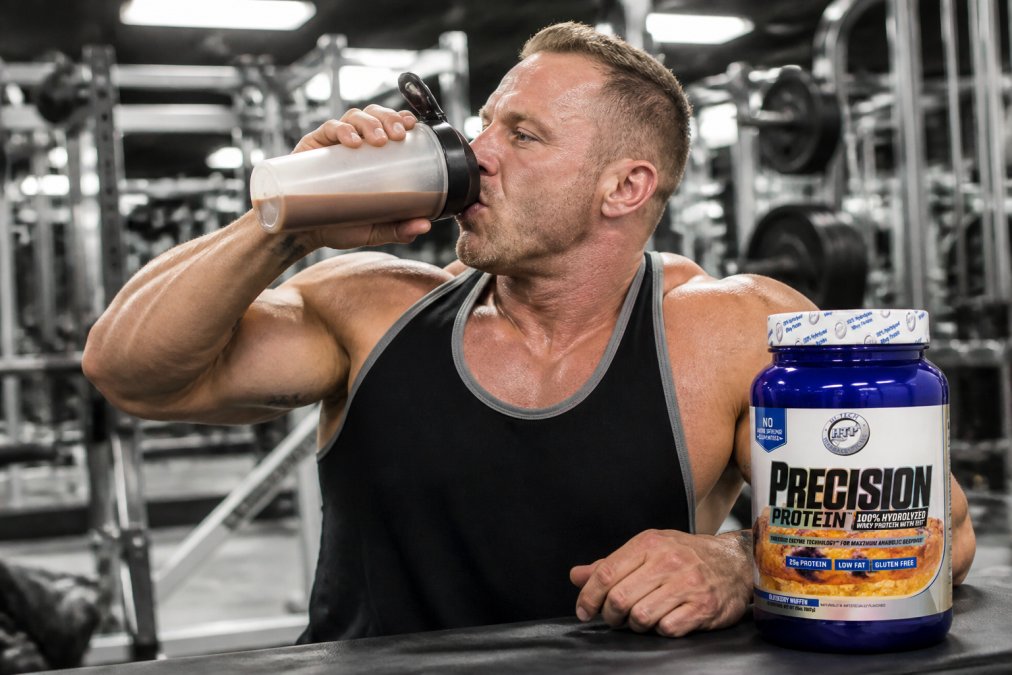
If whole food isn't practical immediately post-training, a quality protein powder works. Hi-Tech Pharma Precision Protein uses Embedded Enzyme Technology to break down peptides into highly bioavailable forms your body can absorb faster. Pair it with simple carbs, white rice, dextrose, or a banana.

The window closes around 2 hours post-training. Consistent protein intake throughout the day matters more than the exact timing of one meal.
Evaluating Supplement Safety and Third-Party Testing
Most athletes don't get hurt by training hard. They get hurt by taking supplements that don't contain what's on the label or contain banned substances they didn't know about.
According to Olivia Morgan, RD, Registered Dietitian and Sports Nutrition Expert at Mass General Brigham: "Supplements aren't regulated by the FDA in the same way food and drugs are. It's really important to find a brand with third-party regulation to test the supplements. Many products that aren't third-party regulated don't contain what's on the label and can even contain harmful substances."
Third-party testing by NSF, USP, or Informed Sport isn't optional. It's mandatory if you care about what you're actually putting in your body.
How to Verify Third-Party Certification
Don't just trust the label claim. Verify it.
Step 1: Check the label for the certification mark. Look for the actual logo or statement on the product packaging. It should say "NSF Certified for Sport," "Informed Sport Certified," or "USP Verified." If it's not there, move on.
Step 2: Cross-reference the product in the certification database:
- NSF Certified for Sport (nsfsport.com): Search by product name or manufacturer.
- Informed Sport (informed-sport.com): Maintains a certified product list updated monthly.
- USP Verified (usp.org): Search their verified products database.
Step 3: Verify the certification date. Certifications expire. A product certified in 2023 may no longer be current if the formula changed.
Step 4: Understand what each certification tests for:
- NSF Certified for Sport: Tests for banned substances listed by major sports organizations (IOC, WADA, NCAA). Verifies label claims match actual content. Gold standard for strength athletes and bodybuilders.
- Informed Sport: Focuses on banned substance testing relevant to competitive athletes. Tests every batch, not just random samples.
- USP Verified: Verifies ingredient identity, strength, purity, and manufacturing quality. Does not specifically test for banned substances.
Red Flags That Signal Untested Supplements
If a supplement has none of these certifications, ask yourself: Why not? Legitimate manufacturers invest in third-party testing. Brands that skip it are cutting corners.
Common red flags: no third-party certification mentioned anywhere, vague sourcing language, no batch or lot number on the label, extremely low price compared to certified competitors, no contact information or transparency about manufacturing location, testimonials instead of clinical data.
Watch Out Untested supplements can contain banned substances that show up on a drug test, even if you didn't intentionally take them. One contaminated batch can end an athletic career. Verify third-party testing before purchase. If it's not certified, don't risk it.
Building Your Supplement Verification Checklist
Before buying any supplement, run through this:
- Does the label display a third-party certification mark (NSF, Informed Sport, or USP)?
- Can I find the product in the official certification database?
- Is the certification current (not expired)?
- Does the certification match my needs?
- Is the manufacturer transparent about sourcing and manufacturing location?
- Does the label include a batch/lot number for traceability?
If you answer "no" to any of these, the supplement doesn't meet the standard. Move to a certified alternative. The risk of contamination, mislabeling, or banned substance exposure is not worth saving money.
Understanding the USADA Prohibited Substance List
If you're competing, the USADA Prohibited Substance List is your bible. Even if you're not competing, understand it because contaminated supplements can contain these substances.
The list changes annually. Major categories include:
Anabolic agents: testosterone, synthetic steroids, SARMs (selective androgen receptor modulators). These are banned.
Peptide hormones: growth hormone, insulin-like growth factor. Banned.
Beta-2 agonists: some are allowed in specific doses for asthma; most are banned.
Stimulants: ephedrine, certain doses of caffeine (over 12 micrograms per milliliter in urine is flagged).
Diuretics and masking agents: banned because they hide other drug use.
Most over-the-counter supplements are clean. But some brands cut corners. Buying from reputable manufacturers with third-party testing eliminates 99% of the risk. HTLT Turk Builder Max and HTLT Turk Builder Platinum use turkesterone (ecdysterone), a plant-derived compound not on the USADA list, making them safe for tested athletes.


Read the full list at usada.org before buying anything if you compete. Ignorance isn't a defense.
Building Your Personal Nutrition Protocol
Your diet guide needs to be personal. A 150-pound CrossFit athlete has different needs than a 250-pound bodybuilder bulking.
Start with these variables:
1. Goal clarity: Are you building muscle, losing fat, or maintaining?
2. Training volume and intensity: More volume requires more carbs. Higher intensity requires more total calories.
3. Sport-specific demands: Endurance athletes need different carb timing than strength athletes.
4. Body composition starting point: Starting lean versus starting with excess fat changes your approach.
5. Digestive tolerance: Some people tolerate high fat; others need low fat. This matters.
Use Tiger Fitness's FREE TOOLS & FITNESS CALCULATORS to dial in your numbers. Input your stats, training style, and goal. The calculator gives you target macros. Build meals around those targets.
| Variable | Calculation | Example (200lb athlete) |
|---|---|---|
| Daily Protein | 1.2-1.6g per kg BW | 127-180g |
| Daily Carbs | 4-7g per kg BW | 363-636g |
| Daily Fat | 0.5-1.5g per kg BW | 45-136g |
| Meal Frequency | 4-5 meals | Spread evenly |
| Pre-Workout Timing | 2-3 hours prior | Balanced meal |
| Post-Workout Timing | Within 2 hours | Protein + carbs |
The supplement stack comes after the diet is locked in. Protein powder, creatine monohydrate, and a quality multivitamin cover most bases. Everything else is optional refinement.
Frequently Asked Questions
How do I calculate my daily protein intake for muscle growth?
Start with 1.2 to 1.6 grams of protein per kilogram of body weight per day, based on 2026 U.S. Dietary Guidelines. For a 200-pound (91 kg) athlete, that's 109-146 grams daily. Divide this across 4-5 meals to optimize protein synthesis. Adjust upward if you're in a caloric deficit or training hard; dial back slightly during maintenance phases. Use Tiger Fitness's free fitness calculators to personalize your targets based on your specific goals and training intensity.
What supplements are most effective for bodybuilders according to research?
Caffeine and amino acid formulations show consistent benefits in clinical trials, according to the International Olympic Committee's 2024 analysis. Creatine monohydrate supports strength and lean mass gains. Whey protein (like Hi-Tech Pharma Precision Protein) delivers fast-absorbing amino acids critical for post-workout recovery. Electrolytes maintain hydration status during intense training. Always verify third-party testing, many products without independent certification don't contain what's on the label and may contain harmful substances.
How does the USADA prohibited substance list affect my supplement choices?
The USADA maintains a comprehensive list of banned substances for tested athletes. Most over-the-counter bodybuilding supplements are legal, but some contain prohormones or unlisted ingredients that violate USADA rules. If you compete in tested federations, check every supplement against the current USADA prohibited substance list before purchase. Third-party tested products from reputable brands significantly reduce contamination risk. When in doubt, consult your sport's governing body or a sports dietitian.
What's the difference between pre-workout and post-workout nutrition timing?
Pre-workout nutrition (60-90 minutes before training) should include carbohydrates for glycogen replenishment and moderate protein for amino acid availability, think oatmeal with a banana. Post-workout (within 2 hours) prioritizes fast-digesting carbs and protein to trigger muscle protein synthesis. A protein shake with simple carbs works perfectly and fits into most athletes' schedules.
Why is third-party testing important when buying supplements?
Supplements aren't regulated by the FDA the same way food and drugs are. Independent third-party testing verifies that a product contains what's on the label and screens for banned substances and contaminants. According to sports nutrition experts, many products without third-party certification don't contain their claimed ingredients or harbor harmful substances. Look for NSF, USP, or Informed Sport certifications. This is the single best way to protect your health and ensure you're not accidentally taking banned substances.
Can I build muscle on a budget without expensive supplements?
Yes. Food first: chicken, eggs, Greek yogurt, rice, and oats deliver macronutrients and micronutrients at lower cost than many supplements. A basic whey protein powder (like Hi-Tech Pharma Precision Protein at $49.99) [cite: https://tigerfitness.com/products/precision-protein] covers gaps when whole food isn't convenient. Creatine monohydrate is inexpensive and proven. Online retailers like Tiger Fitness often undercut traditional retail prices and offer rewards programs that stack savings over time. Focus on consistency with food and training before adding expensive specialty products.
What should I do if I'm recovering from an injury and need to rebuild muscle?
Prioritize protein intake (1.2-1.6 g/kg BW) to support muscle protein synthesis despite reduced training volume. Maintain electrolyte balance and hydration. Anti-inflammatory micronutrients (omega-3 fatty acids, vitamin D, zinc) support recovery. Work with a sports physical therapist to gradually return to full training, nutrition alone won't compensate for poor programming. Consider consulting a registered dietitian who specializes in injury recovery to build a personalized protocol. Tiger Fitness's diet guides can help structure your nutrition around your specific rehab timeline.
How do I know if my diet supports body recomposition goals?
Track your weight, body measurements, and strength weekly. Body recomposition means gaining muscle while losing fat, the scale may stay flat while your body changes. Ensure caloric intake matches your goal (slight deficit for fat loss, slight surplus for muscle gain). Hit protein targets consistently. Monitor energy levels and recovery quality; if you're fatigued or weak, adjust calories upward. Use Tiger Fitness's fitness calculators to dial in your macronutrient split and reassess every 4 weeks based on progress.
Building muscle isn't complicated. It requires consistent training, adequate calories, sufficient protein, and smart supplementation. A solid diet guide removes the guesswork. Tiger Fitness provides the tools, calculators, meal planning resources, and third-party tested supplements, to make it happen. Get your nutrition protocol dialed in, stick to it for 12 weeks, and reassess based on results.
Leave a comment