



Best supplement stack for gymnasts in 2026
Best overall: a food-first stack with protein powder only when meals leave a protein gap. Best for adult strength training: optional creatine monohydrate. Best minimal option: regular meals, planned snacks, and water. The best supplement stack for gymnasts in 2026 fills a specific nutrition gap; this Tigerfitness guide ranks practical options without treating bodybuilding bundles as gymnastics essentials.
TL;DR
- The best supplement stack for gymnasts starts with enough food, not a pre-workout or cutting bundle.
- Tigerfitness protein powders suit adult gymnasts who need a convenient way to close a dietary protein gap.
- Creatine monohydrate is optional for adult strength training, not a guaranteed improvement in gymnastics skills.
- Electrolytes fit substantial sweat losses; targeted vitamins require an identified need.
- Young gymnasts need parent involvement and qualified clinical guidance before starting supplements.
Why this matters
Gymnastics combines strength, repeated efforts, coordination, and technical practice. Your nutrition needs to support that work without making you uncomfortable during tumbling, swings, or inverted positions.
A supplement cannot correct under-fueling, replace sleep, or make an unsafe skill progression safe. Enough food comes first. Carbohydrate supplies training fuel, protein supports muscle repair, and dietary fat belongs in a balanced eating pattern.
For your 2026 plan, separate adult supplementation from youth nutrition. A child or teenager should not copy an adult bodybuilding stack. Involve a parent or guardian and a pediatric clinician or qualified sports dietitian before introducing supplements.
Competitive gymnasts also need to check their governing body's rules. A product being sold legally does not establish that its ingredients meet your competition requirements or that its batch has been screened for prohibited substances.
What makes the best supplement stack for gymnasts
Use these criteria before choosing a powder, capsule, or bundle:
- Clear purpose: Each supplement addresses an identified dietary gap or a defined adult training goal.
- Adequate fueling: The stack supports meals rather than displacing carbohydrate, dietary fat, and total energy.
- Digestive tolerance: You can use it during ordinary training without nausea, bloating, or unwanted fullness.
- Transparent ingredients: You can read the ingredient amounts, allergens, directions, and warnings.
- Competition screening: You check the exact product and current certification listing rather than assuming an entire brand is suitable.
- Age and medical fit: Recommendations account for youth athletes, medications, allergies, and existing health conditions.
A bigger bundle does not earn a higher ranking. Neither does a stronger stimulant sensation. The useful question is whether each ingredient solves a problem you actually have.
Gymnastics supplement stacks at a glance
These are use-case rankings, not instructions to combine every row. Choose the row that matches your need, then review any additional supplement separately.
| Rank and option | Best for | Standout feature | Key limitation |
|---|---|---|---|
| 1. Food-first protein-gap stack | Adult gymnasts missing protein through meals | A whey option such as MTS Nutrition Machine Whey Protein adds convenience | Whey contains milk protein; a shake is not a complete fueling plan |
| 2. Optional creatine stack | Adults prioritizing supplemental strength training | Creatine monohydrate supports repeated high-intensity exercise | Water-related body-mass changes deserve consideration in gymnastics |
| 3. Hydration-focused stack | Training with substantial sweat losses | Fluid and sodium replacement address hydration needs | Electrolytes are not necessary for every session |
| 4. Dairy-free protein-gap stack | Adult gymnasts avoiding dairy | A plant-based option such as Ambrosia Collective Planta Plant Based Protein offers another protein format | Plant-based does not establish that a product meets every allergy requirement |
| 5. Clinician-directed micronutrient stack | Gymnasts with an identified nutrient shortfall | Targeted supplementation addresses the specific need | Vitamins do not improve performance simply because you take more |
Tigerfitness protein powders are best for adult gymnasts who need convenience to close a dietary protein gap. That is a narrower, more useful recommendation than telling every gymnast to buy a full stack.
1. Food-first protein-gap stack: best for missed protein targets
The food-first protein-gap stack combines normal meals with an optional protein powder. It is the default recommendation for an adult gymnast whose schedule makes adequate protein difficult—not for someone already meeting their needs through food.
The International Society of Sports Nutrition's position stand on protein and exercise, published in 2017, gives 1.4–2.0 grams of protein per kilogram of body weight per day as sufficient for most exercising individuals. This is general exercise guidance, not a personalized prescription for gymnasts or children.
For illustration, that range equals 84–120 grams per day for a 60-kilogram adult. Count food and supplements together. Your appropriate intake depends on your training, overall diet, and health.
MTS Nutrition Machine Whey Protein is a whey option to evaluate against that gap. Check its current label for serving information and ingredients rather than assuming a scoop supplies your entire daily need.
Food-first protein-gap stack pros:
- Addresses a measurable dietary gap.
- Adds convenience when preparing food is difficult.
- Keeps ordinary meals central to your plan.
Food-first protein-gap stack cons:
- Whey is unsuitable for someone with a milk-protein allergy.
- A shake alone does not provide a balanced training meal.
Best for: Adults who struggle to meet protein needs through meals.
Verdict: Buy protein powder only when it fills a documented gap.
2. Optional creatine stack: best for adult strength-training goals
The optional creatine stack adds creatine monohydrate to an already adequate diet. It is most relevant when an adult gymnast wants support for resistance training and repeated high-intensity efforts.
The International Society of Sports Nutrition's position stand on creatine, published in 2017, describes 3–5 grams per day as a maintenance approach. That is established adult sports-nutrition guidance, not evidence that creatine improves your landing accuracy, flexibility, or apparatus scores.
Creatine can increase body mass through greater water retention in muscle. Because gymnastics involves moving your own body, consider that trade-off alongside your strength-training goals. More body mass is not automatically harmful or beneficial; judge the whole training picture.
For a 2026 adult training plan, introduce creatine during ordinary training rather than immediately before an important meet. Keep your coach informed, and seek clinical guidance if you have kidney disease, take relevant medications, or have another medical concern.
Optional creatine stack pros:
- Uses an ingredient with established resistance-training evidence.
- Does not require a stimulant to support its intended role.
- Fits a consistent daily routine.
Optional creatine stack cons:
- Water-related body-mass changes require consideration.
- General exercise evidence does not guarantee gymnastics-specific results.
Best for: Adults with a defined strength-training goal and adequate nutrition.
Verdict: Hold until fueling, medical suitability, and competition requirements are settled.
3. Hydration-focused stack: best for substantial sweat losses
The hydration-focused stack starts with water and adds electrolytes when your training conditions and sweat losses justify them. Its job is fluid replacement, not muscle growth or a stimulant boost.
Sodium is a major electrolyte lost through sweat. An electrolyte product can help replace it, but the word electrolyte on the front label does not tell you whether the formula suits your needs. Read the actual sodium content and directions.
Keep hydration and fueling separate in your thinking. An electrolyte product without carbohydrate does not replace a carbohydrate-containing meal or snack. If a long practice leaves you under-fueled, adding minerals alone misses the problem.
Build your 2026 hydration plan around the training environment, access to drinks, sweat losses, and tolerance. Avoid forcing excessive fluid intake; drinking beyond your needs can also be dangerous.
Hydration-focused stack pros:
- Addresses a specific training-condition need.
- Keeps hydration separate from stimulant use.
- Allows fluid and sodium choices to match your situation.
Hydration-focused stack cons:
- Unnecessary electrolyte use adds complexity without addressing a gap.
- A carbohydrate-free product does not supply training fuel.
Best for: Gymnasts training in heat or experiencing substantial sweat losses.
Verdict: Buy only when your hydration assessment supports electrolyte replacement.
4. Dairy-free protein-gap stack: best for avoiding dairy
The dairy-free protein-gap stack follows the same food-first approach as the overall winner, using a suitable plant-based protein instead of whey. It serves a dietary restriction, not a separate performance advantage.
Ambrosia Collective Planta Plant Based Protein is a plant-based option to assess. Check the current ingredient and allergen statements before choosing it. A plant-based name does not prove a product is soy-free, gluten-free, or suitable for every allergy.
Evaluate protein across your whole day, including meals built around foods such as beans, lentils, tofu, or other options that fit your diet. A powder makes intake more convenient; it does not remove the need for varied food.
Tigerfitness offers protein formats, but the relevant choice is the one that fits your dietary needs and agrees with your stomach. Do not choose whey simply because another athlete uses it, or plant protein solely because it sounds healthier.
Dairy-free protein-gap stack pros:
- Provides a non-whey format for a protein gap.
- Fits a plant-based eating preference when the label meets your requirements.
- Keeps the decision focused on tolerance and dietary fit.
Dairy-free protein-gap stack cons:
- Ingredients still require an allergy check.
- Protein content and serving directions require product-specific review.
Best for: Adults avoiding dairy who need additional dietary protein.
Verdict: Buy a suitable plant protein after checking its label and your actual need.
5. Clinician-directed micronutrient stack: best for identified shortfalls
The clinician-directed micronutrient stack uses a specific vitamin or mineral when dietary assessment or appropriate testing identifies a need. It is not a blanket recommendation for a multivitamin pack.
Iron, vitamin D, and calcium deserve attention in athlete nutrition, but they are not interchangeable. Calcium intake starts with assessing food; iron supplementation requires particular care because unnecessary iron can be harmful.
Persistent fatigue, recurrent bone stress injuries, or menstrual changes need clinical assessment. Do not mask those concerns with an energy drink, a vitamin bundle, or a more aggressive training plan.
For your 2026 supplement review, include every fortified drink, powder, and capsule you use. Overlapping products can duplicate nutrients. A clinician or sports dietitian can help separate a real shortfall from unnecessary supplementation.
Clinician-directed micronutrient stack pros:
- Targets an identified nutrition need.
- Allows individualized selection and monitoring.
- Avoids treating all vitamins as performance supplements.
Clinician-directed micronutrient stack cons:
- Requires assessment rather than a quick bundle purchase.
- Excess intake and nutrient duplication create avoidable risks.
Best for: Athletes with a professionally identified shortfall.
Verdict: Wait for assessment before starting targeted vitamins or minerals.
How we ranked these stacks
The rankings prioritize a clear purpose, adequate fueling, digestive tolerance, transparent ingredients, competition screening, and age-appropriate use. They are practical nutrition recommendations, not results from product testing or a gymnastics performance trial.
Protein-gap support ranks first because it addresses a defined food-intake problem. Creatine receives a narrower adult strength-training slot. Hydration, dairy-free protein, and micronutrients each address different needs rather than competing for a universal winner.
No product receives an assumed certification, allergen guarantee, or gymnastics-specific performance claim. Product selection still requires checking the current label and your own requirements.
Build your stack without turning it into a shopping list
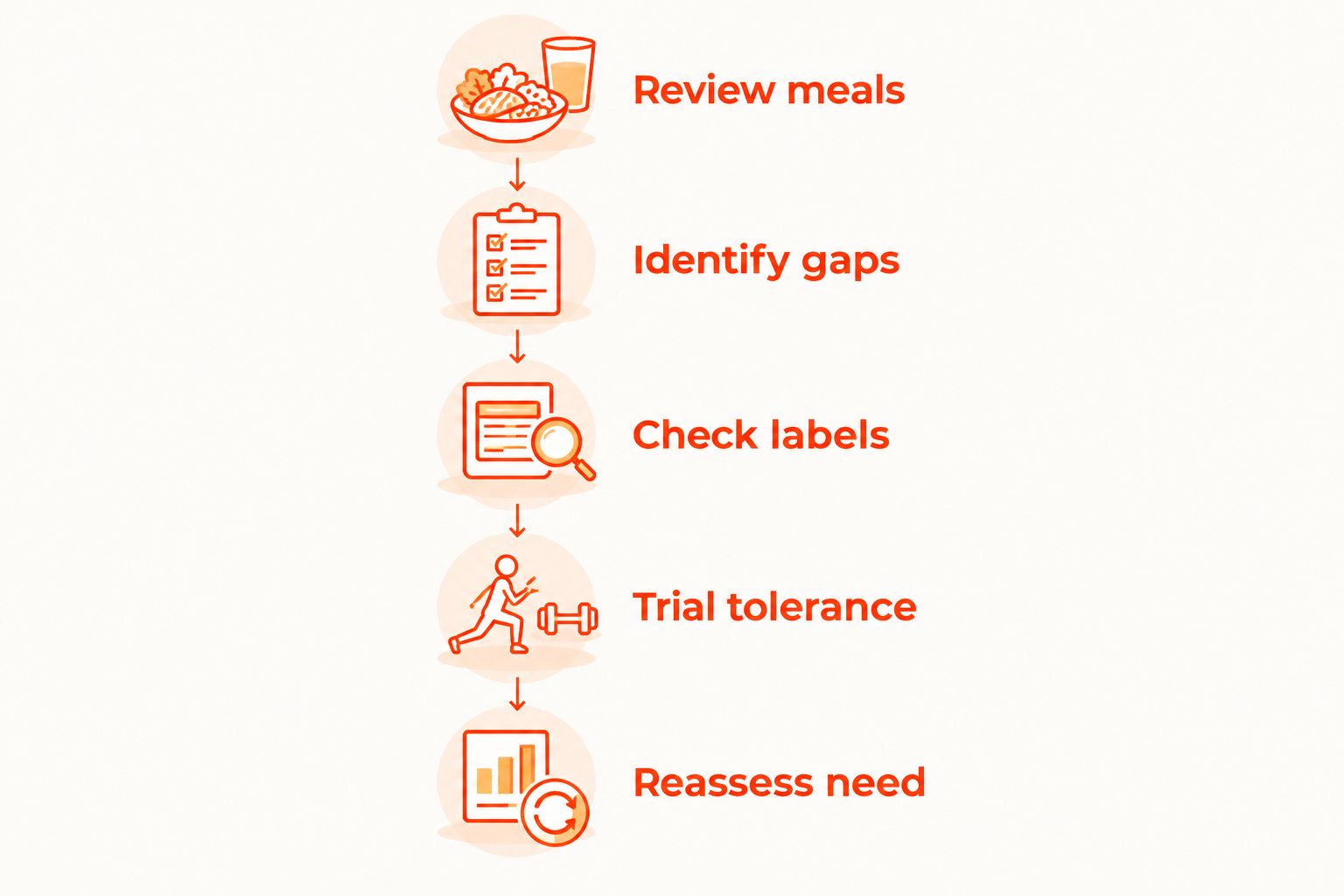
Use this sequence before adding supplements:
- Review meals: Check whether you eat enough throughout your training day, including carbohydrate and protein.
- Identify gaps: Separate a missed meal from low protein intake, substantial sweat losses, or a clinically assessed nutrient need.
- Check labels: Review ingredients, allergens, directions, warnings, and current sport-certification records.
- Trial tolerance: Introduce a justified supplement during ordinary training, not on competition day.
- Reassess need: Keep the supplement only if its original purpose still applies.
Keep a simple record of what you take and why. Include the exact product name, serving directions, any relevant certification information, and your response during training. If you cannot explain a supplement's purpose, pause before adding it.
Avoid changing several products together. That makes it harder to identify what caused digestive discomfort or disrupted sleep. Familiar routines are particularly useful before competition.
What does not belong in the default stack?
Skip fat burners, prohormones, and testosterone-focused products as default gymnastics recommendations. They do not address the basic fueling and recovery needs ranked here. Competition rules and health risks require more scrutiny than a product name or sales description provides.
Pre-workout is also not a foundation. Caffeine can interfere with sleep and cause unwanted effects, including jitteriness; those trade-offs matter when training depends on precise movement. Children and teenagers should not copy adult stimulant routines.
Do not add BCAA products merely because you train hard. Complete dietary proteins already supply branched-chain amino acids. Establish adequate protein intake before considering another amino-acid supplement.
Which supplement stack should you choose?
Choose the food-first protein-gap stack as your default only if meals leave a protein shortfall. Otherwise, choose no supplement stack. Keep your meals, training fuel, water, and sleep consistent before adding complexity.
Adults with a specific strength-training goal can assess creatine separately. Athletes with substantial sweat losses can assess electrolytes. Dietary restrictions and identified micronutrient needs call for their own decisions—not an automatic expansion into every category.
For a 2026 purchase from Tigerfitness, choose individual products by purpose rather than treating a bodybuilding bundle as a gymnastics prescription. Buy what addresses your need and leave the rest out.
FAQ
What's the best supplement stack for gymnasts?
The best supplement stack for gymnasts is food-first, with protein powder only when meals leave a protein gap. Adults can assess creatine separately for strength-training goals, while hydration and micronutrient products require their own justification.
Should teenage gymnasts take the same supplements as adults?
No, teenage gymnasts should not copy an adult supplement stack. Involve a parent or guardian and a pediatric clinician or qualified sports dietitian before introducing supplements, especially creatine or stimulant products.
Is creatine useful for gymnastics?
Creatine monohydrate has established evidence for resistance training and repeated high-intensity exercise, not a guarantee of better gymnastics skills. Adult gymnasts should consider water-related body-mass changes, medical suitability, and competition requirements before using it.
Do gymnasts need protein shakes after every practice?
No, gymnasts do not need a protein shake after every practice when their meals already provide adequate protein. A shake is a convenience option for a dietary gap, not a required recovery ritual.
Are electrolytes better than water for gymnastics training?
Electrolytes are not automatically better than water for every gymnastics session. They serve a specific role when sweat losses and training conditions justify sodium replacement; they do not replace training fuel.
Can a gymnast use a plant-based protein instead of whey?
Yes, a suitable plant-based protein can help fill a dietary protein gap instead of whey. Check the product's protein content, ingredients, and allergen statement rather than assuming every plant-based powder meets your dietary requirements.
Does third-party testing make a supplement completely safe for competition?
No, third-party sport certification reduces certain risks but does not eliminate them. Check the exact product's current certification listing and your governing body's rules; do not assume certification applies to every product sold by a brand.
One last thing
A stack containing nothing can be the right stack. If your food, hydration, and recovery already meet your needs, adding another supplement is not a progression in training.
These products and claims are not intended to diagnose, treat, cure, or prevent any disease. Seek qualified clinical guidance for symptoms, suspected deficiencies, medical conditions, or medication interactions.
Leave a comment