
Pick This Year's Olympia T-Shirt

Last Updated: August 25, 2026
Nearly one-third of protein powders on the market failed quality standards in recent testing because they contained significantly more cholesterol, sodium, or sugar than claimed on their labels (ConsumerLab.com, 2026) (consumerlab.com). All products contained their listed amounts of protein, but that's where the accuracy ended for many brands.
When you pick a powder without third-party testing, you're gambling. The company tests itself. Independent labs don't have a financial incentive to give you a passing grade. They test for what's actually in the container: heavy metals, banned substances, amino acid spiking, microbial contamination, and label accuracy.
The stakes are real. Some athletes compete in tested federations where banned substance contamination can end careers. Others simply want to know their supplement doesn't contain lead or cadmium above safe thresholds. Third-party testing provides that proof.
We evaluated protein powders on five criteria: third-party certification status, heavy metal testing results, banned substance screening, label accuracy verification, and real-world mixability and taste. We prioritized products with certifications from recognized organizations like Informed Choice, NSF Certified for Sport, USP, or IFOS.
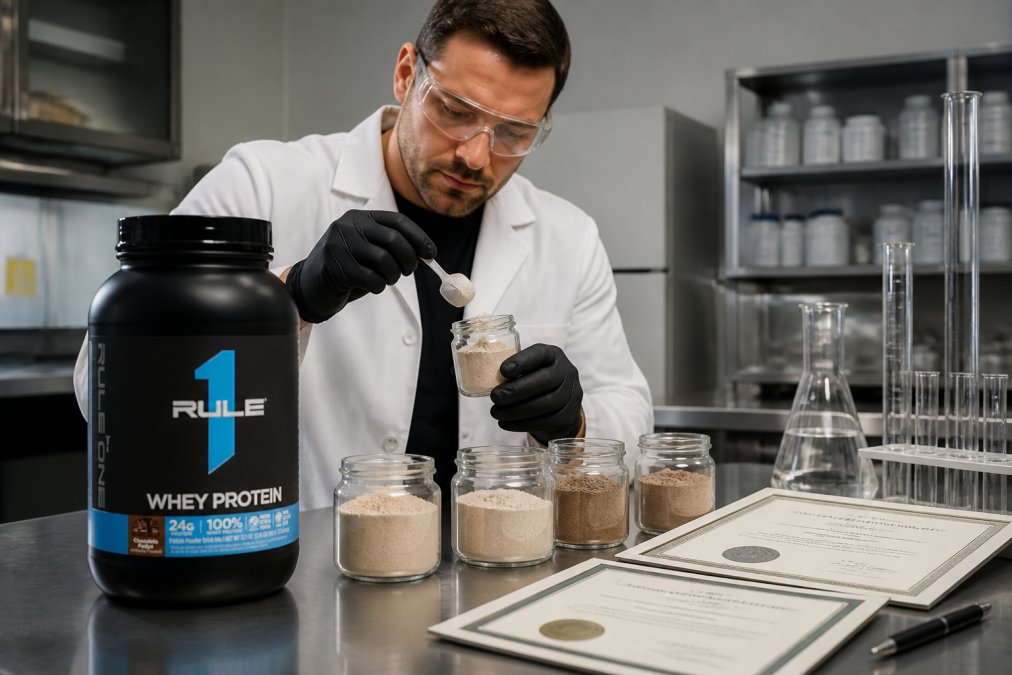
Label accuracy matters more than most people realize. A product claiming 25g of protein per scoop but delivering 22g isn't just short-changing you, it's breaking the law. ConsumerLab testing found that while protein content held up across the board, other macronutrients often didn't.
Heavy metal screening is non-negotiable. Lead and cadmium accumulate in your body over time. A 2025 Clean Label Project study found that nearly half of tested products exceeded California's Prop 65 thresholds for these metals, with plant-based and chocolate powders testing worst (cleanlabelproject.org).
Banned substance screening matters if you compete in any tested sport or simply want to avoid accidental contamination. Products with Informed Choice certification or NSF Certified for Sport status undergo regular banned substance testing by accredited laboratories.
We also tested mixability and taste because a powder that doesn't mix clean or tastes like chalk won't get used.
Whey protein isolate is the gold standard for fast absorption and muscle protein synthesis. The research is clear: collagen and whey protein rank as top strategies for enhancing fat-free mass and strength gains in healthy adults undergoing resistance training (PMC, 2026) (peer-reviewed research). Isolates deliver the purest form of whey with minimal carbs and fats.

Rule 1 Whey Protein delivers 24g of protein per scoop from three whey sources: concentrate, isolate, and partially hydrolyzed isolate. The key differentiator is Informed Choice certification. Rule 1 is regularly tested for banned substances by LGC, an accredited independent laboratory.
Each serving provides 11g of naturally occurring EAAs and 5g of BCAAs, the amino acids most associated with muscle recovery. It mixes cleanly without clumping. The formula contains milk and soy (from lecithin), so check your allergies. Tiger Fitness carries Rule 1 Whey Protein with 16 flavor options.
Core ISO is a 100% whey protein isolate with zero added sugars and no artificial colors, just pure isolate with natural flavoring. Most whey isolates taste bitter because processing removes flavor compounds. Core uses natural flavoring to overcome this, which matters because a protein you actually enjoy drinking gets consumed consistently.
This powder is best for lifters who've tried cheaper isolates and found them unpalatable, or who prioritize ingredient minimalism.
Nutrex ISOFIT is a 100% whey protein isolate using cross-flow microfiltration technology for rapid absorption. Each scoop delivers 25g of isolate with zero sugar and low carbs.
The product is lactose-free and includes digestive enzymes to support absorption. If you've had digestive issues with other isolates, the enzyme inclusion may help. ISOFIT comes with a creamy texture that doesn't leave the chalky aftertaste common in isolates.
Best for lifters who prioritize post-workout absorption speed and digestive comfort.
Forbes rated Optimum Nutrition 100% Gold Standard Whey as the best whey protein powder, earning a 5-star rating from their research team due to high scores in lab testing for label accuracy and absence of heavy metals and contaminants (Forbes, 2026).
Gold Standard Whey combines whey protein isolate, whey concentrate, and hydrolyzed whey peptides, a blend designed for fast absorption and optimal muscle support. Each serving provides 24g of protein, over 5g of BCAAs, and low fat and sugar content.
The formula mixes cleanly and comes in numerous flavors.
Best for lifters who want a proven, widely-available option with major publication backing and solid third-party testing credentials.
Plant-based proteins offer an alternative for vegans, those with dairy allergies, or anyone seeking variety. The challenge: plant proteins have incomplete amino acid profiles, lower bioavailability, and historically worse heavy metal testing results.
NOW Sports Sprouted Brown Rice Protein is made from sprouted whole grain brown rice. Sprouting enhances digestibility and nutrient availability compared to unsprouted rice protein.
This is an unflavored powder, giving you control over how you use it. Mix it into smoothies, oatmeal, or recipes. Each serving provides plant-based protein with naturally occurring essential amino acids.
The tradeoff: brown rice protein delivers fewer BCAAs per serving than whey, and absorption is slower. For someone prioritizing plant-based sourcing, this works. For maximum muscle protein synthesis, whey outperforms it.
NOW Sports products are Informed Sport certified for quality assurance, which means independent verification of label claims.
NSF Certified for Sport is a third-party certification that means an independent laboratory tested the product for banned substances and verified label accuracy. NSF tests for over 270 banned substances relevant to competitive sports.
This certification is specifically designed for athletes competing in tested federations. It's more rigorous than general "third-party tested" claims because NSF maintains a database of banned substances and updates it regularly as sports organizations change their rules.
When you see the NSF Certified for Sport seal, you know:
Other certifications like Informed Choice and USP follow similar rigorous protocols.
Heavy metal contamination in protein powders is a documented problem. A 2025 Clean Label Project study tested 160 products and found that nearly half exceeded California's Prop 65 thresholds for lead and cadmium. Plant-based powders tested worst, followed by chocolate flavors.
Lead and cadmium don't cause acute poisoning from a single serving. The risk is cumulative exposure over months and years. If you consume protein powder daily, heavy metal content matters.
Third-party testing identifies heavy metal levels. ConsumerLab testing confirmed that products with published lab results had significantly lower contamination rates than products without testing. The act of submitting to independent testing creates accountability.
When evaluating a protein powder, look for published heavy metal testing results. If a company won't publish them, that's a red flag. The safest approach: prioritize products with third-party certification seals. NSF, USP, Informed Choice, and IFOS all require heavy metal testing as part of their certification process.
A certificate of analysis (COA) is the laboratory report showing what was actually in the product when tested. It's the most important document for verifying third-party testing claims.
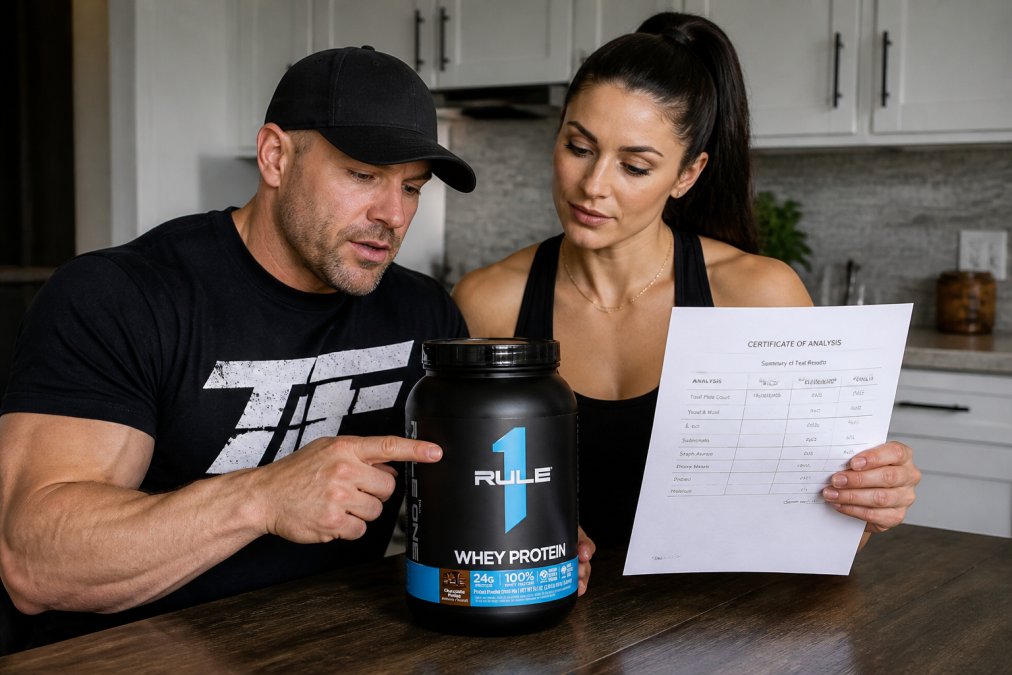
Here's what to look for on a COA:
The testing laboratory name and accreditation status. Legitimate labs are accredited by organizations like AOAC International or ISO 17025.
The test date and batch number. A COA from 2024 doesn't tell you about the product you're buying in 2026. Match the batch number on your container to the batch number on the COA.
The specific tests performed. Look for: protein content verification, heavy metals (lead, cadmium, arsenic), microbial contamination (E. coli, salmonella), and banned substance screening if applicable.
The results and limits. A COA will show "Result" and "Limit" columns. The result should be below the limit. For protein content, the result should match the label claim within a small margin (typically 5%).
The lab's signature and accreditation seal. Legitimate COAs include official seals and signatures from the testing laboratory. Verify the lab's contact information and call them to confirm the COA is real.
Most reputable brands publish COAs on their websites or provide them upon request. If a company won't provide a COA, that's a major warning sign.
| What to Check | What It Means | Red Flag |
|---|---|---|
| Lab name and accreditation | Independent testing by verified organization | Unknown lab or no accreditation |
| Test date | When the product was actually tested | Dates older than 1 year |
| Batch number | Matches your container | Different batch number than your product |
| Protein result vs. label claim | Accuracy of nutrition facts | Result is 10% below claim |
| Heavy metals (Pb, Cd) | Safety threshold verification | Results exceed Prop 65 limits |
| Microbial testing | Contamination screening | Presence of E. coli or salmonella |
For competitive athletes, banned substance contamination can end careers. A positive test due to accidental contamination from shared equipment at the manufacturing facility can disqualify you from competition, even if you didn't intentionally take anything banned.
Informed Choice certification screens for over 200 banned substances. NSF Certified for Sport screens for over 270. These certifications require that the product AND the manufacturing facility are tested regularly.
If you compete in any tested sport, powerlifting, bodybuilding, CrossFit competitions, or any federation with drug testing, use only Informed Choice or NSF Certified for Sport products.
For non-competing lifters, banned substance screening is still valuable. Third-party testing catches this.
The bottom line: Third-party tested protein powders cost slightly more, but you're buying verification instead of hope. You know what's in the container, you know it matches the label, and you know contaminants are within safe limits.
At Tiger Fitness, we stock protein powders that publish their lab results and carry legitimate third-party certifications. We've filtered out the guesswork so you don't have to. Whether you need Informed Choice certification for competition, heavy metal testing for daily safety, or simply a protein that delivers what the label promises, our selection prioritizes products that back up their claims with independent verification.
Start with Rule 1 Whey Protein if you want Informed Choice certification at a reasonable price. Use our FREE TOOLS & FITNESS CALCULATORS to dial in your exact daily protein needs based on your body weight and training intensity. Your muscles deserve protein you can trust.
Third-party testing means an independent laboratory, not the manufacturer, tests the product for label accuracy, purity, and contaminants. According to ConsumerLab.com testing published in April 2026, nearly one-third of protein powders failed to meet quality standards because they contained significantly more cholesterol, sodium, or sugar than claimed. All tested products contained their listed protein amounts, but independent verification catches what internal testing alone misses. Look for certifications from NSF, USP, Informed Choice, or IFOS.
NSF Certified for Sport means an independent body tested the product for banned substances, heavy metals, and label accuracy. This certification is critical for competitive athletes because it guarantees the product won't contain prohibited compounds that could trigger a failed drug test. NSF tests every batch, not just samples. Rule 1 Whey Protein carries Informed Choice Certification, a similar standard, and is regularly tested by LGC for banned substances, making it safe for tested athletes.
Check the label for certification seals from NSF Certified for Sport, USP, Informed Choice, or IFOS. Request a Certificate of Analysis (COA) from the manufacturer, legitimate brands publish these on their websites. The COA shows test dates, lab results, and batch numbers. Tiger Fitness products like Rule 1 Whey display their testing credentials clearly.
Heavy metals (lead and cadmium) and microbial contamination are the top concerns. A 2025 Clean Label Project study found nearly half of tested products exceeded California Prop 65 thresholds for lead and cadmium, with plant and chocolate powders testing worst. ConsumerLab.com also noted 6 products slightly exceeded Prop 65 warning levels for reproductive harm. Third-party testing screens for these contaminants. Whey isolates typically test cleaner than plant-based options because of processing differences.
The FDA regulates dietary supplements under the Dietary Supplement Health and Education Act (DSHEA), but manufacturers are responsible for ensuring safety and label accuracy before products reach shelves. The FDA doesn't pre-approve supplements or test every batch. This is why third-party testing is essential, it fills the gap. Independent labs verify what the FDA cannot. Always choose brands that publish third-party test results and maintain cGMP FDA Inspected Facility status.
{"one"=>"Select 2 or 3 items to compare", "other"=>"{{ count }} of 3 items selected"}





Leave a comment