





Best Training Apps for Supplement Variety in 2026
Table of Contents
- Why Training Apps Matter for Supplement Tracking
- How to Build Muscle Without Overtraining: The App Advantage
- Best Supplement Tracking App Features You Need
- Personalized Workout and Supplement Plans: What Works
- Integration with Wearables and Health Data
- Safety, Contraindications, and Data Privacy
- Verdict: Choosing Your Training App Strategy
Last Updated: August 24, 2026
Why Training Apps Matter for Supplement Tracking
The fitness app market hit $4.75 billion in 2024 and is projected to reach $12.55 billion by 2034, growing at 10.2% annually, according to Nova One Advisor's U.S. Fitness Apps Market analysis. That growth isn't random. Nearly 71% of smartphone users in the United States now use at least one health or fitness application for exercise monitoring, calorie tracking, or wellness management, per SNS Insider's 2026 Fitness Apps Market Report. The reason is simple: tracking matters. You can't optimize what you don't measure.
Here's the reality most people miss. A training app isn't just a workout logger. When integrated properly with supplement tracking, it becomes a data-driven system that tells you exactly what your body is responding to. You log your workouts, you track your supplement intake, you monitor your metrics, and patterns emerge. That's not motivation, that's science.
At Tiger Fitness, we empower your journey with a dedicated training app. Athletes who combine structured training apps with supplement variety tracking can see measurable improvements in body composition and recovery metrics. The key difference between those who succeed and those who plateau is consistency and visibility. A training app for supplement variety gives you both.
Key Takeaway Combining workout tracking with supplement logging creates a feedback loop that reveals what's actually working for your specific goals and body type.
How to Build Muscle Without Overtraining: The App Advantage
The biggest mistake in muscle building isn't undertraining, it's overtraining without data to prove it. Most lifters push harder, add more volume, and wonder why they stall or get injured. A quality training app solves this by enforcing structure and providing feedback loops that prevent the common pitfall of ego-driven programming.
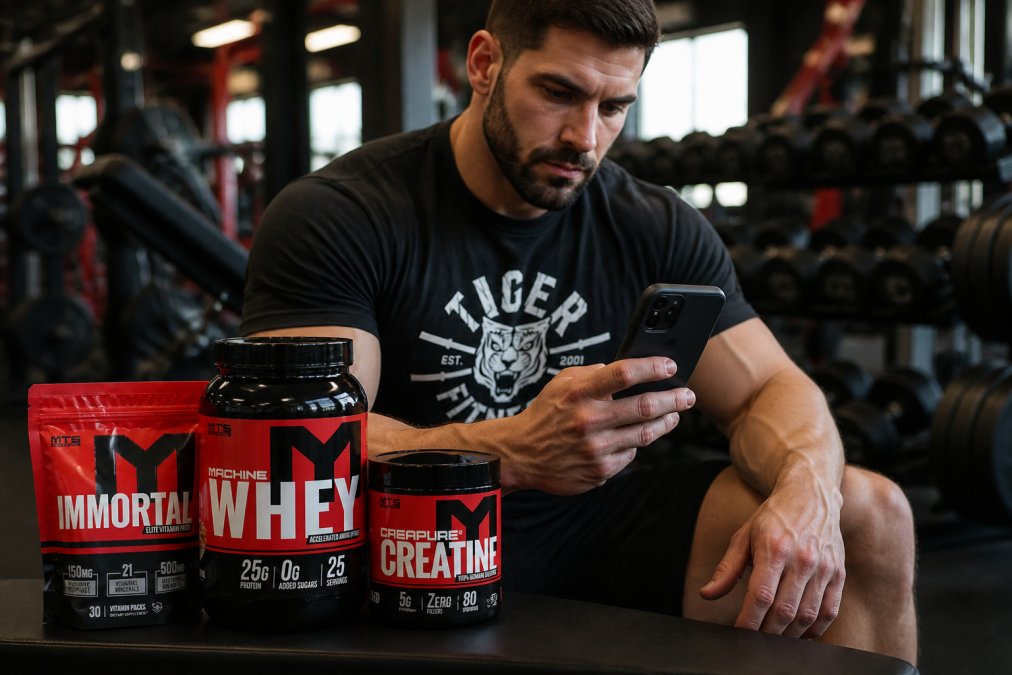
Here's what separates sustainable progress from burnout. A meta-analysis of 16 randomized controlled trials with 2,407 participants found a small to medium positive effect (Hedges' g = 0.42) of gamified fitness apps on physical activity (peer-reviewed research). But standard fitness apps without gamification or personalization showed minimal sustained effects beyond 3 months. That's the critical detail: the app has to be personalized to your goals and track the variables that matter, including your supplement protocol.
Overtraining happens when volume exceeds recovery capacity. Recovery depends on sleep, nutrition, and, critically, supplementation. If your app tracks workouts but ignores your creatine intake, your pre-workout timing, or your protein distribution, you're missing half the equation. The best training apps for muscle building integrate supplement tracking because they understand that training stimulus is only one variable. The other variables are recovery, nutrition, and supplementation.
A study analyzing data from over 515,000 users over two years found that users who started with less than 5,000 steps a day saw increases of 1,000 to 2,000 additional steps daily, with gains sustained at 24 months. That consistency is what matters. Apps that enforce daily logging, including supplement intake, create the consistency loop that drives results.
Watch Out Without supplement tracking integrated into your training app, you're essentially flying blind on recovery. You'll increase volume without knowing if your nutritional support is scaling with it, which is how overtraining injuries happen.
Best Supplement Tracking App Features You Need
Not all training apps handle supplement variety equally. Here's what actually matters when you're evaluating one.
Label scanning and ingredient verification should be non-negotiable. A quality app lets you scan a supplement label with your phone camera and automatically logs the key micronutrients, vitamin D, magnesium, zinc, electrolytes, amino acids. Manual entry is friction that kills compliance. If you're spending 5 minutes typing in supplement data, you'll stop doing it.
Stack optimization is the feature that separates basic logging from intelligent tracking. Your app should understand that creatine monohydrate works best at 5 grams daily, that caffeine timing matters for pre-workout, and that certain micronutrients compete for absorption. A smart app flags these interactions and suggests timing adjustments.
Bioavailability tracking matters more than people realize. Two supplements with identical ingredient lists perform differently based on form, timing, and food intake. The best apps account for this. They know that creatine monohydrate requires consistent daily dosing, that fat-soluble vitamins need fat for absorption, and that beta-alanine has a loading protocol.
Daily dosage management should be automated. You set your supplement protocol once, and the app reminds you when to take what. No guessing, no missed doses, no "did I take my creatine today?" moments.
Research-based recommendations are essential. The app should pull from clinical research on dosing, timing, and stacking. It should tell you why you're taking something, not just remind you to take it.
Integration with wearables and health data closes the loop. Your app should pull data from your fitness tracker or smartwatch, heart rate variability, sleep quality, recovery metrics, and use that to adjust supplement recommendations. If your HRV is low, your app might suggest increased magnesium or adjusted caffeine timing.
| Feature | Why It Matters | What to Look For |
|---|---|---|
| Label scanning | Eliminates manual entry friction | OCR technology that reads supplement labels accurately |
| Stack optimization | Prevents contraindications and improves absorption | Flags nutrient interactions and suggests timing |
| Bioavailability tracking | Accounts for form, timing, and absorption factors | Understands creatine monohydrate vs. other forms |
| Daily dosage management | Ensures consistency and compliance | Automated reminders tied to your schedule |
| Research-based data | Grounds recommendations in clinical evidence | Citations to peer-reviewed studies on dosing |
| Wearable integration | Provides real-time recovery feedback | Connects to Apple Health, Garmin, Oura, Whoop |
Personalized Workout and Supplement Plans: What Works
Generic supplement stacks don't work. A 25-year-old powerlifter has different needs than a 45-year-old trying to maintain muscle while losing fat. A training app that personalizes both your workout and supplement protocol based on your age, sex, goals, and current metrics is what separates mediocre results from exceptional ones.
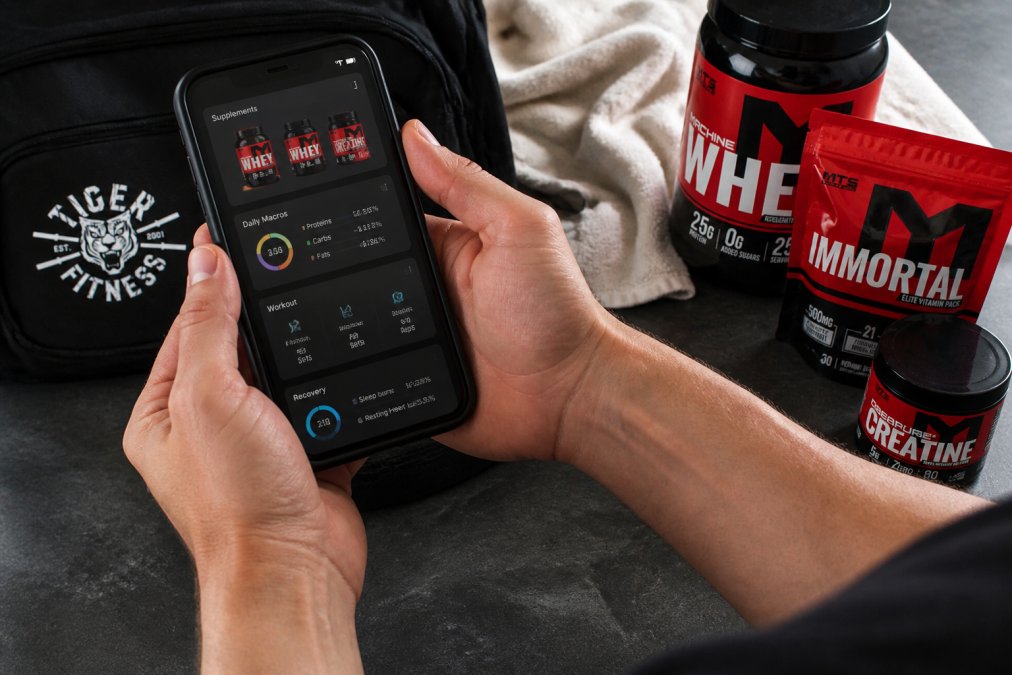
Personalization starts with data collection. The best apps ask the right questions upfront: your age, sex, training experience, injury history, current body composition, and specific goals. Are you building muscle? Cutting fat? Improving athletic performance? Recovering from injury? Each path requires different supplementation.
Age and sex matter significantly. Women's supplement needs differ from men's, iron requirements are higher for women of reproductive age, hormonal support differs, and training response varies. The market is moving away from generic "one pill fits all" approaches to targeted, scientifically informed support based on individual factors.
The app should then build a personalized protocol. For muscle building in a 30-year-old male, that might look like: creatine monohydrate 5g daily, whey protein dosed to hit 1g per pound of bodyweight, a quality multivitamin, magnesium glycinate for sleep, and a pre-workout with proven ingredients. For a 40-year-old woman in a fat-loss phase, the stack shifts: lower protein requirements relative to bodyweight, emphasis on metabolic support, micronutrient density over volume, and recovery focused supplementation.
The critical feature is adjustment. Your app should revisit your protocol every 4-8 weeks based on progress metrics. If you're not recovering, it adjusts magnesium and sleep support. If strength isn't improving despite consistent training, it might suggest a different creatine form or additional beta-alanine. This feedback loop is what makes personalization real instead of theoretical. strength training alternatives.
Pro Tip The best personalized supplement plans track not just what you take, but how your body responds. If your app doesn't adjust recommendations based on your sleep quality, strength progression, or body composition changes, it's not truly personalized, it's just a generic plan with your name on it.
Integration with Wearables and Health Data
Standalone supplement tracking is incomplete. The apps that actually move the needle integrate with wearable health technology, smartwatches, fitness trackers, sleep monitors, and continuous glucose monitors. This integration transforms supplement tracking from a logging exercise into a data-driven optimization system.
Your heart rate variability, sleep quality, and recovery metrics tell you how well your supplementation is working. If your HRV is consistently low despite adequate sleep, your magnesium intake might be insufficient, or your pre-workout timing is interfering with recovery. A training app connected to your wearable data catches this automatically.
Sleep tracking is particularly relevant. A quality app integrates with your sleep data and adjusts your evening supplement protocol accordingly. Low sleep quality? The app might suggest increased magnesium glycinate or adjusted caffeine cutoff time. Consistent good sleep? It maintains your current protocol or optimizes it further.
Recovery metrics from devices like Whoop or Oura provide real-time feedback on whether your supplement stack is supporting recovery. An elevated resting heart rate or low HRV suggests your body needs more recovery support, possibly additional electrolytes, magnesium, or adjusted training intensity. The app flags this and recommends adjustments.
Glucose monitoring integration is emerging as a critical feature. Continuous glucose monitors show how your nutrition and supplementation affect blood sugar stability. This matters for energy, training performance, and fat loss. A smart app uses this data to refine your nutrient timing and supplement choices.
Safety, Contraindications, and Data Privacy
This is where most training apps fail completely. They track supplements but ignore safety.
A quality app flags contraindications. If you're on blood pressure medication, it shouldn't recommend high-dose caffeine without warning. If you're taking a blood thinner, it should flag supplements that affect clotting. If you're on antidepressants, it should note interactions with certain amino acids or herbal supplements.
The app should also track cumulative micronutrient intake. It's easy to exceed safe upper limits when you're taking a multivitamin, a pre-workout, a BCAA supplement, and a magnesium product. A good app totals your daily intake across all supplements and flags if you're approaching or exceeding tolerable upper limits for any nutrient.
Data privacy is non-negotiable. Your health data is sensitive. The app should clearly state what data it collects, how it's stored, and whether it's shared with third parties. Look for apps with end-to-end encryption, transparent privacy policies, and compliance with HIPAA standards if the app shares personal data with a medical professional or other HIPAA Covered Entity.
A training app for supplement variety should also require you to disclose any medical conditions or medications. This isn't intrusive, it's essential. The app uses this information to ensure its recommendations are safe for you specifically.
Watch Out If a supplement tracking app doesn't ask about your medications or medical conditions, it's not taking safety seriously. Never use an app that treats everyone identically when it comes to supplement recommendations.
Verdict: Choosing Your Training App Strategy
The best access to a training app for supplement variety isn't about finding the most feature-rich option. It's about finding an app that treats supplementation as an integrated part of your training system, not an afterthought.
Your training app should:
- Track workouts and supplements together, not separately. The two are inseparable for progress.
- Personalize based on your age, sex, goals, and metrics. Generic recommendations waste your time and money.
- Integrate with wearable health data. Your HRV, sleep, and recovery metrics should inform your supplement protocol.
- Flag safety concerns and contraindications. A responsible app protects you, not just logs data.
- Update recommendations based on progress. If something isn't working after 4-8 weeks, the app should adjust.
- Scan supplement labels accurately. Manual entry kills compliance.
The fitness app market is crowded, but the apps that combine intelligent workout programming with data-driven supplement tracking are rare. Look for one that doesn't just log what you're doing, one that uses data to tell you what you should be doing differently.
At Tiger Fitness, we empower your journey with a dedicated training app. It integrates with your wearables, tracks your supplement intake alongside your workouts, and personalizes recommendations based on your metrics and goals. We also offer free workout plans, diet guides, and fitness calculators to complement app-based tracking, and our supplement selection is built around the stacks that actually work, not marketing hype.
The bottom line: your training app should make supplement tracking frictionless and intelligent. If it doesn't, you'll stop using it. Pick an app that understands that muscle building, fat loss, and performance are driven by the intersection of training, nutrition, and supplementation. That's where real progress happens.
Building muscle without overtraining requires more than willpower, it requires data. A training app that tracks both your workouts and supplement intake gives you that visibility. Tiger Fitness provides the supplements and the app infrastructure to make this system work. Start with our Ultimate Beginner Stack or Total Nutrition Trio to establish a solid foundation, log your protocol in a quality training app, and adjust based on your metrics. That's the formula that works.


=== FAQ ANSWERS (audit these too, same rules) ===
[1] Q: What is the best app to track supplements and vitamins? A: The best supplement tracking app integrates nutrient tracking, label scanning, and personalized recommendations based on your goals. Look for apps that sync with wearables, offer research-based supplement information, and allow you to build custom stacks. Apps that combine workout planning with supplement tracking eliminate the need to toggle between platforms, improving consistency. Your choice depends on whether you prioritize ease of logging, depth of nutrient data, or integration with your training app for a unified health optimization approach.
[2] Q: How can a training app help me optimize my supplement stack? A: A training app with supplement integration tracks your daily intake against your specific goals, whether that's muscle gain, recovery, or performance. The best ones use data from your workouts to adjust recommendations dynamically. For example, if your app logs heavy training volume, it can suggest increased creatine or BCAA intake. Research shows that data-driven wellness approaches improve adherence and results. Integration with wearables adds another layer by monitoring sleep, heart rate variability, and stress to fine-tune your stack for actual recovery needs, not guesswork.
[3] Q: What should I look for in a fitness app that tracks nutrition and supplements? A: Prioritize apps with a comprehensive supplement database, label scanning capability, and the ability to log dosages and timing. The app should allow you to build stacks, track micronutrient intake, and flag potential contraindications or interactions. Look for research-based recommendations tied to your training data, not generic advice. Ensure the app syncs with your wearable for complete health metrics, and verify that your data is encrypted and stored securely. Tiger Fitness offers free fitness calculators and tools to complement app-based tracking by giving you the baseline metrics you need to set realistic supplement and training targets.
[4] Q: Is it better to use separate apps for training and supplement tracking? A: No. A unified app eliminates friction and improves consistency. Studies show that users who must toggle between multiple platforms experience higher abandonment rates due to friction and decision fatigue. A single app that handles workout planning, nutrient tracking, and supplement logging creates a consistency loop, you log one workout, the app adjusts your nutrition targets, and you stay accountable. Separate apps also create data silos, preventing the app from using your training volume to inform supplement recommendations. One integrated platform wins every time.
Frequently Asked Questions
What is the best app to track supplements and vitamins?
The best supplement tracking app integrates nutrient tracking, label scanning, and personalized recommendations based on your goals. Look for apps that sync with wearables, offer research-based supplement information, and allow you to build custom stacks. Apps that combine workout planning with supplement tracking eliminate the need to toggle between platforms, improving consistency. Your choice depends on whether you prioritize ease of logging, depth of nutrient data, or integration with your training app for a unified health optimization approach.
How can a training app help me optimize my supplement stack?
A training app with supplement integration tracks your daily intake against your specific goals, whether that's muscle gain, recovery, or performance. The best ones use data from your workouts to adjust recommendations dynamically. For example, if your app logs heavy training volume, it can suggest increased creatine or BCAA intake. Research shows that data-driven wellness approaches improve adherence and results. Integration with wearables adds another layer by monitoring sleep, heart rate variability, and stress to fine-tune your stack for actual recovery needs, not guesswork.
What should I look for in a fitness app that tracks nutrition and supplements?
Prioritize apps with a comprehensive supplement database, label scanning capability, and the ability to log dosages and timing. The app should allow you to build stacks, track micronutrient intake, and flag potential contraindications or interactions. Look for research-based recommendations tied to your training data, not generic advice. Ensure the app syncs with your wearable for complete health metrics, and verify that your data is encrypted and stored securely. Tiger Fitness offers free fitness calculators and tools to complement app-based tracking by giving you the baseline metrics you need to set realistic supplement and training targets.
Is it better to use separate apps for training and supplement tracking?
No. A unified app eliminates friction and improves consistency. Studies show that users who must toggle between multiple platforms experience higher abandonment rates due to friction and decision fatigue. A single app that handles workout planning, nutrient tracking, and supplement logging creates a consistency loop, you log one workout, the app adjusts your nutrition targets, and you stay accountable. Separate apps also create data silos, preventing the app from using your training volume to inform supplement recommendations. One integrated platform wins every time.
Leave a comment