
Pick This Year's Olympia T-Shirt

Last Updated: August 30, 2026
You hit the gym hard in the morning. By 2 PM, you're dragging. Your afternoon workout is coming, and you've got nothing left in the tank. This isn't weakness, it's biology.
Here's the reality: your body's energy naturally dips in the afternoon. Your core temperature drops, cortisol levels decline, and blood glucose crashes if you haven't fueled properly. At Tiger Fitness, we've tracked what actually works to boost energy for afternoon workouts, and it's not about willpower. It's about strategy.
According to research on exercise performance and dehydration, exercise performance is impaired when an individual is dehydrated by as little as 2% of body weight. That's the margin between a solid workout and a wasted hour. Most people don't realize they're operating at a deficit before they even step foot in the gym.
The seven strategies below are backed by peer-reviewed research and practical experience. They address the root causes of afternoon fatigue: poor hydration, blood sugar crashes, sleep debt, and circadian rhythm misalignment. Implement these, and you'll stop wondering why your afternoon sessions feel flat.
Sleep is where the real work happens. You don't get stronger in the gym, you get stronger in bed.
According to Mayo Clinic Health System research on sleep and athletic performance, collegiate athletes who don't get enough sleep experience significant drops in reaction times and accuracy. One study focusing on basketball free throws and three-pointers found that sleep-deprived athletes can see a drop of 50% in accuracy. With 10 or more hours of sleep, accuracy can increase by 10%, that's a 60% potential difference in performance.
That's not a small detail. That's the difference between a productive session and wasting your time.
Sleep deprivation destroys afternoon performance specifically. Your circadian rhythm naturally dips in the afternoon. Add sleep debt on top of that, and you're fighting an uphill battle. The fix is straightforward: prioritize consistent sleep timing. Go to bed at the same time every night. Wake up at the same time every morning, even weekends.
Here's what matters:
Sleep quality directly impacts afternoon energy. You can't out-supplement poor sleep. Everything else in this guide works better when you're rested.
Dehydration is silent. You don't feel it until performance already tanked.
A meta-analysis concluded that hypohydration, with an average body mass loss of 3.6%, decreases aerobic exercise performance by 2.4%, peak oxygen consumption by 2.4%, and oxygen consumption at lactate threshold by 4.4% (Cadence meta-analysis on hypohydration). That's measurable. That's real.
Most people wait until they're thirsty to drink. By then, you're already dehydrated. Thirst is a lagging indicator.
Start hydrating early in the day. Drink 16-20 oz of water when you wake up. Drink 8 oz every hour until your workout. Two hours before your afternoon session, drink another 16-20 oz. This isn't excessive, it's strategic timing based on how your body absorbs and processes fluid.
During your workout, drink 7-10 oz every 10-20 minutes if you're training hard. The goal is to replace 50-75% of fluid lost through sweat. For afternoon sessions, this is non-negotiable because you're already working against a circadian dip.
Electrolytes matter too. Plain water alone doesn't cut it for sessions over 60 minutes. Sodium helps retain fluid. Potassium supports muscle function. Products like GHOST Energy Drink for hydration and performance combine hydration with caffeine and electrolytes, a practical option for pre-workout fueling.
Track your hydration status: weigh yourself before and after training. For every pound lost, drink 16-24 oz of fluid post-workout. This is how you know you're hydrating properly.
Caffeine works. The data is clear. But timing is everything.
According to the Journal of the International Society of Sports Nutrition study on caffeine and fat oxidation, those who worked out in the afternoon with caffeine burned fat at a 29% higher rate than those who had a placebo. But here's the catch: 67% of athletes experience enhanced sports performance following caffeine consumption, while 33% either report no change or may even suffer adverse effects.
This variability matters. Caffeine isn't a universal solution. But for most people, it works.
The critical variable is timing. Caffeine has a half-life of 5-6 hours. If you drink it at 8 AM, you still have 50% in your system at 1 PM. For an afternoon workout, you need caffeine 30-60 minutes before training. Not earlier.
Dose matters too. Research from the University of Granada's Department of Physiology found that caffeine (about 3 mg/kg) ingested half an hour before aerobic exercise significantly increases the rate of fat-burning, with effects more marked in the afternoon. For a 180-pound person, that's roughly 245 mg of caffeine.
Here's where most people go wrong: they drink energy drinks with breakfast, then expect caffeine to work at 4 PM. It doesn't. The half-life has already kicked in. You're fighting residual caffeine and adenosine receptor saturation.
Timing strategy:
Kristen Chang, Assistant Director of the Master of Science in Nutrition and Dietetics program at Virginia Tech's Department of Human Nutrition, Foods, and Exercise, warns: "In excess, [caffeine] can leave one feeling jittery, anxious, overstimulated, and stressed. Excess caffeine may lead to headaches, dehydration, gastrointestinal issues, and disruption of normal sleeping patterns."

Respect the dose. More isn't better. 200-300 mg is the sweet spot for most athletes.
Your pre-workout meal timing determines whether you have fuel or just stomach distress.
Pre-workout carbohydrates improved total training volume when sessions lasted longer than 45 minutes or involved more than 8-10 sets, according to a meta-analysis by King et al. covering 21 controlled crossover trials. But timing and composition matter.
Eat 2-3 hours before your workout: a full meal with protein, complex carbs, and healthy fats. Eat 30-60 minutes before: a small snack with fast-digesting carbs and some protein.
For afternoon workouts specifically, a high-protein snack with at least 5 grams of protein can help restore energy by elevating glucose levels in a sustained manner, preventing energy slumps. Examples include fat-free plain or Greek yogurt, whole-grain crackers with cheese, or hummus with vegetables.
The post-lunch slump is real. Blood glucose crashes around 2-3 PM if you ate a heavy lunch. Combat this with a small snack 1-2 hours before your workout. This restabilizes blood glucose without causing a second crash.
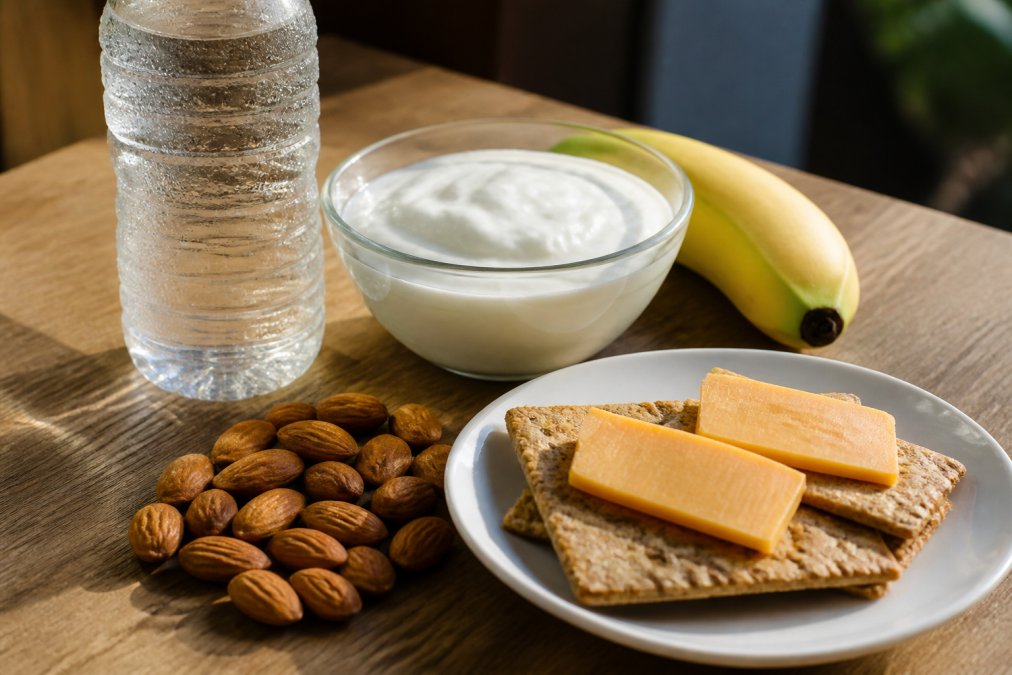
Best pre-workout snack options:
Avoid high-fat, high-fiber snacks immediately before training. They slow digestion and divert blood to your stomach instead of your muscles. Save the heavy foods for post-workout recovery.
For convenience, Celsius On-The-Go Sticks for pre-workout energy combine caffeine, B vitamins, and carbs in a portable format. Mix one stick with water 30 minutes before your session.
The afternoon slump is a circadian event. Your body temperature peaks in late morning and drops in the afternoon. Cortisol declines. Adenosine accumulates. This is biology, not laziness.
You can't eliminate the slump. You can work around it.
A brisk 10-minute walk not only increased energy, but the effects lasted up to 2 hours according to experiments by Robert Thayer, PhD, at California State University, reported by WebMD research on movement and energy. When the daily 10-minute walks continued for 3 weeks, overall energy levels and mood were lifted.
This is powerful. A 10-minute walk costs nothing. It requires no equipment. It works.
The mechanism: movement increases blood flow, delivers oxygen to cells, and stabilizes blood glucose. It also releases endorphins and increases norepinephrine, neurotransmitters that combat fatigue.
If you're desk-bound, take a walk at 2 PM. Not at 3:30 PM when your workout is an hour away. At 2 PM. This resets your energy baseline before your training session. You'll walk into the gym already elevated.

Micro-movement strategy for desk workers:
This staggered approach keeps your energy stable instead of crashing and recovering. You're managing your circadian rhythm, not fighting it.
Light exposure matters too. Afternoon sunlight suppresses melatonin and increases alertness. If you're training indoors, take your walk outside. The combination of movement and natural light is more effective than either alone.
Your body is strongest at specific times. Train with your biology, not against it.
An April 2026 analysis of 200,000 Nutrola users indicated that strength and power output typically peak between 4 PM and 6 PM for most individuals, aligning with the body's core temperature peak in the late afternoon. This isn't random. Your neuromuscular system literally functions better in late afternoon.
Muscle temperature is higher. Reaction time is faster. Grip strength is stronger. Testosterone levels are elevated. Your body is optimized for high-intensity work in the late afternoon.
A study published in Open Heart in 2026 found that aligning exercise with a person's natural body clock (circadian rhythm) significantly improved cardiovascular health, fitness, and metabolic markers. Participants who trained in sync with their internal rhythm saw substantially greater improvements than those who trained at the opposite time, even with the same workout program.
This is why afternoon workouts make sense for strength training and hypertrophy. You're training when your body is strongest. You'll lift heavier, perform more reps, and accumulate more training volume.
If you're a morning person genetically (early chronotype), you still benefit from afternoon training for strength work. Your circadian rhythm matters more than your preference.
Schedule your heaviest compound lifts, squats, deadlifts, bench press, for 4-6 PM. This is when your nervous system is most alert and your muscles are primed for high tension.
Light training, cardio, and mobility work can happen anytime. But if you have limited time and need to choose, train hard in the afternoon.
Afternoon energy crashes aren't inevitable. They're the result of poor hydration, blood sugar mismanagement, sleep debt, and training against your circadian rhythm.
Fix these four variables, and you'll transform your afternoon workouts. Start with sleep, it's the foundation. Add strategic hydration and caffeine timing. Fuel properly with small, well-timed snacks. Align your training with your body's natural peak performance window.
Use FREE TOOLS & FITNESS CALCULATORS to dial in your exact hydration needs, caffeine timing, and pre-workout nutrition based on your bodyweight and training intensity. These tools remove the guesswork and let you systematize your afternoon performance.
Get started with Tiger Fitness and stop leaving gains on the table.
Start with the basics: hydration (even 2% dehydration impairs performance), sleep (10+ hours increases accuracy by 10%), and strategic snacking with protein and complex carbs. A brisk 10-minute walk 2-3 hours before your workout increases energy for up to 2 hours. Timing matters, align your workout with your natural circadian rhythm peak (typically 4-6 PM). Manage stress and cortisol levels through breathing exercises. These fundamentals work together; skip any one and you'll feel the difference.
Consume caffeine about 30 minutes before your afternoon session. Research shows caffeine (around 3 mg/kg body weight) ingested before aerobic exercise significantly increases fat-burning, with effects more pronounced in the afternoon. About 67% of athletes experience enhanced performance from caffeine, though 33% see no benefit or adverse effects. Caffeine has a half-life of 5-6 hours, so afternoon timing avoids sleep disruption. Avoid exceeding 400 mg daily to prevent jitters, anxiety, and gastrointestinal issues.
Dehydration as small as 2% of body weight impairs exercise performance. A meta-analysis found hypohydration averaging 3.6% body mass loss decreases aerobic performance by 2.4%, peak oxygen consumption by 2.4%, and oxygen consumption at lactate threshold by 4.4%. Proper hydration maintains blood flow, oxygen delivery, and mental focus. Drink consistently throughout the day, not just before your workout. Include electrolytes if exercising longer than 60 minutes to maintain electrolyte balance and prevent fatigue.
Eat a balanced snack 1-2 hours before your workout combining lean protein (at least 5 grams) with complex carbohydrates. Greek yogurt with whole grain crackers, hummus with vegetables, or a banana with almonds work well. Complex carbs provide steady glucose release without blood sugar crashes. Pair them with healthy fats for longer-lasting fuel. Avoid simple sugars that spike blood glucose and cause energy crashes. Pre-workout carbohydrates improve total training volume for sessions lasting 45+ minutes or involving 8-10+ sets.
{"one"=>"Select 2 or 3 items to compare", "other"=>"{{ count }} of 3 items selected"}




Leave a comment