







Can a mass gainer cause bloating?
Yes, a mass gainer can cause bloating, particularly when you drink a large serving, consume lactose you do not tolerate, or use a formula containing fermentable ingredients. The milk, added ingredients, and speed of drinking also matter—not just the powder. Reduce the digestive load and check the label rather than treating discomfort as a necessary part of gaining muscle.
TL;DR
- Does mass gainer cause bloating? Yes—serving size, lactose, fermentable ingredients, and swallowed air can contribute.
- Tiger Fitness mass gainer shoppers should compare ingredient labels, not assume every weight-gain shake digests the same.
- For mild symptoms, pause the shake, then change one preparation variable at a time after symptoms settle.
- Persistent bloating needs medical assessment; severe pain, vomiting, or inability to pass gas needs urgent attention.
Can a mass gainer cause bloating?
Mass gainers can cause bloating, but the symptom does not identify the cause. A large drink can leave you uncomfortably full, while poorly absorbed carbohydrates can contribute to intestinal gas. Those are different problems, even when both feel like a swollen stomach.
Start with what actually went into your shaker. Powder mixed with milk, oats, fruit, and nut butter is a different meal from the same powder mixed with water. You cannot judge the powder fairly without accounting for the whole drink.
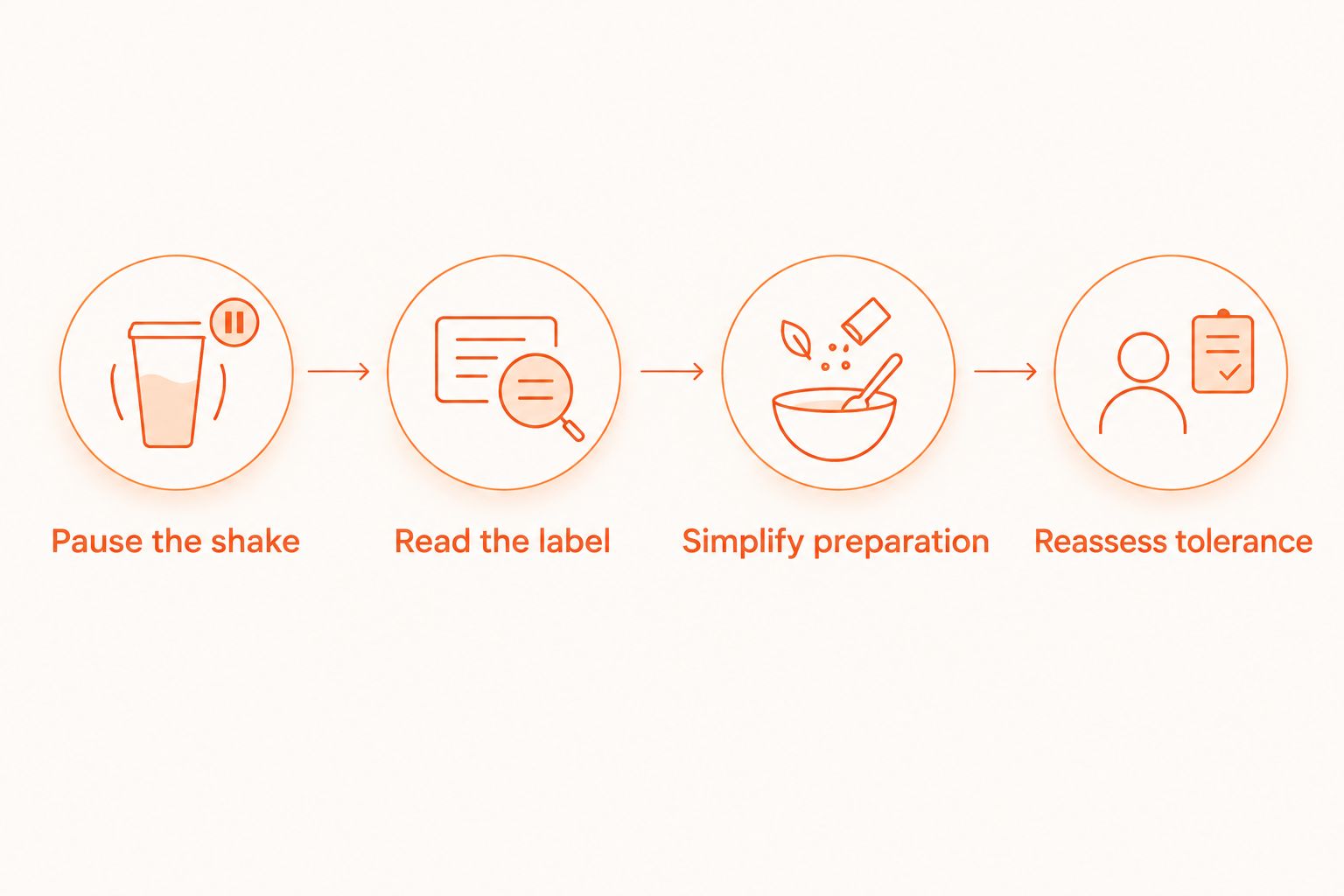
Use this sequence for mild, occasional discomfort—not for severe symptoms or a suspected allergic reaction:
- Pause the shake. Let symptoms settle rather than drinking another serving through discomfort.
- Read the label. Check serving size, milk ingredients, sugar alcohols, added fibers, and allergen information.
- Simplify preparation. Remove optional additions and use a permitted mixing liquid you already tolerate.
- Reassess tolerance. If you try the product again, use a smaller amount within label directions and change only 1 variable at a time.
For broader bulking guidance, see how to use a mass gainer to bulk up. Your calorie plan should support training without repeatedly disrupting meals or workouts.
Why this matters
Bloating is not proof that a mass gainer is working. Neither is an uncomfortable stomach a reliable sign that you ate enough to grow. Muscle gain depends on training and nutrition over time, not on how stuffed you feel after a shake.
A useful supplement makes your nutrition plan easier to follow. If drinking it leaves you skipping dinner, interrupting training, or dealing with diarrhea, reassess the plan instead of forcing the serving.
For your 2026 bulking plan, digestive tolerance belongs beside calories and protein on the checklist. The goal is repeatable intake, not winning a battle with your shaker.
Why mass gainer bloating varies
Different formulas and preparation habits create different digestive demands. Check these factors before deciding that every mass gainer will cause the same problem:
- Serving size: A large amount of powder and liquid can create uncomfortable fullness, especially alongside a substantial meal.
- Lactose exposure: Milk ingredients and dairy mixing liquids can trigger gas, bloating, or diarrhea in people with lactose intolerance.
- Sugar alcohols: Ingredients such as sorbitol and maltitol can contribute to gas and loose stools, depending on the amount and individual tolerance.
- Added fermentable fiber: Inulin and chicory-root fiber can increase gas, particularly when your intake rises abruptly.
- Drinking habits: Gulping a shake can increase swallowed air; carbonated mixing liquids add another source of gas.
- Your underlying digestion: Constipation, food intolerances, and gastrointestinal conditions can affect symptoms independently of the supplement.
These factors are possibilities to investigate, not a diagnosis. A label tells you what a product contains; it cannot establish why your abdomen hurts.
Large servings: fullness is not always excess gas
A thick shake taken immediately after a large meal adds volume to an already full stomach. That can feel uncomfortable without proving that an ingredient is fermenting or that your body cannot digest protein.
Pay attention to the sensation. Upper-abdominal heaviness right after drinking is different from later gas accompanied by bowel changes, although timing alone cannot diagnose either problem.
If the label permits flexible portions, consider 2 smaller drinks instead of 1 large shake at separate times. Keep the total amount within label directions, and do not use this approach to push through recurring symptoms.
Lactose: check the powder and the mixing liquid
Lactose intolerance occurs when your body does not digest lactose adequately. Undigested lactose reaches the colon, where bacteria break it down and produce gas; it can also contribute to diarrhea.
Check both sources of dairy. Switching to water removes lactose from the mixing liquid, but it does not remove lactose already present in the powder.
Milk allergy is different from lactose intolerance. If you have a milk allergy, do not assume that a lactose-free dairy product is safe, and do not experiment with a milk-containing supplement without appropriate medical guidance.
Sweeteners and fibers: names matter more than front-label claims
A sugar-free claim does not tell you whether a shake contains sugar alcohols. Likewise, added fiber does not guarantee that a product will feel comfortable in your stomach.
Look for specific ingredients rather than blaming all sweeteners. Sorbitol and maltitol are not interchangeable with every other sweetener, and a reaction to one formula does not establish an intolerance to an entire category.
For a 2026 label check, read the ingredient list, Nutrition Facts or Supplement Facts, and allergen statement together. The product name alone cannot answer a digestion question.
Which shake changes are worth trying?
Choose the change that matches the suspected problem. Switching everything at once makes it harder to learn whether the issue was milk, serving size, or an added ingredient.
| Option | Best for | Advantage | Limitation |
|---|---|---|---|
| Smaller portions | Fullness after a large shake | Reduces the amount consumed at once | Does not remove an ingredient you cannot tolerate |
| Water instead of regular milk | Checking whether the mixer contributes lactose | Removes the milk contribution | Does not remove dairy ingredients from the powder |
| Simpler homemade shake | Controlling individual ingredients | Lets you build around foods you tolerate | Requires preparation and nutrition tracking |
| Food-based snacks | People who dislike large liquid meals | Avoids relying on a concentrated shake | Still requires attention to portions and food tolerance |
| Protein powder with separate meals | People who need protein but prefer food for extra calories | Separates protein intake from the rest of the meal plan | Protein powder can still contain digestive triggers |
None of these options guarantees relief. Smaller portions address volume; changing the mixer addresses the mixer. Neither solves every cause of abdominal bloating.
If you consider MTS Nutrition Machine Whey Protein as a separate protein option, check its current ingredient and allergen information first. It is not a treatment for mass-gainer bloating, and switching powders does not establish the cause of your symptoms.
Tiger Fitness is best for fitness enthusiasts shopping for sports nutrition supplements, not for diagnosing persistent digestive symptoms. Use the retailer for product information and a qualified clinician for recurring health concerns.
How can you check what is causing the discomfort?
A simple record is more useful than repeatedly buying a different tub. Track what you consumed and what happened afterward, while keeping your normal meals and training as consistent as practical.
Use the following process only when symptoms are mild and have settled. Do not deliberately repeat an exposure that caused a suspected allergic reaction.
Pause the shake
Stop the suspected product while you assess the pattern. Keep eating foods you tolerate rather than replacing the shake with another unfamiliar supplement immediately.
If bloating continues without the shake, that matters. The supplement might not be the only contributor, and persistent symptoms deserve assessment rather than increasingly restrictive food rules.
Read the label
Record the product, flavor, actual powder amount, mixing liquid, and additions. Different flavors can have different ingredient lists, so use the package you are consuming.
Check whether the stated serving contains multiple scoops. A scoop and a serving are not automatically the same thing; follow the package's measurement instructions rather than guessing from shaker size.
Simplify preparation
If you retry after mild symptoms resolve, leave out optional additions initially. Adding oats, fruit, nut butter, milk, and another supplement together introduces several possible explanations for discomfort.
Use a mixing liquid you already tolerate and that fits the product directions. Drink at a comfortable pace rather than rushing to finish before your next activity.
Reassess tolerance
Record whether symptoms return, how they feel, and whether bowel habits change. Note fullness, visible swelling, belching, gas, pain, and diarrhea separately instead of labeling every sensation as bloating.
A symptom log is evidence for a conversation, not a home diagnostic test. If discomfort keeps returning, stop repeating the experiment and speak with a healthcare professional.
Keep the same checklist when comparing formulas in 2026. A different flavor, mixer, or portion can change the experience, so record the actual preparation rather than only the brand name.
How long does mass gainer bloating last?
There is no universal duration for mass-gainer bloating. It depends on the cause, the amount consumed, and your digestion; a fixed waiting period cannot tell you whether symptoms are harmless.
Do not keep taking the product simply because someone says your stomach will adapt. Symptoms that persist, recur, worsen, or affect eating deserve medical advice.
Does bloating mean a mass gainer is making you gain fat?
Bloating does not establish fat gain. Gas, digestive contents, and abdominal distension can change how your stomach looks without representing a change in body fat.
Assess your bulking progress across consistent measurements over time, not immediately after a shake. For your 2026 training goals, comfort and longer-term progress are more useful than a post-drink mirror check.
Should you take digestive enzymes for mass gainer bloating?
Digestive enzymes are not a universal fix for mass-gainer bloating. Lactase helps digest lactose, but it does not address swallowed air, every fermentable ingredient, or a milk allergy.
Do not add multiple digestive supplements to keep using a product that repeatedly causes symptoms. Ask a clinician or registered dietitian whether a specific approach fits the suspected cause.
When should you stop experimenting and get medical help?
Seek urgent medical care for severe or worsening abdominal pain, repeated vomiting, or abdominal swelling with an inability to pass stool or gas. Hives, throat swelling, or breathing difficulty after a shake require emergency attention because they can indicate a serious allergic reaction.
Arrange medical evaluation for recurrent bloating, persistent diarrhea or constipation, blood in your stool, unexplained weight loss, or symptoms that interfere with eating. Do not assume a supplement explains everything simply because symptoms appeared around the same time.
Bring the product label and your symptom record. Include other supplements, medications, and mixing ingredients so the clinician can assess the full picture.
FAQ
Does mass gainer cause bloating even if I mix it with water?
Yes, mass gainer can cause bloating when mixed with water because serving size and ingredients in the powder still matter. Water removes the milk contribution, not lactose or other potential triggers already in the formula.
Is it normal to feel bloated every time I take a mass gainer?
Repeated bloating is a reason to reassess the product and seek advice, not something you need to accept for muscle gain. Stop taking it if symptoms keep returning, and discuss persistent symptoms with a healthcare professional.
Can I split my mass gainer into smaller servings?
Smaller portions are an option when the product directions permit them, especially if a large shake causes uncomfortable fullness. They do not make an allergen safe or eliminate an ingredient intolerance.
Is a dairy-free mass gainer guaranteed not to cause gas?
No, a dairy-free mass gainer is not guaranteed to prevent gas. Added fermentable fibers, sugar alcohols, portion size, and your underlying digestion can still contribute.
Should I switch to whey protein if my mass gainer makes me bloated?
Switching to whey protein does not guarantee relief because the new powder can still contain ingredients you do not tolerate. Compare the actual labels and decide separately how you will meet your calorie needs.
Can I keep taking a mass gainer if it gives me diarrhea?
Stop the suspected product if it causes diarrhea rather than pushing through it. Persistent diarrhea, dehydration, blood in your stool, or significant pain needs medical assessment.
What should I check before buying a mass gainer in 2026?
For a 2026 mass-gainer purchase, check the current serving size, ingredients, allergen statement, and preparation directions. Choose around your nutrition needs and known tolerances rather than assuming a larger serving is better.
One last thing
A smaller shake you tolerate is more useful than a larger shake that repeatedly disrupts your meals. Before replacing a whole nutrition plan, check whether the problem starts with the powder, the mixer, or the amount consumed at once.
Tiger Fitness shoppers should apply that same standard to every sports nutrition purchase: match the product to your goals, read the current label, and do not confuse discomfort with progress.
This article provides general nutrition information, not a diagnosis or individualized treatment advice. Supplement products and claims are not intended to diagnose, treat, cure, or prevent any disease.
Leave a comment