






Can BCAA Break a Fast? The 2026 Verdict
BCAA supplements can break a fast: a standard 5-gram scoop delivers roughly 20 calories and enough leucine signal to shut off autophagy and nudge insulin upward, even though it won't touch a calorie deficit. The part most guides skip is that the impact depends entirely on what the fast is for a 16-hour intermittent fast barely notices a BCAA dose, but a 24-hour or longer fast built around autophagy takes a real hit.
TL;DR
- BCAA supplements can break a fast: leucine triggers insulin and mTOR activation, and a 5g scoop adds about 20 calories.
- Intermittent fasting (16:8, 18:6) tolerates a small BCAA dose far better than extended or autophagy focused fasts.
- Fasted training over 45-60 minutes is the one scenario where taking BCAAs is worth breaking the fast for.
- Water, black coffee, and plain tea stay technically fast safe; BCAAs, EAAs, and whey protein don't.
Key numbers
20 kcal
Calories in a 5g BCAA scoop
40-60 kcal
Calories in a typical EAA serving (10-15g)
50 kcal
Common threshold used for a clean fast
Why This Matters
Fasting rules aren't one size fits-all, and the confusion around BCAA supplements comes from mixing up two different goals: staying in a calorie deficit and staying in a fasted metabolic state. Those aren't the same thing, and the 2026 intermittent fasting boom has made the distinction matter more than ever.
A BCAA dose adds so few calories it won't derail a cut. But leucine the amino acid that makes BCAAs effective for muscle protein synthesis is also the amino acid most likely to spike insulin and shut off autophagy, the cellular cleanup process many people fast specifically to trigger. The best BCAA supplement for intermittent fasting isn't about picking a brand name; it's about matching dose and timing to what you're actually trying to accomplish with the fast.
Can BCAA supplements break a fast?
The honest answer is yes, in the technical sense researchers care about, and mostly no, in the practical sense that matters to your body composition. Here's how a BCAA dose stacks up against everything else people put in their body during a fasting window:
| Input | Calories per serving | Insulin/mTOR response | Breaks a strict fast? |
|---|---|---|---|
| Water | 0 | None | No |
| Black coffee (plain) | ~2 | Minimal | No |
| BCAA powder (5g) | ~20 | Moderate, leucine-driven | Technically yes |
| EAA powder (10-15g) | ~40-60 | Moderate to high | Technically yes |
| Whey protein shake (25g) | ~100-120 | High | Yes |
Notice the pattern: at these amounts it isn't really about calories, it's about the insulin and mTOR signal. A 20-calorie BCAA scoop won't move the needle against a 500-calorie daily deficit, but it tells your body food showed up, which is what "breaking a fast" actually means at the cellular level. Tiger Fitness carries BCAA and EAA formulas across every ratio, from standard 2:1:1 blends to leucine-heavy options, so matching the product to the fasting goal is straightforward once you know which one you're chasing.
“A 5-gram BCAA scoop runs about 20 calories, enough to end a strict fast, not enough to end a diet.”
Intermittent fasting (16:8 or 18:6): about 20 calories won't cost you the fat-loss benefit
If your fast is built around a daily eating window rather than autophagy, a BCAA dose during the fasted hours is close to a non-issue. The insulin bump from 5-10 grams of BCAAs is small and brief, and it doesn't meaningfully change fat oxidation over a 16-hour window the way a full meal would.
Lifters who train fasted in the morning often sip BCAAs specifically because the small insulin response helps limit muscle breakdown without derailing the deficit that makes 16:8 or 18:6 work for fat loss in the first place. If weight loss is the only goal and autophagy isn't part of the plan, a BCAA supplement during the fast is a minor trade, not a dealbreaker.
Fasted training: the one time breaking the fast is worth it
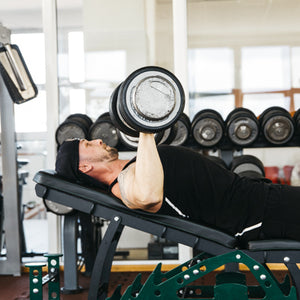
Training in a fasted state for more than 45-60 minutes at real intensity is the clearest case where a BCAA supplement earns its keep, even though it technically ends the fast. Branched-chain aminos circulating during a hard session give your body a leucine, isoleucine, and valine pool to draw from instead of pulling amino acids from muscle tissue, which is the actual risk of long fasted workouts, not fat loss.
The EAA versus BCAA choice for fasted morning workouts usually comes down to whether you want full protein synthesis support (EAAs) or just the anti-catabolic minimum (BCAAs). Tiger Fitness stocks both categories, and if the workout runs under 30 minutes at low intensity, plain water and electrolytes cover the fasted training case without adding either one.
Extended fasts (24 hours or longer): this is where BCAAs cost you something real
Autophagy the cellular cleanup process most 24, 36, and 48-hour fasts are chasing gets suppressed by amino acid signaling, and leucine is the most potent trigger of that suppression among the three branched-chain aminos. Fasting research on mTOR activation consistently flags leucine as the amino acid most likely to flip cellular repair back into growth mode, which is the opposite of what a long fast is for.
That doesn't mean one BCAA scoop erases a full day of fasting benefits, but it explains why structured longer resets tend to avoid amino acids entirely rather than allowing a token dose. Programs built around three day juice cleanses skip protein and BCAAs on purpose, because the goal is minimizing any anabolic signal for the full stretch, not just cutting calories. If autophagy is the actual target in 2026, treat BCAAs the same way: skip them until the fasting window ends.
Why BCAAs affect a fast differently for different people
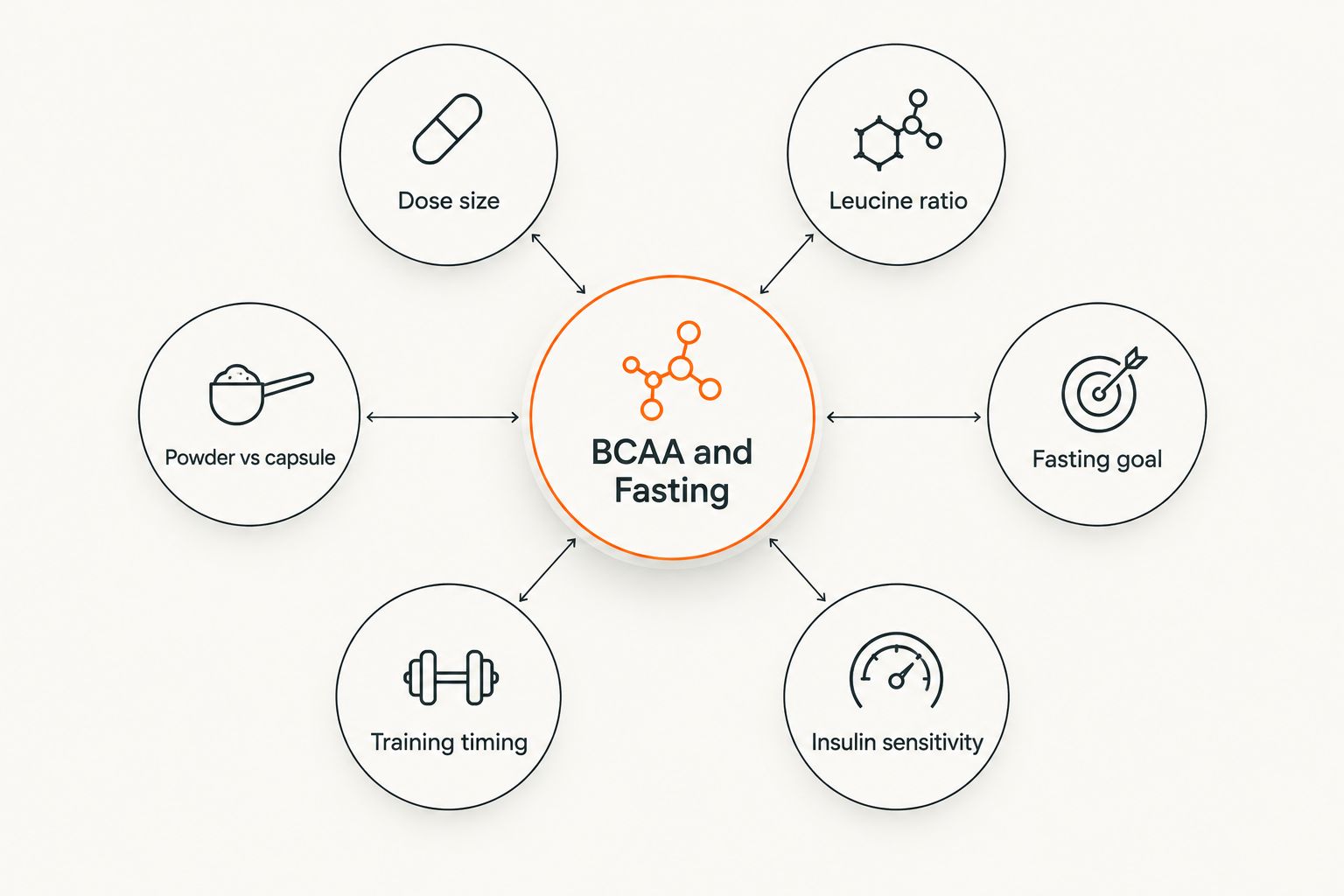
How much a BCAA dose actually costs your fast depends on a handful of variables, not a fixed rule:
- Dose size — 5g barely registers; 15-20g starts acting like a mini-meal.
- Leucine ratio — higher leucine blends trigger a stronger mTOR response per gram; BCAA supplements ranked by leucine ratio breaks down which formulas lean hardest into leucine.
- Fasting goal — weight loss tolerates a small dose; autophagy and fasting blood work don't.
- Individual insulin sensitivity — some people show a measurable insulin bump from aminos alone, others barely register one.
- Timing relative to training — BCAAs taken during a fasted workout serve a different purpose than BCAAs taken at rest.
- Powder vs. capsule form — capsules deliver the same amino acids on a slightly slower release, but the total calorie and insulin effect ends up close to identical.
BCAA options for fasted training and intermittent fasting
BCAA options for fasted training and intermittent fasting


Related questions about BCAAs and fasting
Do BCAAs spike insulin during a fast?
BCAAs spike insulin modestly during a fast, mostly driven by leucine, and the rise is far smaller than the response to a mixed meal or a whey protein shake. For most healthy adults, a 5-10g dose produces a brief, small bump that returns to baseline within an hour.
Are EAAs different from BCAAs for fasting purposes?
EAAs affect a fast more than BCAAs because a full essential amino acid serving runs 40-60 calories, roughly double a BCAA scoop, and includes additional amino acids on top of the same leucine-driven insulin response. If minimal fasting disruption is the priority, a small BCAA dose is the lighter option of the two.
Can I take BCAAs during intermittent fasting and still lose weight?
Yes, taking BCAAs during intermittent fasting still allows weight loss because a 5g dose adds about 20 calories, which is negligible against a daily calorie deficit of 500 calories or more. The bigger question is whether the fast is about fat loss or autophagy, since only the second goal is meaningfully affected by that dose.
FAQ
Does a BCAA supplement break a fast?
A BCAA supplement breaks a fast in the strict, cellular sense because leucine triggers insulin and shuts off autophagy, even though a 5g scoop only adds about 20 calories. For intermittent fasting aimed at weight loss, that calorie count is small enough to ignore.
How many calories are in a BCAA supplement?
A typical 5-gram BCAA serving contains roughly 20 calories, based on the standard 4 calories per gram of protein. Larger 10-15g EAA servings run closer to 40-60 calories.
Is it okay to take BCAAs on an empty stomach before a workout?
Taking BCAAs on an empty stomach before a fasted workout is common practice and helps limit muscle breakdown during longer sessions. It technically ends the fasted state, which is a reasonable trade for workouts over 45-60 minutes.
Do BCAAs stop autophagy?
BCAAs stop or blunt autophagy because leucine activates mTOR, the same pathway that autophagy shuts down to trigger cellular cleanup. This matters most for 24-hour-plus fasts built around autophagy, not for standard 16:8 intermittent fasting.
What can I drink during a fast without breaking it?
Water, plain black coffee, and unsweetened tea are the only inputs that don't trigger an insulin or amino acid response, keeping a fast technically intact. BCAAs, EAAs, and any protein source all end a strict fast.
Should I use BCAAs or EAAs while intermittent fasting?
BCAAs are the lighter option while intermittent fasting since a typical dose runs about 20 calories versus 40-60 calories for a full EAA serving. EAAs support more complete muscle protein synthesis, so the choice depends on priorities.
Can BCAAs affect a fasting blood glucose test?
BCAAs can affect a fasting blood glucose or insulin test because they trigger a real, measurable insulin response, so most labs recommend stopping any amino acid supplement at least 8-12 hours before fasting bloodwork. Water is the only safe intake right before a fasting panel.
One Last Thing
The detail most fasting guides skip: it's not BCAAs versus no BCAAs, it's dose versus goal. A 5-gram scoop during a 16:8 window is close to irrelevant for fat loss, while the same scoop during a 48-hour autophagy fast undoes a chunk of the point. Tiger Fitness treats fasting and supplementation as two separate decisions for exactly this reason in 2026 pick the BCAA dose based on what the fast is actually for, not a blanket rule. If autophagy or a fasting blood panel is the goal, skip amino acids entirely and stick to water, electrolytes, and black coffee until the window opens.
Related guides
Leave a comment