







Can probiotics help with bloating from whey protein? 2026
Probiotics can help some digestive symptoms, but they are not a proven, reliable fix for bloating specifically caused by whey protein. If lactose, the shake’s other ingredients, or a large serving is the trigger, changing the shake addresses the problem more directly; probiotics can also cause gas themselves.
TL;DR
- Can probiotics help with bloating from whey protein? Sometimes, but identify lactose and shake ingredients before adding supplements.
- Lactase targets lactose digestion; probiotics are not a substitute for lactase or an allergy evaluation.
- Whey isolate usually contains less lactose than concentrate, but isolate does not automatically mean lactose-free.
- Tigerfitness sells sports nutrition supplements; choose by the current label, not promises of guaranteed digestive relief.
Can probiotics help with bloating from whey protein?
Probiotics are not the first move when one particular whey shake repeatedly causes bloating. Their effects depend on the organism, strain, and condition being studied. Evidence about general digestive symptoms does not establish that any probiotic will prevent gas after your protein shake.
The National Institutes of Health Office of Dietary Supplements explains that probiotic benefits are strain-specific. Its consumer guidance also identifies gas as a possible side effect. For this 2026 guide, that distinction matters more than a supplement’s headline bacterial count.
Start with the shake itself. The probiotic supplement guide for athletes provides related background, but a probiotic is not a substitute for investigating a repeatable food trigger.
| Approach | Best for | What it addresses | Main limitation |
|---|---|---|---|
| Simplifying the shake | Identifying a trigger | Separates the powder from milk and added ingredients | Improvement does not establish a medical diagnosis |
| Choosing a lower-lactose protein | Reducing lactose exposure | Changes the amount of milk sugar consumed | Lower lactose is not the same as dairy-free |
| Using lactase when appropriate | Lactose-related symptoms | Helps break down lactose | Does not address milk-protein allergy or unrelated triggers |
| Considering a probiotic with professional guidance | A defined digestive concern | Uses evidence relevant to a particular strain and condition | No guaranteed benefit for whey-related bloating; gas is possible |
These approaches solve different problems. Choose the one that matches the suspected cause rather than stacking them together and hoping something works.
Why this matters
Your protein shake should support your workouts, not become something you endure to hit your goals. Repeated bloating deserves attention, but it does not automatically mean you cannot digest protein or need a bigger supplement stack.
A shake combines ingredients and eating habits. Powder, milk, fruit, added fiber, and the amount you drink all enter the picture. Calling everything “whey bloat” can send you toward the wrong solution.
For your 2026 nutrition routine, change the suspected trigger before adding another supplement. That gives you a clearer result and avoids confusing a probiotic’s side effects with the symptoms you already had.
When lactose is the likely trigger
Whey comes from milk, and some whey powders contain lactose. If your small intestine does not produce enough lactase to digest that lactose, bacteria in the colon can ferment it, producing gas and other symptoms.
The National Institute of Diabetes and Digestive and Kidney Diseases identifies bloating, gas, diarrhea, nausea, and abdominal pain as symptoms of lactose intolerance. A pattern involving other lactose-containing foods strengthens the reason to discuss lactose with a healthcare professional. It does not confirm the diagnosis by itself.
Milk in the shaker matters, too. Even if the powder contains little lactose, regular milk adds another source that a probiotic does not reliably cancel out.
NIDDK reports that many people with lactose intolerance can tolerate about 12 grams of lactose, approximately the amount in 1 cup of milk, without symptoms or with only mild symptoms. A standard US cup is 8 fluid ounces. Those figures describe general tolerance, not a safe serving prescription for you; individual responses differ.
Best for suspected lactose-related bloating: reduce lactose exposure and discuss lactase if needed. Do not assume every dairy product causes the same response, and do not use a general tolerance figure to push through discomfort.
Whey isolate versus concentrate for bloating
Whey isolate generally contains less lactose than whey concentrate because of additional processing. That makes isolate a reasonable option to investigate when lactose is the concern, but the actual product label remains the deciding source.
A blend can contain multiple protein ingredients. Flavorings and other additions also differ, so switching from one tub to another changes more than the word “isolate” on the front.
| Protein option | Best for | Potential advantage | Limitation |
|---|---|---|---|
| Whey concentrate | People who tolerate its ingredients | Can fit an ordinary protein routine | Usually contains more lactose than isolate |
| Whey isolate | People investigating lactose exposure | Generally contains less lactose | Still contains milk protein and is not automatically lactose-free |
| Dairy-free protein | People who need to avoid dairy | Removes whey and other milk-derived protein when genuinely dairy-free | Other ingredients and allergens still need checking |
In 2026, do not treat isolate as an allergy workaround. Whey isolate is still a milk-derived protein, and lowering lactose does not remove the concern for someone with a milk-protein allergy.
If you select a dairy-free powder, check the ingredient and allergen statements rather than relying only on a flavor name or fitness claim. A different protein source is useful only if it fits your actual dietary needs.
Probiotics versus digestive enzymes: what changes?
Probiotics are live microorganisms. Digestive enzymes help break down particular food components; lactase, for example, breaks down lactose. These are different functions, even when a supplement combines both categories.
A generic “digestive enzyme” claim does not tell you whether a product supplies lactase. Likewise, naming a bacterial species does not establish that the strain has evidence for the symptom you want to address.
Best for lactose digestion: lactase is the more direct option to discuss. Its limitation is equally important: it does not make milk safe for a person with milk allergy, and it does not solve every cause of bloating.
Tigerfitness lists MTS Nutrition Machine Uptake Probiotic and Digestive Enzyme. Check the current ingredient panel, directions, and warnings before considering it; the product name alone does not establish its suitability for whey-related bloating.
Tigerfitness is an online sports nutrition retailer for bodybuilders and fitness enthusiasts comparing supplements. Retail product information helps you evaluate a label, but persistent digestive symptoms need clinical assessment rather than a product recommendation alone.
Why bloating after whey protein varies
The same shake does not produce the same response in everyone. These factors explain why a blanket probiotic recommendation misses the mark:
- Lactose exposure: the powder and mixing liquid can both contribute lactose. Your personal tolerance matters more than the category name.
- Added ingredients: sugar alcohols and fermentable fibers, including inulin, can contribute to gas or bloating. Read the full ingredient list.
- Serving size: a large shake creates a different digestive load from a smaller amount. Feeling overly full does not prove protein malabsorption.
- Drinking habits: drinking quickly can increase swallowed air. Burping and upper-abdominal fullness deserve a different interpretation from persistent intestinal symptoms.
- Other digestive conditions: constipation, irritable bowel syndrome, and other conditions can cause bloating independent of whey. Symptoms away from shake time are important.
- Probiotic selection: effects are strain-specific, and probiotics can cause gas. Adding one can complicate the picture rather than clarify it.
Do not label every sweetener a problem. Sugar alcohols are not interchangeable with all non-sugar sweeteners, and an ingredient appearing on a label does not prove it caused your symptoms.
How do I troubleshoot a whey shake without guessing?
For mild symptoms without warning signs, use a simple process that keeps the result interpretable. Do not deliberately retest a food that has caused a suspected allergic reaction.
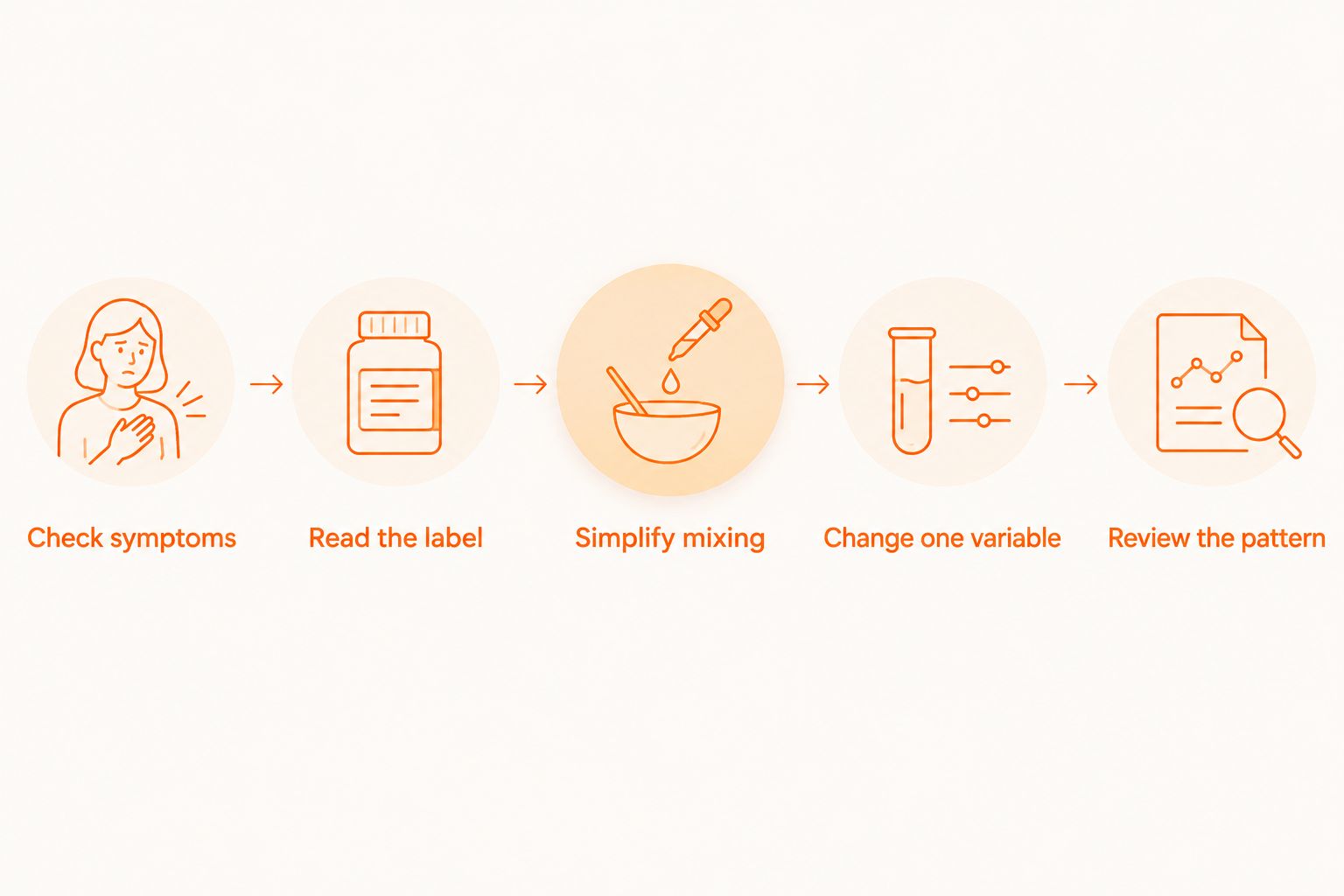
- Check symptoms. Note whether you experience fullness, burping, gas, pain, or loose stools. Record whether symptoms also occur without whey.
- Read the label. Identify the protein sources, milk ingredients, sugar alcohols, added fibers, serving instructions, and allergen statement.
- Simplify mixing. If you normally use regular milk and several add-ins, investigate the mixing liquid separately from the powder. Water removes the milk contribution but not lactose already in the powder.
- Change one variable. Avoid simultaneously switching protein, adding a probiotic, changing meals, and starting enzymes. Otherwise, improvement tells you little about the cause.
- Review the pattern. If symptoms continue, worsen, or disrupt eating and training, take the label and symptom notes to a healthcare professional.
This is a way to organize observations, not diagnose lactose intolerance or rule out disease. Keep your usual meals and workout schedule as consistent as practical so that the shake is easier to evaluate.
How do I choose a probiotic if I still want to try one?
Choose evidence for a specific concern, not the largest bacterial count. NIH guidance explains that a higher colony-forming-unit count does not necessarily mean greater health benefit. The strain and supporting research matter.
Check whether the label identifies the microorganisms clearly, including strain information where provided. Follow its directions and storage instructions. Do not borrow a dose or schedule from a different product simply because both say “probiotic.”
A probiotic trial has a downside: new gas can make the original problem harder to assess. If symptoms worsen, do not assume that means the supplement is working or that discomfort must be endured.
For a 2026 supplement decision, ask a clinician or registered dietitian what outcome you are trying to improve and whether the proposed strain has relevant evidence. People with serious illness or weakened immune systems should seek medical advice before using probiotics because the safety considerations differ.
Is bloating from whey protein the same as a milk allergy?
Bloating alone does not establish a milk allergy, and lactose intolerance is not milk allergy. Lactose intolerance involves difficulty digesting milk sugar. Milk allergy involves an immune response to milk proteins.
That distinction changes your next move. Lactase and low-lactose whey are not solutions for milk-protein allergy, and you should not test your tolerance at home after a suspected allergic reaction.
Hives, swelling, wheezing, throat tightness, or trouble breathing after a shake require urgent attention. Seek emergency care for breathing difficulty, throat swelling, fainting, or other signs of a severe allergic reaction.
How long should I wait for probiotics to fix whey bloating?
There is no established waiting period that guarantees probiotics will fix whey-related bloating. Results from research on a particular strain and digestive condition do not create a universal timeline for protein shakes.
Do not keep drinking a clearly troublesome shake while waiting for a probiotic to “kick in.” Review the shake first, and get medical advice if symptoms persist or are more than mild.
A useful assessment needs a defined symptom and a clear plan. Adding an unspecified probiotic indefinitely gives you neither.
When should I get medical help for bloating after protein shakes?
Seek medical care for persistent or worsening symptoms, severe abdominal pain, repeated vomiting, blood in the stool, or unexplained weight loss. These are not problems to manage by rotating supplement tubs.
Also get assessed when bloating occurs with many foods, wakes you from sleep, or keeps you from eating normally. A shake can coincide with a digestive condition without causing it.
Bring the powder’s ingredient panel and a description of your usual shake. Explain what you mix into it and whether symptoms occur after other dairy foods. That information is more useful than simply saying protein upsets your stomach.
FAQ
Can probiotics help with bloating from whey protein?
Probiotics can help some digestive symptoms, but they are not a proven, reliable fix for bloating specifically caused by whey protein. Check lactose, the mixing liquid, added ingredients, and serving size before adding another supplement.
Is lactase better than a probiotic for whey protein bloating?
Lactase is the more direct option when lactose is the trigger because it breaks down lactose. It does not address milk-protein allergy or every other cause of bloating.
Will whey isolate stop my bloating?
Whey isolate does not guarantee relief from bloating. It generally contains less lactose than concentrate, but other ingredients and digestive conditions still matter.
Can a probiotic make gas from protein shakes worse?
Probiotics can cause gas, so adding one can worsen or complicate your symptoms. Do not interpret worsening discomfort as proof that the supplement is working.
Does mixing whey with water prevent lactose symptoms?
Water removes the lactose contributed by regular milk, but it does not remove lactose already present in the powder. Check the powder’s current label and your response.
Should I stop whey if I get hives or wheezing after a shake?
Stop using the shake and seek medical attention for suspected allergy symptoms. Trouble breathing, throat swelling, or fainting requires emergency care; do not retest the product at home.
Can I use a digestive supplement instead of changing my protein powder?
A digestive supplement is not a substitute for identifying a repeatable trigger. Simplify the shake first and seek professional guidance for persistent symptoms.
One last thing
The ingredient causing your “whey bloat” might be the milk you pour into the shaker, not the powder. Investigate the complete drink before replacing the tub or adding a probiotic.
Make that your 2026 starting point: a simpler shake, a readable label, and one change at a time. Tigerfitness sells sports nutrition supplements, but no supplement replaces finding out why a food repeatedly makes you uncomfortable.
Leave a comment