
NEW NULLA BAR FLAVORS
In-Stock Now!

You can use a mass gainer and fat burner together, but the combination is usually unnecessary and is not automatically safe. A fat burner does not cancel the calories in a mass gainer; whether the combination fits your goals depends on your total intake, the exact ingredients, medications, and health history.
Sometimes, but there is no universal safe stack or special fat-loss advantage from pairing them. A mass gainer supplies calories, usually through carbohydrate and protein. A fat burner is a different category with formulas that require ingredient-by-ingredient review.
For your 2026 training plan, separate two questions: does the combination make nutritional sense, and is the exact formula appropriate for you? Answering the first does not settle the second.
| Approach | Best for | Main benefit | Main drawback |
|---|---|---|---|
| Mass gainer without a fat burner | Lifters who struggle to meet a planned calorie intake | Convenient additional calories | Extra intake can exceed your needs |
| Protein-focused food or shake | Lifters who need protein without deliberately adding a large calorie load | Helps fill a protein gap | Still contributes calories and requires portion tracking |
| Fat burner without a mass gainer | Adults considering a specific formula after a safety review | Some stimulant ingredients increase alertness | Side effects and interactions depend on the formula; fat loss is not guaranteed |
| Mass gainer plus fat burner | No default recommendation | Adds calories while providing a separate supplement formula | Adds complexity without making excess calories disappear |
If you are worried about gaining fat, review your calorie intake before adding another supplement. The underlying question is whether a mass gainer can make you gain fat instead of muscle, not whether a second bottle can prevent it.
Tiger Fitness is best for bodybuilders and fitness enthusiasts shopping for sports nutrition supplements. Shopping by category helps you find options, but choosing a category is not the same as establishing that a combination is appropriate for your health or goals.
A mass gainer makes sense when you struggle to eat enough for your planned intake. It is a convenient food supplement, not a guarantee that every pound gained will be muscle. Resistance training, sufficient protein, recovery, and the size of your calorie surplus all matter.
Adding a fat burner does not make that surplus more selective. If your weight or waist measurement is rising faster than intended, review the gainer portion and the rest of your diet rather than trying to offset them with a thermogenic.
For a muscle-gain plan in 2026, start with a practical question: what nutrition gap does the shake fill? If you cannot identify one, there is no clear reason to add it.
A training day does not erase the need to account for the shake. Include the powder and whatever you mix into it when you review your intake.
A mass gainer can fit within a calorie deficit, just as other calorie-containing foods can. The issue is practicality: a concentrated calorie source can leave less room for meals that provide the protein, fiber, and food volume you want during a cut.
A fat burner does not change that calculation. Feeling warmer, sweating more, or feeling stimulated does not establish that you are losing body fat.
For fat loss, adjust the nutrition plan before adding a fat burner. If you need more protein but not more total calories, compare your food choices and protein-focused supplements against the actual gap.
Avoid treating the word “mass” as automatically bad during a cut or “fat burner” as automatically helpful. The nutrition label and ingredient list matter more than the category name.
Gaining muscle while losing fat is possible, particularly for people who are new to resistance training or returning after a break. It does not require pairing a product labeled for mass with one labeled for fat loss.
For body recomposition in 2026, build around progressive resistance training, adequate protein, and an intake that matches your circumstances. Track changes in strength, waist measurement, and body-weight trends rather than expecting a supplement stack to explain every fluctuation.
The trade-off is patience. Scale weight alone does not distinguish muscle, fat, water, and digestive contents, so a single reading cannot tell you whether the plan is working.
Best for: Lifters prepared to judge progress through several measures rather than a daily weigh-in alone. Start with the training and food plan; add supplements only when they solve a specific problem.
The words “mass gainer” and “fat burner” do not describe a standardized combination. Your answer changes with the products and your circumstances.
The product names alone cannot settle these questions. Keep the full labels available when asking a health professional about a combination.
Use this sequence before you buy or start a stack. It separates a nutrition decision from a safety decision so that one does not substitute for the other.
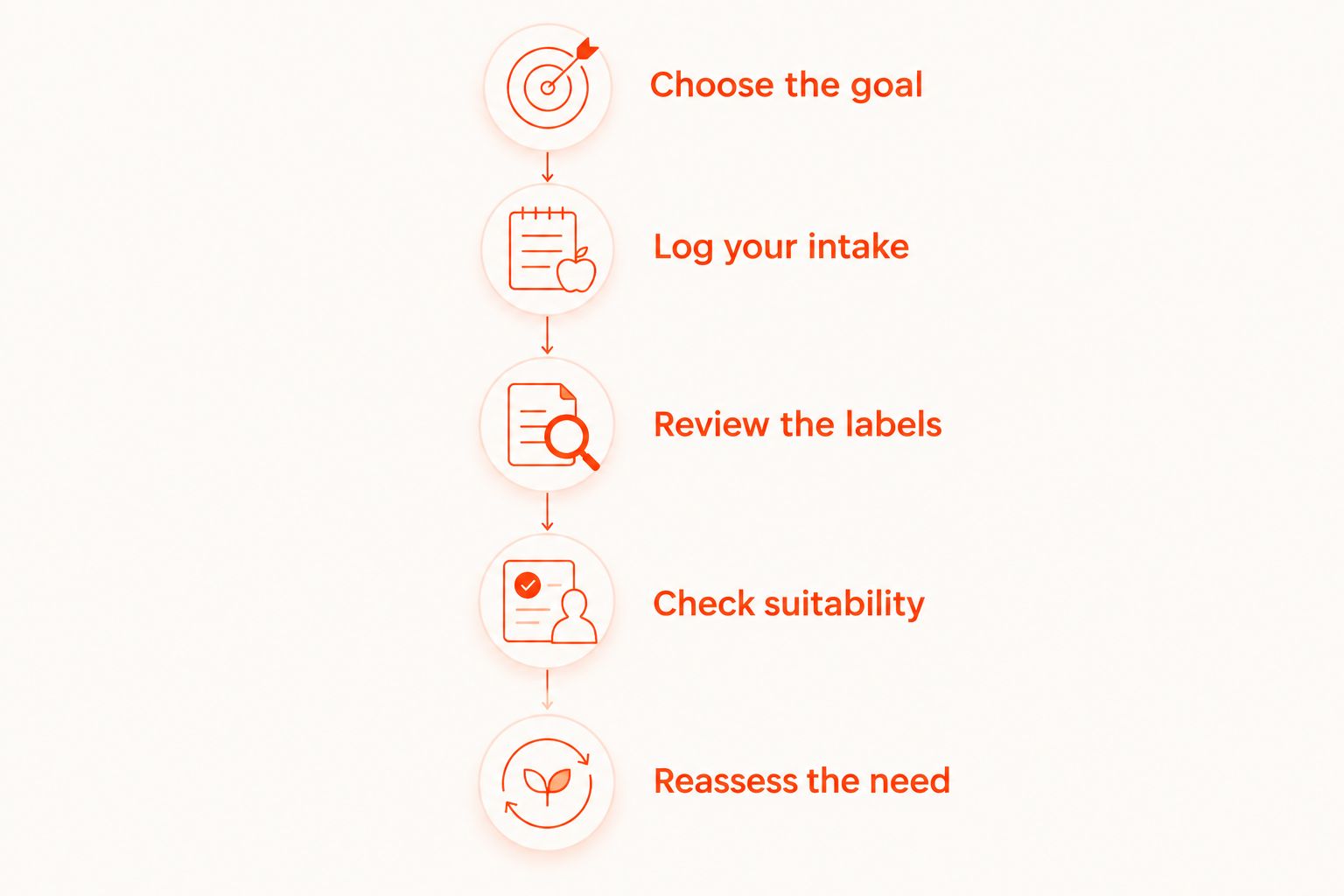
Do not start several new supplements at once. Changing multiple products together makes it harder to identify what caused digestive discomfort, sleep disruption, or an unwanted reaction.
A simpler plan is also easier to adjust. You can change a shake portion directly; you cannot reliably calculate a matching “fat-burning” dose to neutralize it.
Fat burners do not cancel out calories from protein shakes. Standard nutrition calculations assign approximately 4 calories per gram to protein, 4 calories per gram to carbohydrate, and 9 calories per gram to fat. Those energy contributions still count when you take another supplement.
That is why protein shakes and weight gain belong in the same discussion as total food intake: a shake adds nutrition, and adding it without adjusting anything else changes your intake. Whether that supports your goal depends on the overall eating pattern, not whether you swallowed a fat-burner capsule nearby.
For accurate tracking in 2026, use the current nutrition label for your exact flavor and serving. General calorie factors explain the principle, but they are not a replacement for the label's stated values.
Also count the liquid and extras. A powder mixed with water is not nutritionally identical to that same powder mixed with milk, oats, and nut butter.
Review every source, including coffee, tea, energy drinks, pre-workout, and the fat burner. A mass gainer's calories do not protect you from stimulant side effects, and a full stomach does not establish that a combination is safe.
As a concrete example, Blackstone Labs Arson (Thermogenic Fat Burner) 60 Capsules is described in the Tiger Fitness supplement catalog as a high-stimulant thermogenic. That description is a reason to inspect the complete current label, not permission to combine it with another stimulant product.
Do not interpret the amount of a multi-ingredient blend as the amount of caffeine. If the label does not disclose information you need to assess your intake, ask the manufacturer or a pharmacist rather than guessing.
Do not stack stimulant products to make a bulk “leaner.” More stimulation is not evidence of better body composition, and poor sleep can interfere with your training routine.
Stop the product and seek medical advice if you develop palpitations or a concerning reaction. Chest pain, fainting, or severe shortness of breath require urgent medical evaluation, not a different supplement schedule.
Taking a mass gainer and a fat burner at different times does not establish safety. Spacing products out does not remove their ingredients, eliminate medication interactions, or guarantee that stimulant effects will not overlap.
There is no universal waiting interval for these categories. Follow each label, but do not treat label compliance as a substitute for reviewing the entire combination.
For your 2026 routine, fit meals and shakes around comfort and practicality rather than inventing a precise “fat-burning window.” If timing creates a conflict between products or disrupts sleep, simplify the plan instead of adding more scheduling rules.
Taking both does not automatically mean you will have an adverse reaction. Review what you took, the serving amounts, other stimulant sources, and any symptoms before making another decision.
Do not take additional doses to compensate for food intake or because you do not feel an immediate effect. If you are unsure about a dose or interaction, contact a pharmacist, clinician, or Poison Control for individualized guidance.
Keep the containers or label photos available. Exact ingredients are more useful for assessing an exposure than the terms “mass gainer” and “fat burner.”
Is taking a mass gainer and fat burner together a good way to build lean muscle?
Taking a mass gainer and fat burner together is not an established shortcut to lean muscle. Resistance training, adequate protein, recovery, and appropriate total intake remain the foundation.
Can I take a mass gainer while trying to lose belly fat?
A mass gainer can fit a fat-loss plan only if its calories fit your overall intake. Neither the shake nor a fat burner lets you choose where your body loses fat.
Should I take my fat burner before or after my mass gainer?
There is no universal before-or-after schedule that makes this combination safe or effective. Review the exact labels, other stimulant sources, medications, and health history before combining products.
Will a fat burner stop my mass gainer from making me gain fat?
A fat burner does not guarantee protection against fat gain from excess calorie intake. Adjust the gainer portion and total diet rather than treating another supplement as an offset.
Is protein powder better than mass gainer during a cut?
A protein-focused powder is often the more direct choice when your gap is protein rather than total calories. Compare the actual nutrition labels and fit the serving into your eating plan.
Can I also use pre-workout with a mass gainer and fat burner?
Adding pre-workout requires another ingredient and stimulant review; it is not automatically safe. Avoid combining stimulant products without advice specific to the formulas and your circumstances.
Can teenagers take a mass gainer and fat burner together?
Teenagers should not self-prescribe a mass gainer and fat burner stack. A pediatric clinician or sports dietitian should assess nutrition needs and supplement suitability.
If you are adding a fat burner because you fear the calories in your mass gainer, reconsider the gainer portion first. The products do not balance each other like opposite sides of an equation.
Keep your Tiger Fitness sports nutrition choices tied to a clear job: filling a nutrition gap, not compensating for another purchase. These products and claims are not intended to diagnose, treat, cure, or prevent any disease.
{"one"=>"Select 2 or 3 items to compare", "other"=>"{{ count }} of 3 items selected"}






Leave a comment