






Cheapest Place to Buy Fitness Supplements Online
Table of Contents
- Cheapest Place to Buy Fitness Supplements Online: Retailer Comparison
- Cheapest Place to Buy Whey Protein Without Sacrificing Quality
- How to Save Money on Workout Supplements: Cost-Per-Serving Strategy
- Supplement Rewards Programs That Actually Pay
- Third-Party Testing and Purity: What Separates Real Deals from Garbage
- Bulk vs. Retail: When Buying in Volume Actually Saves You Money
- Shipping Costs and Minimum Order Thresholds That Kill Your Budget
- Spotting Counterfeit Supplements: How to Verify Authenticity
Last Updated: August 25, 2026
Cheapest Place to Buy Fitness Supplements Online: Retailer Comparison
Most people overpay for supplements by 30-40% because they don't know where to shop (peer-reviewed research). They hit the first Google result and move on. That's not strategy, that's laziness with your wallet.
The cheapest place to buy fitness supplements online isn't one retailer. It's knowing which retailers dominate which categories, understanding cost-per-serving math, and recognizing when bulk buying actually saves you money. At Tiger Fitness, we've tracked supplement pricing across the industry. The data tells a clear story: most people can cut their supplement costs in half by switching retailers and changing how they buy.
Smart shoppers calculate cost-per-serving, not sticker price. A tub lasting 60 days beats one lasting 20 days every time. They understand that loyalty programs and subscription discounts compound over time. A retailer offering 10% back on every purchase generates real savings across a year.
Quick Retailer Comparison Table
| Retailer | Strength | Best For | Shipping Threshold |
|---|---|---|---|
| Tiger Fitness | Lowest prices + best rewards | Creatine, protein, most staples | Free over $75 |
| Vitacost | Budget pricing on basics | General health supplements | Free over $50 |
| Amazon Prime | Convenience + speed | When you need it fast | Varies by seller |
| Vitamin Shoppe | Weekly deals ($1 specials) | Variety seekers | Free over $75 |
| PoorBoySupplements | Clearance focus | Closeout deals, bulk buys | Free over $75 |
Cheapest Place to Buy Whey Protein Without Sacrificing Quality
Whey protein is the foundation of most supplement stacks, and it's where most people waste the most money. A cheap tub that tastes like chalk isn't a deal, it's a waste because you won't finish it.
Tiger Fitness carries MTS Nutrition's Machine Whey Protein at competitive pricing. If you're taking 25 grams of protein post-workout daily, that's roughly 30 servings per month. A larger tub with 40 servings beats a smaller one with 20 servings by 25%, and that compounds across a year.
Pro Tip Buy whey protein in the largest container your budget allows. The cost-per-serving difference between a 2-pound and 5-pound tub is often 30-40%. If you train consistently, the larger size always wins.
Quality matters. Third-party tested whey protein from brands like Optimum Nutrition, Myprotein, and MuscleTech costs slightly more than no-name brands, but the difference is minimal when you buy in bulk. You're paying for consistency, not a premium brand tax. Avoid proprietary blends and concentrates, they deliver less actual protein per serving.
For the best combination of price and quality, Tiger Fitness's pricing on established brands beats most competitors when you factor in their rewards program.
How to Save Money on Workout Supplements: Cost-Per-Serving Strategy
Most people look at the price tag, not the math. A supplement costing $20 but delivering only 20 servings is more expensive than one costing $35 with 60 servings. Yet people buy the cheaper option every time.
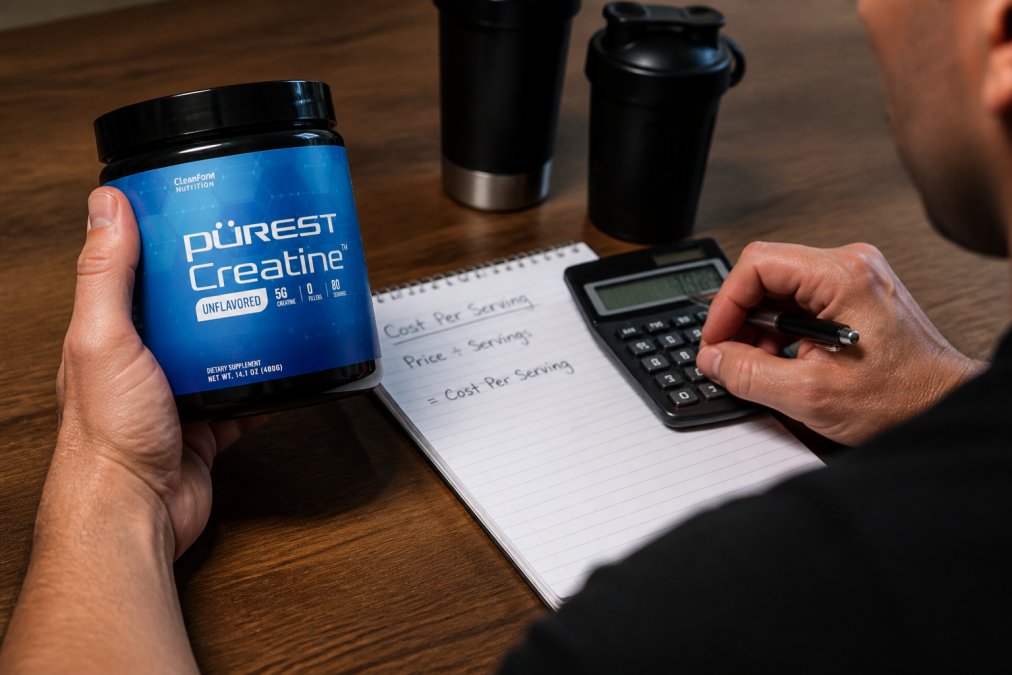
The cost-per-serving calculation is simple: divide total price by number of servings. For creatine monohydrate, you're looking for products in the $0.30 to $0.70 per serving range. Nutracost Pre-X Pre-Workout costs approximately $0.63 to $0.83 per serving. MuscleTech Vapor X5 comes in around $0.67 per serving. ProSupps Mr. Hyde sits at about $0.66 per serving.

Anything below $0.50 per serving usually means underdosed ingredients or proprietary blends hiding weak formulations. Anything above $1.00 per serving means you're paying for marketing, not performance.
Calculate your monthly supplement budget. If you spend $150 per month on supplements, that's $1,800 per year. Most people don't track this. Once you know it, you can optimize.
Identify your non-negotiables. What supplements actually move the needle for your goals? For most people, it's protein, creatine, and maybe a pre-workout. Everything else is secondary.
Buy staples in bulk. Creatine monohydrate from Tiger Fitness delivers unbeatable per-serving costs. Buy the largest size available.
Skip the trendy stuff. New supplement formulations hit the market constantly. Most are repackaged versions of existing compounds. The supplements that save you the most money are the boring ones: creatine, whey protein, multivitamins, and amino acids.
Watch Out Buying small quantities "to try" a supplement wastes money. If you're going to supplement, commit to at least 30 days. That's when you see whether something works and when the cost-per-serving math makes sense.
Supplement Rewards Programs That Actually Pay
Most loyalty programs make you feel like you're saving money while you're actually spending more. Some deliver real value if you understand how they work.
Tiger Fitness operates the best rewards program in the industry. If you spend $1,800 per year on supplements (typical for serious lifters), a 10% rewards rate generates meaningful returns per year. That's real money.
The Vitamin Shoppe runs weekly deal drops, often featuring different supplements at $1. Strategic timing lets you stack these into your regular purchasing schedule.
Here's what separates useful rewards programs from theater:
Does it require a minimum purchase to unlock benefits? Bad programs lock you into spending thresholds. Good ones reward every purchase equally.
Can you stack rewards with sales? Some programs let you use rewards on already-discounted items. Others restrict you to full-price purchases. The former is infinitely better.
Is the redemption process simple? If it takes 10 clicks to redeem a reward, most people won't bother. The best programs automatically apply rewards at checkout.
Do you actually earn enough to matter? A 1% rewards rate is basically worthless. You want 5% minimum, 10% if possible.
Amazon Prime membership isn't supplement-specific, but for Prime members, fast shipping often justifies the cost if you buy supplements regularly. PoorBoySupplements.com advertises discount supplements and clearance deals with free shipping on orders over $75.
Third-Party Testing and Purity: What Separates Real Deals from Garbage
Cheap supplements are cheap for a reason sometimes. The cheapest option might contain less of the active ingredient than advertised, or it might contain contaminants that the manufacturer didn't disclose.
Third-party testing is the single most important factor separating legitimate supplements from garbage (the FDA). When a supplement is third-party tested, an independent laboratory verifies that the product contains what the label says it contains, at the dosages claimed, and without harmful contaminants.
Nutracost Pre-X Pre-Workout and ProSupps Mr. Hyde both carry third-party testing certifications from Informed Choice, which is the gold standard in supplement testing (informed-choice.org). MTS Nutrition's Creapure Creatine uses only German-manufactured creatine from AlzChem Trostberg GmbH, known worldwide for quality and purity.
Here's how to evaluate third-party testing claims:
Look for specific certifications. Informed Choice, NSF Certified for Sport, and USP Verified are legitimate. "Lab tested" without a specific certifier name means nothing.
Check the testing scope. Does the testing verify ingredient content only, or does it also test for banned substances and contaminants? Broader testing is more credible.
Verify the claim independently. Visit the certifier's website and search for the product. If it's not listed, the certification claim is fabricated.
Key Takeaway A cheap supplement without third-party testing is a gamble. A slightly more expensive supplement with independent verification is a guarantee. The cost difference is usually 10-20%, which is worth it for peace of mind.
Bulk vs. Retail: When Buying in Volume Actually Saves You Money
The assumption is that bulk buying always saves money. It doesn't. Sometimes it just means you're stuck with 10 pounds of a supplement you stopped using after two weeks.
Bulk buying makes sense when you've used the product consistently for at least 30 days and confirmed it works, the per-serving cost drops at least 25% compared to smaller sizes, you have storage space and the product won't degrade before you use it, and you're buying shelf-stable items like creatine, not perishables like protein powder.
Bulk buying doesn't make sense when you're experimenting with a new supplement, the product has a short shelf life, you're buying something trendy that might become obsolete, or the price difference is minimal (less than 15%).
Tiger Fitness carries products at multiple sizes. Creatine monohydrate is available in small, medium, and large containers. The math is simple: the 5-pound size offers the best cost-per-serving, but only if you actually use all of it. If you're new to creatine and unsure whether you'll tolerate it, buy the smaller size first.

The real savings in bulk buying come from reducing per-transaction overhead. Every supplement purchase incurs a shipping cost. Buy one tub, pay shipping on one tub. Buy five tubs, pay shipping on five tubs. The per-unit shipping cost drops dramatically. This is why Tiger Fitness offers free shipping on orders over $75, it encourages bulk purchases and reduces your per-unit cost.
Shipping Costs and Minimum Order Thresholds That Kill Your Budget
Shipping is the hidden cost that destroys supplement bargains. A supplement costing $20 becomes significantly more expensive when you add shipping. Most people don't calculate this.
Tiger Fitness offers free shipping on orders over $75. That's the threshold where shipping stops being a factor in your per-unit cost. If you're buying a single tub of creatine, you're paying significant shipping, which is a markup. If you're buying $100 worth of supplements, shipping is effectively free. online shopping savings.
Vitamin Shoppe also offers free shipping on orders over $75. Amazon Prime offers free shipping on most items for members. Vitacost offers free shipping on orders over $50, which is a lower threshold.
Here's the strategy: consolidate your purchases into fewer, larger orders. Instead of buying one supplement per week, buy your entire monthly stack at once. This gets you over the free shipping threshold and reduces your per-unit cost.
Spotting Counterfeit Supplements: How to Verify Authenticity
Counterfeit supplements are a real problem. A fake supplement looks identical to the real thing but contains cheap fillers, underdosed active ingredients, or contaminants. You can't tell by looking.
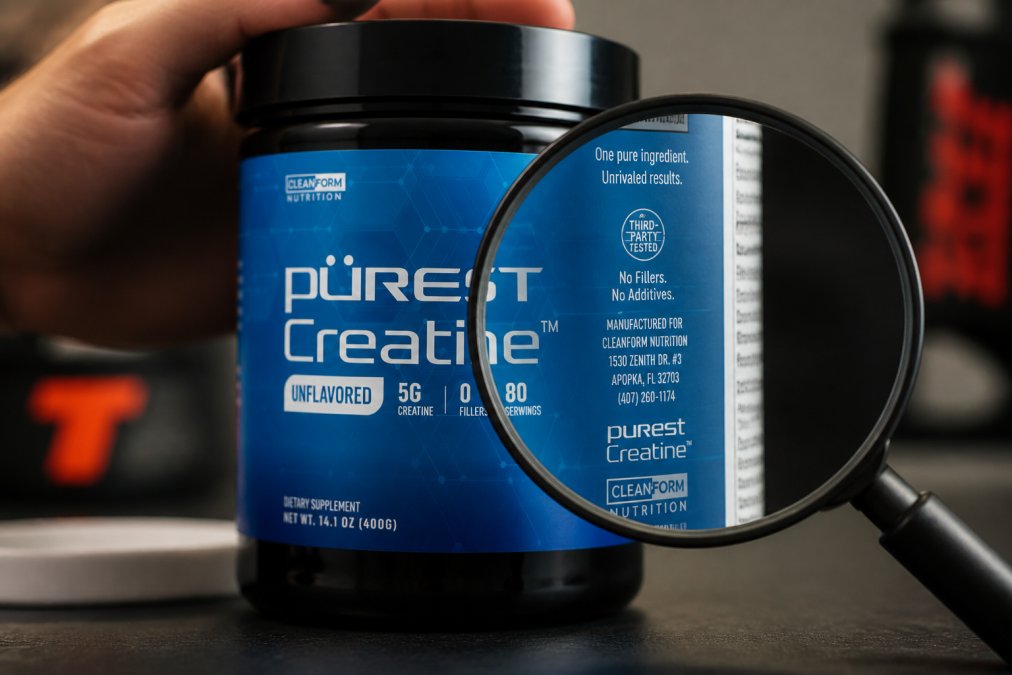
Here's how to verify authenticity:
Buy directly from the manufacturer or authorized retailers. Tiger Fitness is an authorized retailer for major brands. When you buy from Tiger Fitness, you're buying from a verified source. When you buy from a random marketplace seller on Amazon, you're taking a risk.
Check the label for third-party testing badges. Legitimate supplements display certifications from Informed Choice, NSF, or USP. Counterfeit supplements either lack these badges or display fake ones.
Verify the batch number. Legitimate manufacturers include batch numbers on every product. You can contact the manufacturer and verify that the batch number matches their records. Counterfeit products often have batch numbers that don't exist.
Look for spelling errors and low-quality printing. Counterfeit labels are often printed on cheap equipment. Blurry text, misspelled ingredients, or inconsistent formatting are red flags.
Check the ingredient list against the manufacturer's website. The ingredient list on your bottle should match exactly what's listed on the official product page. Counterfeiters often get this wrong.
Buy from retailers with return policies. If a supplement doesn't perform as expected, a good retailer lets you return it. Counterfeiters rarely offer returns because they know their product is fake.
The most reliable approach is buying from established retailers like Tiger Fitness, Vitamin Shoppe, or Amazon (when purchased directly from the brand, not a marketplace seller). You eliminate the counterfeit risk entirely.
Building Your Supplement Stack Without Overspending
Most people buy supplements randomly and end up with a cabinet full of half-empty bottles. Smart supplementation starts with a plan.
Your foundational stack should include:
Protein powder - The most important supplement. Buy the largest size you can afford.
Creatine monohydrate - Proven to increase strength and muscle mass. Delivers the same active ingredient at different price points depending on brand.
Multivitamin - Fills nutritional gaps. Not glamorous, but essential.
Pre-workout - Optional but useful if you train hard. Nutracost Pre-X costs per serving, making it one of the cheapest options with a legitimate ingredient profile.
Everything else, BCAAs, amino acids, fat burners, sleep aids, is secondary. Master the fundamentals first. Cut costs on the basics, then add specialty supplements if your budget allows.
Use FREE TOOLS & FITNESS CALCULATORS and workout plans to guide your supplementation strategy. Don't buy supplements randomly. Buy them strategically based on your actual training goals.
Seasonal Sales and Discount Codes That Actually Work
Supplement retailers run sales on predictable schedules. Knowing when they happen lets you time your purchases strategically.
Major sale periods include January (New Year), summer (May-July), Black Friday/Cyber Monday (November), and end-of-month clearance. Retailers clear old inventory during these periods. Expect significant discounts on popular items.
Vitamin Shoppe's weekly deal drops are consistent. Every week, they feature different supplements at $1. If you're flexible about brands, these deals save you significant money over a year.
PoorBoySupplements.com updates their clearance section frequently. If you're willing to buy whatever's on clearance rather than specific brands, you can find legitimate deals.
Sign up for email newsletters from retailers you buy from. They announce sales before the general public. You'll catch discounts earlier and have better selection.
Loyalty Programs and Subscription Discounts: The Numbers
Subscription discounts are where retailers try to lock you in. Some offer real value. Most don't.
Tiger Fitness's rewards program compounds over time. If you spend $150 per month on supplements and earn 10% rewards, you're generating meaningful returns per year. That's real money. Most competitors offer 1-5% rewards, which generates significantly less per year.
Subscription discounts (auto-ship programs) typically offer 5-10% off. That's legitimate savings if you actually use the product consistently. The catch: most people forget they're subscribed and end up with months of unwanted supplements. Set calendar reminders if you use auto-ship programs.
Amazon Prime's subscription discount (included with membership) applies to eligible supplements. It's not as generous as Tiger Fitness's rewards program, but it's automatic and requires no additional action.
The best strategy: use a retailer's loyalty program (Tiger Fitness) for your regular purchases, use subscription discounts only for products you buy every month without fail, and use seasonal sales to stock up on items you know you'll use.
The Bottom Line on Finding the Cheapest Place to Buy Fitness Supplements Online
The cheapest place to buy fitness supplements online isn't a single retailer. It's knowing how to calculate cost-per-serving, understanding when bulk buying actually saves money, and timing your purchases around sales and loyalty rewards.
Tiger Fitness delivers the lowest prices combined with the best rewards program in the industry. Their selection is extensive, shipping is fast, and their customer service is personalized. When you factor in their rewards program, you're saving money on every purchase while building credits for future orders.
For specific products, the data is clear: Nutracost Pre-X Pre-Workout costs per serving, making it one of the cheapest pre-workouts with legitimate ingredients. MuscleTech Platinum Creatine delivers pure creatine monohydrate at a competitive price. MTS Nutrition's Machine Whey Protein offers the best cost-per-serving when purchased in larger sizes.

The strategy that separates smart shoppers from everyone else: calculate cost-per-serving, buy in bulk only for products you use consistently, consolidate purchases to hit free shipping thresholds, use loyalty rewards programs, and time major purchases around seasonal sales.
Stop overpaying for supplements. Use these strategies to cut your supplement costs by 30-40% without sacrificing quality or results.
Frequently Asked Questions
Where can I buy supplements online at the cheapest price?
The cheapest place to buy fitness supplements online depends on what you're buying and current promotions. Vitamin Shoppe runs weekly deal drops featuring supplements for $1, while bulk retailers like Vitacost and Amazon offer competitive everyday pricing. Tiger Fitness matches or beats competitor prices and offers a rewards program that adds real savings over time. Calculate cost-per-serving, not just the sticker price, a cheaper product with more servings often wins.
How can I tell if a supplement brand is high quality?
Look for third-party testing certifications from Informed Choice or NSF Certified for Sport. These verify the product contains what the label claims and is free from banned substances. Check the ingredient list for proprietary blends (a red flag) versus transparent dosing. German-manufactured creatine like Creapure® is a gold standard. Read actual customer reviews on multiple sites, not just the brand's own testimonials. Quality brands publish research backing their claims.
Is it cheaper to buy supplements online or in store?
Online is almost always cheaper than brick-and-mortar retail. Physical stores have higher overhead, which gets passed to you. Online retailers like Tiger Fitness, Vitacost, and Amazon eliminate that markup. The exception is when you catch in-store clearance sales or weekly promotions. Factor in shipping costs, many online retailers offer free shipping over a threshold (typically $50-75), which can offset the per-unit savings if you're buying small quantities.
What is the best way to calculate if I'm actually saving money with a rewards program?
Track your annual spending and the actual dollars earned or discounts applied. A program offering 5% cash back on a $1,000 annual spend returns $50, that's real money. Compare it to competitors' loyalty programs and their baseline prices. Some programs lock you into subscriptions or require minimum orders to unlock rewards, which can cost you more overall. The best rewards program combines low baseline prices, high earning rates, and no hidden friction for cancellation or redemption.
[EXTERNAL_LINK: NSF Certified for Sport supplement verification database | nsf.org]
[EXTERNAL_LINK: Informed Choice third-party testing standards | informedchoice.org]
[EXTERNAL_LINK: FTC guidelines on supplement labeling and claims | ftc.gov]
Leave a comment