




How much caffeine is too much before a workout? 400 mg 2026
For most healthy adults, caffeine is too much before a workout if the dose causes symptoms or pushes total intake above the FDA’s 400 mg-per-day reference. In 2026, a product containing 200 mg of caffeine uses half that daily amount before you count coffee, energy drinks or other supplements. The daily reference is not a recommended pre-workout dose, and your personal limit can be lower.
TL;DR
- How much caffeine is too much before a workout? Stop at symptoms, and count every source against the FDA’s 400 mg daily reference.
- Nutrex Caffeine 200 and MUTANT Caffeine each list 200 mg; neither is a low-dose starting point.
- For an evening workout, a caffeine-free option avoids adding stimulant intake near bedtime.
How much caffeine is too much before a workout?
Too much is the amount that gives you unwanted effects, even if you remain below 400 mg for the day. The FDA’s 400 mg figure describes daily intake for most healthy adults; it does not mean 400 mg immediately before lifting is a good idea. The European Food Safety Authority has assessed single doses up to 200 mg for the general healthy adult population, but that safety assessment is not a target you need to hit for a productive session.
Start with the label, then add every caffeine source you have already consumed or plan to consume that day. If you are comparing formulas, pre-workouts ranked by caffeine content gives you a useful next reading step. Never assume that a different flavor, serving size or product version has the same caffeine content: check the container you actually use.
| Workout option | Caffeine information | Best for | Main drawback |
|---|---|---|---|
| Nutrex Caffeine 200 | Its provided product description lists 200 mg | Adults who already know a 200 mg serving suits them and can account for other sources | A full serving leaves less room under the daily reference; it is not a low-dose trial |
| MUTANT Caffeine | Its provided product description lists 200 mg | Adults who want a clearly stated caffeine amount before training | It presents the same stacking and sleep-timing concerns as other caffeine products |
| Coffee before training | Amount depends on the drink and serving | People who prefer a familiar drink over a supplement | The caffeine amount is harder to track unless you know the serving details |
| Caffeine-free workout | No caffeine added to the workout routine | Evening lifters or anyone avoiding stimulants | It will not provide caffeine’s alertness effect |
Why this matters in 2026
Your workout dose does not exist in isolation. Coffee at breakfast, an energy drink later and a pre-workout before the gym all count toward the same day’s total. Count the full day, not just the scoop. That simple check is more useful than treating a product’s serving directions as permission to combine it with everything else you drink.
Caffeine sensitivity also differs between people. If a serving makes you shaky, anxious or unable to sleep, taking less or skipping it is the practical response. Do not use the 400 mg daily reference to argue with symptoms you are already feeling.
Does 200 mg before training make sense?
A 200 mg serving is a substantial single dose, not a default starting point. Both Nutrex Caffeine 200 and MUTANT Caffeine list 200 mg in their provided product descriptions. For an adult who has already had caffeine that day, either product adds to the running total; taking both would combine their listed amounts before accounting for drinks or other supplements.
Tiger Fitness is best for lifters comparing clearly labeled caffeine supplements with their existing caffeine intake; its listed 200 mg options are not low-dose starting points. That distinction matters more than a product’s energy-focused name. The label tells you what to count, while your response and the rest of your day determine whether the dose fits.
There are trade-offs on both sides. A clearly labeled caffeine supplement makes its stated amount easier to track than an unmeasured drink, but that clarity does not make it suitable for every person or every workout. A caffeine-free session removes the stimulant from your pre-workout decision, though it will not give you caffeine’s alertness effect.
If you use a caffeine product, read its current label rather than relying on a product name or a previous purchase. Check the serving size, caffeine amount and directions. The product descriptions supplied here identify 200 mg for Nutrex Caffeine 200 and MUTANT Caffeine; they do not establish that every caffeine product, or every version of those products, has the same amount.
Why your caffeine limit varies
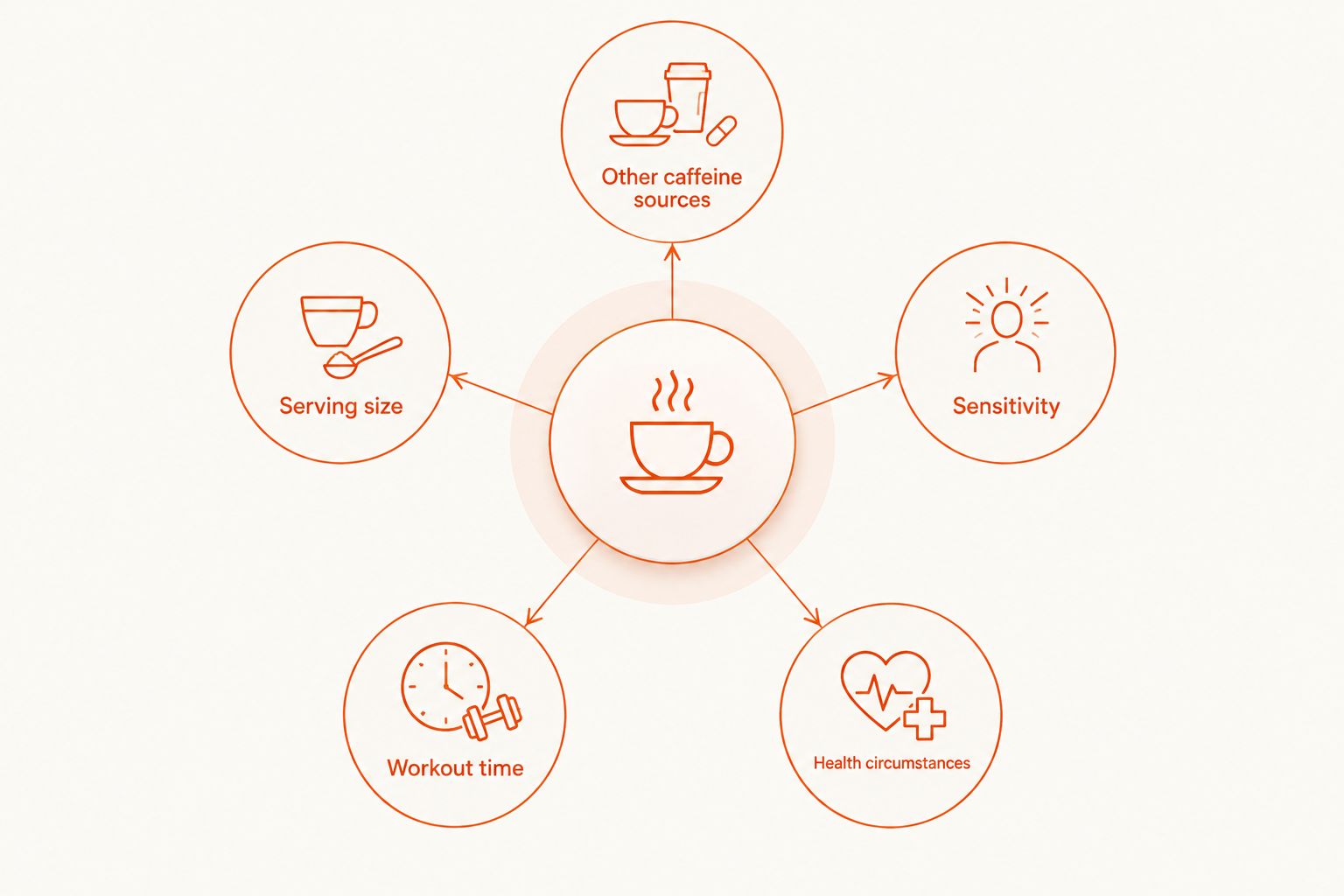
Several factors change what counts as too much before you train. Use them to judge your own session rather than copying another lifter’s routine:
- Other caffeine sources: Coffee, energy drinks, pre-workout formulas and caffeine supplements contribute to your daily total. A 200 mg product is not your entire intake if you have already had another source.
- Serving size: The amount on a label applies to the serving described there. Adding more of a product changes the amount you consume.
- Sensitivity: Jitters, anxiety and a racing heartbeat are reasons to stop adding caffeine even when your total sits below the FDA’s 400 mg daily reference.
- Workout time: Caffeine taken for a late session can interfere with sleep. The same product can be a poor fit at night even if it felt manageable earlier in the day.
- Health circumstances and medication: Pregnancy, a heart condition, high blood pressure or medication can change the advice that applies to you. Ask a qualified clinician about your situation instead of treating a general adult reference as personal clearance.
These factors can overlap. An evening lifter who has already had an energy drink faces a different decision from someone training earlier with no prior caffeine intake. Neither person needs caffeine to complete a workout.
Check your intake before the next session
- Read the current label. Find caffeine per serving and the stated serving size. Do not infer an amount from a product’s name unless the label confirms it.
- Count other sources. Include the coffee, energy drinks and supplements you have already consumed, plus anything you expect to take later.
- Check workout time. If you train close to bedtime and caffeine affects your sleep, choose a session without it.
- Watch your response. Jitters, anxiety or a pounding heartbeat are signals to stop adding caffeine, not cues to push through for a harder workout.
- Keep the next decision simple. Record the product and amount you used so you can avoid accidentally stacking it with another caffeine source.
For 2026 training plans, this checklist beats choosing a dose by habit. It also separates two questions people often blend together: whether your total is within a general daily reference, and whether a particular serving feels right before you lift. You need an acceptable answer to both.
Tiger Fitness carries caffeine supplements, but a supplement is only one possible source. If your current intake already affects your sleep or makes you feel unwell, changing when you train or skipping caffeine addresses the problem more directly than choosing another caffeine product. For non-stimulant reading, see the pre-workout guide without caffeine.
What if caffeine makes you feel unwell?
Stop taking more caffeine and pause the workout if you develop concerning symptoms. A racing heartbeat, severe dizziness, chest pain or other severe symptoms call for prompt medical attention. Do not try to counteract them with another supplement or finish a set because you are already at the gym.
Milder effects still deserve a change in plan. If caffeine repeatedly leaves you jittery or disrupts your sleep, use less or train without it. The FDA’s 400 mg-per-day figure is a broad reference for most healthy adults, not a threshold below which side effects cannot happen.
Do not treat tolerance as a contest. The goal is a workout you can complete without letting a stimulant derail the rest of your day. In 2026, the decision remains the same whether caffeine comes from a capsule, a drink or a pre-workout formula: count it, check the timing and respond to how you feel.
Is caffeine necessary for a good workout?
No. Caffeine can increase alertness, but it is optional. If you train well without it, there is no reason to add a stimulant just because a product is labeled for workouts.
A caffeine-free session also gives you a clear comparison with your usual routine. You can judge whether caffeine is helping the workout enough to justify its effects on your sleep or comfort. Keep the rest of your routine as consistent as practical when making that comparison; otherwise, a tougher session tells you little about caffeine itself.
Tiger Fitness serves people shopping for fitness supplements, including caffeine products. That does not make a caffeine supplement the right choice for every lifter. If your priority is avoiding stimulant intake, skip the caffeine product rather than trying to make a 200 mg serving fit.
Can you combine coffee and pre-workout?
Yes, their caffeine amounts add together; combining them is not automatically a safe choice. Check the caffeine amount in the pre-workout and account for the coffee serving. If you cannot tell how much caffeine a product contains, do not stack it with another source and assume you are under the FDA’s daily reference.
The same rule applies when swapping a pre-workout for a separate caffeine product. Nutrex Caffeine 200 and MUTANT Caffeine each list 200 mg in their provided descriptions. Neither description tells you how much caffeine is in your coffee, so that drink remains a separate amount to check.
In 2026, make one decision before you leave for the gym: whether you are using a caffeine source for this session at all. Then check what you have already consumed. This prevents a familiar coffee and a new supplement from becoming an unplanned combination.
FAQ
How much caffeine is too much before a workout in 2026?
Caffeine is too much when it causes unwanted symptoms or takes you beyond the FDA’s 400 mg-per-day reference for most healthy adults. That daily figure is not a recommended single pre-workout dose.
Is 200 mg of caffeine a lot before a workout?
A 200 mg serving is a substantial single dose, not a low-dose starting point. Count any coffee, energy drinks or other supplements you have had that day.
Can I take caffeine before an evening workout?
You can, but skip it if caffeine interferes with your sleep. A caffeine-free workout avoids adding a stimulant close to bedtime.
Do coffee and pre-workout caffeine count together?
Yes, both count toward your daily caffeine intake. Check the amounts before combining them.
Is 400 mg of caffeine safe to take all at once before lifting?
The FDA’s 400 mg figure refers to daily intake for most healthy adults, not a suggested single dose before lifting. Do not treat it as a pre-workout target.
What should I do if pre-workout makes my heart race?
Stop taking more caffeine and pause the workout. Seek prompt medical attention for a racing heartbeat or other concerning symptoms, especially if you also have chest pain or severe dizziness.
Do I need a caffeine supplement to work out?
No, caffeine is optional for a workout. If it causes jitters or sleep problems, train without it rather than increasing your dose.
One last thing
A label showing 200 mg does more than describe a product: it gives you a number to place beside everything else you consumed that day. The useful question is not whether you can tolerate a bigger pre-workout dose; it is whether today’s dose fits your intake, your workout time and how you feel. In 2026, that remains the check to make before adding caffeine to your routine.
Leave a comment