







BREATHING TECHNIQUES FOR HEAVY LIFTING
How to Improve Focus During Heavy Lifting
Last Updated: October 27, 2026
Quick Summary
To improve focus during heavy lifting, run a fixed pre-set sequence every time: chalk and grip check, setup check, one cue, big breath and brace, eyes on a fixed target, then go. Keep your phone away and rest 3 to 5 minutes between heavy compound top sets so your brace and breath fully recover.
- Use the last ten minutes before your top set to review the plan, warm up with purpose, clear your head, and take three slow breaths.
- Pick one cue per lift, such as push the floor away for squats or pull the slack out for deadlifts.
- Breathe into the belly, brace, hold through the sticking point, then exhale slowly as you finish the rep.
- Rest 3 to 5 minutes between heavy compound top sets and 60 to 90 seconds on accessory work.
- Rack it if form breaks before the target rep, you feel dizzy, or your cue stops working.
Table of Contents
- Why Focus During Heavy Lifting Decides the Set
- Your Pre-Lift Routine for Heavy Lifting
- Mental Cues for Weightlifting That Actually Work
- Breathing Techniques for Heavy Lifting
- How to Avoid Distractions at the Gym
- Fuel, Hydration, and Caffeine Before a Heavy Session
- Rest Periods, Fatigue, and When to Back Off
- Build Your Focus Plan with Tiger Fitness Tools
- Frequently Asked Questions
Why Focus During Heavy Lifting Decides the Set
Your body doesn't fail a heavy set first. Your attention does. When you improve focus during heavy lifting, you stop leaking strength to distractions and start putting every rep where it belongs.
The research backs the stakes.
Here's the honest part most guides skip.
Below, we'll show you exactly how to prepare, cue, breathe, and manage fatigue so your best set isn't your warm-up.
Your Pre-Lift Routine for Heavy Lifting
The best heavy lifting sessions start before you touch the bar. A pre-lift routine is a short, fixed sequence that tells your brain the work is coming.
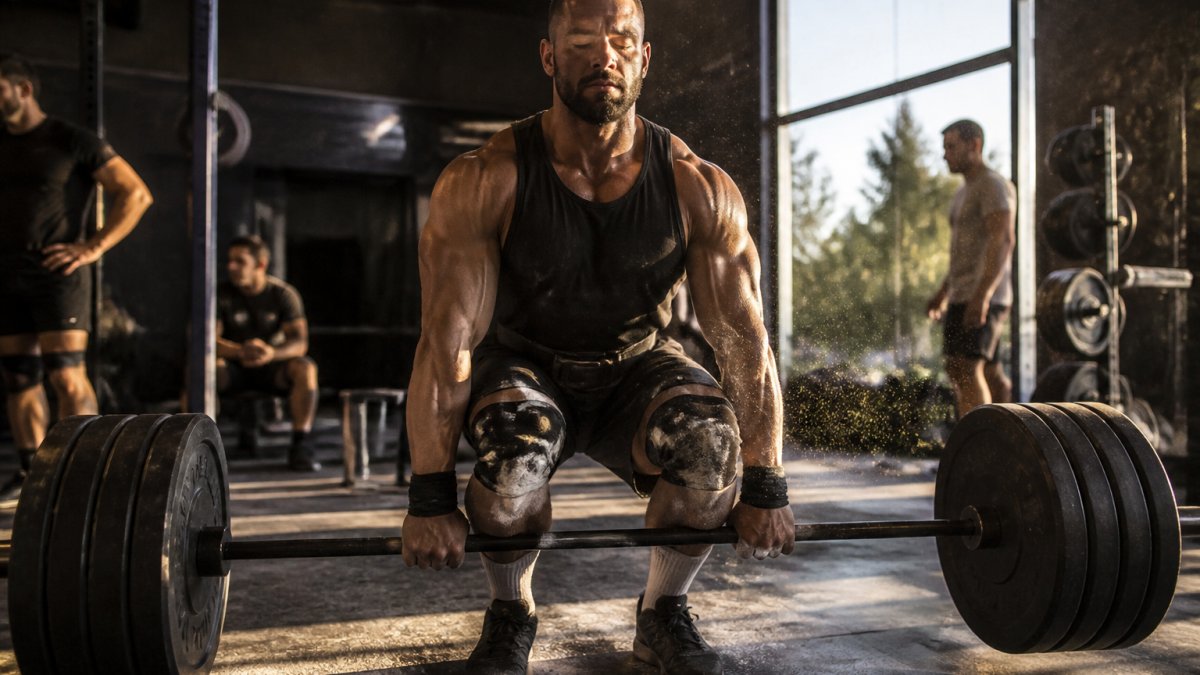
The 10-Minute Prep Window
Use the last ten minutes before your top set to do four things, in order:
- Review the plan. Know your weight, reps, and sets before you walk in. Write the top set on your phone or a card so you're not doing math under load.
- Warm up with purpose. Move the joints you'll load, not a random circuit. For a squat day, that means hips, ankles, and thoracic spine, not 10 minutes on a bike.
- Clear your head. Put the phone away and set one goal for the set. One goal. Not three.
- Take three slow breaths. Calm the nervous system before you grip the bar. In through the nose, out through the mouth, longer on the exhale.
A common mistake is treating prep as social hour. Chatting right up to your heavy set leaves your head in the conversation, not on the lift.
The 60-Second Pre-Set Sequence (The Part Everyone Skips)
This is the gap. Here's the sequence, in order, every time:
- Chalk and grip check (10 seconds). Chalk your hands, set your grip, and confirm the bar is centered. No grip, no focus.
- Setup check (15 seconds). Run your lift-specific checklist, feet, hips, bar path, brace. We list these per lift below.
- One cue, out loud or in your head (5 seconds). Say your single cue. Not a paragraph. One cue.
- Big breath and brace (5 seconds). Nose breath into the belly, brace like you're taking a punch.
- Eyes on the target (5 seconds). Pick a fixed point, the bar, a spot on the wall, the floor ahead. Lock your gaze. No wandering eyes.
- Go (20 seconds). Execute. No re-racking to adjust music, no last-second phone check.
Run that sequence on every heavy set for four weeks and it becomes automatic. That's the whole point, you stop thinking about focusing and just focus.
Lift-Specific Setup Checks
Generic advice fails on heavy compound lifts because each lift has its own setup failure points. Here's what to check in the 15-second setup window:
- Squat: Bar centered on the traps or rear delts, feet shoulder-width with toes slightly out, brace before you unrack, and take the same walkout every time, two steps back, no more. Wandering walkouts waste energy and focus.
- Bench press: Shoulder blades pinched and pulled down, feet planted flat, grip symmetrical on the knurling, and a handoff or unrack you control. If your setup shifts under load, the set is already compromised.
- Deadlift: Bar over mid-foot, shins close, slack pulled out of the bar before you pull, and hips set at the same height every rep. The slack pull is the focus check, if you rush it, you're not ready.
Pro Tip Pick one setup check per lift that you tend to miss and make it your pre-set cue for the week. Rotate it once it's automatic.
What to Cut From Your Prep
Prep isn't just what you add, it's what you remove. Cut these before a heavy set:
- Phone scrolling. Even a 30-second scroll pulls your head out of the set.
- Last-minute program changes. Decide the weight before you walk in, not at the rack.
- Chatting through your rest. Save the conversation for after the set.
The lifters who look locked in aren't born that way. They run the same short sequence every set until it's a habit. That's the routine. Now go run it.
Mental Cues for Weightlifting That Actually Work
Mental cues for weightlifting are short phrases or images you repeat to direct attention to one thing. The right cue narrows your focus to the task and blocks out the noise.
External vs. Internal Cues
External cues point at the bar, the floor, or the movement. Internal cues point at a body part. "Push the floor away" is external. "Flex your quads" is internal. The 2019 review confirms both are studied, but it doesn't crown a winner, so test what works for you.
Practical cues for specific lifts:
- Squat: "Spread the floor" or "chest up."
- Bench: "Bend the bar" or "drive your feet down."
- Deadlift: "Push the earth away" or "pull the slack out."
Pick one cue per lift. More than that splits your attention and kills the set.
Breathing Techniques for Heavy Lifting
Breathing techniques for heavy lifting control pressure and keep you steady under load. The standard is a big breath into the belly before the rep, a brace, then a controlled exhale after the hardest point.
Here's how we'd run it:
- Breathe in through your nose before you unrack.
- Brace your core like you're about to take a punch.
- Hold the breath through the sticking point.
Watch out: holding your breath too long can leave you dizzy. If you feel lightheaded, reset and breathe normally before the next rep. Slow, deep breaths also calm the nervous system so you can hit a focused, relaxed state before heavy work, a point training resources made in 2026.
How to Avoid Distractions at the Gym
Learning how to avoid distractions at the gym comes down to controlling three things: your phone, your music, and the people around you.
Phone, Music, and the People Around You
- Phone: Put it on do-not-disturb and out of reach. Scrolling between sets drains focus.
- Music: Build one playlist for heavy work. Same songs, same mindset.
- People: Train with headphones on and keep talk for after the set.
The gym environment shapes your training. A crowded floor pulls your eyes everywhere. Claim your space, set your station, and stay in your lane. Consistency in this routine builds a mental focus that carries into every session.
Fuel, Hydration, and Caffeine Before a Heavy Session
What you put in your body before training sets the ceiling on your focus. Caffeine supports alertness, water supports performance, and food supports energy across the session.
On caffeine: a pre-workout with a measured dose keeps timing predictable. Our picks include Jocko Fuel Pre-Workout for clean energy and focus without a crash, and MUTANT Caffeine 200mg Tablets if you want a simple, measurable dose. For hydration, a ready-to-drink option like Jocko Fuel Hydrate RTD makes it easy to stay topped off before, during, or after training.
A 2026 Life Time survey found that 42.3% of respondents named getting physically stronger as their top health goal for the year (Life Time 2026 wellness survey). That goal starts with showing up fueled and hydrated.
Rest Periods, Fatigue, and When to Back Off
Rest periods are part of the training, not a break from it. A 2021 review in PubMed Central notes that monitoring and fatigue management matter most during high volume training and intensification periods (review on weightlifting fatigue management). Translation: track how you feel, not just the weight.
Structure Your Rest Periods
Rest is not one-size-fits-all. Match the rest to the lift and the goal:
- Heavy compound sets (squat, deadlift, bench, overhead press): Rest long enough to fully recover your brace and your breath, typically 3 to 5 minutes between top sets. If you're still breathing hard when you grip the bar, you rested too short.
- Accessory work: Shorter rests, 60 to 90 seconds, are fine because the load and the technical demand are lower.
- Between sessions: If your top-set weight is dropping week over week and your sleep and food are dialed in, you're under-recovered. Back off the volume before you back off the focus.
A common pattern is lifters cutting rest to "save time" and then wondering why their top set feels heavy. You didn't save time. You stole it from the set.
The Between-Set Reset (What to Do While You Wait)
- First 30 seconds: Breathe. Slow nose breaths, longer exhale. Bring your heart rate down.
- Next minute: Rehearse your one cue for the next set. Say it in your head. Picture the rep.
- Middle of rest: Check your setup checkpoints for the next lift, feet, grip, brace. No phone.
- Last 30 seconds: Stand up, chalk up, and run the 60-second pre-set sequence from the previous section.
Stay off your phone. Stay off the bench if you can. Standing keeps you engaged and makes the transition to the bar faster.
Key Takeaway The between-set reset is where focus is won or lost. Most lifters zone out for three minutes and then try to snap back in 10 seconds. Flip that ratio.
When to Back Off (Stop-Set Criteria)
- Form breaks before the target rep. If your squat turns into a good morning or your bench press path drifts, rack it. Sloppy reps under heavy load are how people get hurt.
- Dizziness or vision changes. Lightheadedness means your brace or breathing is off. Reset, breathe normally, and don't push the next rep.
- Sharp pain, not muscle burn. Burn is fine. Sharp, joint, or shooting pain is a stop signal. No ego.
Safety beats ego every time. A missed rep costs you nothing. A blown back costs you months.
Fuel and Recovery Between Sessions
When energy fades between sessions, the right foods matter. And when a set feels wrong, back off. Pushing a heavy set with sloppy form and a wandering mind is how people get hurt. Track your top-set weight, your rest times, and how you felt, three numbers, every session.
Match your rest to the lift and the goal, then use the stop-set criteria to know when to rack it.
| Situation | Rest or action | Note |
|---|---|---|
| Heavy compound sets (squat, deadlift, bench, overhead press) | 3 to 5 minutes between top sets | Still breathing hard means you rested too short |
| Accessory work | 60 to 90 seconds | Load and technical demand are lower |
| Between sessions | Back off volume before focus | Top-set weight dropping week over week means under-recovered |
| Form breaks before the target rep | Rack it | Sloppy reps under heavy load cause injury |
| Dizziness or vision changes | Reset and breathe normally | Brace or breathing is off |
| Sharp, joint, or shooting pain | Stop the set | Burn is fine, sharp pain is a stop signal |
| Cue stops working | End the set and reset | Attention is gone |
| Breath you can't control | Take more rest or cut the set | Not recovered when the rest period ends |
Build Your Focus Plan with Tiger Fitness Tools
You now have the pieces: a prep window, one cue per lift, a breathing pattern, distraction control, and honest fatigue management. Put them in the same order every session and focus stops being luck.
Here's the challenge. Most lifters know what to do and still wing it. The fix is a written plan you follow set after set, week after week.
Frequently Asked Questions
How do I stay focused when lifting heavy weights?
Build a repeatable pre-lift routine: set your feet, grip the bar, take two or three slow breaths, and pick one cue for the set. Put your phone on do-not-disturb and keep your rest periods structured instead of scrolling. Research on attentional focus in weightlifting shows that what you pay attention to matters, so choose your cue before you unrack rather than mid-rep. Consistency in the routine is what makes the focus automatic over time.
Should I use external or internal cues when lifting heavy?
Both have a place, but the choice depends on the lift and what you are trying to fix. External cues like pushing the floor away on a squat or spreading the bar on a bench tend to keep you focused on the outcome. Internal cues like bracing your core or squeezing your lats work better for technique corrections. A 2019 systematic review in Frontiers in Sports and Active Living confirms attentional-focus strategies are studied in weightlifting, but the summary does not establish one technique as reliably superior, so test both and keep what works for you.
Can lack of sleep affect focus and lifting performance?
Yes. Sleep is when your nervous system recovers, and a tired brain struggles to hold attention on a heavy set. A 2021 narrative review in PubMed Central notes that monitoring and fatigue management are especially important during high-volume training and intensification periods. If you slept poorly, drop the top set and hit clean reps at a lower load. Pushing a max on four hours of sleep is how you miss lifts and pick up nagging injuries.
What is a good pre-lift routine for heavy sets?
Give yourself a 10-minute window before your first heavy set. Do a general warm-up, then ramp with two or three progressively heavier sets of the main lift. Stop scrolling, put your headphones on, and run the same physical sequence every time: chalk up, set your stance, grip the bar, breathe, and go. A 2014 Georgia Tech report found that an intense workout of as little as 20 minutes enhanced long-term memory for previously presented material, which is one more reason to show up prepared instead of winging it.
Focus is a skill, and like any skill it rewards the lifter who trains it on purpose. Build your prep routine, pick your cues, control your environment, and manage fatigue instead of ignoring it. When you're ready to put it all together, our free fitness tools and calculators help you plan the work, and our team is here to help you fuel it. Get started with Tiger Fitness and make focus your strongest lift.

Leave a comment