







Is It Bad to Eat a Protein Bar Every Day? No | 2026
No, eating a protein bar every day is not inherently bad for most adults in 2026. What matters is whether the bar fits your overall diet, agrees with your digestion, and helps you meet a protein goal without regularly displacing meals that provide a wider mix of nutrients. The label matters more than the daily habit.
TL;DR
- A daily protein bar is generally fine when it fits your diet and does not replace balanced meals.
- Tiger Fitness is best for lifters comparing protein-bar options, not for treating a bar as a complete meal.
- Check protein, added sugar, fiber, allergens and how your stomach responds before making one a daily snack.
- For muscle goals, count the bar's protein toward your full-day intake; workout timing is secondary.
Is it bad to eat a protein bar every day?
No. A daily protein bar is a convenience choice, not a nutritional problem by itself. If you like a particular bar, start with its Nutrition Facts panel and ingredient list. The Outright Peanut Butter Bar is one option to inspect, but its name alone tells you nothing about whether it fits your needs.
Use this quick comparison to decide what belongs in your routine:
| Option | Best for | Advantage | Limitation |
|---|---|---|---|
| Protein bar | A portable snack when a meal is not practical | Easy to carry and portion | Ingredients and nutrient content vary; it is not automatically a balanced meal |
| Meal with protein-rich food | Regular meals at home or work | Lets you combine protein with produce, grains and other foods | Takes more planning and preparation |
| Protein shake | Adding protein when you prefer a drink | Can be mixed into a snack or meal | What you mix it with affects the overall nutrition; a shake alone does not replace a varied diet |
A bar makes sense when it solves a real problem: you need food between workouts and the next meal, or you need a portable way to add protein. It makes less sense when you eat it automatically despite being hungry for a meal. In 2026, judge the habit by your whole day of eating, not by whether the package says protein.
Why this matters
A protein bar can support a consistent eating routine, but protein content is only one line on the label. Added sugar, fiber, allergens and serving size can change whether a bar works for you. A bar that leaves you hungry soon after eating it also needs a different role in your day, even if its protein number looks appealing.
The bigger risk is substitution. If a daily bar repeatedly takes the place of meals containing fruits, vegetables and other protein sources, your diet becomes less varied. If it sits alongside those foods as a snack, the question is simpler: does it help you eat in a way that supports your goals and feels good day after day?
There is no rule that you need a protein bar to make gains. Training, adequate food and sufficient protein across the day matter more than choosing a packaged snack. Use the bar for convenience; do not give it credit for results that depend on your overall routine.
How to check a protein bar for daily use
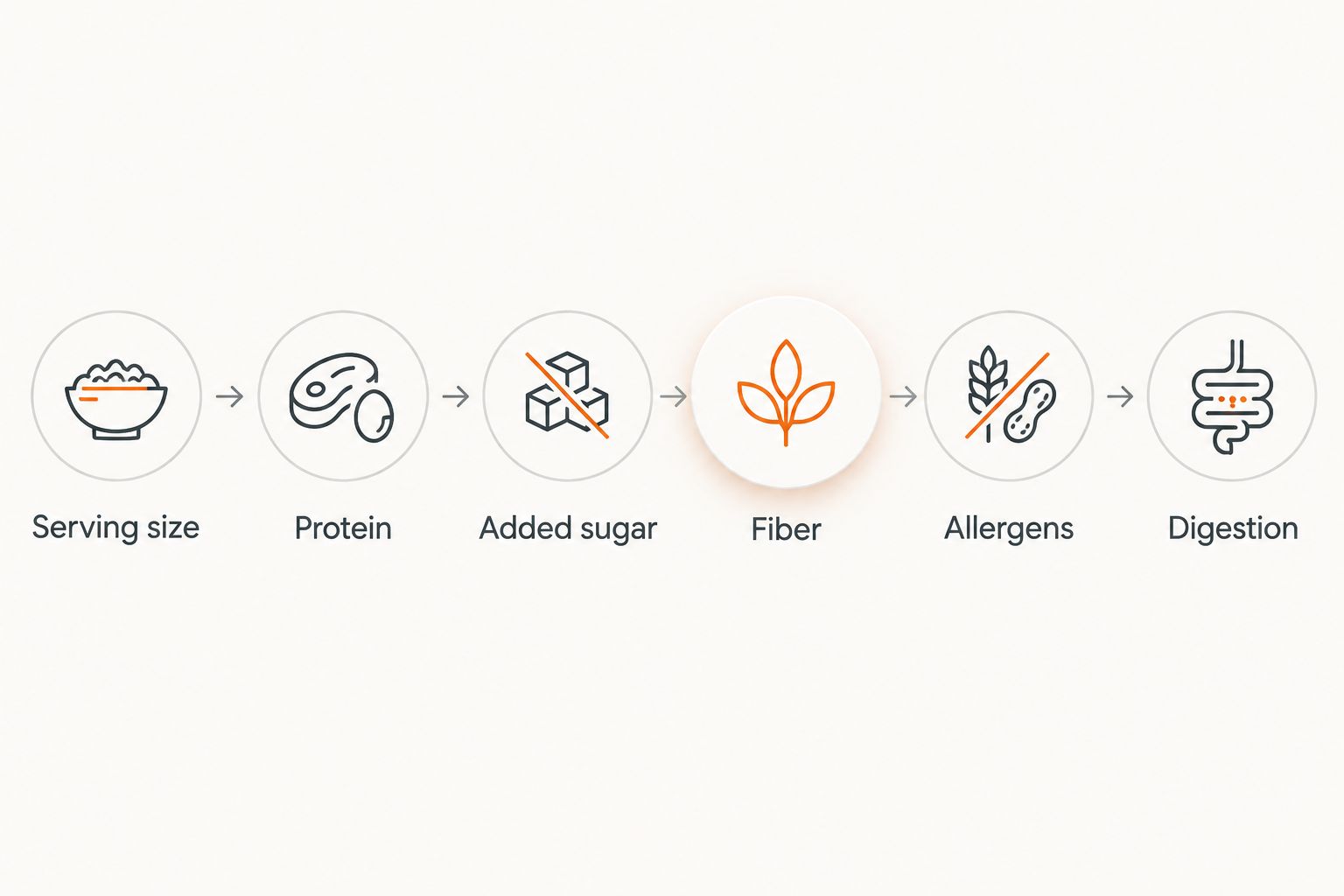
Read the panel for the exact bar and flavor you plan to eat. Formulas differ, and a category label does not establish the nutrition of an individual product. In 2026, use the same checklist each time you try a new bar:
- Check the serving size. Make sure the figures you are comparing describe the amount you will actually eat. A larger bar can look attractive on protein while contributing more of everything else, too.
- Count protein within your full day. The National Academies' adult Recommended Dietary Allowance is 0.8 grams of protein per kilogram of body weight per day. That is a general baseline, not a training-specific target; a 75-kilogram adult reaches 60 grams at that baseline. Count protein from meals as well as the bar rather than treating the bar as a separate goal.
- Look at added sugar. Use the Added Sugars line, not just Total Sugars. The FDA's Daily Value for added sugars is 50 grams on a 2,000-calorie diet. Your needs are individual, but the label helps you see what one bar contributes to the day.
- Look at fiber and the rest of your meals. The FDA's fiber Daily Value is 28 grams on a 2,000-calorie diet. A bar can contribute fiber, but check whether you also get it from foods such as beans, fruit, vegetables and whole grains.
- Read the ingredients and allergen statement. Check for ingredients you avoid, including milk, peanuts, tree nuts or soy where listed. Do not infer that a bar is suitable for an allergy or dietary restriction from its flavor name or front-of-pack wording.
- Pay attention to digestion. Some bars use sugar alcohols or added fibers that do not agree with everyone. If a bar consistently leaves you uncomfortable, choose a different snack instead of trying to force it into a daily plan.
The FDA describes 5% Daily Value or less as low and 20% Daily Value or more as high when reading a Nutrition Facts label. Those reference points help you compare packaged foods; they do not make a bar healthy or unhealthy on their own. For someone training hard, the useful question is what the entire day provides.
Keep the checklist beside the Nutrition Facts panel, not beside a marketing claim. The front of a wrapper can describe a flavor or eating occasion, while the panel tells you what is in the serving. That distinction is particularly useful when two bars appear similar at a glance.
Why the answer varies from person to person
There is no universal best bar for every daily routine. These factors change the answer without changing the basic rule that a bar is food, not a substitute for a varied diet:
- Your other meals. A bar alongside balanced meals plays a different role from a bar that routinely replaces lunch.
- Your protein intake from food. If meals already cover your needs, a bar is an optional snack rather than a requirement for gains.
- The bar's actual label. Protein, added sugar and fiber differ between products and flavors. Compare the serving you will eat.
- Your ingredient restrictions. Allergens and dietary preferences can rule out a bar before its protein content matters.
- Your digestion. A snack you cannot comfortably eat every day is a poor daily choice, whatever the package promises.
- Your training schedule. Portability matters when you have little time between a workout and other commitments; it matters less when you can eat a meal.
If you manage a condition that requires attention to protein, sugar or other nutrients, follow guidance from your clinician or registered dietitian. A general answer about daily bars cannot account for your individual nutrition plan. The same applies when you are choosing a bar for a child rather than for yourself.
Protein bar or regular food: which works better every day?
For a regular meal, food that lets you combine protein with other food groups is the better default. You can build a plate around your appetite and include foods a bar does not necessarily provide. The trade-off is time: shopping, preparation and access are not always convenient around workouts or work.
For a snack you need to carry, a bar can win on practicality. You know what you packed, and you can read its label before it becomes part of your routine. The downside is that convenience can hide repetition: eating the same bar daily is easy even when your meals are short on variety.
A shake sits between the two choices. You can drink protein when chewing a bar is unappealing, and you can combine a shake with other foods. But a shake is not automatically a meal, either. Consider what accompanies it rather than comparing the words protein bar and protein shake as if either name settles the nutrition question.
Tiger Fitness is best for lifters who want to compare protein-bar formats against their own food and training routine, not replace nutrition decisions with a product label. The retailer carries bars and other sports-nutrition products, but the right daily snack depends on the ingredient list, your meals and your response to it.
How to make a daily bar work without relying on it
Treat the bar as a planned snack, not an insurance policy against a poor day of eating. First, decide when you actually need something portable. Then check whether that bar fills the gap between meals or merely adds food you did not want or need.
If you train before work, packing a bar can give you an option for the period before your next meal. If you already have breakfast ready, eat breakfast. Neither choice has special status because of the workout; consistency across meals is the useful part of the plan.
Pairing a bar with another food can make the snack better suited to your appetite. Fruit is a practical option when you want produce alongside it, while water gives you something to drink during a busy day. These are ways to build a snack, not requirements for the bar to count.
In 2026, compare any bars you are considering by their current labels rather than assuming that similar names mean similar nutrition. Tiger Fitness lists multiple bar options; check each product's ingredients and Nutrition Facts information before deciding which belongs in your routine. A bar you enjoy and digest comfortably is more useful than one you choose for a single headline number.
For example, Tiger Fitness carries the Outright® Plant Based Vegan Bar and HTLT CICO Bar. Their product descriptions identify different formats, but neither description tells you how either one will fit your full day of eating. Check the current label and your dietary needs before choosing.
Protein bars to compare

A plant-based vegan bar; check the current label for ingredients and nutrition.
$3.19

Described as a high-protein, low-sugar bar; compare the current Nutrition Facts panel.
$2.80
Can a protein bar every day help me build muscle?
A protein bar can help you reach your daily protein intake; the bar itself does not build muscle. Resistance training and adequate nutrition across the day do the work. Count the protein on the actual bar label, then look at what your meals provide before deciding whether you need an additional snack.
You do not need to eat the bar immediately after lifting for it to count toward your day. Choose a time when eating it makes your routine easier. If a proper meal is available and suits your appetite, you can eat that instead.
Is it okay to replace breakfast with a protein bar every day?
A bar is not an automatic replacement for breakfast. Whether it serves as enough food depends on its label, your appetite and what you eat later. If a bar alone leaves you hungry, add other foods or make time for a meal rather than assuming its protein content covers breakfast.
Think beyond the morning protein total. Breakfast can also be an opportunity to eat fruit, grains and other foods you might miss during a rushed day. If your schedule demands a bar occasionally, treat it as a practical fallback, not proof that breakfast no longer needs planning.
When should I stop eating the same protein bar daily?
Change the routine if the bar repeatedly upsets your stomach, conflicts with a dietary restriction or pushes balanced meals aside. You do not need to finish a box to justify trying a different snack. If symptoms persist or you have a medical condition affecting your diet, speak with an appropriate health professional.
Also reassess when your schedule changes. A portable bar can be useful during a packed training block and unnecessary when you have time to eat meals. Your snack should serve your routine, not dictate it.
FAQ
Is it bad to eat a protein bar every day in 2026?
No, a daily protein bar is generally fine when it fits your overall diet and agrees with your digestion. Check its label and avoid regularly using it in place of balanced meals.
How much protein should I look for in a daily protein bar?
There is no single protein amount every adult needs from a bar. Count the bar's label toward your daily intake; the National Academies' general adult baseline is 0.8 grams per kilogram of body weight per day, not a training-specific target.
Are protein bars better than protein shakes after a workout?
Neither format is automatically better after a workout. Compare the actual nutrition, your appetite and when you will next eat a meal.
Can I eat a protein bar instead of a meal?
A protein bar is not automatically a balanced meal. Check what it provides and what foods you will eat during the rest of the day before relying on one as a replacement.
Can protein bars cause bloating?
Some bars contain sugar alcohols or added fibers that can cause digestive discomfort for some people. Check the ingredients and change snacks if a particular bar repeatedly bothers you.
Should I avoid protein bars with added sugar?
You do not need to reject every bar with added sugar. Read the amount per serving and consider it within your full day's intake; the FDA's Daily Value is 50 grams on a 2,000-calorie diet.
Is a vegan protein bar always suitable for a food allergy?
No. Vegan describes a dietary format, not an assurance that a bar is free of every allergen. Read the ingredient list and allergen information for the exact product.
One last thing
The most useful test is not whether you can eat a bar every day. It is whether you would still choose that bar after reading its label and considering the meals around it. In 2026, keep a daily bar if it earns its place as a convenient snack; change the habit if it crowds out food you would rather eat.
Leave a comment