





Is Plant-Based Protein Powder Worth It for Beginners
Table of Contents
- The Direct Answer: Plant-Based Protein Powder Works, With Caveats
- Plant-Based vs. Whey Protein for Beginners: What the Research Shows
- Complete vs. Incomplete Protein Sources: Why This Matters for Your Goals
- Muscle Growth and Recovery: Can Plant Protein Deliver Results?
- Digestibility and Bioavailability: Why Some Plant Proteins Cause Bloating
- How to Calculate Daily Protein Intake and Meet It With Plant Sources
- Real Talk: The Pros, Cons, and Budget Breakdown for Beginners
- Conclusion
Last Updated: August 21, 2026
The Direct Answer: Plant-Based Protein Powder Works, With Caveats
Plant-based protein powder can support muscle growth and recovery when paired with resistance training. A study from the Journal of the International Society of Sports Nutrition found that pea protein was equally effective as whey protein at increasing muscle thickness. But equal effectiveness only matters if you're using it correctly.
According to [Mordor Intelligence's 2026 plant protein market analysis | morodorintelligence.com], the supplements segment is the fastest growing application in the plant protein market, with a projected CAGR of 6.12% through 2031. Beginners are choosing plant-based options at scale now.
The real question isn't whether plant-based protein works. It's whether the specific product you buy will deliver results without causing digestive issues, costing too much, or containing heavy metals that undermine your health.
Key Takeaway Plant-based protein powder works for muscle growth when paired with resistance training and adequate total protein intake. The challenge is finding a clean, affordable product that doesn't cause bloating or contain contaminants.
Plant-Based vs. Whey Protein for Beginners: What the Research Shows
Whey absorbs faster, plant-based digests slower. That's not good or bad, it's different, and which matters depends on your situation.
Whey has a complete amino acid profile and higher bioavailability, meaning your body absorbs more of it. Plant-based proteins often lack one or more essential amino acids. But beginners overweight this difference because they don't understand the real constraint: total daily protein intake.
According to research from Taylor & Francis on plant versus animal protein absorption, amino acid absorption was slower after plant protein meals compared to animal-based meals. For a beginner, slower absorption isn't a dealbreaker, it just means consume plant protein with meals rather than immediately post-workout.

The advantage of plant-based protein for beginners? No lactose issues, better environmental footprint, and it works. The disadvantage? You need slightly more total protein per day to hit the same muscle-building stimulus because the amino acid profile is incomplete and digestibility is lower.
| Factor | Whey Protein | Plant-Based Protein |
|---|---|---|
| Amino acid completeness | Complete (all 9 essential) | Often incomplete (may lack 1-2) |
| Bioavailability | 90-95% | 70-85% |
| Digestion speed | 30-60 minutes | 60-90 minutes |
| Lactose content | Present (unless isolate) | None |
| Heavy metal risk | Lower | Higher (5x more cadmium per Clean Label Project) |
Both work for beginners. Whey is more efficient gram-for-gram. Plant-based requires slightly higher total intake but offers dietary flexibility.
Watch Out A 2025 Clean Label Project study found that 47% of protein products exceeded federal or state safety thresholds for heavy metals, with plant-based powders containing five times more cadmium than whey-based counterparts. This isn't a reason to avoid plant-based protein, it's a reason to demand third-party testing.
Complete vs. Incomplete Protein Sources: Why This Matters for Your Goals
A complete protein contains all nine essential amino acids your body cannot manufacture. An incomplete protein lacks one or more.
Whey is complete. Most plant proteins are incomplete. This matters for muscle building because muscle protein synthesis requires all nine essential amino acids. If one is missing, the process stalls.
For beginners using a single plant-based protein source, combine it with complementary foods to get a complete amino acid profile. Pea protein plus rice protein equals complete. Pea protein alone does not.
Pea protein accounts for nearly 31.55% of usage in the plant-based protein powders market, according to Plant-based Protein Supplements Market analysis 2026-2035. But it's incomplete on its own. Most quality plant-based powders now use blends, pea, rice, and hemp combined, to create a complete amino acid profile without relying on soy.
Check the ingredient list. If it's a single plant protein source, pair it with food. If it's a blend of three or more plant proteins, it's likely complete and can stand alone.
Muscle Growth and Recovery: Can Plant Protein Deliver Results?
Yes. Plant protein supports muscle growth when total daily protein intake is adequate and you're following a structured resistance training program.
Resistance training creates microtears in muscle tissue. Protein provides amino acids that repair those tears, building back stronger. Plant-based protein provides those amino acids. The amino acids don't know whether they came from pea, whey, or chicken, they do the same job.
For beginners, consume 0.7-1 gram of protein per pound of body weight daily, distributed across 3-4 meals. Whether that protein comes from plant or animal sources matters far less than hitting that total.
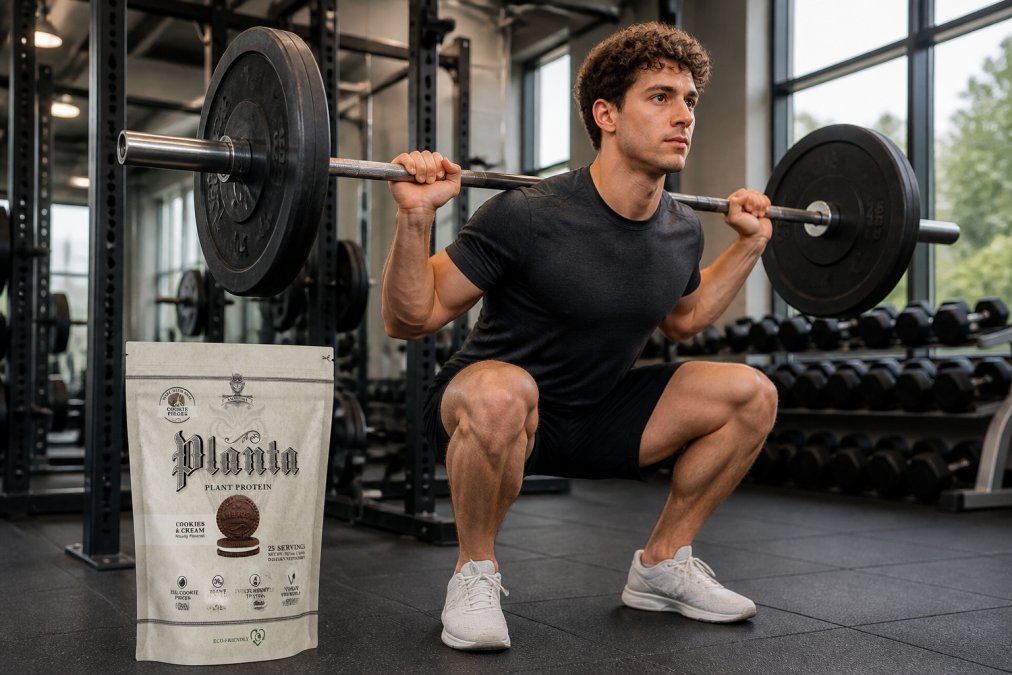
What matters is post-workout timing and total amino acid content. After resistance training, your muscles are primed to absorb amino acids for 2-4 hours. A plant-based protein shake consumed within this window supports recovery. The difference between sources is negligible for beginners.
Plant-based protein digests slower than whey, providing steadier amino acid release over a longer period. For beginners, this is an advantage during the day, sustained amino acid availability supports muscle protein synthesis longer. Immediately post-workout, whey's faster absorption gets amino acids to muscles slightly faster. For beginners, this difference is measurable but not decisive.
:::pro-tip Combine your plant-based protein shake with a carbohydrate source post-workout. The carbs spike insulin, driving amino acids into muscle tissue more efficiently. A banana or rice cakes with your shake amplifies recovery. :::
Digestibility and Bioavailability: Why Some Plant Proteins Cause Bloating
Plant-based proteins are harder for your digestive system to break down than animal proteins. Plant proteins come wrapped in fiber and complex matrices that your gut enzymes must work through. Animal proteins are simpler structures, so your digestive system processes them faster.
The practical result: bloating, gas, and digestive distress. According to research from A*STAR Singapore Institute of Food and Biotechnology Innovation, plant-based products presented lower digestibility due to their structure compared to animal-based products.
Bioavailability is how much protein your body actually absorbs and uses. Whey has bioavailability around 90-95%. Most plant proteins range from 70-85%. You need to consume slightly more plant protein to achieve the same muscle-building stimulus.
For beginners managing this:
-
Start with a blend, not a single source. Blended plant proteins digest more completely than single-source powders.
-
Consume with food, not alone. A plant protein shake mixed with a meal digests much more smoothly than alone.
-
Choose isolate over concentrate when possible. Plant protein isolates have been processed to remove more fiber and complex compounds that cause bloating.
-
Give your gut time to adapt. Start with smaller servings, 20 grams instead of 30, and increase over 2-3 weeks. Your gut bacteria will adapt, and bloating will decrease.
Products like Rule 1 Plant Protein and Nutrakey V Pro are designed with beginner digestion in mind.

How to Calculate Daily Protein Intake and Meet It With Plant Sources
Your daily protein requirement depends on your goal. For muscle building, the research consensus is 0.7-1 gram per pound of body weight daily. For weight loss while preserving muscle, aim for the higher end. For general health, 0.4-0.6 grams per pound is adequate.
A 180-pound beginner aiming to build muscle needs 126-180 grams of protein daily. Spread across four meals, that's 31-45 grams per meal.
One plant-based protein shake typically provides 20-30 grams of protein. The other three meals need to come from whole foods: beans, lentils, tofu, tempeh, nuts, seeds, whole grains, and vegetables.
Here's a realistic daily breakdown for a 180-pound beginner:
- Breakfast: 30g (oatmeal with protein powder + almond butter)
- Lunch: 40g (lentil-based meal with quinoa)
- Snack: 25g (protein shake)
- Dinner: 45g (tofu stir-fry with brown rice and beans)
- Total: 140 grams
Most beginners assume they need a shake with every meal. They don't. Whole food plant sources provide complete nutrition that powder cannot: fiber, micronutrients, phytonutrients. Powder is a convenience tool, not a meal replacement.
The calculation is simple: (your body weight in pounds) × (0.7 to 1.0) = daily protein target in grams. Divide by meals. Track for one week to see where you actually land. Adjust.
Tiger Fitness offers free fitness calculators that can help you dial in your specific macronutrient targets.
Real Talk: The Pros, Cons, and Budget Breakdown for Beginners
The Pros:
Plant-based protein powder is convenient. You don't have to cook or think. Scoop, shake, drink. For beginners juggling work, training, and life, that convenience has real value. It works. The research is clear.
It's inclusive. If you're vegan, vegetarian, lactose intolerant, or prefer not to consume animal products, plant-based protein removes a barrier to hitting your daily protein target.
For sustainability focused beginners, plant-based protein has a lower environmental footprint than whey. According to Dr. Andrew Berardy from Loma Linda University, "The lower overall environmental impact of plant-based production systems means that the environmental footprint of plant-based proteins is less sensitive to changes over time than that of whey protein."
The Cons:
Plant-based protein powder is more expensive per serving than whey. Over a year of daily use, that's a significant difference for beginners on a budget.
It tastes worse. Most plant-based powders have a chalky, earthy, or slightly bitter flavor requiring masking with fruit, nut butter, or flavored liquids.
The texture is grittier. It doesn't mix as smoothly as whey isolate. You need a shaker bottle or blender.
Most importantly, the contamination risk is real. According to the Clean Label Project's 2025 study, plant-based protein powders contained five times more cadmium than whey-based counterparts. This isn't a dealbreaker, it's a reason to demand third-party testing and choose brands that publish those results.
Budget Breakdown:
Whole food plant protein sources cost less:
- Dried lentils: $0.15-$0.25 per serving (25g protein)
- Canned beans: $0.10-$0.20 per serving (15g protein)
- Tofu: $0.30-$0.50 per serving (20g protein)
The math is clear: whole foods are cheaper. But they require cooking, planning, and preparation. Powder is faster and more convenient. For beginners, that convenience is worth the premium, as long as you're not relying on powder for all your protein. Use it strategically: post-workout, when traveling, or when whole food options aren't available.
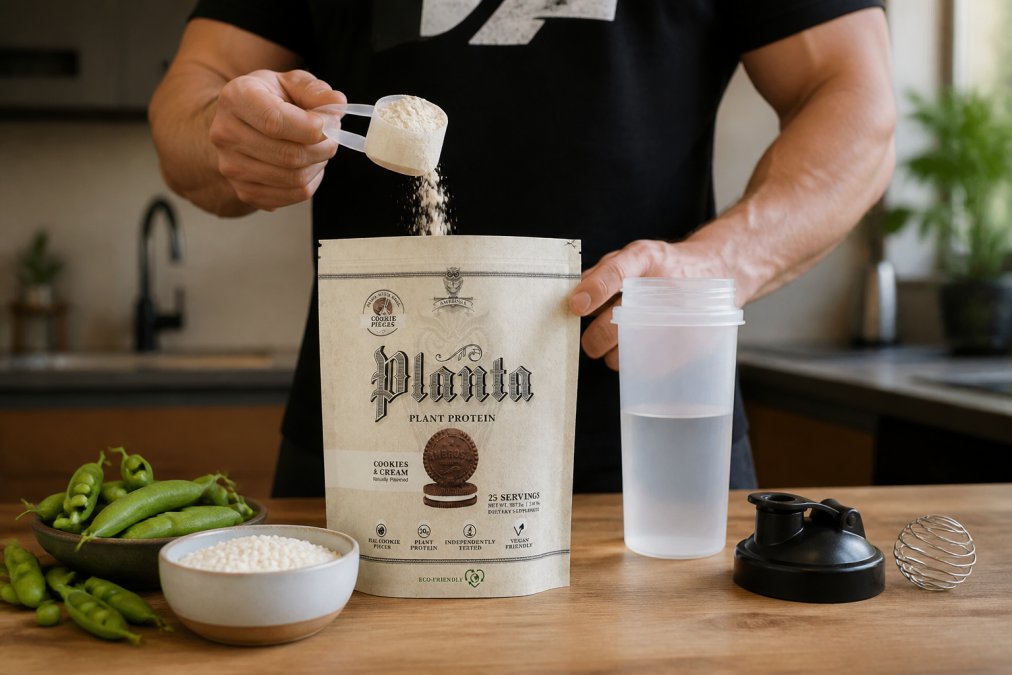
Products like Ambrosia Planta or NOW Sports Plant Protein Complex represent mid-range options that balance cost, quality, and third-party testing.

Watch Out Check the label for third-party testing certification. NSF Certified for Sport, Informed Choice, or USP Verified indicate the product has been independently tested for contaminants and label accuracy. If it's not on the label, the brand probably didn't test it.
Conclusion
Is plant-based protein powder worth it for beginners? Yes, if you use it strategically and choose a tested product.
Plant-based protein supports muscle growth and recovery when paired with resistance training and adequate total daily protein intake. But it's not a magic solution. It's a convenience tool that fits into a broader nutrition strategy, not a replacement for whole foods or consistent training.
For beginners, the real value is removing one barrier to hitting your daily protein target. If you're vegan, lactose intolerant, or prefer plant-based options, a quality powder makes consistency easier. The constraint is choosing one that's been third-party tested for heavy metals.
Start with Tiger Fitness. We carry tested plant-based options like Ambrosia Planta and Rule 1 Plant Protein that balance cost, quality, and results. Use our free fitness calculators to dial in your daily protein target, then build a nutrition strategy around whole foods with powder as a supplement, not the foundation. Train hard, eat consistently, and reassess after 8-12 weeks. That's how beginners actually see results.
=== FAQ ANSWERS (audit these too, same rules) ===
[1] Q: Does plant-based protein build muscle as effectively as whey for beginners? A: Yes, if you hit your total daily protein target and train hard. Research shows pea protein was equally effective as whey at increasing muscle thickness when paired with resistance training. The key is consuming enough total protein (0.7-1g per pound of body weight daily) and performing progressive strength training. Plant protein may absorb slower than whey, so consistency across your day matters more than timing.
[2] Q: What should beginners look for in a plant-based protein powder? A: Look for third-party testing (NSF, Informed Choice, or Clean Label Project certified), a complete amino acid profile (all nine essential amino acids), and minimal additives. Pea protein isolate, brown rice protein, and soy protein are the most bioavailable sources. Avoid products with excessive gums, thickeners, or artificial sweeteners if you're prone to bloating. Check labels for heavy metal screening, 47% of protein products tested exceeded federal safety thresholds for heavy metals.
[3] Q: How much plant-based protein powder do I actually need per day? A: Start by calculating your daily protein target: multiply your body weight in pounds by 0.7-1.0 grams. For a 180-pound beginner, that's 126-180 grams daily. One scoop of plant protein powder typically provides 20-25 grams. Use powder to fill gaps after whole food sources, aim for 3-4 servings of whole protein daily, then supplement with powder as needed. This prevents over-reliance on supplements and improves nutrient variety.
[4] Q: Are plant-based protein powders worth the cost compared to whey? A: Plant-based powders cost more per serving than whey. However, if you have dairy intolerance, follow a vegan diet, or prioritize sustainability, the premium is justified. For pure cost efficiency, whey wins. But if digestive comfort or dietary alignment matters to you, plant protein's higher price becomes a reasonable trade-off. Calculate your cost per serving and compare against your budget and goals.
Frequently Asked Questions
Does plant-based protein build muscle as effectively as whey for beginners?
Yes, if you hit your total daily protein target and train hard. Research shows pea protein was equally effective as whey at increasing muscle thickness when paired with resistance training. The key is consuming enough total protein (0.7-1g per pound of body weight daily) and performing progressive strength training. Plant protein may absorb slower than whey, so consistency across your day matters more than timing.
What should beginners look for in a plant-based protein powder?
Look for third-party testing (NSF, Informed Choice, or Clean Label Project certified), a complete amino acid profile (all nine essential amino acids), and minimal additives. Pea protein isolate, brown rice protein, and soy protein are the most bioavailable sources. Avoid products with excessive gums, thickeners, or artificial sweeteners if you're prone to bloating. Check labels for heavy metal screening, 47% of protein products tested exceeded federal safety thresholds for heavy metals.
How much plant-based protein powder do I actually need per day?
Start by calculating your daily protein target: multiply your body weight in pounds by 0.7-1.0 grams. For a 180-pound beginner, that's 126-180 grams daily. One scoop of plant protein powder typically provides 20-25 grams. Use powder to fill gaps after whole food sources, aim for 3-4 servings of whole protein daily, then supplement with powder as needed. This prevents over reliance on supplements and improves nutrient variety.
Are plant-based protein powders worth the cost compared to whey?
Plant-based powders cost more per serving than whey. However, if you have dairy intolerance, follow a vegan diet, or prioritize sustainability, the premium is justified. For pure cost efficiency, whey wins. But if digestive comfort or dietary alignment matters to you, plant protein's higher price becomes a reasonable trade-off. Calculate your cost per serving and compare against your budget and goals.
Leave a comment