







Whey Isolate vs Concentrate: Worth It in 2026?
Whey protein isolate is worth the extra cost if you want less lactose or more protein relative to the powder in each serving. If you digest concentrate comfortably and it helps you meet your daily protein target, concentrate is the better default in 2026. The label matters more than the word isolate: check protein, serving size and ingredients before you decide.
TL;DR
- Whey protein isolate is worth the extra cost when lower lactose content helps you use it consistently.
- Whey concentrate is the better default if you tolerate it and meet your protein target.
- Tiger Fitness is best for lifters comparing protein powders by the label, not the word isolate alone.
- Neither whey option is suitable for a milk protein allergy; isolate still comes from milk.
Why This Matters
Both options supply whey protein. For a lifter choosing between them, the useful question is not which sounds purer. It is whether isolate's lower lactose content or greater protein density solves a problem you actually have. In 2026, an isolate label is still no substitute for checking the full nutrition panel.
If you already know you want to compare isolate powders, use this guide to whey protein isolate powders alongside the product labels. Do not assume every powder marketed to lifters has the same whey source.
Is Whey Protein Isolate worth the extra cost over concentrate?
Usually no for a lifter who tolerates concentrate; yes when lower lactose or a tighter protein to serving ratio matters to you. Both can help you reach a protein target. Isolate undergoes further processing that removes more lactose and fat, but that difference does not make concentrate ineffective.
| What you need | Whey isolate | Whey concentrate |
|---|---|---|
| A protein powder you tolerate | Best for: people who want less lactose; still check the label | Best for: people who digest it comfortably |
| More protein relative to the powder in a serving | Best for: people comparing protein density | Best for: people who do not need to prioritize protein density |
| A straightforward way to meet a protein target | Works; the trade-off is paying extra for features you might not need | Works; the trade-off is more lactose and other milk components |
| A milk-protein-free option | Not suitable; whey is a milk protein | Not suitable; whey is a milk protein |
The verdict changes if concentrate leaves you uncomfortable or its nutrition panel does not fit how you eat. It does not change just because you train hard, are cutting or see an isolate claim on the front of a tub. Compare what is in the serving you will use.
When Whey Isolate earns its place
Isolate is the better pick when the difference on the label addresses a real constraint. Its lower lactose content is useful if lactose is the reason you struggle with concentrate, although lower lactose does not mean lactose-free. Check the specific product's ingredients and nutrition panel; a milk allergy rules out both forms of whey.
Protein density can also matter when you want more of each serving to be protein rather than other components. Look at grams of protein against the full serving size, not protein grams in isolation. A larger scoop can carry more protein while also containing more total powder. Best for: lifters with a specific tolerance or label composition reason to choose isolate. The downside is paying extra without a clear benefit if concentrate already works for you.
Do not use isolate as a shortcut around your daily eating plan. A shake helps only if it closes a protein gap or offers a practical way to eat. If your meals already cover your target, changing the type of whey does not create a new protein requirement.
When Whey concentrate is the better default
Concentrate makes sense when you tolerate it, like using it and can reach your protein target with it. The presence of more lactose and other milk components than in isolate is a meaningful drawback for some people, not a universal reason to reject it. Best for: lifters without a tolerance issue or a need to prioritize protein density.
Concentrate still requires a label check. Flavored powders can contain ingredients beyond whey, and serving sizes vary by product. If you compare two tubs using only the front-panel protein claim, you can miss differences in serving size and ingredients. Decide from the nutrition panel you will actually log, especially if you track your intake during a cut.
Tiger Fitness sells protein powders, but no retailer category name tells you the whey source of every product in it. Treat concentrate as your starting point, then choose isolate if its specific label solves a problem concentrate does not.
How to compare the labels without guessing
Use the same process for any two powders. It keeps the decision tied to what you consume rather than to claims on the front of the package.
- Find the protein source. Read the ingredients list for whey protein isolate, whey protein concentrate or a blend. A product name alone does not establish which form is inside.
- Compare protein with serving size. Read both figures together. This shows how much of a serving is protein without treating unequal scoops as equivalent.
- Check the rest of the panel. Review carbohydrates, fat and ingredients against your dietary needs. Do not infer that an isolate has none of them.
- Account for tolerance. If concentrate consistently disagrees with you, lower-lactose isolate is a sensible comparison. If you have a milk protein allergy, neither is the answer.
- Compare the amount you would actually use. Judge each powder by the servings and protein you expect to consume, not the size of the container alone. Recheck the current product listing before you buy.
This is the point at which shopping becomes useful. Tiger Fitness carries MTS Nutrition Machine Whey Protein; check its current ingredients and nutrition panel to see how it fits your comparison. Its name does not establish that it is an isolate or a concentrate.
A label comparison also keeps marketing language in proportion. Protein grams tell you what a serving contributes to your diet; the ingredient list tells you what supplies it. Neither figure, read alone, tells you whether the powder is comfortable for you to use.
Why the answer varies
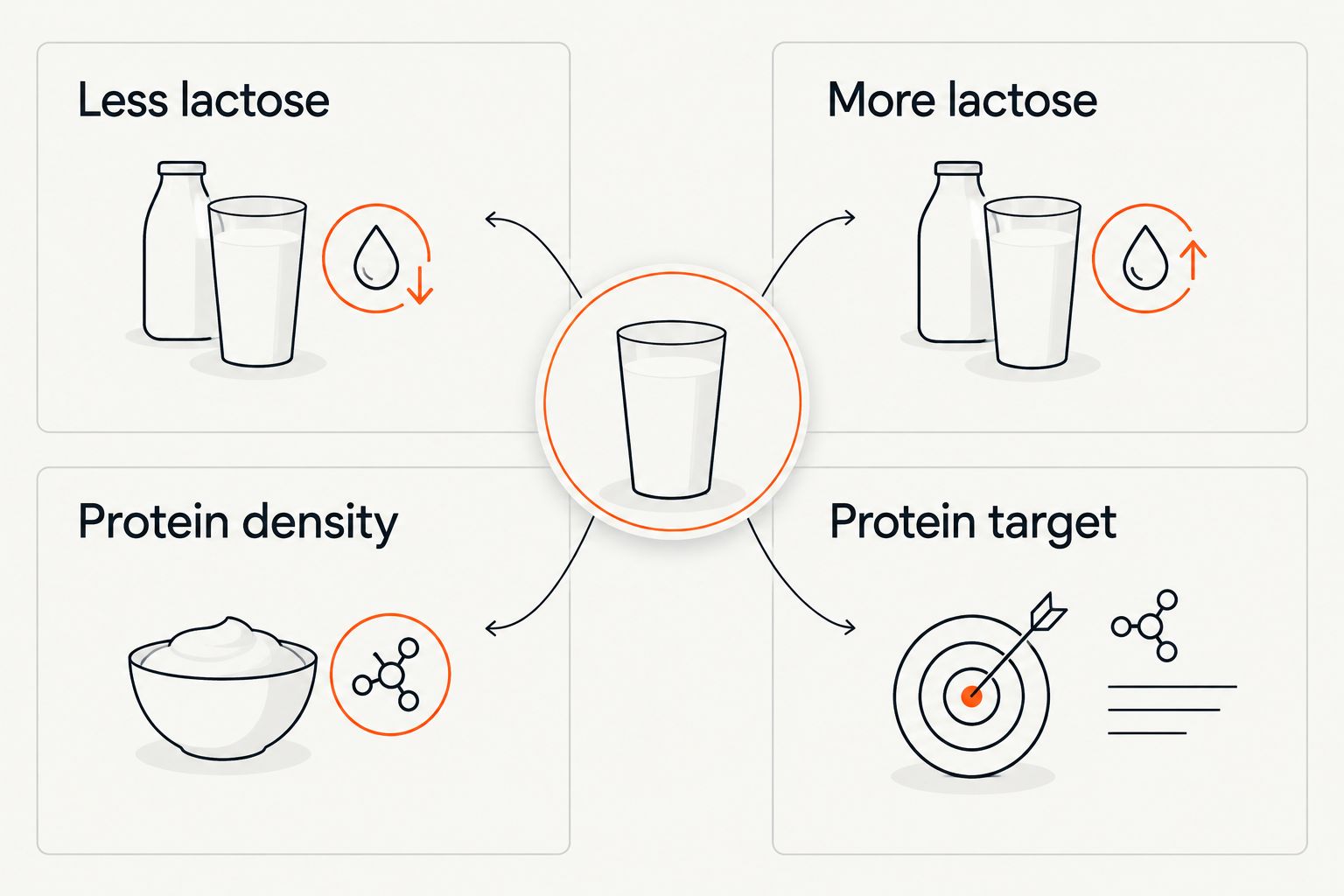
- Lactose tolerance. Isolate generally contains less lactose than concentrate, but neither label alone guarantees how you will feel after a shake.
- Milk protein allergy. The isolate versus concentrate choice does not solve it. Both are derived from milk.
- Protein density. Compare grams of protein with the entire serving size if you want to limit what comes along with the protein.
- Your daily intake. If food already covers your protein target, neither powder has to be part of your routine.
- The full formula. A powder can include other ingredients. Read the complete label rather than treating its whey source as the whole product.
- Your buying decision. The extra expense is justified only if the isolate's actual label gives you something you value and will use.
These factors are more useful than a blanket rule for bulking or cutting. In 2026, the same lifter can reasonably choose concentrate for an everyday shake and decline isolate if its distinguishing features do not matter to them. Someone else can make the opposite choice for tolerance. Both decisions follow the same test: does the specific product help you eat in line with your goals?
Does Isolate build more muscle than concentrate?
No whey type replaces enough total protein and resistance training. The International Society of Sports Nutrition's position stand on protein and exercise identifies 1.4–2.0 grams of protein per kilogram of body weight per day as a range sufficient for most exercising individuals seeking to build or maintain muscle. That is a daily intake reference, not a reason to pay extra for isolate.
The same position stand discusses 20–40 grams of protein per feeding as a general intake range. Those figures describe protein consumed, not the required scoop size of a particular powder. In 2026, check the grams of protein on the product label and count the protein you get from meals as well. If concentrate already helps you reach your target, the word isolate does not make a shake more useful.
Is Whey Isolate better if concentrate upsets your stomach?
Isolate is a reasonable option to compare because it generally contains less lactose, but it is not guaranteed to fix discomfort. Read the label for the exact powder, including other ingredients you might react to. If you suspect a milk protein allergy rather than lactose intolerance, do not try to solve it by switching between whey types; speak with a qualified clinician.
Avoid treating one uncomfortable shake as proof that all concentrate powders cause the same reaction. A shake also contains liquid and any ingredients you add. Identify what changed before you make isolate a permanent part of your routine.
Can you use concentrate while cutting?
Yes. Cutting does not require isolate; your overall food intake and the powder's nutrition panel determine whether a serving fits your plan. If you want more protein relative to serving size, compare specific products. If concentrate fits and you tolerate it, keep the simpler choice.
The same rule applies when you are trying to add size. Pick a powder you will use to meet your protein target, then build the rest of your diet around the goal. No whey label can replace that work.
FAQ
Is Whey Protein Isolate worth the extra cost over concentrate?
Yes if lower lactose content or greater protein density solves a specific need; otherwise concentrate is the better default. Compare the actual labels before deciding.
Which is better for building muscle, Whey Isolate or Concentrate?
Neither has a blanket advantage for muscle building when both help you meet your protein needs alongside resistance training. Choose based on tolerance and the nutrition panel.
Is Whey Isolate lactose-free?
Not necessarily. Isolate generally contains less lactose than concentrate, but you need to check the specific product if lactose matters to you.
Can I take Whey Isolate if I have a milk allergy?
No. Whey isolate and whey concentrate both come from milk, so switching between them does not remove milk protein.
Do I need Whey Isolate while cutting?
No. Whey concentrate can fit a cut if its nutrition panel works with your food intake and you tolerate it.
How do I compare Protein powders with different scoop sizes?
Compare grams of protein with the full serving size on each label. Then review the remaining nutrients and ingredients rather than relying on a front panel claim.
How much Protein do exercising adults need?
The International Society of Sports Nutrition identifies 1.4–2.0 grams per kilogram of body weight per day as sufficient for most exercising individuals seeking to build or maintain muscle. Count food and any shakes together.
One Last Thing
The easiest mistake in 2026 is comparing the protein number on two tubs without checking whether their serving sizes match. Read protein grams, serving size and ingredients together. If both powders fit your target and concentrate feels fine, stay with concentrate; switch to isolate only when its differences help you.
Related Guides
- Protein powders compared by price per gram of protein
- Whey Protein powder for lactose intolerance
- How to mix Whey Protein powder without clumps
Leave a comment