

Meet Your Fitness Goals With Equipment: A 2026 Guide
Table of Contents
- Define Your Fitness Goals With Precision
- How to Set SMART Fitness Goals That Actually Stick
- Assess Your Current Fitness Level
- Best Home Gym Equipment for Beginners
- How to Build a Home Gym That Matches Your Goals
- Cardio vs. Strength Training: Choose Based on Your Goals
- Track Progress and Stay Consistent With Your Equipment
- Conclusion
Last Updated: August 25, 2026
Define Your Fitness Goals With Precision
Most people walk into a gym without a clear target. They grab equipment, follow random routines, and wonder why progress stalls after a few weeks. Vague intentions don't drive results, specific goals do.
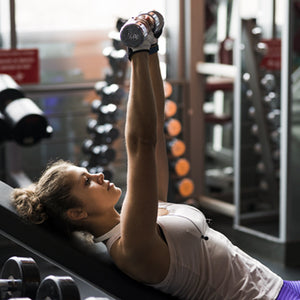
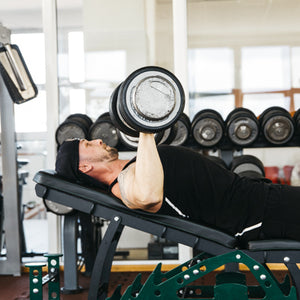
Before you buy a single dumbbell, know exactly what you're chasing. Are you building muscle? Losing fat? Improving cardiovascular capacity? Each demands different equipment, training frequency, and intensity. According to the Health & Fitness Association 2026 survey data, 54% of Americans planning fitness goals in 2026 target building muscle or strength, while 48% focus on improving mobility and posture (fortune.com).
The difference between "I want to get stronger" and "I want to add 50 pounds to my squat in 12 weeks" is the difference between hoping and succeeding. One is abstract. The other is measurable.
Here's what precision looks like: Instead of "build muscle," say "gain 10 pounds of lean mass while staying under 15% body fat." Instead of "get in shape," say "run a 5K without stopping in under 28 minutes." Specificity tells you which equipment you need, how often you need to use it, and when you've won.
Pro Tip Write your goal down on paper. Tape it to your bathroom mirror. The act of writing forces your brain to commit to specifics instead of staying in fantasy mode.
How to Set SMART Fitness Goals That Actually Stick
SMART goals, Specific, Measurable, Achievable, Relevant, and Time-bound, separate people who meet their fitness goals from people who quit after three weeks.
Specific means naming the exact outcome. Not "lose weight" but "lose 15 pounds of fat." Not "get stronger" but "deadlift 405 pounds for a triple."
Measurable means you can track it objectively. A scale, tape measure, stopwatch, or rep counter proves progress. According to a Grand View Research 2025 report, wearable technology ranks as the biggest fitness trend for the third consecutive year (grandviewresearch.com).
Achievable means realistic within your timeframe. Gaining 50 pounds of muscle in 8 weeks isn't happening. Gaining 8-12 pounds over 16 weeks while training hard and eating right is achievable. The goal should challenge you but not be so far out that you quit by week two.
Relevant means it actually matters to you, not what Instagram says you should want. If you hate running, "run a marathon" is a terrible goal. Your goal needs to align with how you actually want to spend your time.
Time-bound means you set a deadline. "I want to be stronger someday" is meaningless. "I want to add 25 pounds to my bench press by December 31st" gives you a finish line.
Brooke Harrison, founder and NASM-certified personal trainer at Asteria Health, puts it plainly: "The average person doesn't need anything fancy; they need the ability to progressively overload, which means gradually increasing the demand you place on your muscles over time. Whether that's more weight, more reps, or more difficulty in the movement itself, it's the actual mechanism behind building strength and muscle."
Progressive overload only works if you're tracking it. Write down your lifts. Log your workouts. The data proves whether your strategy is working.

Key Takeaway A SMART goal turns "I want to get fit" into "I will add 5 pounds to my squat every two weeks for the next 12 weeks." That specificity makes the difference between success and spinning your wheels.
Assess Your Current Fitness Level
You can't navigate from point A to point B if you don't know where A is. Assessing your baseline fitness determines which equipment you need and what intensity you can handle.
Start with these assessments:
-
Cardiovascular baseline: How long can you sustain moderate-intensity activity? A 12-minute run or 20-minute bike ride tells you your aerobic capacity. According to a 2021 study in the Journal of Sports Science and Medicine, treadmill exercise produced significantly higher maximal fat oxidation rates (0.61 g·min⁻¹) compared to elliptical (0.41 g·min⁻¹) and rowing machines (0.40 g·min⁻¹) (peer-reviewed research). Your baseline shows which cardio equipment fits your capacity.
-
Strength baseline: Test your max on basic lifts, squat, bench press, deadlift, or bodyweight movements like push-ups and pull-ups. Someone doing 5 push-ups needs different equipment than someone doing 25.
-
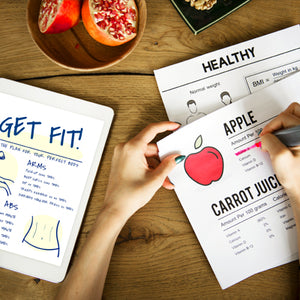
Body composition: Get weighed, measure your waist, and ideally get a body fat percentage. This is your anchor point for tracking fat loss or muscle gain.
-
Mobility and flexibility: Can you touch your toes? Perform a full squat? These tests reveal limitations that equipment can address.
You need real data, not assumptions, to build a training plan that works. The FREE TOOLS & FITNESS CALCULATORS at Tiger Fitness help you establish baselines and track these metrics without guessing.
Best Home Gym Equipment for Beginners
Beginners don't need everything. They need the right few things that cover the most ground.
Approximately 78 million Americans actively use home fitness equipment, with treadmills, stationary bikes, and dumbbells leading product sales, according to Industry Research 2026 home fitness market data. That concentration exists for a reason: these tools deliver results.
Here's what actually works:
Dumbbells and resistance bands cover strength training. A set of adjustable dumbbells from 5 to 50 pounds handles most compound movements, squats, deadlifts, bench press, rows, shoulder presses. Resistance bands add variety and progressive overload without needing a full rack.

A pull-up bar opens up back training and core work. Mounted in a doorway for under $50, it unlocks pull-ups, chin-ups, and hanging core exercises that dumbbells alone can't replicate.
A stationary bike or rowing machine handles cardiovascular training. Cardiovascular training equipment accounted for 60.19% revenue share in the connected fitness equipment industry in 2024. Rowing works more muscle groups than biking, but biking is easier to recover from for beginners.
A bench multiplies dumbbell effectiveness for bench press, incline press, and dumbbell rows.
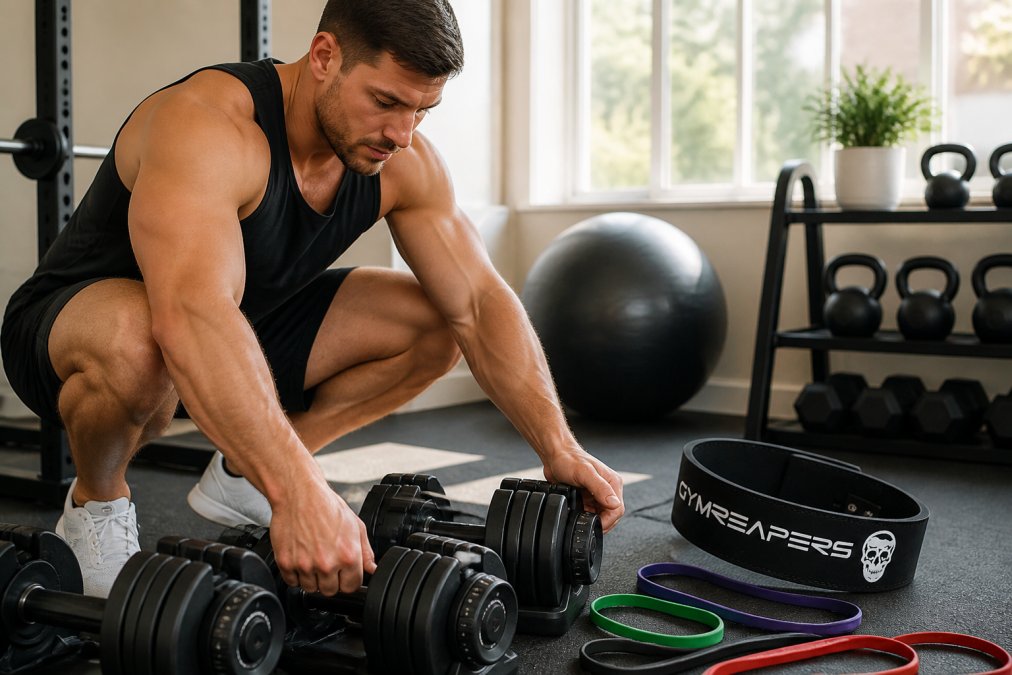
Start with these five items. Everything else is optional until you've mastered progressive overload with the basics. Too many beginners buy fancy equipment, get overwhelmed, and quit.
Watch Out Buying equipment you won't use is the fastest way to waste money and kill motivation. Start minimal. Add equipment only after you've proven you'll actually use what you have.
How to Build a Home Gym That Matches Your Goals
Your home gym setup should reflect your specific fitness goals, not Instagram aesthetics.
If your goal is building muscle and strength, you need heavy resistance and progressive overload capability, dumbbells, barbells, a bench, pull-up bar, and resistance bands. If your goal is fat loss and conditioning, you need cardio equipment and high-intensity training tools. If your goal is mobility and functional fitness, you need space, bands, and bodyweight options.

Map your goal to equipment:
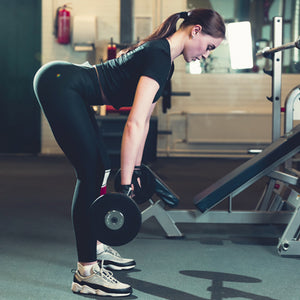
For muscle building: Dumbbells (adjustable preferred), barbell if space allows, bench, pull-up bar, resistance bands. Prioritize load and the ability to gradually increase it.
For fat loss and conditioning: Stationary bike, rowing machine, or treadmill for steady-state cardio. Jump rope for HIIT. Dumbbells for metabolic resistance training. Prioritize calorie expenditure and sustained intensity. professional results at home.
For mobility and functional fitness: Yoga mat, foam roller, resistance bands, light dumbbells, pull-up bar, and open floor space. Prioritize movement quality and range of motion.
You need adequate space (at least 6 feet by 8 feet), good lighting, proper flooring (rubber mats, plywood), and temperature control. Home installations of fitness equipment are advancing at a 7.06% CAGR between 2026 and 2031 as consumers embed permanent workout spaces in their living environments.
For apartment dwellers or small spaces, focus on adjustable dumbbells, resistance bands, and bodyweight movements. A stationary bike or rowing machine takes minimal space compared to a treadmill. Vertical storage and wall-mounted pull-up bars maximize usable floor space.
Best For Beginners with 100-200 square feet of space should prioritize adjustable dumbbells, resistance bands, a pull-up bar, and a rowing machine. This setup covers all major fitness goals without requiring a dedicated room.
Cardio vs. Strength Training: Choose Based on Your Goals
The equipment you buy depends on whether you prioritize cardiovascular adaptation or muscular development.
Cardio equipment builds aerobic capacity, burns calories, and improves heart health. Strength equipment builds muscle, increases bone density, and improves metabolic rate. Most people need both, but the ratio depends on your specific goal.
If your goal is building muscle and strength, strength training gets 70% of your training time and equipment budget. Cardio is supplementary, 2-3 sessions per week for recovery and conditioning.
If your goal is fat loss, you need both equally. Strength training preserves muscle during caloric deficit. Cardio creates the caloric deficit.
If your goal is cardiovascular health and endurance, cardio gets priority. But strength training still matters for bone health and metabolic support.
According to a meta-analysis published in Medicine (2023), whole-body EMS combined with traditional training showed significant improvements in muscle mass, body fat percentage, strength, and power. But here's the reality: you don't need fancy technology. Progressive overload with basic equipment, dumbbells, resistance bands, a bike, delivers results if you stay consistent.
Most beginners split their focus equally when their goal demands emphasis. Know your primary goal. Build your equipment setup around it. Add secondary equipment once you've mastered the primary work.
Track Progress and Stay Consistent With Your Equipment
You can't improve what you don't measure. Consistency requires proof that your effort is working.
Tracking shows you're progressing (which keeps you motivated) and reveals when you're plateauing (which tells you to adjust). Without data, you're training blind.
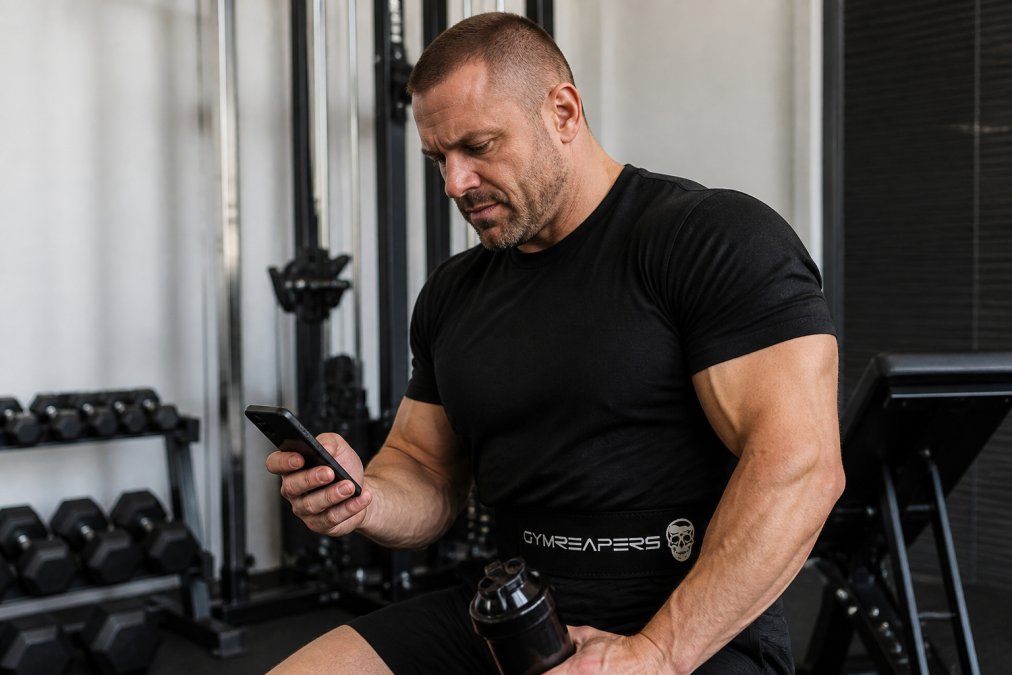
Here's what to track:
Strength metrics: Weight lifted, reps completed, sets performed. If you deadlifted 225 for 5 reps last month and 235 for 5 reps this month, you have proof of progress.
Cardio metrics: Distance covered, time taken, heart rate during effort. An 11-minute mile versus a 12-minute mile is measurable improvement.
Body composition: Weight, waist measurement, body fat percentage. These change slower than strength, but they're the ultimate proof of whether your training and nutrition are working together.
Workout frequency: How many sessions per week did you complete? Consistency beats perfection. Someone who trains 3 times per week for 52 weeks beats someone who trains 6 times per week for 8 weeks then quits.
A contrarian note on wearable technology: A 2016 University of Pittsburgh study found that participants who did not use a wearable device lost an average of 5.3 lbs more weight than those who did over 24 months. Some people become dependent on the gadget and lose focus on fundamentals. The best tracking tool is one you'll actually use consistently, whether that's a notebook, spreadsheet, or app.
Consistency beats intensity every time. Someone training 3 times per week for a year beats someone training 6 times per week for 2 months. Track your usage. Track your progress. Review it monthly. Adjust when progress stalls.
Meeting your fitness goals comes down to three things: clarity on what you're chasing, the right tools for that goal, and consistent effort over time. You don't need expensive gear or fancy technology. You need precision in planning, basic equipment that covers the fundamentals, and the discipline to show up week after week.
Tiger Fitness provides the equipment, guidance, and community support to make this straightforward. Access free workout plans, diet guides, and fitness calculators designed by athletes who understand what actually works. Start with your baseline assessment, define your SMART goal, and build a home gym setup that matches that specific target. Track your progress. Stay consistent. The results follow.
=== FAQ ANSWERS (audit these too, same rules) ===
[1] Q: What are some realistic fitness goals examples I can meet with home equipment? A: Concrete examples include: build 5 pounds of muscle in 12 weeks, increase your bench press by 25 pounds, complete 20 consecutive pull-ups, reduce body fat by 5 percentage points, or run a 5K in under 25 minutes. The key is specificity. Instead of 'get stronger,' aim for 'add 10 pounds to my squat.' Americans setting fitness goals for 2026 are targeting three main outcomes: building muscle or strength (50%), improving mobility and posture (48%), and enhancing mental health through physical activity (46%).
[2] Q: How do I choose the right fitness equipment for my specific goals? A: Match equipment to your primary goal. For muscle building, invest in free weights, barbells, and a power rack. For cardiovascular health, treadmills, stationary bikes, and rowing machines deliver results. Research shows treadmills produce maximal fat oxidation rates of 0.61 g·min⁻¹ compared to ellipticals at 0.41 g·min⁻¹. For functional fitness in small spaces, resistance bands and dumbbells offer versatility. Use Tiger Fitness's free fitness calculators to assess what aligns with your body composition and intensity levels.
[3] Q: What's the difference between SMART goals and regular fitness goals? A: SMART goals are Specific, Measurable, Achievable, Relevant, and Time-bound. A regular goal is 'lose weight.' A SMART goal is 'reduce body fat by 8 pounds in 16 weeks through three strength-training sessions and two cardio sessions weekly.' SMART goals eliminate ambiguity and create accountability. They force you to define exercise frequency, intensity levels, and recovery time upfront, which directly determines what equipment you actually need to purchase.
[4] Q: How long does it take to see results from home fitness equipment? A: Measurable progress appears within 3-4 weeks if your training plan and nutrition align with your goals. Strength gains show first: most lifters add 5-10 pounds to compound lifts in the first month. Body composition changes take 8-12 weeks to become visually noticeable. Cardiovascular improvements (reduced resting heart rate, increased aerobic capacity) appear within 2-3 weeks. Consistency matters more than intensity, showing up four times weekly for 8 weeks beats sporadic intense sessions. Track metrics weekly using a simple notebook or app to maintain exercise adherence.
Frequently Asked Questions
What are some realistic fitness goals examples I can meet with home equipment?
Concrete examples include: build 5 pounds of muscle in 12 weeks, increase your bench press by 25 pounds, complete 20 consecutive pull-ups, reduce body fat by 5 percentage points, or run a 5K in under 25 minutes. The key is specificity. Instead of 'get stronger,' aim for 'add 10 pounds to my squat.' Americans setting fitness goals for 2026 are targeting three main outcomes: building muscle or strength (50%), improving mobility and posture (48%), and enhancing mental health through physical activity (46%).
How do I choose the right fitness equipment for my specific goals?
Match equipment to your primary goal. For muscle building, invest in free weights, barbells, and a power rack. For cardiovascular health, treadmills, stationary bikes, and rowing machines deliver results. Research shows treadmills produce maximal fat oxidation rates of 0.61 g·min⁻¹ compared to ellipticals at 0.41 g·min⁻¹. For functional fitness in small spaces, resistance bands and dumbbells offer versatility. Use Tiger Fitness's free fitness calculators to assess what aligns with your body composition and intensity levels.
What's the difference between SMART goals and regular fitness goals?
SMART goals are Specific, Measurable, Achievable, Relevant, and Time-bound. A regular goal is 'lose weight.' A SMART goal is 'reduce body fat by 8 pounds in 16 weeks through three strength-training sessions and two cardio sessions weekly.' SMART goals eliminate ambiguity and create accountability. They force you to define exercise frequency, intensity levels, and recovery time upfront, which directly determines what equipment you actually need to purchase.
How long does it take to see results from home fitness equipment?
Measurable progress appears within 3-4 weeks if your training plan and nutrition align with your goals. Strength gains show first: most lifters add 5-10 pounds to compound lifts in the first month. Body composition changes take 8-12 weeks to become visually noticeable. Cardiovascular improvements (reduced resting heart rate, increased aerobic capacity) appear within 2-3 weeks. Consistency matters more than intensity, showing up four times weekly for 8 weeks beats sporadic intense sessions. Track metrics weekly using a simple notebook or app to maintain exercise adherence.
Leave a comment