
NEW NULLA BAR FLAVORS
In-Stock Now!

Building real strength doesn't happen in a bottle. It happens in the gym, in your kitchen, and in your recovery. But here's what most people miss: the right supplement stack removes friction from the process. It fills the gaps that food alone can't close.
According to Life Time's 2026 Health and Wellness Survey, 42.3% of people identified getting physically stronger as their primary health goal. Nearly half plan to lift more weights. That tells you something: strength training is serious business now. And if you're serious about it, your supplement stack either accelerates your progress or holds it back.
The difference between a mediocre stack and an optimized one isn't subtle. A well-designed supplement stack for strength gains addresses three specific bottlenecks: protein synthesis, energy production, and fatigue resistance. Miss one of these, and you're leaving gains on the table.
This guide from Tiger Fitness breaks down exactly how to build a stack that works. We're not talking about buying 10 supplements and hoping something sticks. We're talking about a strategic approach backed by research and real-world results.
Protein is non-negotiable. It's the raw material your muscles use to repair and grow. But most people get the dose wrong.
The evidence points to roughly 1.6 to 2.0 grams of protein per kilogram of body weight per day as the range where eating more stops building more muscle (FitChef, 2026). For an 80-kilogram person, this translates to about 130 to 160 grams daily. The popular 1-gram-per-pound target provides no measurable additional muscle growth.
Here's what matters: consistency and distribution. You can't eat 160 grams at one meal and expect your muscles to use all of it. Your body has a ceiling for how much protein it can synthesize per meal. For individuals over 40, that threshold rises to approximately 40 grams per meal, compared to about 25 grams for younger adults.
Stop chasing arbitrary numbers. Your protein requirement depends on three factors: your body weight, your training intensity, and your age.
If you weigh 180 pounds (82 kg), your daily target is 130-164 grams. If you're over 40, you need 40 grams per meal to trigger a full muscle-building response. That's the science. Increasing protein intake without increased physical activity is unlikely to improve muscle health, so don't waste money on excess.
The practical approach: divide your daily target by 4-5 meals. Aim for 30-40 grams per meal. That's one scoop of whey protein plus a palm-sized serving of carbs, or a 4-ounce chicken breast with rice. Use our FREE TOOLS & FITNESS CALCULATORS to dial in your exact targets based on your body weight and training goals.
Not all protein is created equal. Your muscles care about the amino acid profile, specifically the presence of all nine essential amino acids (EAAs).
Complete proteins contain all nine EAAs in adequate amounts. Whey protein isolate, casein, and whole eggs are complete. Plant-based sources like pea protein alone are incomplete, they're missing methionine and tryptophan in meaningful quantities.
This is where the research gets interesting: BCAAs (branched-chain amino acids) alone produce a weaker anabolic response compared to complete protein sources or full EAA mixtures (FitChef, Meto Health, Healthline, 2026). If you're plant-based, you need a complete EAA supplement or a combination of plant proteins (rice + pea, for example) to hit all nine.
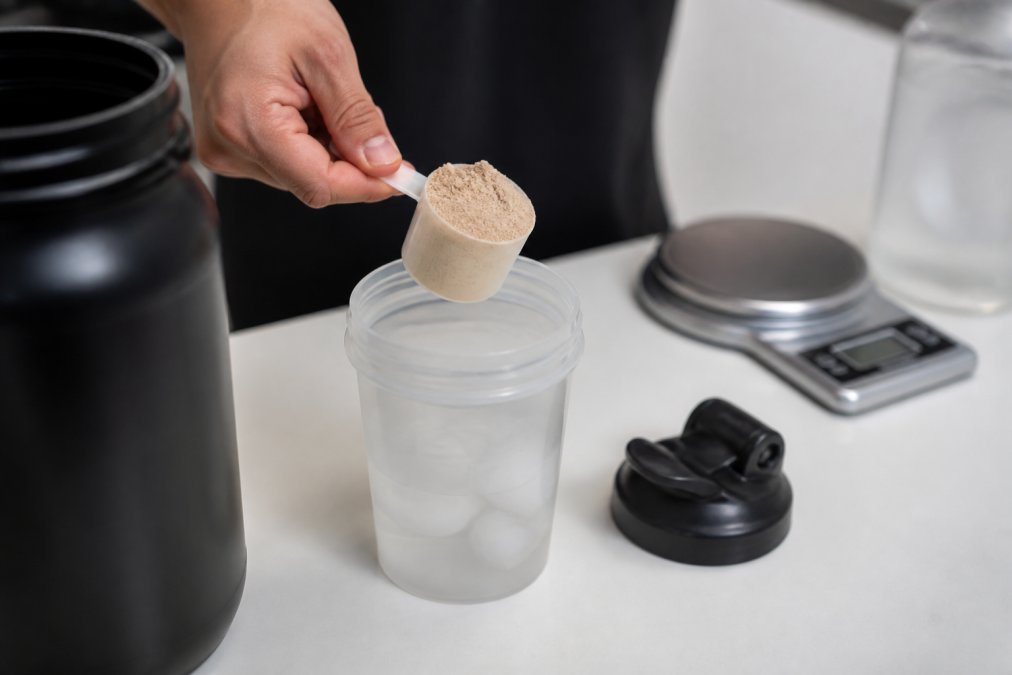
For a strength stack, this means: prioritize whey isolate or a complete plant-based blend. Skip standalone BCAAs unless you're in a fasted state or recovering from injury.
Creatine is the most researched supplement in strength training. The evidence is overwhelming: it works.
Creatine supplementation can increase one-rep max strength by 10-25% compared to placebo groups over comparable training periods (Ultimate Nutrition, 2026). It also increases the total volume of reps athletes can complete in a given workout. That's real, measurable strength gain.
Here's the mechanism: creatine increases ATP regeneration. ATP is your muscle's energy currency. More ATP = more reps at high intensity = more training stimulus = more strength adaptation.
Forget loading phases. They're unnecessary and they'll have you gaining water weight for no reason.
The protocol is simple: 5 grams per day, every single day. Consistency in daily saturation is more important than timing. You don't need to load with 20 grams per day for 5-7 days. You don't need to take it post-workout. You just need to take it daily.
Here's the timeline: after 3-4 weeks of daily dosing, your muscles are fully saturated with creatine. That's when you'll notice the difference in your lifts. You'll squeeze out an extra rep or two on your main compounds. You'll recover faster between sets.
At Tiger Fitness, we carry CleanForm Pürest Creatine™ and RAW Creatine Monohydrate, both pure micronized creatine monohydrate with zero fillers. The difference between brands is minimal at this point. Pick one and stick with it.


A 2026 study found that four weeks of creatine supplementation in individuals following a vegan diet enhanced muscle strength and lower-body muscular power (Ultimate Nutrition, 2026). This matters because plant-based athletes often struggle with creatine synthesis, supplementation closes that gap.
Creatine supports hypertrophy by increasing training capacity, satellite cell activity, anabolic hormone levels, and counteracting myostatin. It's not just a strength tool. It builds muscle.
The side effect most people worry about: water retention. Yes, you'll gain 2-3 pounds of water weight in the first week. That's intramuscular water, not subcutaneous bloat. It actually helps your muscles look fuller and recover better.
Pre-workout supplements are useful, but only if they contain the right ingredients.
Scientifically formulated pre-workout supplements can boost energy, endurance, strength, and focus (Xendurance, Garage Gym Reviews, Purist Nutrition, Mito Health, 2026). But most pre-workouts are loaded with filler ingredients that do nothing.
The three most evidence backed pre-workout ingredients are:
That's it. Everything else is secondary.
Caffeine is straightforward. It blocks adenosine receptors, delaying fatigue. For a 180-pound lifter, that's 120-270 mg per dose. Most pre-workouts contain 150-300 mg. Effective dose.
Beta-alanine raises muscle carnosine and reduces fatigue in high-intensity efforts lasting 1-4 minutes, leading to a modest but real 2-4 percent improvement in high-intensity capacity (Planfit, Farmacam LLC, 2026). However, a 2026 meta-analysis of 17 RCTs found zero benefit for repeated sprints. So beta-alanine helps with single heavy sets, not conditioning work. The tingling sensation you feel is harmless, that's carnosine accumulating in your muscles.
Citrulline malate increases blood flow and reduces fatigue during high-rep work. A 6-8 gram dose taken 30-60 minutes before training improves pump and endurance. This is especially useful for hypertrophy work where you're chasing the pump.
If you train in the morning or early afternoon, a full pre-workout with caffeine is optimal. You'll get the energy boost, the mental clarity, and the performance edge.
If you train in the evening, stimulant-free pump formulas with citrulline malate and beta-alanine are recommended to avoid disrupting sleep. You still get the blood flow and endurance benefits without the caffeine crash at 10 PM.
Don't take pre-workout every single day. Your body adapts to stimulants. Use it 4-5 times per week on your heavy compound days. Save it for when it matters.
This is where most people get careless. They buy whatever's cheapest and assume it's safe.
The FDA doesn't pre-approve supplements the way it does pharmaceuticals. That's important to understand. The burden of safety falls on the manufacturer. But here's what you need to know: third-party testing exists, and it matters.
Third-party testing means an independent lab (not the manufacturer) tests the product for purity, potency, and contaminants. Look for NSF Certified for Sport, Informed Choice, or USP verification on the label.
Heavy metals, lead, cadmium, arsenic, can accumulate in supplement ingredients, especially plant-based ones. A reputable brand tests for these. A cheap brand doesn't.
This isn't paranoia. It's due diligence. Your kidneys and liver process everything you ingest. If you're taking a supplement with heavy metal contamination, you're adding stress to organs that are already working hard.
Open the label. Look for these red flags:
Proprietary blends are a scam. If the label says "Performance Blend 5g" and lists 10 ingredients, you have no idea how much of each ingredient you're getting. Avoid them. The FDA allows proprietary blends, but manufacturers are not required to disclose the individual amounts of each ingredient within the blend, only the total weight of the blend and the ingredients in descending order by weight.
Artificial sweeteners like sucralose and ace-K are generally recognized as safe by the FDA in limited amounts for healthy people. However, some people report bloating and digestive issues. If that's you, look for stevia or erythritol.
Added sugars have no place in a strength supplement. If your protein powder has 5+ grams of sugar per serving, it's a dessert, not a supplement. The FDA requires labels for products containing 1 gram or more of added sugar per serving to declare "Includes 'X' g Added Sugars" beneath "Total Sugars."
Ingredient transparency matters. A quality brand lists exact doses for every ingredient. If they're hiding doses behind a blend, they're hiding something.
This is where strategy matters. You can't just throw supplements at the wall and hope they stick.
Recent reviews highlight that targeted combinations of supplements can enhance performance markers by 10-30% beyond single supplements alone, especially when addressing energy production, fatigue resistance, and recovery pathways (Xendurance, 2026). The key is addressing different bottlenecks.
Start here. This is your foundation:
Protein powder (whey isolate or complete plant-based blend): 1-2 servings daily to hit your protein target. Cost is minimal. Impact is massive.
Creatine monohydrate: 5 grams daily. Consistent, proven, affordable. This is non-negotiable for strength.
Pre-workout (caffeine-based or stimulant-free depending on timing): 4-5 times per week on heavy days. Improves work capacity and recovery.
That's your stack. This combination addresses protein synthesis, ATP regeneration, and fatigue resistance. Everything else is optional.

Once you've nailed the core three, you can add:
Beta-alanine (3-6 grams daily in divided doses): Stacks well with creatine and pre-workout. Increases carnosine buffering for high-rep work.
Citrulline malate (6-8 grams pre-workout): If your pre-workout doesn't contain it, add it separately. Improves pump and endurance without extra caffeine.
Electrolytes (sodium, potassium, magnesium): Especially if you're training hard and sweating heavily. Supports hydration and muscle function.
The rule: stack products that address different pathways. Creatine for ATP. Caffeine for CNS stimulation. Beta-alanine for buffering. Citrulline for blood flow. Each one does a different job.
Stacking works best when products address different bottlenecks, such as creatine for ATP regeneration, lactic acid buffers like beta-alanine for metabolic acidosis, and protein for muscle repair. Realistic expectations include improved workout quality, faster recovery, and modest but measurable gains in strength or body composition over 8-12+ weeks (Xendurance, 2026).
Mistake 1: Buying 10 supplements at once. You don't know which one works. You can't troubleshoot. Start with three. Add one variable at a time.
Mistake 2: Skipping the protein. You can't build muscle without adequate protein. No supplement compensates for inadequate intake. Get this right first.
Mistake 3: Inconsistent dosing. Creatine doesn't work if you take it sporadically. Pre-workout loses effectiveness if you use it daily. Consistency is the variable that matters most.
Mistake 4: Chasing trends. Every month there's a new "breakthrough" supplement. Most are marketing hype. Stick with what works: protein, creatine, caffeine, and citrulline. These have decades of research behind them.
Mistake 5: Ignoring label transparency. If you can't see the ingredient doses, don't buy it. You're paying for a mystery blend.
Mistake 6: Assuming more is better. A 200-gram protein shake isn't twice as effective as a 100-gram shake. Your body has limits on how much protein it can synthesize per meal. Excess is just expensive calories.
Your supplement stack is a tool, not a replacement for hard work. The best stack in the world won't build muscle if you're not training hard and eating enough protein.
But the right stack removes friction. It ensures you're hitting your protein targets, maintaining energy for intense training, and recovering faster. That's the real value.
Start with protein, creatine, and pre-workout. Master those three. Test them for 8-12 weeks. Track your lifts. If your strength is climbing and you're gaining lean mass, your stack is working.
According to research on supplement efficacy, the most successful athletes combine evidence-based supplementation with consistent training and nutrition. That's your formula.
Research from meta-analyses of 49 randomized controlled trials shows 1.6 to 2.0 grams of protein per kilogram of body weight daily is where muscle growth plateaus. For an 80-kilogram person, that's 130 to 160 grams daily. The popular 1-gram-per-pound target delivers no additional muscle growth. For those over 40, you need roughly 40 grams of protein per meal to trigger a full muscle-building response, compared to 25 grams for younger lifters.
Take 5 grams of creatine monohydrate daily, every single day. Consistency matters far more than timing. Research shows creatine increases one-rep max strength by 10-25% compared to placebo over comparable training periods. It also increases total training volume you can complete. Creatine works by increasing ATP regeneration, supporting satellite cell activity, and boosting anabolic hormone levels.
No. While BCAAs may slightly reduce delayed onset muscle soreness and mental fatigue during exercise, they're incomplete without the full spectrum of essential amino acids. Studies show BCAAs alone produce a weaker anabolic response than complete protein sources or full essential amino acid mixtures. If you're hitting your daily protein target with complete sources, BCAAs add no measurable benefit.
Look for third-party testing certifications from independent labs. Check the label for heavy metals testing results and verify the manufacturer discloses batch-specific testing data, not just general claims. The FDA classifies supplements as food products, not drugs, so manufacturers bear the responsibility for safety and accuracy. Avoid proprietary blends that hide individual ingredient amounts, and cross-reference ingredient lists against published research to confirm doses match what's been studied.
{"one"=>"Select 2 or 3 items to compare", "other"=>"{{ count }} of 3 items selected"}






Leave a comment