







Supplements for Body Recomposition: The Evidence Based Guide
Table of Contents
- What Is Body Recomposition and Why Supplements Matter
- Best Protein Powder for Muscle Growth During Recomposition
- Creatine Monohydrate Benefits for Recomp Goals
- How to Track Macros for Body Recomposition Success
- Essential Supplements Beyond Protein and Creatine
- Building Your Body Recomposition Supplement Stack
- Timing, Dosage, and Long-Term Cycling Protocols
- Common Mistakes That Kill Body Recomposition Results
Last Updated: August 26, 2026
What Is Body Recomposition and Why Supplements Matter
Body recomposition is the simultaneous process of losing fat while building muscle, defying the traditional bulk-and-cut cycle most lifters accept as inevitable. Unlike simple weight loss, body recomposition for fitness goals requires precise resistance training, caloric control, and strategic supplementation to shift body composition while preserving lean tissue.
Most people think they have to choose: bulk up and get soft, or cut down and lose muscle. Wrong. According to Nutrola's 2026 Body Recomposition Data Report, 34% of users successfully achieved simultaneous fat loss and muscle gain over 12 months, losing an average of 4.8 kg of fat while gaining 1.2 kg of lean mass. The difference came down to three factors: adequate protein intake (averaging 2.2 g/kg bodyweight), consistent resistance training (3.4 sessions weekly), and the right supplement stack.
The global sports supplement market hit $9.394 billion in the United States alone in 2025, with muscle building accounting for 32.4% of all supplement applications (Fact.MR Global Market Analysis Report 2026). That's money backing results. But not all supplements are created equal, and most lifters waste cash on products that don't move the needle on body recomposition.
At Tiger Fitness, we've analyzed which supplements actually work for body recomposition and which ones are marketing noise. Below, we'll show you exactly which products to stack, how much to take, and when to take them for maximum fat loss and muscle retention.
Best Protein Powder for Muscle Growth During Recomposition
Protein is non-negotiable. A 2018 meta-analysis of 49 studies involving 1,863 participants found that 1.6 grams per kilogram of bodyweight per day maximizes resistance training-induced muscle gains. Beyond that threshold, additional protein provided zero additional benefit for muscle growth. For body recomposition specifically, whey protein isolate outperforms other sources for speed and bioavailability.
Recent research from February 2026 compared 13 types of protein supplements across 78 studies with 4,755 participants. Collagen ranked first for enhancing fat-free mass and strength gains during resistance training, followed closely by whey protein. But collagen supports joint health and recovery over weeks, not immediately. For pure muscle protein synthesis and rapid amino acid delivery, whey isolate wins.
Whey Protein Isolate vs. Collagen for Lean Mass
Whey protein isolate delivers 90%+ protein content with minimal lactose and fat. It spikes amino acid levels in your bloodstream within 30 minutes, directly stimulating muscle protein synthesis. Whey increases muscle protein synthesis by approximately 50% compared to BCAAs alone, which only achieved 22%.
Collagen peptides work differently. They're slower to absorb but provide glycine and proline, amino acids that support connective tissue and joint health. For someone in a caloric deficit doing heavy compound movements, collagen reduces joint stress and supports recovery. The ideal approach: use whey isolate as your primary protein source (1.2-1.6g/kg bodyweight) and add collagen peptides (10-20g daily) for joint support.
Timing matters. Consume whey within 2 hours post-workout when muscle protein synthesis is elevated. Collagen can be taken anytime. Use both: whey handles the muscle-building stimulus; collagen handles durability.
Creatine Monohydrate Benefits for Recomp Goals
Creatine monohydrate is the most researched supplement in existence, with over 1,000 peer-reviewed studies confirming its effectiveness. It works by replenishing ATP faster, allowing your muscles to produce more force during training. More work capacity means more stimulus for hypertrophy and strength gains.
For body recomposition specifically, creatine is a game-changer. A 2024 study found that creatine supplementation combined with resistance training increased lean body mass by 1.14 kilograms and reduced body fat percentage by 0.88 percent in adults under 50. A separate 2022 trial showed that individuals taking 5 grams daily lost 1.5-2.2% more body fat over eight weeks and gained 2.3 kg of muscle compared to those who didn't supplement.
Creatine increases work capacity, which drives more training volume, which triggers more hypertrophy. During a caloric deficit, that extra stimulus is critical for muscle retention. The dosage is straightforward: 5 grams daily, every day, no loading phase necessary. It takes 3-4 weeks to saturate muscle tissue, but once it does, you'll notice strength gains and improved recovery.
One concern: water retention. Creatine pulls water into muscle cells (intramuscular), it doesn't make you look softer. Subcutaneous water (under the skin) is what kills definition. Creatine doesn't cause that. You'll actually look harder because you're building muscle while in a deficit.
How to Track Macros for Body Recomposition Success
Tracking macros is not optional for body recomposition. You can't achieve simultaneous fat loss and muscle gain without knowing your caloric intake and protein distribution. The Nutrola data showed that successful recomposition users tracked their food an average of 6.2 days per week.

Your baseline: consume a caloric deficit of 250-400 calories below maintenance. Larger deficits accelerate fat loss but increase muscle loss risk. Hit 1.6-2.2 grams of protein per kilogram of bodyweight daily, this is the single most important macro for body recomposition. Carbs and fats fill the remaining calories based on your training volume and preference.
A practical framework: start with your maintenance calories (bodyweight in pounds × 14-16 for sedentary, × 16-18 for moderate activity). Subtract 300 calories. Set protein to 1.8g/kg bodyweight. Fill remaining calories with carbs (prioritize training days) and fats (minimum 0.3g/kg for hormonal health). Track for two weeks. If scale weight doesn't move, subtract another 100 calories. If you're losing more than 1 pound weekly, add 100 calories back. start body recomposition.
Use a tracking app and leverage FREE TOOLS & FITNESS CALCULATORS to dial in your numbers precisely. MacroFactor research case study documented one athlete losing 19 pounds in four months (body fat dropping from 17% to 9.5%) while maintaining strength through consistent macro tracking. Consistency matters more than the tool.
Essential Supplements Beyond Protein and Creatine
Once protein and creatine are dialed in, three additional supplements move the needle: glucose disposal agents, essential amino acids during cuts, and recovery support.
Glucose Disposal Agents and Nutrient Partitioning
A glucose disposal agent (GDA) improves how your body handles carbohydrates, directing them toward muscle tissue instead of fat storage. This is macronutrient partitioning, the metabolic traffic cop deciding where calories go.
Berberine is the active compound backed by research. It improves insulin sensitivity and supports healthy glucose metabolism. Tiger Fitness carries Chemix GDA and Alpha Lion Gains Candy GlucoVantage, both featuring premium formulations designed to support nutrient partitioning during higher-carb meals and recomposition phases.

The mechanism: improved insulin sensitivity means your muscles absorb glucose more efficiently, reducing the amount that gets stored as fat. This is especially valuable when you're eating in a deficit but maintaining training volume, you need carbs for performance, and a GDA ensures they're used for muscle fuel, not fat storage.
Dosage: 500-1000mg daily of berberine or equivalent GDA. Timing doesn't matter; it works systemically. Stack it with your largest carb meal.
BCAAs and EAAs for Muscle Preservation During Cuts
Branched-chain amino acids (BCAAs) alone are overrated for muscle growth. A 2025 systematic review of 22 randomized controlled trials found that only one out of five studies showed BCAAs made a meaningful difference in body composition. They reduce muscle soreness, but they're not primarily for muscle growth.
Essential amino acids (EAAs) contain all nine amino acids your body can't synthesize. They're superior to BCAAs for stimulating muscle protein synthesis, especially during a caloric deficit when your body is catabolic. EAAs are nine amino acids; BCAAs are three.
For body recomposition, use EAAs, not BCAAs. Dosage: 5-10 grams between meals or during training if you're fasted. This is most valuable when training fasted or in a deep deficit, it signals your body to preserve muscle tissue instead of breaking it down for energy.
Building Your Body Recomposition Supplement Stack
The foundation is simple. Everything else is optional.
Tier 1 (Non-Negotiable):
- Whey protein isolate: 1.2-1.6g/kg bodyweight daily
- Creatine monohydrate: 5g daily
- Multivitamin: fills micronutrient gaps from dieting
Tier 2 (High ROI):
- Collagen peptides: 10-20g daily for joint health
- Glucose disposal agent: 500-1000mg daily with largest carb meal
- EAAs: 5-10g between meals or during fasted training
Tier 3 (Optional but Useful):
- Beta-alanine: 3-5g daily for strength endurance (takes 4-6 weeks to load)
- Caffeine: 200-400mg pre-workout for performance and fat oxidation
- Magnesium: 300-400mg before bed for recovery and hormonal balance
The mistake most lifters make is stacking ten supplements and expecting magic. Nail the Tier 1 basics first. Add Tier 2 if you're serious about optimizing nutrient partitioning and recovery. Tier 3 is fine-tuning.
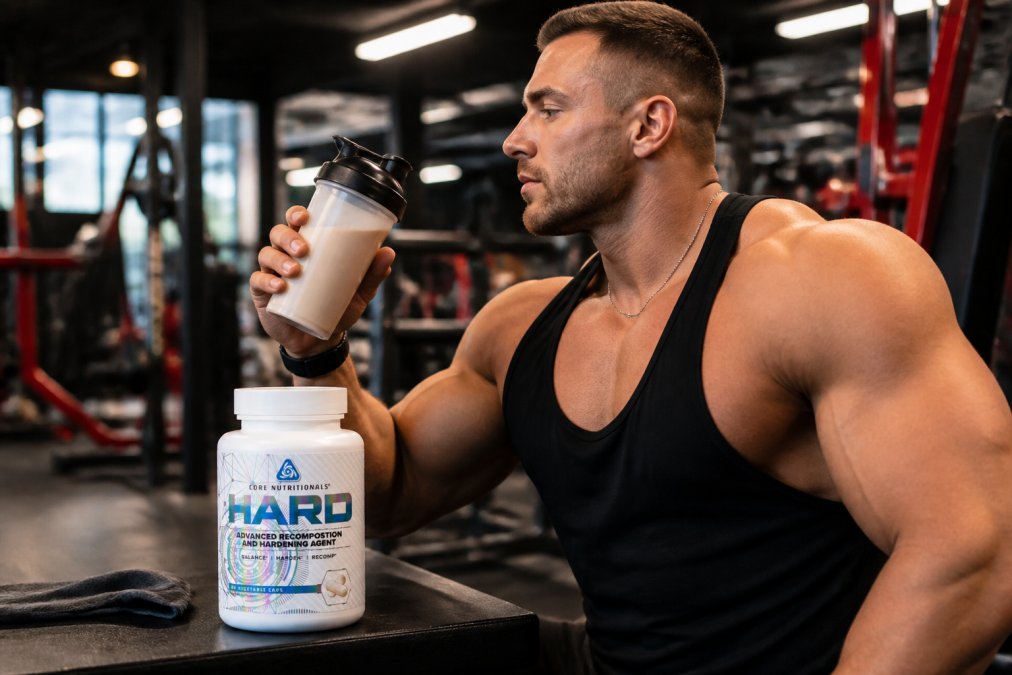
Tiger Fitness carries several products specifically designed for body recomposition. Core HARD is formulated as an advanced body recomposition and hardening agent. Blackstone Recomp RX combines fat-burning support with anabolic signaling for simultaneous fat loss and muscle retention. These are designed specifically for the recomposition phase, not generic pre-workouts or fat burners.


| Supplement | Dosage | Timing | Primary Benefit |
|---|---|---|---|
| Whey Protein Isolate | 1.2-1.6g/kg BW | Post-workout or anytime | Muscle protein synthesis |
| Creatine Monohydrate | 5g daily | Anytime (consistent) | Strength, work capacity, lean mass |
| Collagen Peptides | 10-20g daily | Anytime | Joint health, recovery |
| GDA (Berberine) | 500-1000mg | With largest carb meal | Nutrient partitioning |
| EAAs | 5-10g | Between meals or fasted | Muscle preservation during deficit |
| Beta-Alanine | 3-5g daily | Anytime (4-6 week load) | Strength endurance |
Timing, Dosage, and Long-Term Cycling Protocols
Most lifters overthink timing. Total daily intake matters far more than when you consume it. That said, strategic timing optimizes results.
Protein: consume 30-40g within two hours post-workout when muscle protein synthesis is elevated. Distribute remaining protein across 3-4 meals to maximize daily synthesis.
Creatine: 5g daily, every single day. No pulsing, no cycling, no loading. Consistency builds saturation over 3-4 weeks.
Carbs and GDAs: consume your largest carb meal post-workout when insulin sensitivity is highest and muscle glycogen is depleted. Take your GDA with this meal to ensure maximal nutrient partitioning toward muscle tissue.
Fasted training: if training fasted, consume 5-10g EAAs 15-20 minutes before training. This preserves muscle tissue and provides amino acids without breaking your fast.
Long-term cycling: don't cycle creatine or protein. These are foundational, not hormonal. Cycle higher-stimulant products (caffeine, beta-alanine) every 8-12 weeks to prevent tolerance. Take a full week off stimulants, then restart.
For body recomposition specifically, expect results over 12-16 weeks. The Nutrola data showed successful recomposition took 12 months on average. This isn't a sprint. Consistency beats perfection.
Common Mistakes That Kill Body Recomposition Results
Mistake 1: Undereating protein. Most lifters in a deficit drop protein to "save calories." Wrong. Higher protein intakes (2.4g/kg vs. 1.2g/kg) during energy restriction resulted in significantly greater lean muscle retention and greater fat loss in resistance-trained individuals. Protein is your muscle-sparing tool during a deficit.
Mistake 2: Too aggressive a deficit. Deficits larger than 500 calories daily accelerate muscle loss. Stick to 250-400 calories below maintenance. It's slower, but you'll retain more muscle and feel better during training.
Mistake 3: Inconsistent training stimulus. Supplements don't build muscle, training does. Supplements support the process. If your training stimulus is weak, no supplement stack will save you. Minimum: 3 resistance training sessions weekly with progressive overload.
Mistake 4: Ignoring sleep and recovery. The Nutrola data showed successful recomposition users averaged over 7.5 hours of sleep nightly. Hormonal balance, muscle protein synthesis, and fat oxidation all depend on sleep. No supplement replaces this.
Mistake 5: Expecting results in 4 weeks. Body recomposition is slow. You're not just losing fat; you're building muscle simultaneously. Expect visible changes in 8-12 weeks, significant transformation in 16-24 weeks.
Mistake 6: Cycling too aggressively. Some lifters jump between bulks and cuts every 4-6 weeks. That's not enough time for either phase to deliver results. Commit to 12-16 weeks of consistent recomposition work before reassessing.
Mistake 7: Buying the wrong protein powder. Not all protein powders are created equal. Whey isolate (90%+ protein, minimal lactose) outperforms concentrates for recomposition. Check the label: protein content per serving should be 25-30g with minimal carbs and fat.
Body recomposition isn't magic, it's math. Eat in a modest deficit, hit your protein targets, train hard, supplement strategically, and be patient. The supplements we've covered here are backed by research and used by competitive athletes and serious lifters. Tiger Fitness carries the highest-quality versions of each, tested and verified for purity and potency. Start with protein and creatine. Add a GDA and collagen once those are locked in. Track your progress, adjust calories based on results, and commit to 16 weeks of consistency. That's the formula.
Frequently Asked Questions
What is the most effective supplement for body recomposition?
Whey protein isolate and creatine monohydrate are the foundation. A 2026 network meta-analysis of 78 studies found collagen to be most effective for fat-free mass gains, followed by whey protein. Creatine is backed by over 1,000 peer-reviewed studies showing increases in strength, power output, and lean muscle mass. Stack these with a glucose disposal agent like Chemix GDA or Alpha Lion Gains Candy GlucoVantage to optimize nutrient partitioning during your caloric deficit.
Do I need supplements to lose fat and build muscle at the same time?
No, but they dramatically improve your odds. Body recomposition is possible through diet and training alone, 34% of tracked users achieved simultaneous fat loss and muscle gain over 12 months. However, those who succeeded averaged 2.2 g/kg protein intake, 3.4 resistance training sessions weekly, and 6.2 tracking days per week. Protein powder, creatine, and a glucose disposal agent remove friction from hitting these targets consistently.
How does protein intake affect body recomposition?
Protein is non-negotiable. Research published in the British Journal of Sports Medicine (2018, 1,863 participants) found that 1.6 grams per kilogram of body weight per day maximizes resistance training-induced lean mass gains. During energy restriction, higher protein intakes (2.4g/kg vs. 1.2g/kg) resulted in significantly greater lean muscle retention and greater fat loss in resistance-trained individuals. This is why whey protein isolate remains the most cost-effective way to hit your daily target.
Are fat burners necessary for body recomposition?
They're not mandatory, but specific formulations support your results. Glucose disposal agents like Chemix GDA help your body partition carbohydrates toward muscle instead of fat storage, which is critical during recomposition. Appetite support formulas help you maintain your caloric deficit without hunger driving you off track. They're tools that accelerate results when your diet and training are already dialed in.
How should I time my supplement intake for maximum results?
Protein should be distributed across meals: aim for 0.4-0.5g per kg of body weight per meal, spaced 4-6 hours apart. Creatine monohydrate works best with 5 grams daily, any time of day, as it builds up in your system over weeks. Take glucose disposal agents with your largest carbohydrate meals to optimize nutrient partitioning. EAAs are most effective post-workout or during fasted training to preserve muscle during caloric deficits. Consistency matters more than perfect timing.
What about cycling supplements, do I need to rotate them?
Creatine doesn't require cycling; it's safe for long-term continuous use and actually needs 4-6 weeks to reach peak effectiveness. Glucose disposal agents and fat burners can be cycled in 8-12 week blocks to prevent adaptation, though it's not mandatory. Protein and BCAAs are dietary components, no cycling needed. The real variable is your training stimulus and caloric deficit. If you're not progressing, the problem is usually training intensity or calorie accuracy, not supplement rotation.
Can women use the same supplements as men for body recomposition?
Yes. The research applies equally to men and women. Protein requirements, creatine dosing, and glucose disposal agents work the same way regardless of sex. The only difference is total caloric intake and training volume may vary based on body weight and experience level. Women often respond exceptionally well to creatine. Focus on hitting your protein target and training hard; the supplements support the same process.
Leave a comment