




Supplements for Muscle Gain Without Fat: A No-BS Guide
Table of Contents
- What Are Muscle-Building Supplements and Why They Matter for Lean Gains
- The Role of Protein in Muscle Growth and Body Recomposition
- Creatine Monohydrate: The Most Evidence-Based Supplement for Lean Muscle
- Best Supplements for Lean Muscle Gain Without Water Retention
- Diet for Muscle Gain Without Fat: The Supplement Foundation
- Workout Plan for Lean Muscle Gain: Supplement Timing and Stacking
- Body Recomposition Supplements: The Without-Fat Mechanism Explained
- Safety, Side Effects, and Supplement Efficacy: What the Clinical Trials Show
Supplements for Muscle Gain Without Fat: A No-BS Guide
Last Updated: July 29, 2026
What Are Muscle-Building Supplements and Why They Matter for Lean Gains
Supplements for muscle gain without fat are ergogenic aids designed to support muscle protein synthesis while minimizing unwanted fat accumulation during a caloric surplus or body recomposition phase. Most lifters approach supplementation wrong; they buy protein, creatine, and maybe a fat burner, then wonder why they're gaining soft weight.
What separates effective supplementation from noise: evidence-based dosing, third-party testing verification, and ingredients with clinical backing.
Pro TipThe biggest mistake lifters make is treating all protein powder the same. [Whey protein isolate](/products/spoken-nutrition-grass-fed-whey-protein-clean-muscle-recovery-fuel) and blends perform differently for lean gains. Isolate has lower carbs and fat per serving, which matters when you're trying to stay lean while building muscle.
The Role of Protein in Muscle Growth and Body Recomposition
Protein synthesis is the foundation of muscle building. Your body requires adequate amino acids to repair and build skeletal muscle tissue. During body recomposition, simultaneously building muscle and losing fat, protein becomes critical because it preserves existing muscle while you're in a caloric deficit.
Nitrogen balance, the difference between nitrogen consumed and nitrogen excreted, is the actual marker of whether you're building or losing muscle. For lean gains specifically, aim for 0.8-1.0 grams of protein per pound of bodyweight daily. Research on muscle protein synthesis shows this range optimizes hypertrophy while supporting fat loss when combined with resistance training and a slight caloric deficit.
Whey Protein Isolate vs. Blends: What Actually Works
Whey protein isolate contains 90%+ protein by weight with minimal lactose and fat. A serving delivers 25-30 grams of protein with 110-130 calories. Whey protein blends typically contain 70-80% protein with added carbs and fats, delivering the same protein but 150-180 calories per serving.
For supplements for muscle gain without fat, isolate wins. Those extra 50 calories per shake add up to 350 calories per week, roughly one pound of fat gain you didn't plan for.
Nutrex ISOFIT Premium Whey Protein Isolate is microfiltration-processed and delivers clean macros without artificial sweeteners that some athletes find problematic.
Key TakeawayThe practical difference: isolate for strict body recomposition, blend for bulking or if you're not tracking calories meticulously. Both build muscle. Isolate just doesn't add unnecessary fat-building calories.
Casein Protein for Recovery and Muscle Preservation
Casein is a slow-digesting protein that creates a sustained amino acid release over 6-8 hours. While whey is fast and perfect for post-workout, casein prevents muscle breakdown during extended fasting or sleep.
Casein matters for lean gains because it preserves muscle tissue during periods when you're not eating. If you're doing intermittent fasting or training fasted, casein before bed prevents catabolism by maintaining positive nitrogen balance overnight. Dose casein at 20-30 grams before bed on training days.
Creatine Monohydrate: The Most Evidence-Based Supplement for Lean Muscle
Creatine monohydrate is the most researched supplement in existence. Hundreds of clinical trials confirm it increases strength, muscle mass, and power output without adding body fat. Yet lifters still avoid it, thinking it causes water retention and bloating.
Here's the truth: creatine pulls water into muscle cells, not under the skin. This intramuscular water retention actually makes muscle look fuller and more defined.
Creatine works by increasing ATP availability in muscle tissue, allowing you to perform more reps at higher loads. More volume under tension means more hypertrophy stimulus. The result: 3-5 pounds of additional lean muscle gain over 8-12 weeks compared to training without it.
Dose creatine monohydrate at 5 grams daily. No loading phase necessary, consistent daily dosing reaches full saturation in 3-4 weeks.
Finaflex Creatine Capsules deliver exactly this: 5-gram servings in capsule form, eliminating the taste and mixing issues of powder.
Watch OutStop taking creatine if you have existing kidney issues or a family history of kidney disease. Creatine is safe for healthy individuals, but it increases creatinine levels, which can mask kidney problems on blood work. Get baseline kidney function tested if you're over 40 or have risk factors.
Best Supplements for Lean Muscle Gain Without Water Retention
Water retention masks muscle definition and makes body recomposition harder to assess. Some supplements cause unnecessary water retention; others actively reduce it while supporting lean gains.
Beta-alanine increases muscle carnosine, which buffers lactic acid and allows more reps at higher intensities. Unlike creatine, beta-alanine doesn't cause water retention. Dose at 3-5 grams daily split into smaller doses to avoid the harmless but annoying "tingles" side effect.
Caffeine enhances fat oxidation and thermogenesis, the heat your body produces during metabolism. It also improves focus and strength during training. Dose at 200-400 mg before training.
BCAAs and HMB: Separating Fact from Marketing
Branched-chain amino acids (BCAAs) are leucine, isoleucine, and valine. The marketing claim is that BCAAs trigger muscle protein synthesis and prevent breakdown. The reality is that if you're consuming adequate total protein from whole foods and whey, you're already getting sufficient BCAAs.
HMB (beta-hydroxy beta-methylbutyrate) is a metabolite of leucine that directly inhibits muscle protein breakdown. Studies show that lifters using HMB in a deficit lose significantly less muscle than those without it.
For supplements for muscle gain without fat, HMB is the better choice. Dose at 2-3 grams daily during caloric deficits.
Key TakeawayBCAAs are marketing-heavy and redundant if you're drinking whey protein. HMB is underrated and genuinely useful during fat-loss phases. Choose HMB if budget allows only one.
Micronutrients: Zinc, Magnesium, and Omega-3 Fatty Acids
Micronutrients don't directly build muscle, but deficiencies destroy your results. Zinc supports testosterone production and protein synthesis. Magnesium regulates muscle contraction and recovery. Omega-3 fatty acids reduce inflammation and support insulin sensitivity, which matters for nutrient partitioning.
Most lifters are deficient in at least one of these. Supplement zinc at 25-50 mg daily, magnesium at 400-500 mg daily, and omega-3s at 2-3 grams daily of combined EPA and DHA.
Diet for Muscle Gain Without Fat: The Supplement Foundation
Supplements amplify a solid diet. They don't replace it. For body recomposition, maintain a slight caloric deficit (300-500 calories below maintenance) while training hard. This creates the metabolic environment where you can build muscle while losing fat.
Protein intake remains high to preserve and build muscle tissue, while the deficit comes from reduced carbs and fats. Carbs fuel training performance and recovery; time them around workouts when insulin sensitivity is highest. Fats support hormone production at 0.3-0.4 grams per pound of bodyweight.
Protein Synthesis and Nitrogen Balance
Muscle protein synthesis is triggered by resistance training and requires adequate amino acids. To maintain positive nitrogen balance during a deficit, protein intake must be higher than during a surplus. Aim for 1.0 grams per pound of bodyweight minimum.
Timing also matters. Consume protein in 4-5 servings throughout the day rather than one massive meal. This keeps amino acid availability constant and maximizes muscle protein synthesis across the full 24-hour period.
Thermogenesis and Metabolic Rate Support
Thermogenesis is the production of heat through metabolism. It accounts for 10-15% of total daily energy expenditure. Certain supplements increase thermogenesis, which supports fat loss without requiring additional caloric restriction.
Caffeine increases thermogenesis by 5-10% for several hours post-consumption. Green tea extract (EGCG) provides a modest additional boost. Together, they create a synergistic effect that adds up to measurable fat loss over weeks.
MTS Machine Lean® is a non-stimulant fat-loss supplement that uses ingredients like conjugated linoleic acid (CLA) and acetyl-L-carnitine to support fat oxidation without the jitters of stimulants.
Workout Plan for Lean Muscle Gain: Supplement Timing and Stacking
Supplement timing is less critical than total daily intake, but it still matters for optimization. Post-workout is when your muscles are most receptive to nutrients.
Immediately post-training, consume 30-40 grams of whey protein and 40-60 grams of fast-digesting carbs. This triggers the anabolic window, a 30-60 minute period of elevated muscle protein synthesis and nutrient uptake.
Pre-training, consume 20-30 grams of protein and adequate carbs 60-90 minutes before lifting.
The Anabolic Window and Recovery Time
The anabolic window is real but smaller than most believe. Peak nutrient uptake occurs in the first 30-60 minutes post-training, but elevated muscle protein synthesis continues for 24-48 hours after training.
Total daily protein intake matters far more than nailing the exact 30-minute window. Recovery time between sessions should be 48-72 hours for the same muscle groups. Supplements don't shorten this, sleep and nutrition do.
Supplement Stacking for Body Recomposition Without the Fat
Stacking means combining multiple supplements for synergistic effects. A basic lean-gains stack looks like this:
Supplement |
Dose |
Timing |
Purpose |
|---|---|---|---|
25-30g |
Post-workout, breakfast |
Muscle protein synthesis |
|
5g daily |
Anytime with food |
Strength and muscle volume |
|
200-400mg |
Pre-workout |
Performance and thermogenesis |
|
400-500mg |
Evening |
Recovery and sleep |
|
2-3g daily |
With meals |
Inflammation and insulin sensitivity |
|
3-5g daily |
Split doses |
Muscular endurance |
This stack addresses the core mechanisms of lean gains: protein synthesis, strength, recovery, and fat oxidation. Each ingredient serves a specific function without redundancy.
Advanced stacking adds HMB during deficit phases and green tea extract for additional thermogenesis support. Beverly UMP Ultimate Muscle Protein is a multi-source blend that includes casein alongside whey, making it useful for all-day amino acid availability.
Pro TipDon't stack more than 5-6 supplements. Each addition increases cost and complexity without proportional benefit. Focus on the fundamentals: protein, creatine, caffeine, and micronutrients.
Body Recomposition Supplements: The Without-Fat Mechanism Explained
The "without fat" mechanism in supplements for muscle gain without fat works through three pathways: nutrient partitioning, thermogenesis, and muscle preservation.
Nutrient partitioning determines whether calories are directed toward muscle or fat storage. Protein intake, training stimulus, and insulin sensitivity all influence this. Supplements that improve insulin sensitivity, like chromium picolinate and alpha-lipoic acid, help direct nutrients toward muscle.
Thermogenesis increases caloric expenditure without additional exercise. Caffeine, green tea extract, and other thermogenic agents create a small but consistent increase in fat oxidation.
Muscle preservation during a deficit prevents the muscle loss that typically accompanies fat loss. Adequate protein, creatine, and HMB all support this.
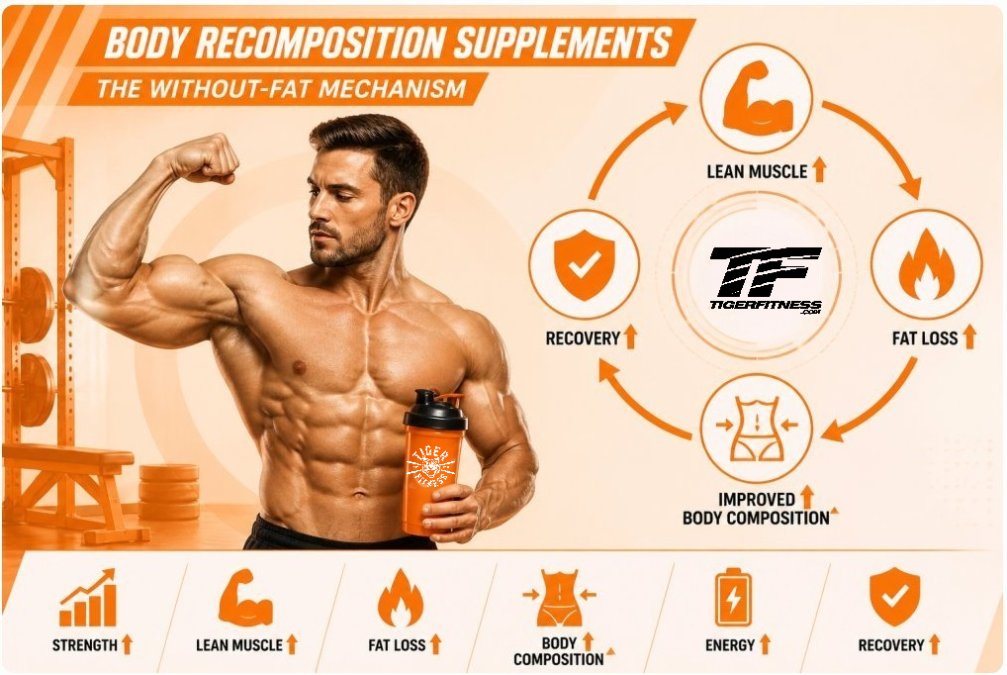
Muscular athlete in modern gym setting flexing biceps with defined lean muscle and minimal body fat, holding a protein shake with natural gym lighting
Fat Oxidation and Insulin Sensitivity
Fat oxidation is the breakdown of stored fat for energy. Carnitine transports fatty acids into mitochondria for oxidation. If you're deficient in carnitine, supplementing at 2-3 grams daily can improve fat oxidation. This is particularly useful if you're vegetarian or vegan.
Insulin sensitivity determines how efficiently your body handles carbohydrates. Poor insulin sensitivity drives excess carbs toward fat storage. Improved sensitivity directs them toward muscle and glycogen replenishment. Chromium picolinate improves insulin sensitivity and reduces cravings for simple carbs. Dose at 200-400 mcg daily.
Supplement Interactions with Intermittent Fasting
Intermittent fasting (IF) creates a longer fasted window, which can accelerate fat loss but also increases muscle breakdown risk. Supplements become more important during IF because you're not eating frequently.
During the fasted window, take only caffeine and maybe BCAAs or essential amino acids (EAAs). Protein triggers an insulin response that breaks the fast. HMB becomes more valuable during IF because the extended fasted period increases muscle breakdown risk. Dose HMB before the fast begins to provide protection throughout the fasting window.
The evidence from International Society of Sports Nutrition position stand on protein confirms that protein timing matters more during energy restriction, making supplements for muscle gain without fat particularly important when combining IF with training.
Safety, Side Effects, and Supplement Efficacy: What the Clinical Trials Show
Most supplements are safe when dosed correctly. Creatine causes intramuscular water retention and may increase creatinine levels on blood work; this is normal and not harmful in healthy individuals. Caffeine can cause jitters, insomnia, and anxiety if overdosed. Beta-alanine causes harmless but annoying tingling.
According to the Examine.com supplement evidence database, creatine, caffeine, and beta-alanine have strong evidence for performance and muscle gains. Protein, magnesium, and zinc have strong evidence for general health and recovery. HMB has moderate evidence specifically for muscle preservation during deficits.
Supplements with weak evidence include most proprietary blends, some fat-burners with unverified ingredients, and products making claims unsupported by research. This is why third-party testing matters; it verifies that what's on the label is actually in the bottle.
Bioavailability and Dosage Standards
Bioavailability is how much of a supplement your body actually absorbs and uses. Whey protein isolate has nearly 100% bioavailability. Creatine monohydrate is 99% bioavailable when taken with carbs and protein.
Dosage standards vary by ingredient. The effective dose for creatine is 5 grams daily. For beta-alanine, it's 3-5 grams daily. For caffeine, 200-400 mg. These aren't arbitrary; they're based on clinical research showing what dose produces measurable results.
Third-Party Testing and Quality Control
Third-party testing verifies that a supplement contains what it claims and is free from contaminants. The NSF Certified for Sport program tests supplements for banned substances and contaminants. Informed Choice is another reputable third-party testing program.
While the FDA doesn't pre-approve supplements, manufacturers are legally required to ensure safety and accurate labeling.
Proprietary blends without third-party testing are red flags. They hide individual ingredient doses and offer no transparency. Avoid them.
Building lean muscle while minimizing fat gain requires a strategic combination of training, nutrition, and supplementation. The supplements for muscle gain without fat outlined here- whey isolate, creatine, caffeine, and key micronutrients- address the actual mechanisms of body recomposition. Start with the fundamentals, dial in your training and nutrition, then add these supplements to accelerate your progress. Use FREE TOOLS & FITNESS CALCULATORS to build a complete lean-gains program tailored to your specific metrics and goals.
Frequently Asked Questions
What supplements actually build lean muscle without excess fat gain?
The core stack is whey protein isolate for muscle protein synthesis, creatine monohydrate for strength and hypertrophy, and micronutrients like zinc and magnesium. Add BCAAs if training fasted. Skip proprietary blends and focus on evidence-based compounds with clinical trial backing. Quality matters—third-party tested products eliminate guesswork.
How important is creatine monohydrate for lean muscle gain without fat?
Creatine is non-negotiable. Clinical trials show it increases skeletal muscle mass and strength while supporting fat oxidation. Dosage: 5g daily. It doesn't cause fat gain; water retention is intramuscular, not subcutaneous. It's one of the few supplements with rock-solid efficacy data across hundreds of studies.
Can body recomposition supplements work with intermittent fasting?
Yes, but timing matters. Take whey protein isolate and BCAAs during your eating window to preserve muscle protein synthesis. Creatine works fine fasted or fed. MCT oil can support thermogenesis without breaking a fast. The key: don't sacrifice total protein intake just because you're eating in a compressed window.
What's the best diet for muscle gain without fat when using supplements?
Maintain a slight caloric surplus (200-300 calories above maintenance) with protein at 0.8-1g per pound of bodyweight. Supplements amplify this—they don't replace it. Prioritize whole foods first, then use whey isolate, casein, and creatine to hit targets. Insulin sensitivity matters: time carbs around training, use beta-alanine to buffer fatigue.
How do I know if a supplement is actually third-party tested and not just marketing?
Look for NSF Certified for Sport, Informed Choice, or USP verification on the label. Avoid proprietary blends—they hide dosages and ingredients. Check the manufacturer's website for actual test results, not just claims. Tiger Fitness carries products with transparent labeling and verified testing, so you're not guessing what you're putting in your body.
What's the difference between whey protein isolate and casein for lean gains?
Whey isolate is fast-digesting, perfect post-workout for the anabolic window and muscle protein synthesis. Casein is slow-digesting, ideal before bed to maintain nitrogen balance overnight and support muscle preservation. Use both: whey around training, casein before sleep. Together they cover recovery time and maximize skeletal muscle retention.
Can I build lean muscle on a budget without sacrificing results?
Absolutely. Prioritize: whey protein isolate, creatine monohydrate, and micronutrients (zinc, magnesium). These three deliver 80% of the results. Skip expensive proprietary blends and fat burners with weak evidence. Focus on training hard, eating right, and sleeping well. Supplements enhance a solid foundation—they don't replace it. Smart shopping beats expensive stacks every time.
Leave a comment