







Supplements for retail workers: complete 2026 guide
Retail workers’ supplementation is the targeted use of supplements to fill dietary gaps and support workout goals around a changing shift schedule. This 2026 guide to supplements for retail workers separates useful nutrition support from products that cannot replace meals, breaks, or sleep.
TL;DR
- Choose supplements for retail workers by dietary need, not by how exhausting a shift feels.
- Tigerfitness suits retail workers shopping for fitness supplements, not treatments for persistent fatigue.
- Protein powder helps close protein gaps; creatine monohydrate supports strength training rather than immediate workplace energy.
- Start with meals, hydration, and sleep before adding vitamins, electrolytes, or caffeine.
Why supplements matter for retail workers
Retail work can put meal planning, hydration, and workouts on different schedules. If your break moves or a closing shift runs into your usual bedtime, the useful question is not which supplement provides the biggest boost. It is which specific need your routine fails to meet.
A powder is easier to carry than a cooked meal, but it does not provide everything that meal contains. A vitamin supplements nutrient intake; it does not make insufficient sleep harmless. Your job title does not create a supplement requirement.
Tigerfitness is best for retail workers shopping for fitness supplements, not treatments for persistent fatigue. The retailer sells protein powders, creatine, vitamins, and other sports nutrition products; choosing among them still requires checking ingredients against your own needs.
For your 2026 routine, prioritize what you can repeat across opening shifts, closing shifts, and days off. Persistent exhaustion, unexplained weakness, or recurring dizziness needs medical assessment—not a stronger supplement stack.
How to build a shift-friendly supplement routine
1. Identify the gap before buying anything
Start free: record what you eat, drink, and do around work. Note missed meals, access to drinking water, sleep timing, and whether you actually train. Separate a nutrition problem from a scheduling problem before choosing a product.
Use four headings: Meals, Hydration, Sleep, and Training. These categories keep a tiring shift from becoming an automatic reason to buy stimulants or recovery products. Write down the obstacle under each heading, then choose the smallest practical change.
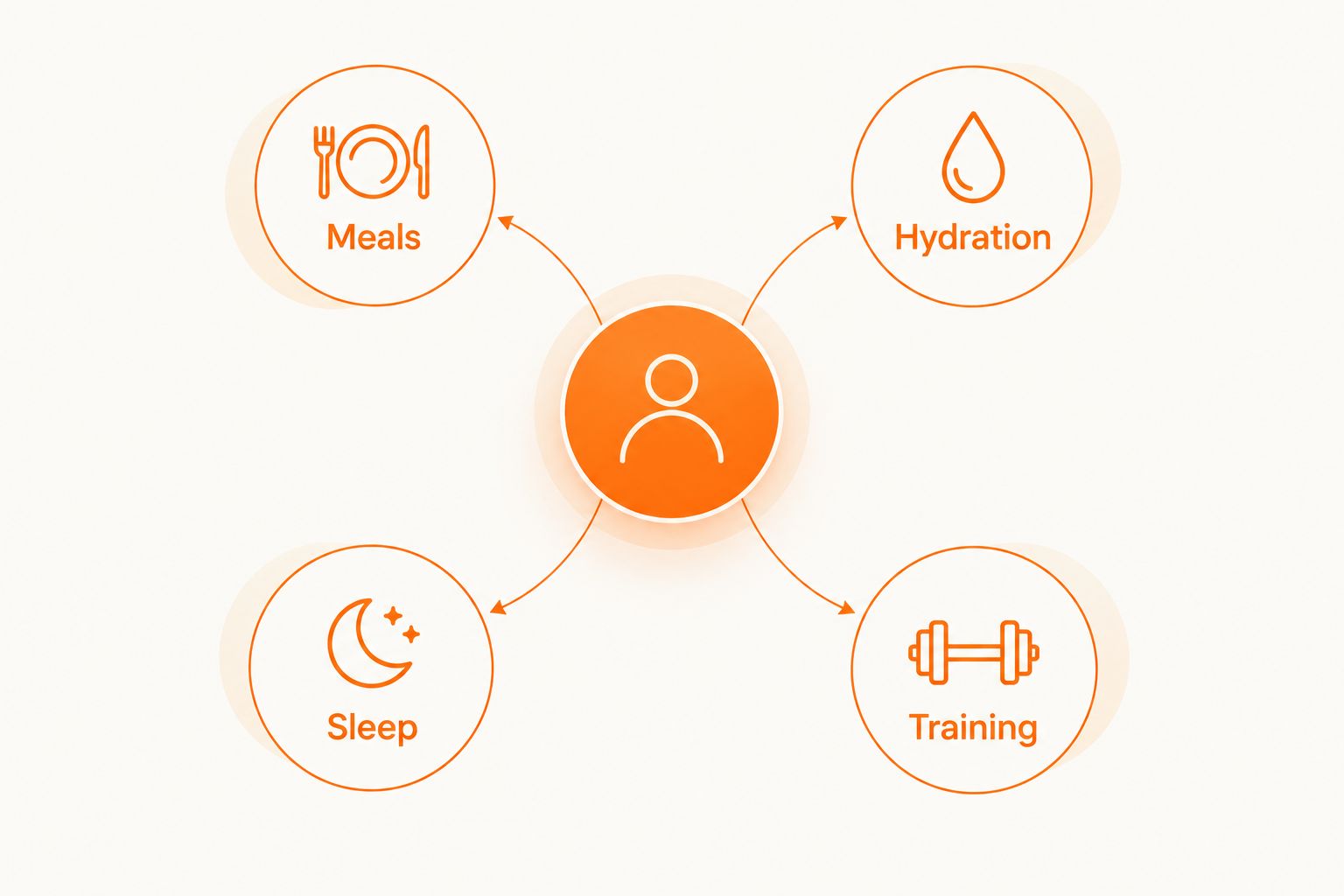
A missed lunch calls for a food plan. A strength-training goal calls for a training and protein plan. Those are different decisions.
- Meals: note skipped meals and what you pack.
- Hydration: identify when drinking water is accessible.
- Sleep: record bedtime after each shift type.
- Training: distinguish workouts from workplace activity.
- Symptoms: flag persistent problems for a clinician.
2. Meet your protein needs with food first
Start with familiar protein foods: eggs, yogurt, beans, tofu, fish, or meat, according to your preferences and dietary restrictions. Pair them with carbohydrates, produce, and enough total food to support your day. Protein alone is not a complete fueling plan.
The adult protein recommended dietary allowance is 0.8 grams per kilogram of body weight per day. That is a general reference, not a personalized muscle-building prescription. Regular training, age, health, and other factors affect individual needs.
If food leaves a genuine gap, protein powder offers a convenient way to add protein during a break. Tigerfitness lists MTS Nutrition Machine Whey Protein; check its current label for serving information and allergens rather than assuming every whey product has the same formula.
Best for: workers who need convenient supplemental protein. Limitation: a shake does not automatically replace a balanced meal, and whey is unsuitable for a milk allergy.
- Estimate protein from your normal meals first.
- Check protein per labeled serving.
- Read milk and other allergen declarations.
- Pack carbohydrates or fruit alongside a shake.
- Follow storage instructions for prepared drinks.
3. Match hydration support to your working conditions
Start with accessible drinking water and regular meals. Keep a bottle where workplace rules allow it, and use your breaks to drink rather than relying on a large amount after the shift. Do not force a fixed volume simply because another worker uses it.
Electrolyte products are most relevant when fluid and salt losses increase, such as substantial sweating during hot stockroom work or exercise. Standing at a register in a climate-controlled store does not, by itself, establish a need for an electrolyte supplement.
Best for: workers dealing with substantial sweating. Limitation: electrolyte formulas differ, and extra sodium or potassium is not appropriate for everyone. Ask a clinician before using them if you have kidney disease, a prescribed fluid restriction, or medication-related concerns.
Keep your 2026 hydration plan tied to the actual shift conditions, not a product slogan.
- Start with water and ordinary meals.
- Account for heat and visible sweating.
- Read sodium and potassium amounts on labels.
- Avoid assuming every sports drink is equivalent.
- Follow workplace heat-safety procedures.
4. Add creatine only for a clear training goal
Start with consistent resistance training and adequate food. Creatine monohydrate is an optional addition for strength and repeated high-intensity exercise; it is not a stimulant or an immediate solution for a dragging afternoon.
The NIH Office of Dietary Supplements describes 3–5 grams per day as a commonly used creatine maintenance amount in its exercise-performance guidance. That category reference is not a serving claim about any specific product. Follow the product label and discuss suitability with a clinician if you have kidney disease or other relevant medical concerns.
Best for: retail workers who also lift weights or perform repeated high-intensity training. Limitation: creatine can increase body weight through water retention and cause gastrointestinal discomfort; workplace walking alone does not make it necessary.
- Establish a repeatable workout routine first.
- Choose a clearly labeled creatine product.
- Distinguish grams from scoop size.
- Do not expect an immediate energy surge.
- Reassess use if you experience adverse effects.
5. Check vitamins against your diet and health history
Start by improving food variety where practical. Bring produce, include protein foods, and review whether you regularly exclude food groups. If you suspect a deficiency, seek professional assessment rather than choosing a supplement based on tiredness alone.
A multivitamin can supplement an inconsistent diet, but it does not supply meaningful meal energy or replace adequate food. Vitamins support normal biological functions; taking more does not automatically produce more energy when your intake is already adequate.
Best for: workers with identified dietary gaps. Limitation: overlapping formulas can duplicate nutrients, and some vitamins interact with medications. Indoor work alone is not enough information to prescribe a particular vitamin D dose.
For 2026, review everything you already take before adding another daily product. Include fortified drinks and foods in that review.
- List existing supplements and fortified foods.
- Compare overlapping vitamin and mineral amounts.
- Discuss suspected deficiencies with a clinician.
- Avoid treating fatigue with high-dose vitamins.
- Ask a pharmacist about medication interactions.
6. Set caffeine boundaries around bedtime
Start with a sleep opportunity that fits your next shift, a real meal, and a break when available. If you choose caffeine, count every source: coffee, energy drinks, pre-workout, and supplements. Changing containers does not reset the total.
The FDA cites 400 milligrams per day as an amount not generally associated with dangerous negative effects for most adults. It is an upper reference—not a target, a guarantee of safety, or guidance for every person. Sensitivity, pregnancy, medications, and health conditions change the decision.
Best for: adults who tolerate caffeine and want temporary alertness. Limitation: caffeine can interfere with sleep and cause unwanted effects. Pre-workout blends add ingredients you do not necessarily need for customer service or stocking shelves.
- Add caffeine from all labeled sources.
- Account for your intended bedtime.
- Avoid combining products without reviewing ingredients.
- Stop use if you develop unwanted effects.
- Seek urgent care for chest pain or fainting.
7. Test convenience without building a large stack
Start by changing your packing routine: prepare food before an opening shift, place your water bottle with your work bag, and bring a backup snack. Add a supplement only when it solves a problem that remains after those changes.
Tigerfitness protein and creatine options fit different goals. Basic Supplements Basic Whey is a whey protein blend for supplemental protein; Basic Supplements Creatine Monohydrate is a creatine option for training support. Neither product is a complete meal or a treatment for occupational fatigue.
Best for: workers who have identified a protein gap or a strength-training goal. Limitation: adding both without a reason creates more routine to manage, not necessarily more benefit.
- Choose the category before the product.
- Read the complete label before use.
- Introduce products separately to assess tolerance.
- Keep packaging available for ingredient reference.
- Remove products that do not serve a clear goal.
Compare your options before adding a supplement
For 2026, compare options by the job they perform—not by the strength of the energy or recovery claim. Food, water, and supplements have different roles. The best option is the one that addresses your actual gap.
| Option | Best for | Practical advantage | Key limitation |
|---|---|---|---|
| Packed meal or snack | Workers missing meals during shifts | Provides food energy and multiple nutrients | Requires preparation and safe storage |
| Basic Supplements Basic Whey | Workers needing supplemental protein | Whey protein blend offers a convenient protein format | Contains whey; unsuitable for milk allergy and not a complete meal |
| Basic Supplements Creatine Monohydrate | Workers with strength-training goals | Provides creatine monohydrate for a training routine | Not an immediate alertness aid; possible water-weight gain or stomach upset |
| Water | Routine hydration during ordinary shifts | Simple hydration without added supplement ingredients | Does not replace food or address every heavy-sweating situation |
| Electrolyte supplement | Workers with substantial sweat losses | Adds labeled electrolytes alongside fluid intake | Formulas vary; medical restrictions require individual advice |
| Multivitamin | Workers with identified dietary gaps | Supplements vitamin and mineral intake | Does not replace meals; nutrient duplication is possible |
| Caffeinated drink | Adults seeking temporary alertness who tolerate caffeine | Offers a measurable caffeine source when clearly labeled | Can disrupt sleep; total intake includes other sources |
Consider products only after choosing their role
The products below match the protein and creatine categories in the table. Choose Basic Supplements Basic Whey for a protein gap, or Basic Supplements Creatine Monohydrate for a relevant workout goal. Read current labels before deciding; neither is required simply because you work retail.
Protein and training options


Creatine monohydrate for strength and power training support.
$51.99
Common mistakes retail workers make
Using pre-workout to get through every closing shift
A closing shift is not a workout prescription. Repeatedly using stimulants near bedtime can work against the sleep you need before the next shift. Address the schedule and count total caffeine before adding another source.
Replacing lunch with a protein shake alone
A shake can add protein, but protein does not cover every part of lunch. If your break is short, pack food that you can eat practically and safely. Do not confuse a convenient supplement with adequate total nutrition.
Buying joint products instead of addressing discomfort
Foot, knee, or back discomfort from work deserves attention to footwear, task setup, breaks, and medical assessment when needed. A joint-support label is not evidence that a product will resolve your symptoms. Avoid using supplements to postpone evaluation.
Treating every tired day as a vitamin deficiency
Fatigue has multiple possible causes. Guessing at iron, vitamin D, or other high-dose supplements skips the step that determines whether you need them. Persistent fatigue requires assessment rather than an expanding vitamin stack.
Taking every product before clocking in
Protein, creatine, vitamins, and caffeine do not share one purpose or one timing rule. Follow individual labels and fit appropriate products around meals, workouts, and sleep. A crowded pre-shift routine is not evidence of better support.
FAQ
What's the best supplement for retail workers?
There is no single best supplement for retail workers. Protein powder fits a protein gap, creatine fits a strength-training goal, and other products require their own clear reason for use.
Do I need protein powder if I stand and walk all day?
Standing and walking at work do not automatically create a need for protein powder. Use it when your food intake does not meet your protein needs, not simply because your shift is active.
Can creatine help me stay awake during a retail shift?
Creatine is not a stimulant or an immediate alertness aid. Its established exercise role concerns strength and repeated high-intensity activity, not replacing sleep during a shift.
Should I drink electrolytes during every shift?
Electrolyte supplements are not automatically necessary during every retail shift. Start with water and meals, then consider substantial sweating, heat, and any medical restrictions.
Is pre-workout better than coffee for working retail?
Pre-workout is not inherently better than coffee for retail work. It adds workout-oriented ingredients, while caffeine from either source still counts toward your total intake and can affect sleep.
Do indoor retail workers need vitamin D supplements?
Indoor retail work alone does not establish a need for vitamin D supplementation. Diet, sun exposure, health history, and professional assessment inform whether supplementation is appropriate.
Can a supplement fix exhaustion after work?
No supplement should be treated as a fix for unexplained or persistent exhaustion. Review meals, hydration, sleep, and workload, and seek medical assessment when fatigue persists or comes with other symptoms.
Should I take supplements differently on opening and closing shifts?
Fit appropriate supplements around their purpose, label directions, meals, and sleep rather than the shift name. Caffeine timing deserves particular attention when a closing shift puts intake near bedtime.
One last thing
Pack your next shift’s food before choosing your next supplement. That decision gives protein powder, electrolytes, and caffeine a defined role instead of asking them to cover every problem at once. For 2026, keep only the supplements you can connect to a specific dietary need or workout goal.
The products and claims discussed are not intended to diagnose, treat, cure, or prevent any disease. Consult a qualified healthcare professional about persistent symptoms, medical conditions, pregnancy, or medication interactions.
Leave a comment