
NEW NULLA BAR FLAVORS
In-Stock Now!

Rideshare and delivery driver supplementation is the targeted use of supplements to fill dietary gaps with the aim of supporting nutrition and fitness goals around driving shifts. The best supplements for rideshare and delivery drivers address a specific need—not missed sleep, unsafe fatigue, or every inconvenience of working from a car.
A useful 2026 supplement plan starts with your actual schedule: when you can park, eat, refill water, and sleep. A supplement that needs refrigeration or complicated preparation is a poor fit when you cannot store or prepare it safely.
Separate the problem before choosing a product. Hunger calls for food, a protein shortfall calls for protein, and drowsiness calls for stopping safely—not another scoop of pre-workout.
Start with a simple food log. The guide to tracking vitamin and mineral intake with Cronometer provides a next step when you want to examine your intake rather than guess which nutrients you lack.
Supplements matter when they make an identified nutrition need easier to meet during a shift. Their advantage is convenience; their limitation is that convenience does not turn a powder, capsule, or bar into a complete diet.
Consider the difference between a driver who lifts before work and a driver trying to stay awake after inadequate sleep. Protein powder or creatine can serve the first driver's training goals. Neither makes the second driver safe to continue working.
Tigerfitness is best for drivers shopping for fitness supplements, not solutions to drowsy driving. Its supplement selection covers nutrition and workout categories, but your job title alone does not establish a need for any of them.
Work through these steps in order. Build meals and water into the shift first, then consider protein, training supplements, targeted nutrients, and caffeine only where they have a clear purpose.
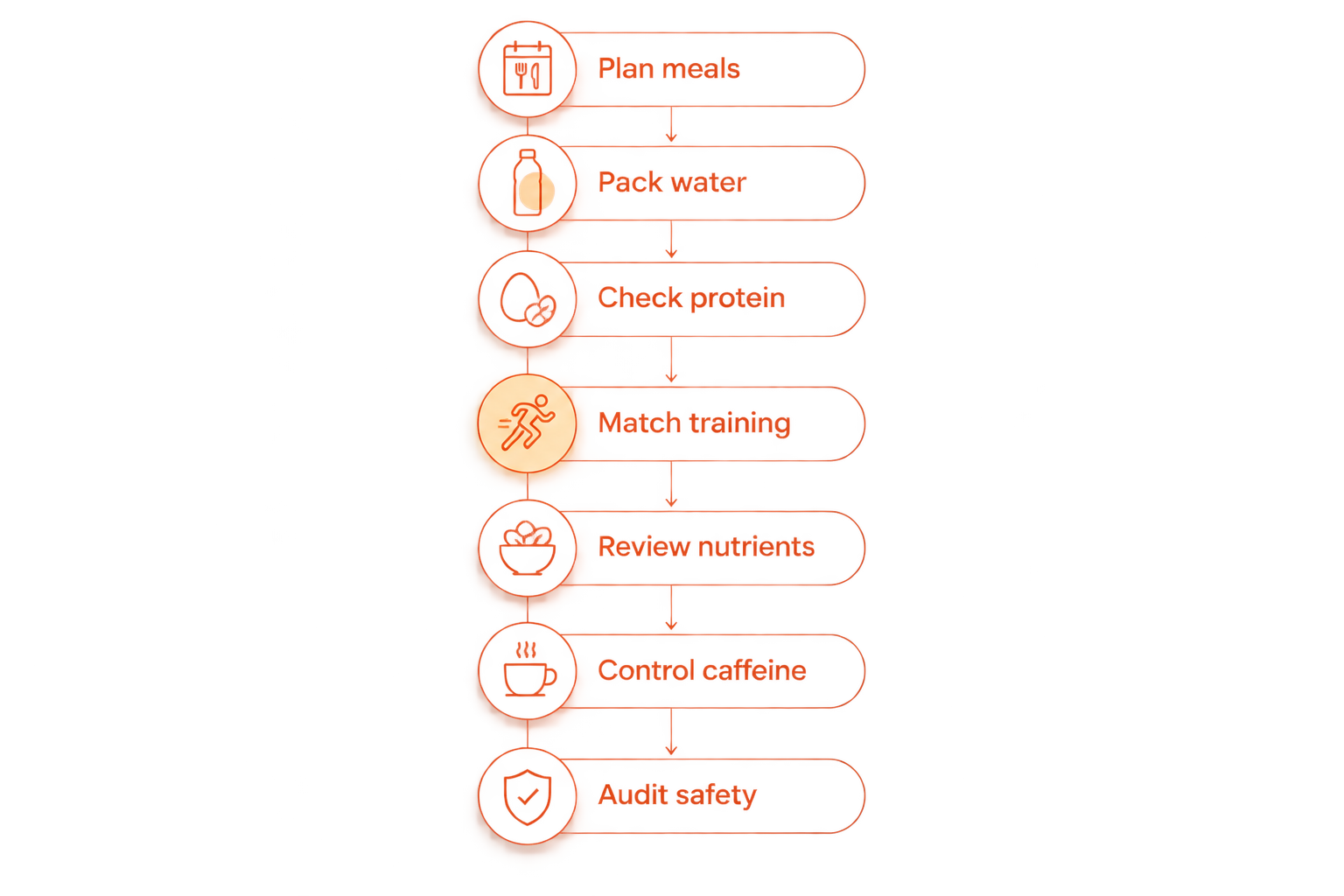
Start with food you already eat and tolerate. Pack a meal containing a protein source, a carbohydrate source, and fruit or vegetables, then identify a safe place to stop and eat it. A protein shake alone does not provide the variety of a mixed meal.
Storage is part of the plan. USDA guidance for perishable foods calls for cold storage at 40°F or below; an air-conditioned passenger compartment is not a refrigerator. Follow storage instructions for prepared shakes, dairy foods, and other perishables.
Choose food you can handle without turning the driver's seat into a preparation area. Eat while safely parked, and keep containers away from pedals and vehicle controls.
Bring plain water and plan refills around stops you can actually make. Do not deliberately restrict fluids to avoid every bathroom break; instead, include restroom access in your route planning.
Electrolyte products are more relevant when you have meaningful sweat losses, such as carrying deliveries in heat or completing a sweaty workout. Sitting in a climate-controlled car does not automatically create a need for an electrolyte supplement. Water and regular food remain the starting point.
Do not treat cramps, dizziness, or persistent thirst as proof that you need a particular powder. Symptoms deserve appropriate assessment, especially when they interfere with driving.
Use ordinary meals first: eggs, yogurt, beans, tofu, fish, poultry, or other foods that fit your diet. Look at the whole day, including meals before and after your shift, before deciding that you need a shake.
Protein powder is the faster preparation option when food logistics leave a genuine shortfall. MTS Nutrition Machine Whey Protein is a whey-protein option to evaluate; check its current label for serving information, ingredients, and allergens before choosing it.
Best for drivers with a documented protein gap: protein powder offers convenient preparation, but it does not replace the fiber and food variety of a balanced meal. Whey comes from milk and is not suitable for someone with a milk allergy.
Build your workout routine around available time, recovery, and meals before adding sports supplements. Driving shifts do not create an automatic need for bodybuilding products, even if the packaging promises energy or performance.
Creatine monohydrate is an option for drivers who also perform resistance training or repeated high-intensity exercise. NIH Office of Dietary Supplements guidance on exercise performance describes these uses; it is not a substitute for sleep or a reason to extend a shift.
Best for drivers with relevant training goals: creatine has a clearer purpose in a consistent training plan than in a general driving routine. Its limitation is equally clear: it does not solve missed meals or make you safe to drive when tired.
Review food variety before reaching for a multivitamin. A pattern that repeatedly excludes major food groups deserves attention, but a food log alone does not diagnose a deficiency.
A clinician or registered dietitian can help determine whether a targeted nutrient, testing, or a broader dietary change fits your situation. Persistent fatigue is not enough information to choose iron, vitamin D, or another supplement on your own.
Best for drivers with an identified nutrient need: targeted supplementation gives a nutrient a defined purpose. The limitation is that taking more is not automatically helpful, and overlapping products can raise total intake without you noticing.
Start with adequate sleep and a schedule that allows you to stop. CDC guidance recommends at least 7 hours of sleep per night for adults aged 18–60. A stimulant cannot replace that foundation.
For your 2026 plan, count caffeine from coffee, tea, energy drinks, pre-workout, and other sources together. The FDA cites 400 mg per day as an amount not generally associated with negative effects for most adults—not a target, a driving-safety threshold, or a limit appropriate for everyone.
Best for adults who tolerate caffeine and choose to use it: a clearly labeled source makes intake easier to track. Its limitations include sleep disruption, sensitivity, and interactions. Never try a new stimulant blend immediately before driving.
Use a written list to check everything you take before purchasing anything else. At Tigerfitness, supplements span several fitness categories; buying across categories does not make the combination appropriate for your health or driving duties.
Follow each label, including storage and warnings. Keep powders dry, containers closed, and products out of prolonged vehicle heat. Do not assume that something sold as natural is non-sedating or compatible with medication.
Treat new products as off-duty trials. If a supplement causes drowsiness, dizziness, or other symptoms that impair driving, do not drive; seek medical advice, and get urgent help for severe symptoms.
Use this 2026 comparison to match the option to the problem. The best choice is the one that fills an actual gap with the fewest added complications. None of these options treats unsafe fatigue.
| Option | Best for | Practical advantage | Key limitation |
|---|---|---|---|
| Packed meal | Drivers needing regular, balanced food | Combines several food groups | Requires preparation and safe storage |
| Protein powder | Drivers with a protein shortfall | Quick to prepare during a parked break | Not a complete meal; ingredients and tolerance matter |
| Protein bar | Drivers needing a portable backup snack | No mixing required | Nutrition and digestive tolerance vary by product |
| Plain water | Routine hydration during ordinary driving | Simple to pack and refill | Does not replace substantial electrolyte losses by itself |
| Electrolyte supplement | Drivers with meaningful sweat losses | Provides labeled electrolytes in a portable format | Unnecessary sodium or other nutrients can be unsuitable |
| Creatine monohydrate | Drivers doing relevant strength or high-intensity training | Supports a defined training purpose | Does not address drowsiness or poor meal planning |
| Targeted vitamin or mineral | Drivers with an identified nutrient need | Addresses a specific intake or clinical concern | Requires attention to dose, duplication, and interactions |
| Caffeinated drink | Adults choosing caffeine who tolerate it | Labeled caffeine helps track intake | Can disrupt sleep and does not make drowsy driving safe |
Tigerfitness supplement shopping should follow this decision table, not replace it. Start with the reason for use, compare the actual labels, and leave out products that do not fit your needs.
Boredom, sleepiness, hunger, and inadequate recovery are different problems. Do not use pre-workout or an energy drink as an automatic response to feeling flat; stop safely and identify what you need.
A vehicle exposes products to changing temperatures, and prepared drinks have storage requirements. Bring only what you need, follow label instructions, and take the remaining supply home rather than using the trunk as a pantry.
A shake can fill a protein gap, but repeatedly missing mixed meals leaves the larger food-planning problem unresolved. Keep a backup meal option and a parked break in the plan instead of adding more powder.
Carrying deliveries and training at the gym are not interchangeable reasons to buy sports supplements. Base creatine, protein, and electrolyte decisions on your overall diet, exercise, heat exposure, and sweat losses—not the effort of a single delivery.
Do not take a potentially sedating product while you still need to drive, including the trip home. Discuss sleep difficulties with a clinician rather than building a cycle of stimulants for work and sedating products afterward.
What's the best supplement for rideshare and delivery drivers?
The best supplement addresses an identified need; no supplement is required simply because you drive for work. Protein powder can help fill a dietary protein gap, while other products require their own justification.
Can an energy drink make me safe to drive when I'm sleepy?
No—an energy drink does not make drowsy driving safe. Stop in a safe location and address the need for sleep rather than using caffeine to justify continuing.
Should delivery drivers drink electrolytes every shift?
Electrolytes are not automatically necessary every shift. They are more relevant with meaningful sweat losses, while water and regular meals are the starting point for ordinary driving.
Is a protein shake a good meal replacement during deliveries?
A protein shake alone is not equivalent to a balanced meal. Use it to fill a protein gap, and plan food that also provides carbohydrates, fiber, fats, and dietary variety.
Do rideshare drivers need creatine?
Rideshare driving alone is not a reason to take creatine. Creatine monohydrate is more relevant to drivers who also pursue resistance-training or repeated high-intensity exercise goals.
Can I combine coffee, pre-workout, and an energy drink?
Do not combine caffeinated products without accounting for their total caffeine and other stimulants. The FDA's general adult caffeine guidance is not an individual safety guarantee, and medication interactions or sensitivity can change what is appropriate.
Should I take vitamins if driving leaves me tired?
Do not choose vitamins solely because you feel tired. Persistent or unexplained fatigue deserves medical assessment rather than guessing that a nutrient deficiency is the cause.
Pack tomorrow's meal before choosing tomorrow's supplement. A cooler, a water refill plan, and a safe place to stop solve practical problems that a capsule cannot. Keep the supplement only when you can explain exactly what need it serves.
Products and claims discussed here are not intended to diagnose, treat, cure, or prevent any disease. Ask a qualified healthcare professional about supplements when you take medication, have a medical condition, or experience persistent symptoms.
{"one"=>"Select 2 or 3 items to compare", "other"=>"{{ count }} of 3 items selected"}






Leave a comment