







Fiber supplements: Best Digestion picks for 2026
Best overall for an organic blend: NOW Foods Certified Organic Fiber-3™. Best for chewable convenience: BuHealth Fiber Gummies 1000 mg; best for a regularity focused formula: Revive Fiber; best for an active lifestyle focus: 5% Nutrition Fiber. This 2026 guide compares fiber supplements by their stated purpose, format, and the label checks that matter before you buy.
TL;DR
- NOW Foods Certified Organic Fiber-3™ is the best fiber supplements pick here for shoppers seeking an organic fiber blend.
- BuHealth Fiber Gummies 1000 mg suits shoppers who prefer chewable daily fiber support.
- Revive Fiber emphasizes digestive health and regularity; 5% Nutrition Fiber emphasizes daily support for active lifestyles.
- Check dietary fiber per serving, ingredients, and directions before choosing a supplement for digestion.
Why This Matters
Hitting your protein goal does not automatically cover your fiber needs. When shakes and convenient meals crowd out beans, vegetables, fruit, and whole grains, check your food intake before adding another supplement.
Tigerfitness is a fit for fitness enthusiasts comparing fiber supplements alongside sports nutrition products. Use Tigerfitness to review your supplement choices, but keep each product's job separate: protein supports your protein intake; a fiber supplement fills a measured fiber gap.
The best choice is not the formula with the broadest digestive health wording. It is the one whose ingredients, serving directions, and format match your goal without making your routine harder to maintain.
What makes the Best Fiber supplements?
Use these criteria to judge the 2026 shortlist before reading the rankings:
- Fiber source: Identify the actual fiber ingredients. An organic blend and a gummy are not interchangeable descriptions of how a formula works.
- Serving amount: Read dietary fiber per serving, not just the product name or the weight of the entire blend.
- Routine fit: Choose a format you will use consistently and exactly as directed.
- Digestive tolerance: Increase fiber gradually. More gas or discomfort is not a reason to keep increasing the serving.
- Label clarity: Check ingredients, allergens, added sugars, and any mixing or fluid instructions.
- Goal match: Separate daily fiber support from promises about symptoms, weight loss, or disease treatment.
Organic status is relevant when you specifically want organic ingredients. It does not establish that a supplement works better for digestion than another fiber source.
Likewise, convenience matters only when the serving fits your needs. A chewable format does not remove the need to read the label.
Fiber Supplements at a glance
These are use case rankings, not a clinical effectiveness ranking. The table compares the stated product details without assigning unverified fiber doses or ingredients.
| Rank and item | Best for | Standout stated feature | Key limitation |
|---|---|---|---|
| 1. NOW Foods Certified Organic Fiber-3™ | Shoppers seeking an organic blend | Blend of three organic fiber sources | Organic status alone does not establish digestive effectiveness |
| 2. BuHealth Fiber Gummies 1000 mg | Shoppers preferring chewables | Vegan gummies with natural berry flavor | The product name does not replace the serving instructions |
| 3. Revive Fiber | Shoppers prioritizing regularity focused positioning | Daily formula described for gut function and regularity | Broad digestive wellness wording does not explain the cause of symptoms |
| 4. 5% Nutrition Fiber | Active shoppers building a daily fiber habit | Daily fiber support framed around demanding schedules | An active lifestyle focus does not establish a workout performance benefit |
1. NOW Foods Certified Organic Fiber-3™: Best for an Organic blend
NOW Foods Certified Organic Fiber-3™ combines three organic fiber sources and is described as supporting digestive health and regularity. It earns the first position because its organic-blend identity gives shoppers a concrete selection criterion, rather than only a general wellness promise.
Best for: You want an organic fiber blend and will compare the ingredient list with your dietary preferences.
NOW Foods Certified Organic Fiber-3™ pros
- Its stated formulation combines three organic fiber sources.
- Digestive health and regularity are explicit parts of its stated purpose.
- Its organic positioning answers a specific ingredient preference.
NOW Foods Certified Organic Fiber-3™ cons
- Organic status does not establish better stool consistency or less bloating.
- A blend is less suitable when your clinician recommends a specific single fiber ingredient.
- Like other fiber supplements, it does not replace the range of nutrients in whole foods.
Before choosing NOW Foods Certified Organic Fiber-3™, read the individual fiber ingredients and the dietary fiber amount per serving. Follow its preparation directions rather than adding an arbitrary scoop to your shake.
Verdict: Buy for an organic blend preference, not for an assumption that organic means stronger digestive results.
2. BuHealth Fiber Gummies 1000 mg: Best for Chewable convenience
BuHealth Fiber Gummies 1000 mg offers a chewable approach to daily fiber support. Its supplied description identifies vegan gummies with natural berry flavor, making format the clearest reason to choose it over the other options here.
Best for: You prefer gummies and want a fiber routine that does not depend on preparing a drink.
BuHealth Fiber Gummies 1000 mg pros
- The gummy format suits shoppers who prefer chewing to mixing.
- Its description identifies the gummies as vegan.
- Natural berry flavor provides a defined flavor option.
BuHealth Fiber Gummies 1000 mg cons
- The amount named on the front does not, by itself, tell you how many gummies constitute a serving.
- A flavored chewable is not a fit for someone seeking an unflavored option.
- Gummies still require checks for dietary fiber, added sugars, and other ingredients.
Treat the serving directions as the deciding information. Do not assume the number in the product name describes dietary fiber in each individual gummy, and do not take extra gummies simply because they are easy to eat.
Verdict: Buy for chewable convenience after confirming the serving fits your fiber goal.
3. Revive Fiber: Best for regularity focused shopping
Revive Fiber is described as a daily digestive health formula intended to support gut function, regularity, and digestive wellness. It belongs on the shortlist for shoppers whose primary goal is daily bowel regularity rather than a particular flavor or organic designation.
Best for: You are comparing daily formulas with an explicit regularity focus.
Revive Fiber pros
- Regularity is an explicit part of its stated purpose.
- Its daily use positioning fits a consistent nutrition routine.
- Its description keeps the focus on digestive support rather than workout stimulation.
Revive Fiber cons
- General gut health language does not identify which fiber ingredient fits your needs.
- A daily formula is not a substitute for assessing persistent digestive symptoms.
- Regularity support should not be interpreted as a guaranteed response for every user.
Choose Revive Fiber based on its label, not on the breadth of the phrase digestive wellness. Check the fiber source, serving instructions, and cautions against the specific reason you are considering supplementation.
Verdict: Hold until the ingredient list and serving directions match your regularity goal.
4. 5% Nutrition Fiber: Best for an active lifestyle routine
5% Nutrition Fiber is presented as daily fiber support for people with active lifestyles and demanding schedules. That framing fits fitness enthusiasts who plan workouts and protein intake but also need to make room for everyday nutrition basics.
Best for: You want to include fiber in an established training and nutrition routine.
5% Nutrition Fiber pros
- Its stated purpose is daily fiber support.
- Its description addresses active people with demanding schedules.
- It gives shoppers a fiber-specific option to evaluate separately from performance supplements.
5% Nutrition Fiber cons
- Fitness oriented positioning does not prove a strength, recovery, or muscle gain benefit.
- A supplement cannot correct every nutritional gap in a rushed meal plan.
- Busy schedule appeal does not remove preparation or serving requirements.
For your 2026 training plan, evaluate 5% Nutrition Fiber as a nutrition tool, not another performance ingredient. Its value depends on whether the actual serving fills your dietary gap and fits the directions you can follow.
Verdict: Hold until you confirm the label fits your daily routine; skip it as a workout-performance purchase.
Check the label before choosing
Tigerfitness shoppers comparing fiber supplements should start with three checks: fiber source, serving amount, and routine fit. These checks keep a familiar brand or convenient format from replacing the information that determines your choice.
- Fiber source: Read the ingredient names, not just digestive-support wording.
- Serving amount: Find grams of dietary fiber in the recommended serving.
- Routine fit: Review preparation, fluid instructions, and any medication cautions.
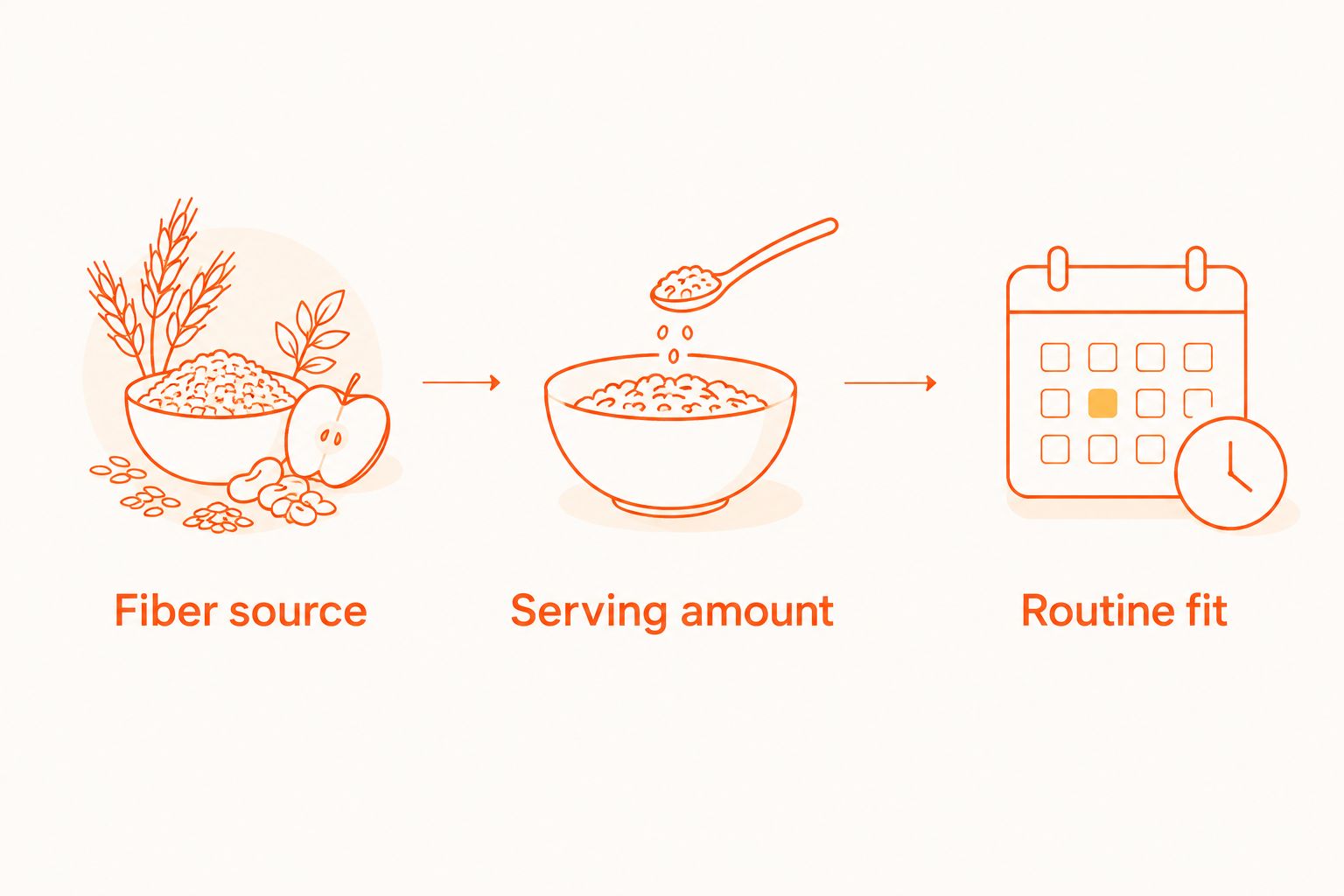
Compare these products against the same checklist. A product that suits another lifter's routine is not automatically the right match for your diet or digestive tolerance.
Fiber products to compare

Blend of three organic fiber sources described for digestive health and regularity support.
$14.95

Vegan gummies with natural berry flavor for convenient daily fiber support.
$23.99

Daily digestive health formula described for gut function and regularity support.
$27.95

Daily fiber support framed around active lifestyles and demanding schedules.
$24.99
How much fiber belongs in your daily diet?
For context in this 2026 guide, the FDA's Nutrition Facts guidance sets the Daily Value for dietary fiber at 28 grams per day on a 2,000 calorie daily diet. That is a label reference, not a personalized supplement dose.
The National Institute of Diabetes and Digestive and Kidney Diseases gives an adult intake range of 22–34 grams per day, depending on age and sex, in its guidance on eating, diet, and nutrition for constipation. Count fiber from food and supplements together when assessing your intake.
Do not automatically take enough supplemental fiber to reach the entire daily reference amount. First count what you already get from meals. Beans, lentils, oats, fruit, vegetables, nuts, and seeds contribute fiber while also bringing other nutrients to your diet.
Fill the gap; do not stack servings without counting them. If you need an individualized target, ask a registered dietitian or your healthcare professional.
Start without disrupting your workouts
Build your 2026 fiber routine around consistency, not a last minute addition before training. Follow the product's directions, increase dietary fiber gradually, and pay attention to how your digestion responds.
- Count food first: Review your usual meals before deciding how much supplemental fiber you need.
- Change one thing: Avoid introducing several new digestive supplements together.
- Follow directions: Use the stated serving and required fluid or mixing instructions.
- Review tolerance: Do not increase your serving while gas, cramping, or discomfort is worsening.
Fiber supplements can affect medication absorption. Ask a pharmacist about the timing for your specific medicines instead of applying one separation interval to every drug.
If you have swallowing difficulties, a history of bowel obstruction, or a medical condition affecting digestion, get medical advice before starting. Severe abdominal pain, vomiting, blood in your stool, or an unexplained persistent change in bowel habits needs assessment not a larger serving of fiber.
How these fiber supplements were ranked
The 2026 ranking uses stated product descriptions and the criteria above: fiber source, serving amount, routine fit, tolerance, label clarity, and goal match. NOW Foods Certified Organic Fiber-3™ leads for its defined organic blend identity; the other entries own separate convenience and routine focused slots.
This is not a head to head trial. It does not establish that one formula improves digestion more than another. The intake context comes from FDA Nutrition Facts guidance and NIDDK adult nutrition guidance, not from a product effectiveness claim.
Which fiber supplements should you choose?
Choose NOW Foods Certified Organic Fiber-3™ if your default preference is an organic blend. Choose BuHealth Fiber Gummies 1000 mg if chewable convenience is your deciding factor.
Consider Revive Fiber for its regularity-focused positioning or 5% Nutrition Fiber for an active lifestyle routine, then let the ingredient list and serving directions settle the decision. Tigerfitness shoppers should compare fiber supplements by these practical differences rather than expecting every digestive support product to do the same job.
FAQ
What's the Best Fiber supplement for digestion in 2026?
NOW Foods Certified Organic Fiber-3™ is the leading pick in this guide for shoppers seeking an organic fiber blend. That ranking reflects its stated formulation, not proof that it produces better digestive results than the other options.
Are Fiber Gummies better than other fiber supplements?
Fiber gummies are better for someone who prefers a chewable format, not automatically better for digestion. Compare dietary fiber per serving, ingredients, and directions before choosing BuHealth Fiber Gummies 1000 mg or another format.
How much Fiber should an adult get each day?
NIDDK guidance gives an adult range of 22–34 grams of fiber per day, depending on age and sex. The FDA label Daily Value is 28 grams on a 2,000-calorie diet; neither figure means you should get all your fiber from supplements.
Can Fiber supplements cause bloating?
Yes, increasing fiber can cause gas and bloating, especially when the increase is abrupt. Increase gradually and follow the product's directions; persistent or severe symptoms need medical assessment.
Can I take fiber supplements with my medications?
Ask a pharmacist before taking fiber supplements alongside medications because fiber can affect absorption. Follow the timing advice for your specific medicine rather than assuming one interval works for everything.
Are probiotics or digestive enzymes the same as fiber?
No, probiotics, digestive enzymes, and fiber are different supplement categories. Probiotics supply microorganisms, enzymes help break down particular food components, and fiber contributes to dietary fiber intake.
Should I take fiber supplements before a workout?
There is no general requirement to take fiber supplements before training. Follow the label and choose a consistent time that does not interfere with your comfort during workouts.
Do Fiber supplements replace vegetables and whole grains?
No, fiber supplements do not replace vegetables, whole grains, legumes, or fruit. Whole foods provide nutrients beyond fiber, so use supplements to address a specific intake gap.
One Last Rhing
Do not judge your fiber routine by the size of your supplement stack. Review what you eat and how you feel before adding another product. A protein shake, greens powder, probiotic, and fiber supplement have different jobs; combining them does not automatically solve a digestive problem.
Keep the routine simple enough to evaluate. If discomfort persists, investigate the cause with a healthcare professional rather than rotating through more formulas.
Related Guides
- How to track vitamin and mineral intake with Cronometer
- Probiotic supplements for gut health in athletes
- Digestive enzyme supplements for bodybuilders
- Greens powders ranked by ingredient transparency
Leave a comment