




BODY RECOMPOSITION WOMEN OVER 40
Body Recomposition for Women Over 40: The Complete Guide
Table of Contents
- What Is Body Recomposition for Women Over 40?
- Why Body Recomposition Matters After 40
- Strength Training for Women Over 40
- Protein Intake for Muscle Gain Over 40
- The Role of Hormonal Changes and NEAT
- How to Track Body Recomposition Progress
- Common Mistakes That Slow Your Results
- Frequently Asked Questions
Last Updated: September 19, 2026
What Is Body Recomposition for Women Over 40?
Body recomposition for women over 40 is the simultaneous process of reducing body fat while maintaining or increasing lean muscle mass. This isn't about chasing a lower number on the scale; body recomposition women over 40 is about changing what that number is made of. According to National Institutes of Health research on body recomposition, this approach fundamentally differs from traditional weight loss because it prioritizes muscle retention and growth alongside fat reduction.
Here's the reality: women lose 3-8% of their muscle mass every decade after age 30, according to Nicole Wilkins' fitness research. That's not opinion. That's biology. The hormonal shifts of perimenopause and menopause accelerate this process further. Body recomposition directly counters this decline by forcing your body to build muscle while simultaneously shedding fat. At Tiger Fitness, we've worked with hundreds of women over 40 who discovered that the old "eat less, do cardio" approach leaves them weaker, softer, and metabolically worse off than when they started.
The goal isn't aesthetics alone, though that's a bonus. It's metabolic health, bone density, functional strength, and the ability to move through life without breaking down. A woman who weighs 160 pounds at 25% body fat looks and performs dramatically differently than one at 35% body fat, despite the identical scale reading.
Why Body Recomposition Matters After 40
The stakes change after 40. Your metabolism doesn't work the same way it did at 25. Hormonal fluctuations during perimenopause and menopause directly impact how your body stores fat, preserves muscle, and responds to training. Ignoring this reality and applying the same approach that worked in your 30s is a recipe for frustration.
Body recomposition women over 40 matters because it's the only strategy that simultaneously addresses the two biggest health threats for women in this age group: muscle loss and metabolic decline. Research from For Hers Body Recomposition Guide demonstrates that higher-load strength training routines produce greater body recomposition results in post-menopausal women compared to lower-load routines. Translation: you need to lift heavy. Cardio alone won't cut it.
The alternative, traditional caloric restriction combined with moderate cardio, leaves you smaller but not stronger. You lose muscle along with fat. Your basal metabolic rate drops further. You end up in a worse position than when you started, fighting an increasingly sluggish metabolism for the rest of your life.
Body recomposition is slower than rapid weight loss. It requires patience. But it's the only approach that builds the body composition, strength, and metabolic health you actually want to maintain for decades.
Strength Training for Women Over 40
Progressive strength training is non-negotiable for body recomposition. This isn't optional. This isn't supplementary to cardio. This is the foundation.
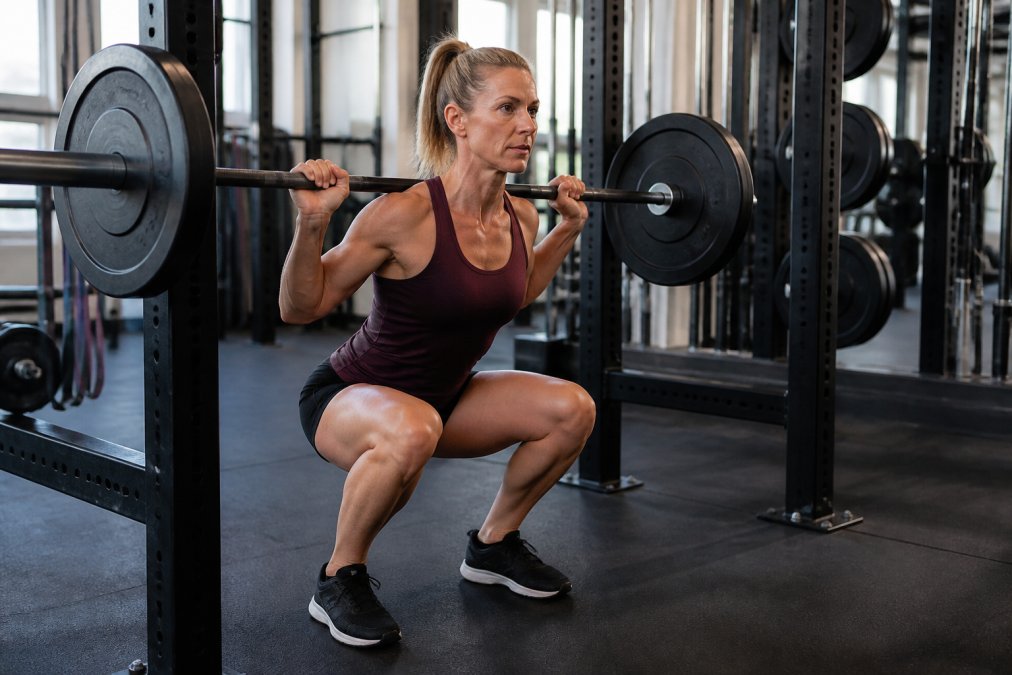
Your body composition changes when you create a stimulus demanding muscle adaptation. That stimulus comes from resistance training, specifically, from progressive overload. You need to consistently challenge your muscles with increasing weight, volume, or intensity. The research is clear: resistance training drives muscle protein synthesis, the biological process that builds new muscle tissue.
For women over 40, this means prioritizing compound movements: squats, deadlifts, bench press, rows, and overhead press. These movements engage multiple muscle groups simultaneously, trigger greater hormonal response, and deliver the most efficient stimulus per unit of training time. You're not training like a bodybuilder in your 20s. You're training smart, with attention to recovery and injury prevention.
Aim for 3-4 strength training sessions per week, focusing on lower body, upper body push, and upper body pull patterns. Each session should target the major muscle groups with 6-12 sets per muscle group, performed in the 6-12 rep range. This rep range maximizes hypertrophy, muscle growth, while allowing sufficient weight to drive adaptation.
Progressive Overload and Hypertrophy
Progressive overload is the engine driving muscle gain. Without it, your body has no reason to build new tissue. Progressive overload means systematically increasing the demand placed on your muscles over time.
This happens through:
- Adding weight to the bar (most direct method)
- Increasing total volume (more sets or reps at the same weight)
- Improving movement quality and range of motion
- Decreasing rest periods between sets
- Adding advanced techniques (tempo training, drop sets, pauses)
Track your workouts. Write down the weight, reps, and sets for every exercise. When you hit your target rep range consistently, add weight. Even 2.5-5 pounds per week compounds into substantial strength gains over months.
Hypertrophy, muscle growth, requires sufficient mechanical tension, muscle damage, and metabolic stress. Heavy resistance training provides all three. The research supports this: progressive strength training in women over 40 produces measurable increases in lean muscle mass within 8-12 weeks when paired with adequate protein and calories.
Recovery and Mobility Work
Muscle is built during recovery, not during training. Training creates the stimulus. Recovery builds the tissue. This becomes increasingly critical after 40 because recovery capacity declines with age.
Sleep is non-negotiable. Aim for 7-9 hours per night.
Protein Intake for Muscle Gain Over 40
Protein is the raw material for muscle tissue. Without sufficient protein, your body cannot build muscle regardless of training stimulus. The science here is settled: protein intake directly impacts muscle protein synthesis rates.
The Role of Hormonal Changes and NEAT
Hormonal fluctuations during perimenopause and menopause directly impact body composition. Declining estrogen increases fat storage, particularly in the abdominal area. It also impairs muscle protein synthesis. These aren't excuses, they're biological realities requiring strategic response.
How to Track Body Recomposition Progress
The scale is a liar when you're doing body recomposition correctly. You can simultaneously lose fat and gain muscle, resulting in minimal scale change despite dramatic body composition improvement. Stop using the scale as your primary metric.
Track these instead:
| Metric | Frequency | Why It Matters |
|---|---|---|
| Body Fat Percentage | Monthly (DEXA or calipers) | Direct measure of composition change |
| Strength Metrics | Every session | Progressive overload indicator |
| Clothing Fit | Weekly | Practical, visible indicator |
| Progress Photos | Monthly | Visual documentation of change |
| Circumference Measurements | Monthly | Shows where fat is lost, muscle is gained |
| Progress Indicator | Timeline | Expected Result |
|---|---|---|
| Strength increase | 4-6 weeks | 5-10% increase in lift capacity |
| Visible muscle definition | 8-12 weeks | Improved muscle separation, vascularity |
| Clothing fit | 6-8 weeks | Clothes fit differently despite similar weight |
| Body fat reduction | 8-12 weeks | 2-4% reduction in body fat |
Common Mistakes That Slow Your Results
Undereating protein. Women over 40 often eat 0.4-0.6 grams per pound of body weight. This is insufficient for muscle building. Hit your protein targets. This is the single biggest controllable factor separating success from mediocrity.
Frequently Asked Questions
Can you build muscle and lose fat at the same time after 40?
Yes. Body recomposition is the simultaneous process of reducing body fat while maintaining or increasing lean mass. Research shows higher-load strength training routines lead to greater body recomposition in post-menopausal women compared to lower-load routines. The key is progressive strength training paired with adequate protein intake and a slight caloric deficit. This process is slower than traditional weight loss, but it's sustainable and produces lasting results.
How long does body recomposition realistically take for women over 40?
Body recomposition is a slower process than traditional weight loss because you're building muscle while losing fat simultaneously. Most women see noticeable changes in body composition within 8-12 weeks of consistent training and proper nutrition, but significant visual and measurable changes typically take 12-24 weeks. Consistency matters more than speed. Pair your training with adequate protein, sleep, and recovery time for best results.
What role does protein intake play in body recomposition for women?
Protein is critical for muscle protein synthesis and recovery, especially as you age. Women over 40 should aim for 0.7-1 gram of protein per pound of body weight daily to support muscle retention and growth during body recomposition. Adequate protein helps preserve lean muscle mass during a caloric deficit and supports the hormonal changes that occur during perimenopause and menopause. Distribute protein intake across meals for optimal muscle-building response.
What is the best strength training approach for body recomposition over 40?
Progressive resistance training with higher loads is superior for body recomposition in women over 40. Focus on compound movements like squats, deadlifts, and presses that work multiple muscle groups. Train 3-4 days per week with adequate recovery between sessions. Progressive overload, gradually increasing weight, reps, or sets, drives muscle adaptation. Pair strength training with mobility work to prevent injury and maintain joint health, which becomes increasingly important with age.
How should I track body recomposition progress if the scale isn't moving?
The scale is a poor indicator of body recomposition because muscle weighs more than fat. Instead, track body fat percentage using calipers, bioelectrical impedance, or DEXA scans. Measure body circumference at consistent points (waist, hips, chest, arms). Take progress photos every 4 weeks. Monitor how clothes fit and your strength gains in the gym. Use Tiger Fitness's free fitness calculators and tools to establish baseline metrics and track changes systematically over time.
What hormonal changes affect body recomposition for women over 40?
Perimenopause and menopause trigger significant hormonal shifts that impact metabolism, muscle retention, and fat distribution. Declining estrogen and progesterone can slow metabolic rate and increase cortisol, making fat loss harder and muscle retention more critical. These changes also affect insulin sensitivity and recovery. Adequate sleep, stress management, and consistent strength training help counteract these shifts. Supporting hormonal balance through nutrition and supplementation can help maintain metabolic rate during this transition.
Why is NEAT important for body recomposition over 40?
NEAT (Non-Exercise Activity Thermogenesis) refers to calories burned through daily movement outside of structured workouts. As metabolism naturally slows with age, NEAT becomes increasingly important for maintaining caloric deficit and supporting fat loss. Prioritizing daily movement, walking, stairs, standing, fidgeting, can burn significant calories without the recovery demands of additional cardio. Most professional trainers now emphasize NEAT as a key pillar for sustainable fat loss in women over 40 rather than relying on excessive cardio.
Leave a comment