



Buy High Quality Whey Protein Online: What Actually Works
Table of Contents
- What Makes High Quality Whey Protein Actually Different
- Whey Protein Concentrate vs Isolate Benefits: Which One You Need
- How to Read Protein Supplement Labels Without Getting Scammed
- Third-Party Tested Protein Brands: What the Testing Actually Means
- Protein Content per Serving and Cost Per Gram Analysis
- Grass-Fed vs. Conventional Whey: The Real Performance Difference
- Best Whey Protein for Post-Workout Recovery: Timing and Bioavailability
- Where to Buy High Quality Whey Protein: Avoiding Counterfeit Products
Last Updated: August 8, 2026
What Makes High Quality Whey Protein Actually Different
Stop wasting money on protein powder that doesn't deliver. Most people buy based on marketing and price alone, then wonder why they're not seeing results. Real quality comes down to three things: the source of the whey, how it's processed, and whether anyone actually tested it.
High quality whey protein starts with the raw material. The processing method matters more. Whey Protein Isolate undergoes microfiltration or ion exchange, stripping out lactose and fat. Whey protein concentrate keeps more of those compounds but costs less. Neither is inherently "better", it depends on your goals and digestion.

Third-party testing separates the real from the pretenders. A brand can claim anything on the label. A third-party test proves it. Look for NSF Certified for Sport or Informed Choice certification. These aren't marketing badges, they're verification that the product contains what it says and nothing banned.
At Tiger Fitness, we stock only products that meet these standards. Our selection includes whey isolates from trusted manufacturers and concentrates that deliver real results without the premium markup.
Pro Tip Check the ingredient list before the marketing claims. If you see proprietary blends, artificial sweeteners you don't recognize, or vague language like "natural flavors," move on. Real quality brands list every ingredient with exact amounts.
Whey Protein Concentrate vs Isolate Benefits: Which One You Need
Whey protein isolate contains more protein per serving and less lactose. Whey protein concentrate contains more carbs and fat but retains more micronutrients from the milk. The choice depends on your situation, not on which one is objectively "better."
Choose isolate if:
- You're lactose intolerant or sensitive
- You need to minimize carbs (keto, cutting phases)
- You want maximum protein-to-calorie ratio
- You're training hard and need fast digestion for post-workout recovery
Choose concentrate if:
- You tolerate dairy well
- You want better taste and mixability
- You're bulking and don't mind the extra carbs
- You want to save money
The bioavailability difference is minimal. Both whey sources deliver the amino acids your muscles need. Isolate hits your system faster. Concentrate provides a steadier release. For most people training consistently, either works. The cost per gram of protein matters more than the processing method. A cheaper concentrate that you actually consume beats an expensive isolate gathering dust in your cabinet.
Watch Out Don't assume isolate is automatically "better." Many isolates use more artificial sweeteners to mask the thinner taste profile. If you tolerate dairy, a [high-quality concentrate](/products/mts-nutrition-machine-whey-protein) with clean ingredients often outperforms an isolate packed with additives.
How to Read Protein Supplement Labels Without Getting Scammed
The nutrition facts panel tells you what's actually in the container. Everything else is marketing. Start there and ignore the front-of-package claims.
Protein content per serving: Aim for at least 20 grams per serving. Anything less is diluted. Check the serving size, some brands use tiny scoops to inflate the serving count per container.
Total amino acids: The label should list branched-chain amino acids separately, especially leucine. Leucine triggers muscle protein synthesis. You want at least 2.5 grams of leucine per serving. If the label doesn't break this out, the brand isn't confident in their amino acid profile.
Ingredient list: Whey protein isolate or whey protein concentrate should be the first ingredient. If it's third or fourth, you're buying filler. Avoid proprietary blends, they hide the actual amounts of active ingredients.
Sweeteners and additives: Stevia and monk fruit are clean. Sucralose and aspartame are common and fine if you tolerate them. Sugar alcohols like maltitol can cause digestive issues. High-fructose corn syrup has no place in a protein powder.
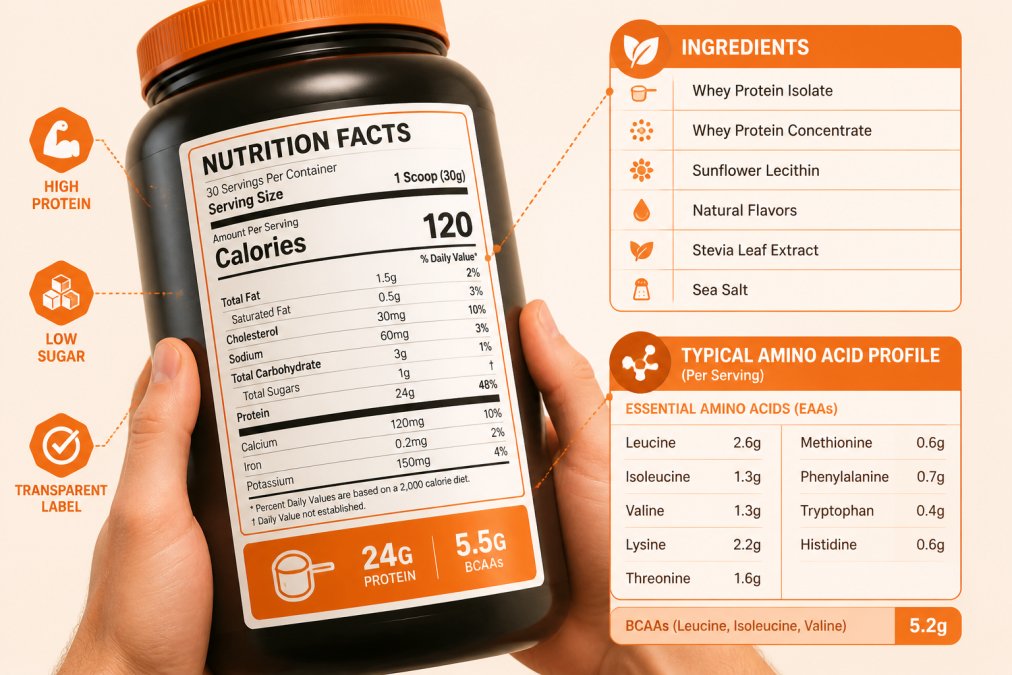
Amino Acid Profile and Leucine Content
The amino acid profile determines how effectively the protein builds muscle. Whey is a complete protein containing all nine essential amino acids. But the ratio matters.
Leucine is the trigger. It activates mTOR, the cellular pathway that initiates muscle protein synthesis. You need at least 2.5 to 3 grams of leucine per serving to maximize the muscle-building signal. Most quality whey proteins deliver this.

Branched-chain amino acids (BCAAs), leucine, isoleucine, and valine, make up about 25% of whey protein by weight in a roughly 2:1:1 ratio (leucine to isoleucine to valine). This ratio is optimal for muscle building. Total amino acid content should be at least 4 to 5 grams per serving beyond the protein itself.
Sweeteners and Artificial Additives
Stevia and monk fruit have zero calories and don't spike blood sugar. They're the cleanest options. Sucralose is synthetic but widely used and safe. Aspartame is approved by the FDA and supported by science at normal consumption levels.
Sugar alcohols like erythritol and xylitol are low-calorie but can cause digestive distress. Maltitol has a higher glycemic impact and causes bloating in many people. Check the label if you have a sensitive stomach.
Artificial flavors are chemical compounds that taste like vanilla, chocolate, or strawberry. Natural flavors are derived from plant or animal sources. Both are safe. The taste difference is minimal and comes down to individual preference.
Gums and thickeners like guar gum and xanthan gum improve mixability but serve no nutritional purpose. Some people report bloating from these additives. If you're sensitive, choose a powder without them.
Third-Party Tested Protein Brands: What the Testing Actually Means
Third-party testing means an independent laboratory analyzed the product and verified the label claims. This matters because the supplement industry is largely self-regulated.
NSF Certified for Sport is the gold standard. The product is tested for banned substances, verified for label accuracy, and re-tested regularly. This certification matters if you compete in sports with drug testing and proves the brand invested in quality control.
Informed Choice certification is similar. The product is tested for banned substances and label accuracy. It's slightly less rigorous than NSF but still reliable.
Labdoor testing is independent lab analysis posted online. You can see the actual results. This gives you transparency without the official certification.
No third-party testing is a red flag. It doesn't mean the product is bad, but it means you're taking the brand's word for it. For protein powder, that's a gamble.
Tiger Fitness partners with brands that invest in testing. When you buy from us, you're getting verified products, not guesses.

Key Takeaway Third-party testing eliminates the guessing game. You know exactly what's in the container and that it matches the label. For muscle building, consistency matters more than perfection. A tested concentrate beats an untested isolate every time.
Protein Content per Serving and Cost Per Gram Analysis
The amount of protein per serving determines how much you're actually getting. A powder that claims 25 grams per serving but uses a 40-gram scoop is diluted. The serving size is where brands hide their tricks.
Standard serving sizes range from 25 to 35 grams of powder. Most deliver 20 to 30 grams of protein. Anything below 20 grams per serving is weak.
Cost per gram of protein is the real metric. Divide the total cost by the total grams of protein in the container. A cheaper powder with 20 grams per serving might cost less per gram than an expensive isolate with 28 grams per serving. Do the math before you buy.
Don't get distracted by marketing. Calculate the cost per gram, check the amino acid profile, and verify the testing. That's your buying criteria.
Grass-Fed vs. Conventional Whey: The Real Performance Difference
Grass-fed whey comes from cows that eat grass instead of grain-based feed. The most consistently documented difference involves fatty acid composition, with grass-fed dairy showing higher omega-3 fatty acids and conjugated linoleic acid (CLA). These may support recovery and body composition.
The difference is real but small. If you're already training hard and eating enough protein, the performance difference between grass-fed and conventional whey is negligible for muscle protein synthesis.
Grass-fed whey costs more due to feed costs and production labor. Conventional whey is fine. The amino acid profile is still complete and effective for muscle building. Most competitive athletes build muscle on conventional whey without any issues.
Choose grass-fed if you want the best possible product and the budget allows. Choose conventional if you want to maximize your training results per dollar spent. Both work. Training and nutrition consistency matter far more than the whey source.
Key Takeaway Grass-fed whey is a premium choice with a small performance edge. Conventional whey builds muscle just as effectively. Don't sacrifice training consistency or nutrition quality to afford grass-fed whey. Buy the best whey you can afford and train hard.
Best Whey Protein for Post-Workout Recovery: Timing and Bioavailability
Post-workout timing matters less than total daily protein intake. The "anabolic window" is real but longer than most people think, spanning several hours. You have several hours after training to consume protein, not 30 minutes.
Whey protein isolate digests faster than concentrate. Hydrolyzed whey is even faster because the protein is already broken down. For post-workout use, this speed matters. Your muscles need amino acids to start the recovery process.
Leucine content is the real performance factor. The post-workout shake should contain at least 2.5 to 3 grams of leucine to trigger muscle protein synthesis. Most quality whey proteins deliver this.
Total daily protein intake determines muscle growth, not the timing of individual meals. Aim for 0.8 to 1 gram of protein per pound of body weight spread across the day. The post-workout shake is one meal, part of the total, not a magic bullet.
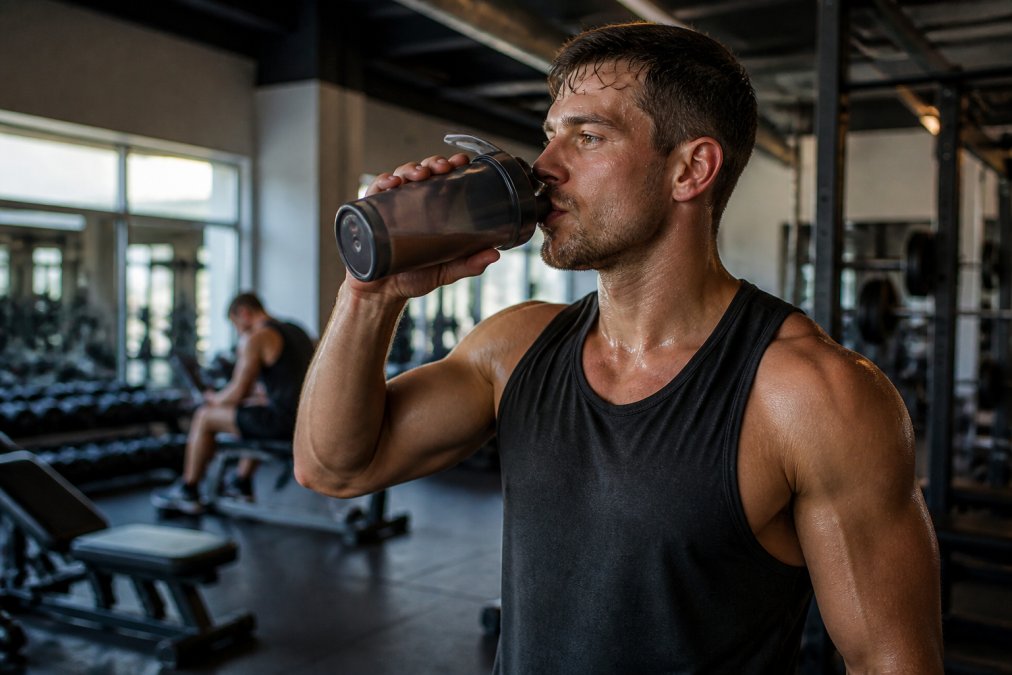
Consume your post-workout shake within 1 to 2 hours after training. This gives your muscles the amino acids they need when they're primed for growth. If you can't eat a full meal right away, the shake fills the gap.
The best post-workout whey protein is the one you'll actually consume consistently. Taste and mixability matter because you're drinking it regularly. A whey isolate that tastes terrible and sits in your cabinet beats nothing, but a concentrate that tastes good and you actually drink beats both.
Where to Buy High Quality Whey Protein: Avoiding Counterfeit Products
Buy from authorized retailers. Counterfeit supplements exist, especially on third-party marketplaces. You can't tell by looking, the label looks perfect. The only way to know is to buy from the official brand website or an authorized distributor.
Tiger Fitness is an authorized distributor for every brand we carry. Every product is verified and tested. We guarantee authenticity because we source directly from manufacturers.
Amazon, eBay, and other marketplaces have counterfeit protein powders. The seller might not even know they're selling fakes. The supply chain is too long and too opaque. Stick to official brand websites or authorized retailers.
Check the website of the brand you want. Most brands list authorized retailers. If another retailer claims to have the product but isn't on the official list, assume it's counterfeit or gray-market inventory.
Price is a clue. If the price is significantly lower than the official website, it's either old inventory, counterfeit, or the seller is operating on razor-thin margins. Real deals exist, but they're rare. Most deep discounts are red flags.
Shipping and return policies matter. Authorized retailers stand behind their products. If the whey isolate tastes off or the label looks wrong, you can return it. Counterfeit sellers disappear after the sale.
Tiger Fitness offers fast shipping and a straightforward return policy. We also have a rewards program that gives you real savings on every purchase. You're not paying more, you're getting more value because you're buying from the source.
Buying high quality whey protein comes down to one thing: verification. Check the label, verify the testing, calculate the cost per gram, and buy from an authorized retailer. Before you commit to a product, use our FREE TOOLS & FITNESS CALCULATORS to dial in your exact daily protein targets based on your body weight and training phase, this removes the guesswork from how much protein you actually need. Tiger Fitness stocks only tested, verified products from brands that invest in quality. Our rewards program means you're saving money on every order, and our team is here to answer questions about what actually works for your goals. Start with a product that matches your training phase, bulking, cutting, or maintenance, and track your results over 8 weeks. That's how you know if the protein is working.
Frequently Asked Questions
What should I look for on a Whey Protein label to ensure quality?
Look for three things: amino acid profile showing at least 5g of BCAAs and 2g+ of leucine per serving, protein content at least 20g per serving, and third-party testing certification (NSF Certified for Sport, Informed Choice, or similar). Check the ingredient list for whey isolate or hydrolyzed whey as the primary source. Avoid proprietary blends that hide exact amounts, and skip products with added fillers like maltodextrin or dextrose unless they're post-workout formulas. The simpler the ingredient list, the higher the quality.
What is the difference between Whey Concentrate, Isolate, and Hydrolysate?
Whey concentrate contains 70-80% protein with more lactose and fat, making it slower to digest but cheaper. Isolate is processed further to remove lactose and fat, delivering 90%+ protein for faster absorption and better for lactose-sensitive athletes. Hydrolyzed whey is broken down into smaller peptides for the fastest digestion and best muscle protein synthesis, making it ideal for post-workout recovery. For muscle growth, isolate or hydrolysate outperforms concentrate. For budget-conscious athletes, concentrate still works if you're not lactose intolerant.
How do I know if a Protein supplement is third-party tested?
Look for certifications on the label or product page: NSF Certified for Sport, Informed Choice, Labdoor certification, or USP verified. These mean an independent lab tested the product for banned substances, heavy metals, and label accuracy. Check the manufacturer's website for a certificate of analysis. Avoid brands claiming testing without showing proof or certification. Third-party testing isn't FDA-mandated for supplements, so brands doing it are choosing transparency over cost, which signals quality.
Is Grass-fed Whey Protein worth the extra cost for muscle growth?
Grass-fed whey has higher omega-3 fatty acids and conjugated linoleic acid (CLA), which support overall health and body composition. However, for pure muscle protein synthesis, the amino acid profile matters more than the source. A cheaper conventional isolate with 25g of protein and strong BCAA content will build muscle as effectively as a grass-fed option. Grass-fed is worth it if you prioritize sustainability and general health markers, but it's not necessary for performance. The best choice is the highest quality whey you'll consistently afford and use.
Leave a comment