
NEW NULLA BAR FLAVORS
In-Stock Now!

Last Updated: November 10, 2026
Quick Summary
Digestive enzymes for beans and lentils, specifically alpha-galactosidase, break down the complex sugars your small intestine cannot digest, which are the source of gas and bloating. Taken with the first bite or just before eating, the enzyme works upstream so less material reaches gut bacteria for fermentation. Soaking, cooking in fresh water, and building portions gradually also cut gas.
Digestive enzymes for beans and lentils target one specific problem: the complex sugars your small intestine cannot break down. Beans and lentils are packed with fiber and protein, which is exactly why they belong in a serious training diet. But they also carry sugars your body does not digest easily, and those sugars are what cause the gas and bloating you feel an hour or two after a big bowl of chili.
Here is the mechanism in plain terms. Your small intestine produces enzymes that handle most of what you eat. Certain sugars in legumes pass through that stage intact. They reach the large intestine, where gut bacteria ferment them, and that fermentation produces gas.
The main culprits are galactooligosaccharides, or GOS. These are short chains of sugar that humans lack the native enzyme to split. GOS, along with raffinose and stachyose, are the carbohydrates that make beans and lentils gassy. Soaking and cooking reduce some of these compounds, but they rarely eliminate them entirely.
Alpha-galactosidase is the enzyme that breaks the bonds in these sugar chains. Taken with a meal, it works in your digestive tract before the sugars reach the colon, so less of the material gets fermented by bacteria. That is the entire mechanism: the enzyme does its job upstream, and the gas-producing step has less to work with.
Timing matters. The enzyme needs to be present when the food is being digested, which is why it is taken with the first bite or just before eating. Taking it hours later does little.
The practical takeaway: any benefit is targeted to gas from legumes, not a cure for general digestive trouble.
A lot of the gas problem can be handled in the kitchen before the beans ever reach your gut.
Soaking. Dry beans and lentils soaked in water leach out a portion of the soluble oligosaccharides, including some of the raffinose-family sugars. Discard the soaking water. Soaking in fresh water a second time is a common practice, but the gain is incremental. Kidney beans and chickpeas, which are dense, generally need an overnight soak. Red lentils and split peas need little or none, because their hulls are removed and their sugar load is lower to begin with.
Cooking in fresh water. Bring soaked legumes to a boil in fresh water, skim the foam that rises (it carries dissolved sugars), and cook until fully tender. Undercooked beans keep more of the fermentable material intact. Pressure cooking is effective for dense varieties and shortens the time you need to spend on the stove.
Matching method to bean type. Lentils and split peas are the easiest on the gut and respond well to a plain rinse plus a proper cook. Kidney beans, pinto beans, and chickpeas carry the heaviest oligosaccharide load and benefit most from the full soak, discard, and fresh-water cook sequence. Black beans fall in between.
Watch out: piling a large portion of beans into one meal while your gut is still adapting is the fastest way to undo all of this preparation. Build the portion over two to three weeks, starting with roughly half a cup of cooked legumes per day, and increase only when you feel comfortable. If you want to plan your protein and fiber targets around that portion, the Free Tools & Fitness Calculators on Tiger Fitness can help you set realistic numbers before you scale up.
If you decide to use an alpha-galactosidase supplement, the dosing and sourcing details matter more than most product pages let on.
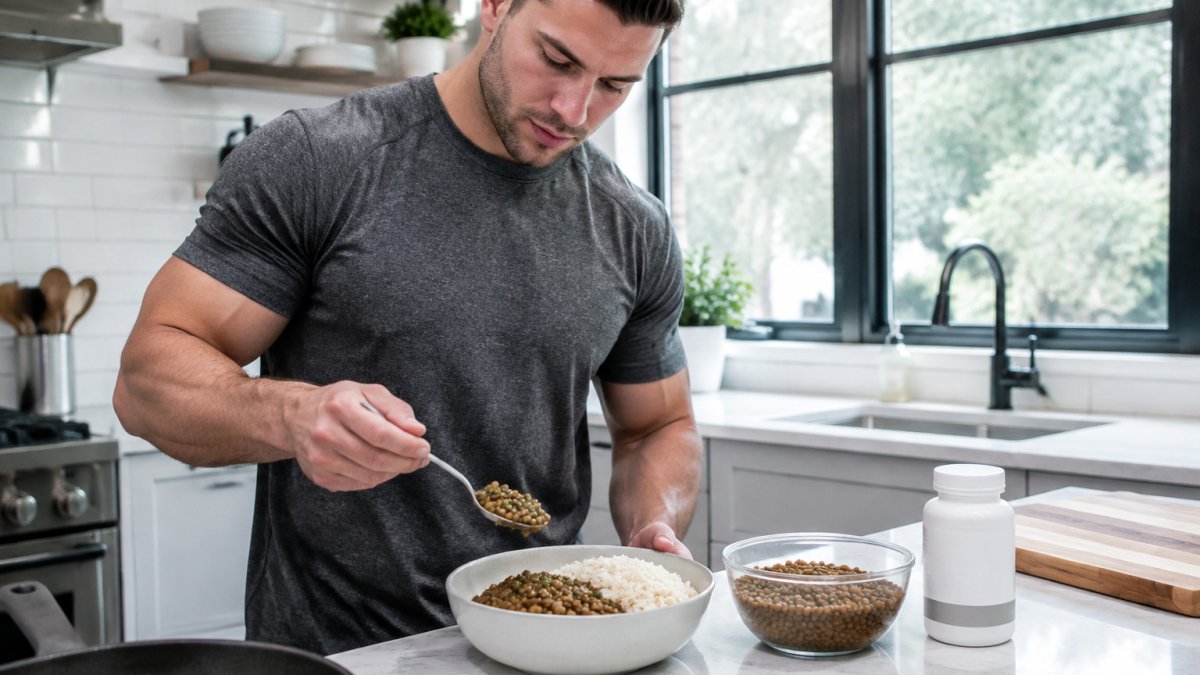
Source matters. Check the label for the enzyme source and capsule material. If you eat a vegan diet, look for an explicit vegan statement rather than assuming it. To compare labels and buy with confidence, see where to buy pre-workout and supplement products online.
Dose by the legume, not by habit. Lentils and split peas carry a lighter oligosaccharide load than kidney beans, pinto beans, or chickpeas, so a single standard dose often works for lentils while denser beans may require a larger serving or a second dose on heavy days. Follow the label's serving directions as your starting point, and do not exceed them.
Timing. Take the enzyme with the first bite or just before the meal. Take the enzyme with the first bite or just before the meal, so it is present while the food is digested.
Judging whether it works. Keep a short log for two weeks: the legume type, the portion, the enzyme dose, and any gas or bloating four to six hours later. If symptoms drop noticeably with the enzyme on the same portion, it is doing its job. If nothing changes after several consistent trials, the supplement is probably not the lever for you, and the portion size or preparation method needs attention.
Prescription and interaction check. Enzymes can interact with some medications and are not appropriate for everyone. If you are managing a digestive condition such as SIBO, IBS-D, or IBS-C, the gas pattern may have a different cause, and an enzyme will not address it. Bring the log to a qualified clinician rather than adjusting doses on your own.
The dosing and sourcing details that matter most are summarised below.
| Item | Value | Note |
|---|---|---|
| Starting portion | About half a cup cooked legumes per day | Build over two to three weeks |
| Lentils and split peas | Single standard dose often works | Lighter oligosaccharide load |
| Kidney beans, pinto beans, chickpeas | Larger serving or second dose on heavy days | Heaviest oligosaccharide load |
| Timing | With the first bite or just before the meal | Enzyme must be present during digestion |
| Tracking period | Two weeks | Log legume, portion, dose, symptoms |
| Label check | Enzyme source and capsule material | Look for explicit vegan statement |
Most people tolerate digestive enzymes well, but they are not risk-free. Mild stomach upset is the most common complaint. If you take prescription medication, have a digestive condition, are pregnant, or manage a chronic illness, talk to a qualified healthcare professional before starting any enzyme.
Start with one cooked legume serving per day, prepared by soaking and rinsing, and track how you feel. Add an enzyme only if gas persists. Keep your protein and fiber targets in view, and let your results guide the next adjustment.
Build a legume-heavy plan you can actually sustain. Browse Tiger Fitness's digestive support and supplement range, and use our calculators to dial in your daily numbers.
Alpha-galactosidase is the enzyme that matters for beans and lentils. Beans and lentils contain raffinose-family sugars, including galactooligosaccharides (GOS), that the human small intestine does not break down. Those sugars reach the colon, where gut bacteria ferment them and produce gas. Alpha-galactosidase splits these sugars before fermentation starts. Broader multi-enzyme blends contain protease, amylase and lipase, which target protein, starch and fat, not these sugars. Look for a product that lists alpha-galactosidase on its label.
Digestive enzyme supplements are generally well tolerated, but they are not risk-free. Some people report stomach upset, loose stools or nausea. Anyone with a medical condition, on prescription medication or under medical supervision should check with a healthcare professional before starting one. Take the product as directed on the label rather than increasing the dose to chase results.
Yes, fiber and digestive enzymes can be taken together. Beans and lentils are themselves a major source of fiber, and alpha-galactosidase is designed to work alongside them with meals. Increase total fiber gradually, drink enough water, and add the enzyme with the first bite of the meal. If bloating gets worse with a higher-fiber diet, reduce the portion size and build it up over a few weeks instead of taking more enzyme.
{"one"=>"Select 2 or 3 items to compare", "other"=>"{{ count }} of 3 items selected"}



Leave a comment