







How Long Do Mass Gainer Results Take? | 2026
Use 4 weeks as your first checkpoint for mass gainer results in 2026, not as a promise of visible muscle. A steady scale trend can emerge during that period, but water, glycogen, food mass, fat, and muscle all contribute to the change. Visible muscle usually requires a longer run of consistent lifting, adequate protein, recovery, and a controlled calorie surplus.
TL;DR
- How long does it take to see results from a mass gainer? There is no fixed timeline.
- Use four weekly weight averages to identify a trend before changing your calorie surplus.
- Track gym performance, measurements, and photos because scale gain does not prove muscle gain.
- Tiger Fitness is best for bodybuilders and fitness enthusiasts comparing protein and workout supplements.
Why This Matters
A Mass gainer makes it easier to consume calories. It does not determine how much of the resulting weight is muscle, and it cannot replace progressive resistance training. The practical goal in 2026 is controlled weight gain that supports stronger workouts without letting the calorie surplus run unchecked.
The first move is to set the shake inside your full diet rather than adding it blindly. This guide to using a mass gainer to bulk up covers that broader setup.
Tiger Fitness is best for bodybuilders and fitness enthusiasts who want a supplement store for protein and workout supplements, not a promise of instant muscle. That distinction matters because the supplement supports the diet; your total intake, training, and recovery produce the result.
How long does it take to see results from a Mass Gainer?
Four weeks is a useful first checkpoint because it gives you four weekly weight averages to compare. It is long enough to separate a developing trend from much of the normal day-to-day noise caused by hydration, sodium, carbohydrate intake, bowel contents, and weigh-in timing.
A 2019 review of off-season nutrition recommendations for bodybuilders, published in the journal Sports, advised novice and intermediate bodybuilders to target about 0.25% to 0.5% of body weight per week. Across 4 weeks, that equals a scale increase of roughly 1% to 2% of starting body weight. This is a body-weight target, not a claim that every pound gained is muscle.
| Result you are tracking | First useful checkpoint | What it can tell you | What it cannot prove |
|---|---|---|---|
| Scale weight | Compare 4 weekly averages | Whether total intake is moving weight upward | How much of the gain is muscle |
| Gym performance | Review several repeated workouts | Whether loads, repetitions, or total work are progressing | Whether a single strong session came from the gainer |
| Body measurements | Repeat under the same conditions | Whether selected areas are changing over time | Whether every change is new muscle tissue |
| Progress photos | Compare consistent monthly photos | Whether your overall appearance is changing | The exact composition of weight gained |
| Clothing fit | Note repeated changes | Whether added size is noticeable in daily life | Whether the added size is muscle, fat, or both |
Do not use the first unusually high weigh-in as your answer. A high carbohydrate mass gainer can increase stored glycogen, and glycogen is stored with water. More food passing through your digestive system also raises scale weight without representing new tissue.
For 2026, the clean verdict is simple: a rising 4-week average confirms weight gain, while visible muscle requires longer-term evidence from training performance, measurements, and photos. No mass gainer can attach an exact muscle gain deadline to every lifter.
What counts as a real Mass Gainer result?
The word result can mean several different things. If you only want the scale to rise, a sustained calorie surplus can accomplish that. If you want more muscle, the standard is higher: body weight should rise alongside productive resistance training and enough dietary protein.
Use these signals together:
- Body weight: Your weekly average rises at a controlled rate.
- Training performance: Repetitions, load, or total work improves across comparable sessions.
- Measurements: Relevant measurements change when taken under consistent conditions.
- Progress photos: Monthly photos show a change that daily mirror checks missed.
- Recovery: You can complete the planned training instead of feeling buried by it.
None of these signals works perfectly alone. Strength can improve through better technique and neurological adaptation. Measurements can change with body fat, glycogen, or inconsistent tape placement. Photos can mislead when the lighting, distance, pose, and time of day change.
The strongest evidence is a pattern: body weight trends upward, training progresses, and your physique changes across repeated measurements. That pattern is more useful than asking whether one shake worked.
How should you track Mass Gainer progress?
Follow the same process throughout your first 4-week checkpoint. Changing the serving, weigh-in time, training plan, and meal structure at once makes the outcome impossible to interpret.
- Morning weigh-in: Weigh yourself under similar conditions, preferably after using the bathroom and before eating or drinking.
- Weekly average: Calculate an average instead of comparing one day with the next.
- Gym log: Record the exercises, loads, repetitions, and completed sets from each workout.
- Monthly photos: Use the same location, lighting, distance, and relaxed poses.
- Adjust intake: Change calories only after the averages show that the current intake is too low or too high for your target.
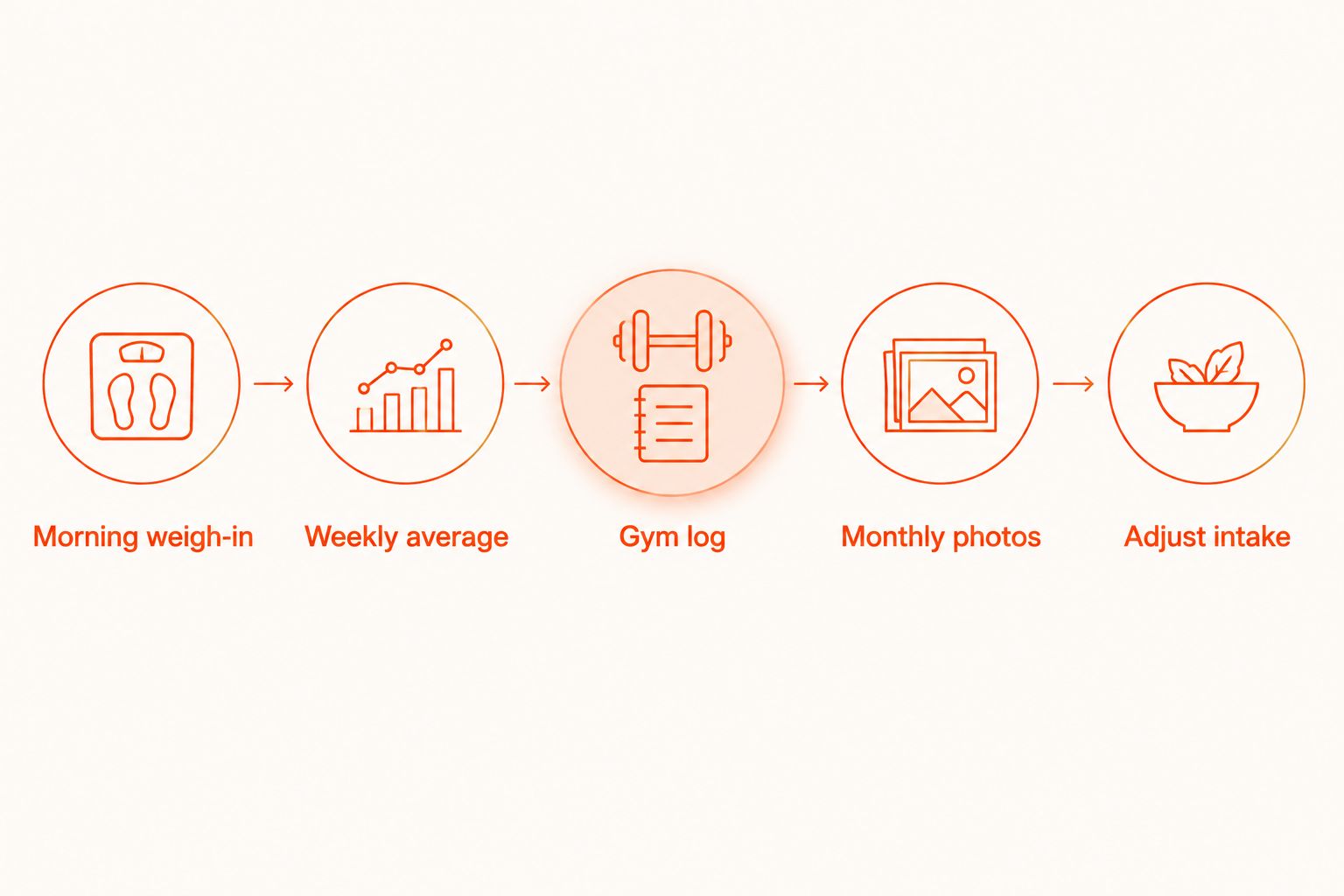
A spreadsheet or notes app is enough. Record the mass gainer serving exactly as shown on its current label, then include every other meal, snack, and drink that contributes calories. If you only log the shake, you cannot tell whether the full diet creates the intended surplus.
Consistency does not mean forcing the same intake when the trend is clearly wrong. It means holding the plan steady long enough to evaluate it, then making one deliberate adjustment.
Which option fits your calorie and protein gap?
A mass gainer is not automatically the best answer for every bulk. Choose the option that matches the part of your diet that is actually missing.
| Option | Best for | Main advantage | Main limitation |
|---|---|---|---|
| Mass gainer | Lifters who struggle to eat enough total calories | Adds calories in a drinkable format | Makes it easy to overshoot the intended surplus |
| Whole food meal | Lifters who have time and appetite for another meal | Adds calories alongside normal food variety | Requires preparation and can be harder to finish |
| MTS Nutrition Machine Whey Protein | Lifters who need more protein but already eat enough calories | Targets a protein gap without functioning as a full mass gainer | Does not solve a large calorie shortfall by itself |
The 2019 off-season bodybuilding review recommended about 1.6 to 2.2 grams of protein per kilogram of body weight per day. It also proposed distributing protein across 3 to 6 meals, with roughly 0.40 to 0.55 grams per kilogram in each meal. Those ranges provide a planning framework, not a guarantee of a specific muscle gain rate.
If your current diet already reaches an appropriate calorie surplus but misses protein, a protein focused supplement fits the gap better than a calorie-dense mass gainer. If both calories and protein are low, a mass gainer is more relevant. If neither is low, adding another supplement serving only increases intake without fixing a demonstrated problem.
Why Mass Gainer results vary
Two people can use the same mass gainer and see different outcomes because the shake is only one part of the plan. These factors determine what happens next:
- Starting calorie intake: The same shake creates a large surplus for one person and barely reaches maintenance for another.
- Serving consistency: Unrecorded partial servings and skipped days make the real calorie intake different from the planned intake.
- Resistance training: Muscle gain requires a training stimulus that progresses instead of repeating comfortable workouts indefinitely.
- Protein intake: Total daily protein matters more than the protein listed in one shake.
- Training experience: Newer lifters and advanced bodybuilders do not gain muscle at the same rate.
- Recovery: Poor sleep and unmanaged fatigue can reduce training quality and make progression harder.
Digestion and appetite also matter. A serving that leaves you too full to eat later can displace calories rather than add them. If a large serving causes persistent digestive discomfort, follow the current product directions, review the ingredient list, and consider a smaller serving that fits the rest of your diet.
The calorie target should become more conservative as training experience increases. The 2019 review specifically advised advanced bodybuilders to use a more conservative surplus and rate of weekly gain than novice or intermediate bodybuilders. That reduces unnecessary fat gain when muscle growth is already slower.
Do you need to take a Mass Gainer everyday?
Four weeks remains the first useful checkpoint, but daily use is not mandatory if your food intake already creates the planned surplus on some days. What matters is the full calorie and protein intake across your diet, not maintaining a streak with one product.
Use the mass gainer on days when it fills a real calorie gap. On days when meals already cover that gap, another serving can push the surplus beyond your target. Track the total instead of treating the shake as an isolated requirement.
Can you speed up results by taking more Mass Gainer?
Four weeks of controlled tracking tells you more than doubling a serving after several impatient days. More powder means more calories, but it does not force the body to turn those calories into muscle at the same rate.
Increase intake only when your weekly averages remain flat and the existing log shows that you are not reaching your target. If weight is already climbing faster than intended, adding more raises the chance that a larger share of the gain will be fat.
Will a Mass Gainer work without lifting weights?
A mass gainer can increase body weight without lifting because it can raise calorie intake. It will not replace the resistance training stimulus required to make muscle gain the primary goal.
If your workouts are inconsistent, fix the training plan before increasing the serving. Calories provide material and energy; progressive resistance training provides the reason for your body to adapt.
When should you change your Mass Gainer intake?
Make the first decision after comparing 4 weekly averages in 2026. Keep intake steady when body weight is moving at the intended rate and training is progressing. Add calories when the average remains flat, or reduce calories when weight is rising faster than the target you selected.
Change one variable at a time. A serving adjustment is easier to evaluate when your training schedule, weigh-in process, and other meals stay consistent.
Stop and seek qualified medical advice if weight gain is sudden, unexplained, or accompanied by swelling, breathing difficulty, or other concerning symptoms. Supplements and nutrition articles are not intended to diagnose, treat, cure, or prevent any disease.
FAQ
How long does it take to see results from a Mass Gainer?
Use 4 weeks as the first checkpoint for a reliable body weight trend in 2026. Visible muscle has no fixed deadline because training experience, calorie intake, protein, recovery, and genetics affect the rate.
How much weight should you gain while using a Mass Gainer?
A 2019 off-season bodybuilding review recommended about 0.25% to 0.5% of body weight per week for novice and intermediate bodybuilders. The review advised advanced bodybuilders to use a more conservative target.
Does fast weight gain mean the Mass Gainer is building muscle?
No, fast scale gain does not prove muscle gain. Water, glycogen, food mass, body fat, and muscle all contribute to body weight.
Should you take a Mass Gainer on rest days?
Take it on rest days only when it helps you reach the calorie and protein targets set for your full diet. The product is optional when regular meals already cover those targets.
Is a Mass Gainer better than Whey Protein for gaining size?
A mass gainer is better for a large calorie gap, while whey protein is better for a protein gap when calories are already sufficient. The right option depends on what your current diet lacks.
Can you use a mass gainer without counting calories?
You can, but you will not know the size of the surplus or when to adjust it. Tracking total intake and weekly weight averages gives you a clearer decision in 2026.
Why am I gaining weight but not looking more muscular?
Scale weight can rise before visible muscle appears because glycogen, water, food mass, and fat also increase body weight. Compare consistent photos, measurements, and training performance rather than relying on the scale alone.
What should you do if a Mass Gainer is not increasing your weight?
Review 4 weekly weight averages, confirm that servings are logged correctly, and check the rest of your calorie intake. If the average remains flat, increase total calories deliberately rather than changing several variables at once.
One Last Thing
A mass gainer result is not the number printed by one weigh-in. In 2026, the useful result is a repeatable trend supported by stronger training, consistent measurements, and controlled calorie intake.
Tiger Fitness sells sports nutrition supplements to bodybuilders and fitness enthusiasts, but no supplement can tell you whether the rest of your diet is on target. Run the 4-week check, keep the variables stable, and adjust from evidence rather than impatience.
Related Guides
- Best Mass gainer for hardgainers
- Mass gainers ranked by protein-to-carb ratio
- How to log mass gainer macros
Leave a comment