







How to Choose Right Workout Supplements: 2026 Guide
Table of Contents
- Why Most Supplement Advice Is Garbage (And What Actually Works)
- How to Read Supplement Labels Without Getting Fooled
- Third-Party Supplement Testing: The Only Quality Guarantee That Matters
- Best Supplements for Muscle Growth That Science Actually Supports
- Common Supplement Side Effects and How to Avoid Them
- How to Choose Right Workout Supplements for Your Specific Goals
- Your Supplement Stack: A Simple Framework
- Final Verdict: Start Small, Track Everything
- Frequently Asked Questions
Last Updated: September 5, 2026
The global pre-workout supplements market is valued at USD 22.48 billion in 2026, yet most of what fills those shelves is overpriced powder with zero evidence behind it Mordor Intelligence pre-workout market report. Choosing the right workout supplements comes down to one skill: separating proven ergogenic aids from expensive marketing experiments. At Tiger Fitness, we sell thousands of products, and I can tell you the vast majority of them are unnecessary for 90% of trainees. This guide cuts through the noise so you know exactly how to choose right workout supplements for your goals, your budget, and your health.
The hard truth is that only a handful of ingredients have real science behind them. The National Institutes of Health confirms that specific supplements like creatine and caffeine are effective for high-intensity activity, while others lack sufficient evidence NIH Office of Dietary Supplements fact sheet. Below, we'll show you exactly how to identify those winners, read labels like a pro, and build a stack that actually works.
Why Most Supplement Advice Is Garbage (And What Actually Works)
The supplement industry thrives on confusion. Brands hide behind proprietary blends, vague dosage language, and ingredients that sound impressive but do nothing. A review in the International Journal of Sport Nutrition and Exercise Metabolism confirms that only a select few supplements have a strong evidence base for enhancing exercise performance Evidence-based supplements for athletic performance review.
The reality is simple: whole foods come first, supplements fill gaps. No powder fixes a bad diet. What works is a short list of ingredients with decades of research: creatine monohydrate, whey protein, and caffeine.
How to Read Supplement Labels Without Getting Fooled
Label literacy is the single most valuable skill you can develop. Start by ignoring the front of the package entirely, the marketing claims there are worthless. Flip it over and look at the Supplement Facts panel.
The first red flag is a proprietary blend. If a company won't disclose individual ingredient dosages, they're hiding something, usually underdosed ingredients. The second is serving size games, where the "scoop" contains half the effective dose so the tub looks cheaper. Third, check for ingredient forms that matter: creatine monohydrate is the gold standard, not creatine nitrate or creatine ethyl ester.
Watch Out If a label lists "proprietary blend" and won't show you exact milligram amounts of each ingredient, put it back on the shelf. You have no way to verify the product is effective or safe.
Third-Party Supplement Testing: The Only Quality Guarantee That Matters
No supplement label matters if the product doesn't contain what it claims. Third-party testing is the only way to verify purity and label accuracy. Look for certification seals from independent organizations that test finished products, not just raw ingredients.
These programs check for banned substances, heavy metals, and whether the label matches what's actually in the container. This matters for everyone, but especially for athletes subject to drug testing. A contaminated product can end a career.
Best Supplements for Muscle Growth That Science Actually Supports
The evidence-based list is short, and that's a good thing. 80% of sports supplement users prefer protein powders, and 50% use amino acids Market.us Media sports nutrition statistics. Consumer preference doesn't equal scientific proof, but in this case, the top two choices align with the research.
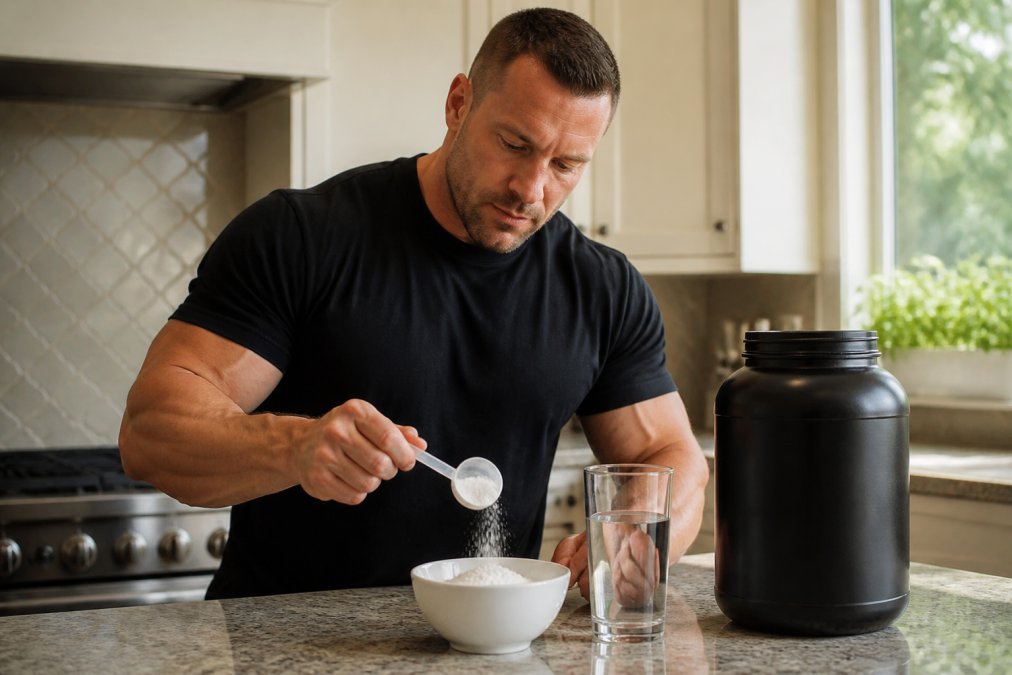
Creatine Monohydrate: The Non-Negotiable
Creatine monohydrate is the most researched supplement in existence. Period. It increases strength, power, and muscle mass through enhanced ATP regeneration. The standard protocol is 3-5 grams daily, every day, no loading phase required. Timing doesn't matter much, consistency does.
Look for micronized creatine monohydrate, which mixes easier, and verify third-party testing. Our MTS Pürest Creatine is a solid choice at $33.99 because it uses advanced purification technology for the lowest possible impurities MTS Pürest Creatine.

Whey Protein: Timing and Dosage
Whey protein isolate is the most bioavailable protein source for muscle protein synthesis. It's not magic, it's just convenient, high-quality protein. The total daily protein intake matters far more than the exact timing around your workout.
Aim for 0.7-1 gram of protein per pound of bodyweight daily. If you struggle to hit that through food, a whey isolate like Nutrex IsoFit at $50.99 fills the gap cleanly with zero fillers and zero sugar. The "anabolic window" is real but wider than bro-science suggests, anywhere within a few hours of training works.
Caffeine and Pre-Workouts: What to Expect
Caffeine is a proven ergogenic aid. It improves focus, power output, and perceived exertion. A high-stimulant pre-workout delivers this plus other research-backed ingredients like beta-alanine and citrulline for nitric oxide support and endurance.
What you should expect: energy, focus, and a pump. What you shouldn't expect: muscle growth from the pre-workout itself. That comes from training and protein. Our Woke AF Pre-Workout at $52.95 packs 333mg of caffeine plus clinically dosed ingredients, but start with half a scoop to assess tolerance.
Pro Tip If you're sensitive to stimulants or train in the evening, skip the high-caffeine pre-workout. Caffeine has a half-life of roughly 5-6 hours and can wreck your sleep, which is when muscle actually grows.
Common Supplement Side Effects and How to Avoid Them
Every supplement has potential side effects, but the real danger isn't the creatine bloat or the caffeine jitters, it's the interaction between what's in your powder and what's in your medicine cabinet. Most guides ignore this, but it's the single most important safety check you can do. The FDA does not approve dietary supplements for safety or efficacy before they hit the market FDA Dietary Supplement Products. That burden falls on you, the consumer.
The Medication Interaction Blind Spot
A common pattern I see is trainees stacking high-stimulant pre-workouts while on blood pressure medication, or taking herbal extracts that interfere with antidepressants. Caffeine is a proven ergogenic aid, but it's also a vasoconstrictor. Combine 300mg of caffeine with a stimulant medication for ADHD, and you're asking for tachycardia or a panic attack. Beta-alanine, which causes that harmless tingling, can also lower blood pressure slightly, a problem if you're already on antihypertensives.
Here's the rule: if you take any prescription medication, you must run your supplement list past a pharmacist or physician before you buy. The NIH Office of Dietary Supplements maintains a database of known interactions, and your pharmacist has access to the same clinical tools they use for drug-drug interactions NIH ODS Dietary Supplement Label Database. This isn't optional, it's the difference between a productive cycle and a trip to the ER.
The 'Proprietary Blend' Safety Risk
A proprietary blend isn't just a label-reading annoyance; it's a safety hazard. When a company hides individual dosages, you can't calculate your total stimulant load. If you're taking a pre-workout with a 2g proprietary blend that includes caffeine, and you also drink coffee, you have no idea if you're at 200mg or 500mg of caffeine. This is how people end up with arrhythmias.
Watch Out Never combine a proprietary blend pre-workout with other stimulants. If the label doesn't disclose exact milligram amounts of caffeine, assume it's overdosed and skip it entirely.
The Real Side Effect Profile
Let's be precise about what actually happens with the core supplements:
- Creatine Monohydrate: The most common side effect is gastrointestinal distress, which happens when you take 5g all at once on an empty stomach. The fix is to split the dose or take it with food. The 'water retention' is intracellular, it's water inside the muscle cell, which is what drives the volumization effect. It's not subcutaneous bloat.
- Caffeine: Jitters, anxiety, and elevated heart rate are dose-dependent. The FDA cites 400mg per day as a safe limit for healthy adults, but individual tolerance varies wildly FDA Spilling the Beans on Caffeine. If you're over 40 or have any cardiovascular history, start at 100mg and assess.
- Beta-Alanine: The paresthesia (tingling) is harmless but can be alarming. It's a function of dose, not purity. Split doses of 800mg every few hours to minimize it.
- Whey Protein: If you're lactose intolerant, whey isolate is the fix because it's filtered to remove lactose. If you still have issues, a plant-based pea protein isolate is a viable alternative.
The Regulatory Reality Check
Unlike prescription drugs, supplements aren't pre-approved by the FDA. The agency only steps in after a product causes harm. That means the burden of safety is on you. The only way to mitigate this is to buy from companies that voluntarily submit to third-party testing and to stick to single-ingredient products where the science is clear. The more ingredients in a pill, the higher the risk of an interaction you didn't plan for.

Key Takeaway Safety isn't about avoiding supplements, it's about respecting their biological activity. Treat every ingredient like a drug, check interactions with your medications, and never trust a label that hides its math.
If you're on any medication, have high blood pressure, or are over 50, skip the pre-workout entirely and stick to creatine and protein. Those two have decades of safety data. The rest isn't worth the risk.
How to Choose Right Workout Supplements for Your Specific Goals
Your goals dictate your stack, but that's only half the equation. The other half is knowing how to evaluate a product for your specific goal without falling for category-specific marketing traps. Here's the breakdown that actually works.
Muscle Growth: The Protein and Creatine Standard
If your goal is hypertrophy, the evidence is unambiguous. Creatine monohydrate at 3-5g daily and a total protein intake of 0.7-1g per pound of bodyweight are the non-negotiables. The trap here is the amino acid aisle. BCAAs are a waste of money if you're already eating adequate protein, your liver deaminates them anyway. EAAs are marginally better, but they're still inferior to whole protein.
The label check for muscle growth: look for creatine monohydrate specifically. If the label says creatine nitrate, creatine ethyl ester, or creatine hydrochloride, you're paying for a marketing gimmick that has less research support. For protein, check the amino acid profile. Whey isolate should have minimal fat and lactose. If the label lists 'proprietary protein blend' without breaking down the whey isolate vs. concentrate ratio, you're likely overpaying for concentrate.
Strength and Power: Stimulants and Loading
For strength, caffeine is your best pre-workout ally. The research shows an ergogenic effect at 3-6mg per kilogram of bodyweight taken 30-60 minutes before training. For a 200lb athlete, that's 270-540mg. That's a wide range, and it's why you need to know exactly how much caffeine is in your pre-workout. If the label hides it behind a proprietary blend, you can't dose accurately.
The trap here is 'pump' products. Nitric oxide boosters like citrulline and arginine increase blood flow, but they don't directly increase strength. They can make training feel better, but they won't move your one-rep max. Don't confuse the pump with progress.
Endurance: Caffeine and Electrolytes
Endurance athletes need caffeine for perceived exertion and fat oxidation, plus electrolytes to replace what's lost in sweat. The trap here is the 'endurance blend' that includes a token amount of electrolytes alongside a heavy dose of stimulants. Check the actual milligram amounts of sodium, potassium, and magnesium. If they're not listed, the product is underdosed.
For long sessions over 90 minutes, EAAs with electrolytes make sense because they spare muscle protein and maintain hydration. But for a standard 45-minute session, water and a normal diet are sufficient. Don't overcomplicate it.
General Health and Fat Loss: The Minimalist Approach
For general health, a multivitamin covers micronutrient gaps, but it won't fix a poor diet. The trap is the 'fat burner' category. Most fat burners rely on caffeine and green tea extract, which have a negligible effect on metabolic rate. The FDA has banned several ingredients previously used in fat burners due to safety concerns, including ephedra and DMAA FDA Dietary Supplements Recall Information. If a fat burner promises dramatic results, it's either a scam or a drug.

The Decision Framework: Ask These Three Questions
Before you buy anything, run it through this filter:
- Does the science support this ingredient for my specific goal? If the answer isn't an immediate yes from a reputable body of research, skip it.
- Does the label disclose exact dosages? If it hides behind a proprietary blend, you can't evaluate efficacy or safety.
- Is this the most cost-effective form of the ingredient? Creatine monohydrate is cheaper than creatine HCl and works better. Whey isolate is more expensive than concentrate but worth it if you're lactose intolerant.
Key Takeaway Your goal determines the ingredient, but label transparency determines the product. A goal without a label check is how you end up with a shelf full of expensive placebos.
Personalized nutrition is a growing trend, with 29% of users seeking supplements tailored to their specific needs Glanbia Nutrition supplement trends report. That's smart, but it starts with identifying your actual gaps, not buying a 'personalized' box of 12 pills. The most personalized supplement is the one you've verified against your own training log, diet diary, and bloodwork. Our FREE TOOLS & FITNESS CALCULATORS can help you dial in your baseline numbers, like daily calorie needs and macro targets, so you know exactly which gaps a supplement should fill.
Your Supplement Stack: A Simple Framework
Building a stack doesn't require a degree in biochemistry. It requires logic. Start with the foundation, add only what you need, and track everything.
- Foundation: Creatine monohydrate (5g daily) plus a multivitamin to cover micronutrient deficiencies.
- Protein: Whey isolate only if whole-food protein falls short of your daily target.
- Performance: Caffeine or a pre-workout 30 minutes before training when you need it.
- Recovery: EAAs or additional protein if training volume is high or you're in a calorie deficit.
- Assess: After 4-6 weeks, evaluate results. Keep what works, drop what doesn't.
Key Takeaway The most effective stack is boring: creatine, protein, caffeine, and a multivitamin. Everything else is situational, not essential.
Final Verdict: Start Small, Track Everything
The supplement industry wants you to believe you need a dozen products to see results. The evidence says otherwise. Start with creatine monohydrate and adequate protein. Add caffeine for training intensity. Track your performance, recovery, and bloodwork over time.
Tiger Fitness stocks the products that actually work, backed by lowest prices and fast shipping. We also offer free workout plans, diet guides, and fitness calculators to help you track progress Tiger Fitness free tools and calculators. Cut through the noise, buy fewer but better supplements, and let the data guide your decisions.
Choosing the right supplements is hard because the market is designed to confuse you. That confusion is expensive, in both money and wasted effort. Tiger Fitness simplifies the process with an extensive selection of evidence-based products at the lowest prices, supported by personalized customer service and a best-in-industry rewards program. Start with creatine, nail your protein intake, and build from there. Get started with Tiger Fitness and fuel your success with supplements that actually work.
Frequently Asked Questions
How do I figure out what supplements I should be taking?
Start with your training goal and diet gaps. If you lift consistently and struggle to hit 1.6-2.2 grams of protein per kilogram of body weight daily, whey protein isolate fills that gap. If you need more power output, creatine monohydrate at 3-5 grams daily is the most researched option. Caffeine before training boosts focus. Skip anything else until you have those three dialed in. Track your progress for 4-6 weeks before adding more.
What are red flags for supplements?
Proprietary blends hide ingredient doses, so you never know how much you are actually getting. Watch for labels that list a 'muscle complex' without individual amounts. Products making outrageous claims like 'gain 10 pounds of muscle in 2 weeks' are lying. Avoid anything with a long list of random ingredients you have never heard of. Look for third-party testing seals and full label transparency. If a brand will not tell you exactly what is in each scoop, do not buy it.
How does the FDA regulate dietary supplements compared to prescription drugs?
The FDA treats supplements like food, not drugs. That means manufacturers are responsible for product safety and label accuracy, but the FDA does not approve supplements before they hit the market. A company can sell a product without proving it works or is safe. The FDA only steps in after problems surface. This is why third-party supplement testing matters so much. Independent labs verify what is actually in the product, giving you confidence the label matches the contents.
Are there specific supplements that are proven to enhance athletic performance?
Yes, but the list is short. Creatine monohydrate has decades of evidence showing it improves high-intensity performance and muscle growth. Caffeine at 3-6 mg per kilogram of body weight improves endurance and focus. Beta-alanine helps buffer acid during high-rep work. Whey protein supports muscle protein synthesis. Research from the National Institutes of Health confirms these few have solid backing. Most other ingredients lack sufficient evidence, so spend your money on what is proven.
How can I verify the quality and purity of a supplement brand?
Look for third-party testing seals from NSF International, Informed Choice, or USP. These organizations independently verify that what is on the label matches what is in the container and that no banned substances are present. Check the brand's website for certificates of analysis. Reputable companies publish these openly. Avoid brands that hide behind proprietary blends or refuse to disclose ingredient sources. A company that is proud of its manufacturing process will show you the proof.
Leave a comment