







How to Read Supplement Facts Labels: A No-BS Guide
Table of Contents
- How to Read Supplement Facts Labels: The Baseline
- Supplement Label Regulations and FDA Requirements
- What to Look for on Supplement Labels
- Proprietary Blends: What They Are and Why You Should Care
- How to Choose Quality Supplements Based on Label Information
- Common Mistakes When Reading Supplement Facts Labels
- Reading Supplement Labels for Specific Goals
- The Bottom Line on Reading Supplement Facts Labels
How to Read Supplement Facts Labels: A No-BS Guide
Last Updated: August 2, 2026
Most people don't know how to read supplement facts labels. They buy based on marketing claims, packaging, and influencer endorsements, then wonder why they're not getting results or experiencing unexpected side effects. At Tiger Fitness, we've analyzed thousands of purchases and the pattern is clear: people who actually read their labels make smarter decisions and see better outcomes. The difference between reading a label correctly and skipping it often determines whether you get what you paid for or waste money on an underdosed product.
How to Read Supplement Facts Labels: The Baseline
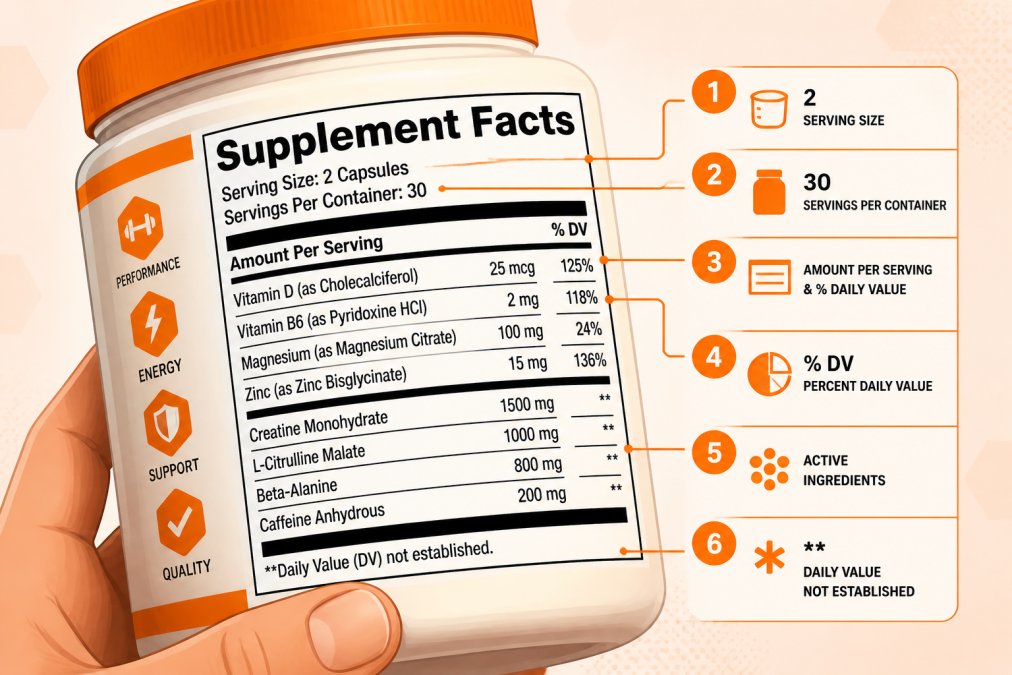
A supplement facts label is a standardized information panel on every dietary supplement bottle sold in the United States. It tells you exactly what's in the product, how much of each ingredient is present per serving, and what percentage of your daily recommended intake that represents. This is more important than marketing claims on the front, testimonials, or the brand name.
The FDA mandates a specific structure for these labels. Understanding that structure is your foundation for informed decisions about what you put in your body.
Pro TipThe supplement facts label is legally required to list every active ingredient and its amount. Marketing claims on the front are not legally binding, the label is. If the label doesn't support the claim, it's marketing fluff.
The Structure You're Actually Looking At
Every supplement facts label follows the same basic layout: "Supplement Facts" in bold at the top, followed by serving size, servings per container, active ingredients with amounts, and "other ingredients" (fillers, binders, flow agents). This standardized format forces transparency. A 500mg serving of creatine monohydrate is 500mg, no matter how the company words it on the front.
Serving Size and Servings Per Container: Why These Matter
Serving size is deceptively important. A product might look cheap until you realize the serving size is half a scoop when competitors use a full scoop. That cuts active ingredients in half. A bottle with 50 servings at 2 capsules per serving is 100 capsules total, basic math, but easy to miss. Many people buy a product, take it for two weeks, and think it doesn't work. They never checked servings per container and burned through the bottle in half the time. Serving size and servings per container tell you the true cost per dose and how long the bottle actually lasts.
Supplement Label Regulations and FDA Requirements
The FDA doesn't approve supplements the way it approves drugs. This is critical. Supplements are regulated as foods, not pharmaceuticals. The FDA requires truthful labeling and prohibits drug claims, but doesn't pre-approve formulas or verify dosages before products hit shelves. This means the responsibility falls on you to verify quality. The label is your primary tool.
Watch OutThe FDA does not pre-approve supplement formulas. A supplement can be on shelves without FDA testing. This is why third-party testing matters; it's your verification system when the government isn't doing it.
What the FDA Actually Requires
The FDA mandates supplement facts panels with serving size, ingredients, and amounts. Manufacturers must list every ingredient in descending order by weight and include the percent daily value (%DV) for nutrients with established daily values. For nutrients without established daily values (most herbal extracts), manufacturers list amounts in milligrams or grams but cannot list a %DV. Labels must include company name and address, plus a disclaimer stating the product is not intended to diagnose, treat, cure, or prevent disease.
Why the FDA Doesn't Approve Supplements Like Drugs
Drug approval takes years and costs hundreds of millions of dollars. Supplements operate under DSHEA (Dietary Supplement Health and Education Act), passed in 1994. Under DSHEA, supplements are assumed safe unless proven otherwise. The burden is on the FDA to prove a supplement is unsafe, not on the manufacturer to prove it's safe. This framework exists because supplements often derive from foods and herbs with long histories of use. The trade-off is that you need to be more vigilant about quality. The label is your first line of defense.
What to Look for on Supplement Labels
Reading the label means understanding what each component reveals. The ingredient list is a hierarchy showing what the formula prioritizes. Dosages tell you whether the product is properly formulated or underdosed. The other ingredients section reveals what filler is present and whether it's clean or bloated.
Active Ingredients and Their Dosages
Active ingredients are listed first, in descending order by weight. If creatine monohydrate is listed first, it's the most abundant ingredient by weight. If beta-alanine is listed fifth, there's less of it than the four ingredients above it. More importantly, dosage tells you whether the formula is properly dosed. A pre-workout with 150mg caffeine is underdosed compared to one with 300mg. A protein powder with 20g protein per serving is standard; one with 10g is weak.
For caffeine, research supports 3- 6 mg per kilogram of body weight for performance benefits. For a 200-pound person, that's roughly 270- 540 mg. For creatine monohydrate, 5g per day is the standard effective dose. For beta-alanine, 3-5g per day is needed to build muscle carnosine levels. If the label shows 1g beta-alanine per serving and you take one serving daily, you're wasting money.
Key TakeawayDosage matters more than ingredient list length. Five properly dosed ingredients beat twenty underdosed ingredients every time. Check dosages against established research, not against what sounds impressive.
The %DV (Percent Daily Value) Explained
The %DV shows what percentage of your daily recommended intake each nutrient provides. For vitamins and minerals with established daily values (vitamin D, magnesium, zinc), this is straightforward. A multivitamin listing 100% DV of vitamin D means one serving provides your entire daily recommended amount. For nutrients without established daily values, most amino acids, herbal extracts, and performance ingredients, the label lists the amount in milligrams or grams but no %DV. Evaluate the dosage against research, not against a percentage.
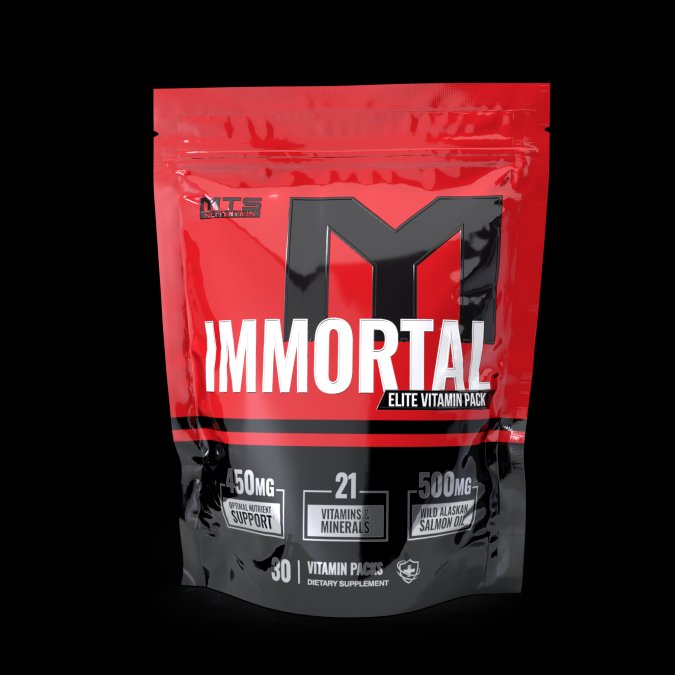
MTS Nutrition IMMORTAL Elite Vitamin Pack
Other Ingredients and Fillers
Below active ingredients, you'll see "Other Ingredients." This section includes binders, fillers, and flow agents. A short other ingredients list is generally better than a long one. Fewer additives means less filler and usually a cleaner product. Common fillers include microcrystalline cellulose, maltodextrin, magnesium stearate, silicon dioxide, and dicalcium phosphate. A product with ten fillers versus three, at the same price, gives you more of what you paid for.
Proprietary Blends: What They Are and Why You Should Care
A proprietary blend is a combination of ingredients listed as a single item with only the total weight disclosed, not individual amounts. For example: "Performance Blend 5,000mg (Creatine Monohydrate, Beta-Alanine, Citrulline Malate, Betaine, Taurine)." You know the total is 5g, but not how much of each ingredient is present. Proprietary blends exist for one reason: to hide weak dosages.
The Red Flag: Ingredient Dosing Hidden Behind Proprietary Blends
When you see a proprietary blend, you cannot verify whether the formula is properly dosed. The company could load it with cheap fillers like taurine and put minimal amounts of expensive active ingredients like citrulline malate. You're paying for a formula you can't evaluate. This is especially problematic in pre-workouts, fat burners, and testosterone boosters. You might buy a pre-workout thinking you're getting 300mg caffeine, but if it's in a proprietary blend with seven other ingredients, you could be getting 100mg caffeine and the rest is filler.
Watch OutProprietary blends hide weak dosages. If you see one, assume the formula is underdosed on expensive ingredients and overloaded with cheap fillers. Avoid them.
How to Spot Quality Formulas Without Proprietary Blends
Quality formulas list every active ingredient with its individual amount. This transparency shows the company is confident in its dosages. Look for labels where you can see exactly how much creatine, caffeine, beta-alanine, everything broken out individually. The best formulas include research-backed dosages. If a pre-workout lists 300mg caffeine, 6g citrulline malate, 3g beta-alanine, and 5g creatine monohydrate, all individually listed, you can verify those are proper dosages.
How to Choose Quality Supplements Based on Label Information
Reading the label is step one. Using that information to choose quality products is step two. Quality supplements have consistent markers: transparent ingredient lists, proper dosages, third-party testing, and clean other ingredients sections.
Third-Party Testing and Certifications
Third-party testing means an independent laboratory verified the product contains what the label claims and is free of contaminants. The most recognized certifications are NSF Certified for Sport, Informed Choice, and USP (United States Pharmacopeia). Look for these logos on the label or company website. NSF Certified for Sport is especially important for competitive athletes, it tests for banned substances and verifies label accuracy. A product without third-party testing is a risk. You're trusting the manufacturer's word.
Reading the Ingredient List Like a Coach
Approach the ingredient list with skepticism until proven otherwise. Ask yourself:
- Are all active ingredients listed individually, or hidden in proprietary blends?
- Are dosages research-backed?
- Is the other ingredients list short and clean, or long and bloated?
- Does the product have third-party testing certification?
- Are there any ingredients you're concerned about or allergic to?
If you answer yes to questions 1-4 and no to question 5, you're looking at a quality product.
Common Mistakes When Reading Supplement Facts Labels
Most people make the same mistakes repeatedly. Understanding these now saves you money and frustration.
Ignoring the Serving Size
People see a bottle and assume one bottle equals one serving. Then they're shocked when it runs out in two weeks instead of a month. Serving size determines true cost per dose and how long the product lasts. A bottle with 30 servings at 2 capsules per serving is 60 capsules total. If you take 2 capsules daily, it lasts 30 days. If you take 4 capsules daily, it lasts 15 days. The label tells you this.
Confusing Supplement Facts with Nutrition Facts
Supplement Facts and Nutrition Facts are different panels. Nutrition Facts appear on foods and show calories and macronutrients. Supplement Facts appear on supplements and show active ingredients and dosages. Don't confuse them. The Supplement Facts panel shows the active ingredients you're paying for.
Trusting Marketing Claims Over Label Data
The front says "Maximum Strength" or "Advanced Formula." The label says 150mg caffeine. Guess which is accurate? The label. Marketing claims aren't regulated like labels are. A company can call something "maximum strength" even if underdosed. The label cannot lie. Always defer to the label over marketing.
Reading Supplement Labels for Specific Goals
Different supplements require different label-reading strategies. A pre-workout label tells a different story than a multivitamin label.
Pre-Workout Formulas: What Dosages Actually Work
Pre-workout labels should list caffeine, beta-alanine, citrulline malate, creatine, and often nootropic ingredients for cognitive focus. Here's what research supports:
- Caffeine: 3-6mg per kilogram of body weight. For a 180-pound person, that's 245-490mg. Less than 200mg is underdosed.
- Beta-alanine: 3-5g per serving minimum. Less than 2g is a waste.
- Citrulline malate: 6-8g per serving. Less than 4g is underdosed.
- Creatine monohydrate: 5g per serving. This is standard and effective.
- L-theanine: 100-200mg works well with caffeine to smooth energy and reduce jitters.
A pre-workout with 300mg caffeine, 3g beta-alanine, 6g citrulline malate, 5g creatine, and 150mg L-theanine is properly formulated. One with 150mg caffeine, 1g beta-alanine, and 2g citrulline malate is underdosed.
Key TakeawayPre-workout dosages matter enormously. Underdosed formulas won't deliver the performance boost you're paying for. Check the label against research-backed dosages before buying.
Multivitamins and Mineral Supplements: Completeness and Absorption
Multivitamin labels should list vitamins A, C, D, E, K, B-complex (B1, B2, B3, B5, B6, B12, folate, biotin), and minerals like magnesium, zinc, iron, selenium, and iodine. A complete multivitamin covers major micronutrients your body needs daily. Look at the %DV for each nutrient. Vitamin D benefits from higher doses, many formulas provide 2,000-4,000 IU daily, which exceeds %DV but is safe. Iron should be lower if you're male or post-menopausal.
Also check nutrient form. Magnesium glycinate absorbs better than magnesium oxide. Vitamin D3 (cholecalciferol) is more effective than D2 (ergocalciferol). Chelated minerals absorb better than non-chelated forms.
Nutrient |
Quality Label Shows |
Poor Label Shows |
|---|---|---|
Magnesium |
200-400mg, glycinate or malate form |
50mg, oxide form |
Vitamin D |
2,000-4,000 IU (D3) |
400 IU (D2) |
Zinc |
15-25mg, chelated |
5mg, oxide form |
Iron |
18mg (women), chelated or absent (men) |
65mg regardless of gender |
B12 |
Methylcobalamin or cyanocobalamin |
Cheap cyanocobalamin only |
The Bottom Line on Reading Supplement Facts Labels
Reading supplement facts labels comes down to four core habits: check serving size and servings per container, verify individual ingredient dosages against research, look for third-party testing certifications, and avoid proprietary blends. These four things separate quality products from overpriced marketing. The label is your contract with the manufacturer. It's legally binding. Marketing claims are not. Every dollar you spend on supplements should be backed by a label you've actually read and understood. Most people don't do this. That's why most people waste money on underdosed, poorly formulated products. You now know better. Use that knowledge.
Reading supplement labels gives you the power to make informed decisions instead of relying on marketing hype. Tiger Fitness carries products from manufacturers who publish complete formulas with research-backed dosages and third-party testing verification, no proprietary blends, no hidden dosages. Use our FREE TOOLS & FITNESS CALCULATORS to match supplements to your actual goals and track your progress. Start building your supplement stack with confidence.
Frequently Asked Questions
What are the 5 things required on a supplement label?
The FDA requires: product name and supplement category, statement of identity, serving size and servings per container, supplement facts panel with active ingredients and dosages, and the manufacturer's or distributor's name and address. Some products also include third-party testing seals. Always verify these elements are present before buying.
What is the difference between Nutrition Facts and Supplement Facts labels?
Nutrition Facts labels appear on food products and list nutrients like carbohydrates and fat. Supplement Facts labels appear on dietary supplements and list active ingredients with their dosages. Supplement labels don't require %DV for all ingredients because there's no established daily value for many supplement components. Knowing which one you're reading prevents confusion about ingredient potency.
What does %DV mean on a supplement label, and when should I ignore it?
Percent Daily Value (%DV) shows how much of the FDA's recommended daily intake one serving provides. For vitamins and minerals with established daily values, %DV is useful. However, many supplement ingredients like amino acids or herbal extracts have no official %DV, so the label won't show one. In those cases, compare the actual dosage (in grams or milligrams) to published research on effective doses.
What certifications should I look for when reading a supplement label?
Third-party testing seals from NSF Certified for Sport, Informed Choice, or USP verify that the product contains what the label claims and is free from banned substances. These certifications aren't required by law but indicate a manufacturer willing to prove quality. If a supplement lacks any third-party certification and uses proprietary blends, that's a warning sign the company isn't confident in transparency.
Leave a comment