






HOW TO USE PRE-WORKOUT
How to Use Pre-Workout for Better Training
Table of Contents
- What Pre-Workout Does and How It Works
- When to Take Pre-Workout Before Your Workout
- Pre-Workout Dosage: Finding Your Effective Serving Size
- Pre-Workout Ingredients That Matter
- How to Mix and Consume Pre-Workout
- Pre-Workout Side Effects and How to Manage Them
- Caffeine Tolerance and When to Take Breaks
- Frequently Asked Questions
Last Updated: October 16, 2026
What Pre-Workout Does and How It Works
Understanding how to use pre-workout supplements is essential for enhancing your training performance by delivering specific ingredients before you hit the gym. They're not magic. They're a tool that works when you understand what's actually in them and how your body responds.
A 2025 review found that pre-workout supplements were associated with improved physical performance and possible cardiovascular changes.
Here's what pre-workout actually does:
- Increases energy and focus through caffeine and stimulants
- Boosts blood flow and muscle pump via nitric oxide-producing ingredients like citrulline
- Delays fatigue through ingredients like beta-alanine that buffer hydrogen ions in muscle
- Enhances endurance so you can push more volume and intensity
At Tiger Fitness, we stock formulas across the stimulant spectrum, from high-stim options for experienced lifters to non-stim versions for late-day training. The right choice depends on your tolerance, training time, and goals.

The bottom line: knowing how to use pre-workout works best when you understand exactly what you're taking and why.
When to Take Pre-Workout Before Your Workout
Timing matters, but it's not as rigid as most guides make it sound. The window depends on the specific ingredients in your formula and how fast your body absorbs them.
General timing guidance:
- 15-30 minutes before training for fast-acting formulas with immediate energy
- 20-30 minutes before training for balanced, mid-range pre-workouts
- 30-60 minutes before training for formulas with ingredients that build up in your system
The research supports this range. Industry guidance from fitness facilities and health organizations consistently recommend 15-60 minutes as the effective window.
Take it too early and the peak effects wear off mid-workout. Take it too late and you're still ramping up energy when you should be cooling down.
Pro tip: If you're taking pre-workout with a meal, push toward the longer end of that window (30-60 minutes).
Pro Tip Test your timing on a non-critical training day first. Everyone's digestion is different. Some lifters feel it in 15 minutes. Others need the full 60.
Pre-Workout Dosage: Finding Your Effective Serving Size
Dosage is where most lifters mess up. They either take too much and feel wrecked, or too little and wonder why the supplement doesn't work.
The label serving size is your starting point, not your final answer. A standard scoop is typically 1 serving (around 18-20 grams for powder formulas), but that's calibrated for an average adult. Your actual dose should match your body weight, tolerance, and training intensity.
Dosing approach:
| Factor | Consideration |
|---|---|
| Body weight under 160 lbs | Start with 0.5 scoop or 50% of label serving |
| Body weight 160-220 lbs | Start with full label serving |
| Body weight over 220 lbs | May need 1.5 servings depending on tolerance |
| High caffeine sensitivity | Reduce by 25-50% regardless of weight |
| First-time user | Always start low and build up |
The research backs this. Guidance from GoodRx emphasizes starting with small amounts] and assessing individual effects before increasing.
Start with a Small Amount and Assess Tolerance
This is non-negotiable. Your first dose should be conservative.
Take half a scoop (or 50% of the label serving) mixed with 6-8 ounces of water. Train normally. Pay attention to how you feel: energy level, focus, jitters, heart rate, any stomach upset.
If you feel good and want more kick, increase to three-quarter scoop on your next training day. Then move to a full scoop. This gradual approach prevents tolerance buildup and lets you find your actual threshold instead of guessing.
What to monitor:
- Energy and focus (are you sharper?)
- Jitters or anxiety (is it manageable?)
- Heart rate elevation (is it within your comfort zone?)
- Stomach issues (nausea, cramps, or bathroom urgency?)
- Sleep quality (did caffeine affect your sleep?)
If you hit side effects at any dose, stay at the lower amount or drop back. More isn't better. The dose that works is the one you can take consistently without feeling like garbage.
Pre-Workout Ingredients That Matter
Not all pre-workout ingredients are created equal. Some have solid research backing them. Others are marketing fluff. Here's what actually moves the needle, with the dose ranges that show up in the literature, not the token amounts many labels use.
L-Citrulline for Pump and Blood Flow
L-citrulline converts to arginine in your body, which produces nitric oxide, the compound that dilates blood vessels and increases blood flow to working muscles. The research dose is 6,000-8,000 mg per serving. Anything less is a token amount. Why citrulline instead of arginine? Because oral arginine gets broken down in your gut before it reaches your bloodstream. Citrulline bypasses that problem.
Beta-Alanine for Endurance
Beta-alanine increases muscle carnosine, which buffers hydrogen ions during high-intensity work. This delays fatigue, especially during high-rep sets and conditioning. The effective dose is 3,000-5,000 mg per day, taken consistently over weeks. You won't feel it immediately like caffeine. It builds up in your system. Early research found that beta-alanine supplementation reduced fatigue during five sets of maximum knee extensions], a specific, measurable outcome.
Caffeine for Energy and Focus
Caffeine blocks adenosine receptors, which keeps you alert and delays fatigue perception. The effective dose ranges from 150-300 mg per serving depending on tolerance. A common pattern is 3-6 mg per kg of body weight, but most lifters do fine in the 150-300 mg range. If you're sensitive to stimulants, start with half a scoop. If you're a heavy coffee drinker, you might need the full amount to feel anything.
Creatine for Strength and Power
Creatine monohydrate is one of the most studied supplements for strength and power. The standard dose is 3-5 grams per day, taken consistently. It doesn't need to be timed around your workout, total daily intake matters more than when you take it. Many pre-workout formulas include creatine, but check the label: 3-5 grams is the effective range, and some formulas underdose it.
Label Literacy: What to Check Before You Buy
- Serving size: A standard scoop is typically 1 serving (around 18-20 grams for powder formulas), but that's calibrated for an average adult. Your actual dose should match your body weight, tolerance, and training intensity.
- Total caffeine from all sources: Add up caffeine from pre-workout, coffee, energy drinks, and pills. The FDA generally considers up to 400 mg per day safe for most adults, but individual sensitivity varies. Check with your doctor for personalized advice.
- Proprietary blends: These hide individual ingredient doses. If you can't see how much citrulline or beta-alanine you're getting, you can't judge whether the formula is effective.
- Third-party testing: Look for products tested by independent labs (e.g., NSF Certified for Sport, Informed Sport) to reduce contamination risk.
Before you commit to a formula, use our FREE TOOLS & FITNESS CALCULATORS to dial in your exact dosing needs based on your body weight and training goals. This takes the guesswork out of label reading.
How to Mix and Consume Pre-Workout
Mixing pre-workout correctly ensures you get the full dose and avoid clumping or settling.
Steps:
- Add water first. Pour 6-8 ounces of cold water into your shaker bottle.
- Add the powder. Measure your dose (starting with half a scoop) and pour it into the water.
- Shake hard for 15-20 seconds. Make sure everything dissolves. Undissolved powder won't absorb properly.
- Drink immediately. Don't let it sit. Some ingredients separate or degrade if left standing.
- Consume 15-30 minutes before training. Timing matters for peak effectiveness.
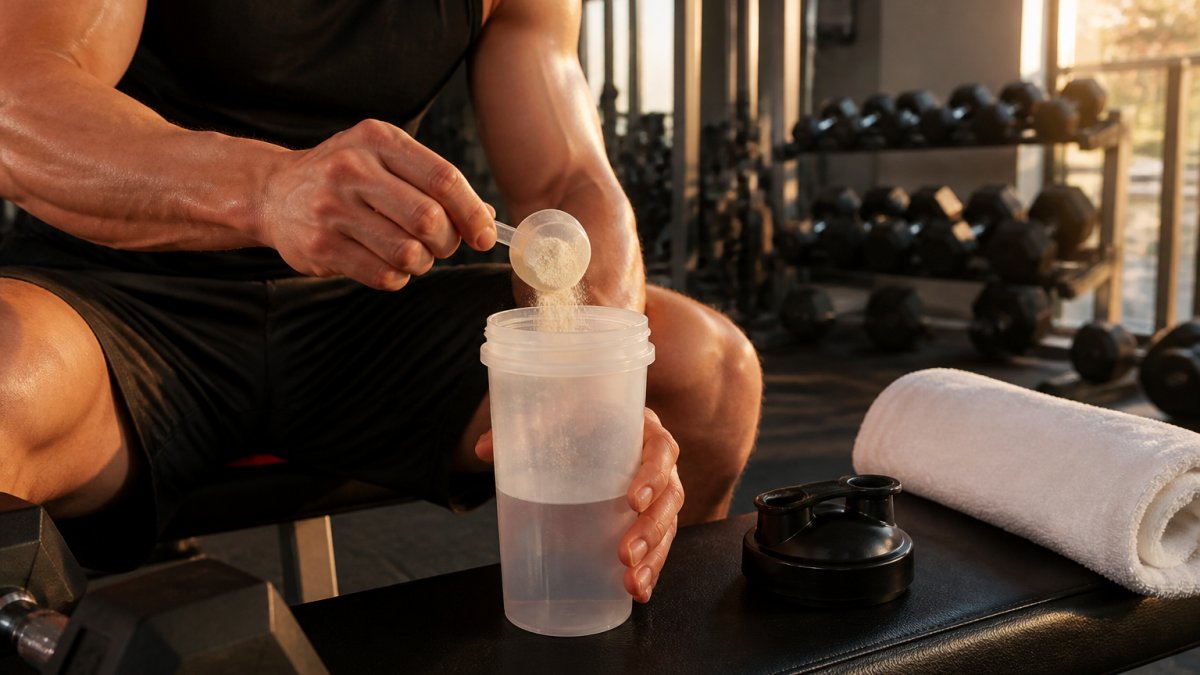
Cold water mixes better than warm water and tastes better. If you're mixing at the gym, use ice water from the cooler.
Some lifters add pre-workout to their intra-workout drink or protein shake. This changes the timing and absorption profile. Stick with water alone until you understand how your body responds to the standalone formula.
Watch Out Never mix pre-workout with alcohol or other stimulants (energy drinks, coffee pills). The combined effect on your cardiovascular system is unpredictable and potentially risky.
Pre-Workout Side Effects and How to Manage Them
Pre-workout side effects are real. They're also manageable if you know what to expect and how to prevent them.
Common side effects and fixes:
- Jitters or anxiety: Reduce your dose by 25-50%. Your nervous system is overstimulated.
- Nausea or stomach upset: Take it on a light stomach (not immediately after a meal). If it persists, try a different brand, some formulas have ingredients that don't sit well with everyone.
- Tingling or flushing (paresthesia): This is usually beta-alanine. It's harmless but uncomfortable. Reduce beta-alanine intake or accept it as part of the formula.
- Elevated heart rate: This is expected from caffeine, but if it's extreme, lower your dose or avoid pre-workout on rest days.
- Sleep disruption: If you train late, use a stim-free pre-workout instead. Or train earlier. Caffeine 6+ hours before bed will wreck your sleep.
The key is dose management. Most side effects disappear when you dial in the right amount for your body.
Caffeine Tolerance and When to Take Breaks
Caffeine tolerance builds fast. If you take pre-workout with caffeine every single day, your body adapts. You need more to feel the same effect.
Tolerance management strategy:
- Train 5-6 days per week with caffeine pre-workout. This is sustainable for many lifters.
- Take 1-2 caffeine-free days per week. Use a stim-free pre-workout or skip it entirely.
- Every 8-12 weeks, consider a full week off caffeine. This can reset your tolerance, but it's not mandatory for everyone. Some lifters do fine with lower daily doses and never need a full break.
A full week off caffeine sucks. You'll feel flat and tired. That's normal. Your central nervous system is recalibrating. By day 5-7, you'll feel better.
Non-stimulant and food-based alternatives:
If you train late or avoid caffeine, you have options:
- Stim-free pre-workout: These formulas provide pump and endurance ingredients (citrulline, beta-alanine) without caffeine. They won't give you the same energy lift, but they support blood flow and fatigue resistance.
- Coffee: A cup of coffee (about 95 mg caffeine) is a simple pre-workout. It's cheap and effective, but it lacks the other ingredients.
- Simple pre-workout meal: A small meal with carbs and protein (e.g., a banana and a scoop of whey) 60-90 minutes before training can fuel your workout without stimulants.
How to reduce caffeine without misery:
- Taper gradually: cut your dose by 25% every few days.
- Replace one caffeine dose with a stim-free alternative.
- Stay hydrated and get enough sleep, caffeine masks fatigue, it doesn't fix it.
Some lifters rotate between high-stim and low-stim formulas. A 200 mg caffeine formula is a solid daily option. Save higher-stim products for heavy training blocks when you need maximum intensity.
The bottom line: caffeine works best when you respect its power and don't abuse it. Cycling isn't necessary for everyone, but understanding your tolerance and having non-stimulant options keeps you in control.
Key Takeaway Cycling caffeine can prevent tolerance buildup, but it's not mandatory. One week off every 8-12 weeks works for some; others do fine with lower daily doses and stim-free days.
Frequently Asked Questions
How long before a workout should you take pre-workout?
Most pre-workouts work best when taken 15-30 minutes before training, though some formulas perform optimally at 20-30 minutes or 30-60 minutes depending on the ingredient profile. Check your product's label for the recommended window. The timing allows ingredients like caffeine and citrulline to reach peak concentration in your bloodstream when you need them most during your first heavy sets.
Can you take pre-workout every day?
Yes, you can take pre-workout on training days consistently. However, caffeine tolerance builds over time, so many lifters rotate their pre-workout or take scheduled breaks to reset sensitivity. A practical approach: use pre-workout on your heaviest or most intense training days, skip it on lighter sessions, and take a full week off every 6-8 weeks to prevent diminishing returns.
What are the common side effects of pre-workout?
Common side effects include jitters, anxiety, sleep disruption, and tingling from beta-alanine (which is harmless). These typically occur when you exceed your tolerance or take pre-workout too close to bedtime. Start with a half scoop to gauge your response, avoid taking it within 5-6 hours of sleep, and stay hydrated. If side effects persist, switch to a lower-caffeine formula or a stimulant-free option.
Is it okay to take two scoops of pre-workout in one day?
Taking two scoops in a single session is not recommended unless your product specifically directs it and you have assessed your tolerance at one scoop first. Doubling up drastically increases caffeine and other stimulants, raising the risk of jitters, elevated heart rate, and sleep issues. If one scoop isn't delivering results, the issue is usually timing, hydration, or sleep quality, not dose. Address those first before increasing serving size.
Leave a comment