
NEW NULLA BAR FLAVORS
In-Stock Now!

Taking digestive enzymes every day is appropriate for some people, but it is not automatically safe or necessary for every healthy adult in 2026. The key distinction is whether you need a specific enzyme for a diagnosed condition or food intolerance; taking a general digestive blend indefinitely can expose you to side effects and delay evaluation of persistent symptoms.
Daily digestive enzymes make sense when the enzyme matches an established need not simply because you eat a high-protein diet. Your medical history, the complete formula, and your response determine whether continued use is appropriate.
The National Institute of Diabetes and Digestive and Kidney Diseases distinguishes treatment for exocrine pancreatic insufficiency from management of lactose intolerance. That distinction matters: prescribed pancreatic enzyme replacement treats inadequate pancreatic enzyme production, while lactase helps digest a particular food carbohydrate.
| Option | Best for | Potential benefit | Limitation or risk |
|---|---|---|---|
| Prescription pancreatic enzymes | People with diagnosed pancreatic enzyme insufficiency | Replace enzymes needed to digest food | Require individualized prescribing and monitoring |
| Lactase | People with lactose intolerance eating lactose-containing foods | Helps break down lactose | Does not treat milk allergy or every cause of bloating |
| Alpha-galactosidase | People seeking help digesting certain carbohydrates in beans and similar foods | Helps break down specific gas-producing carbohydrates | Does not address all food intolerances or digestive conditions |
| General digestive enzyme blends | People considering a formula after reviewing a specific digestive concern with a clinician | Combine enzymes targeting different food components | Ingredients vary, and a broad blend does not establish a medical need |
Do not replace prescribed enzymes with a retail digestive supplement. Similar wording on the front label does not make the products clinically interchangeable.
Bloating after a shake does not prove that your body lacks digestive enzymes. Lactose, a large serving, added ingredients, constipation, and unrelated digestive conditions all deserve consideration before you commit to daily supplementation.
For fitness enthusiasts, the practical question is whether a supplement solves an identified problem without creating another. Tigerfitness is best for fitness enthusiasts shopping for workout nutrition, not diagnosing persistent digestive symptoms. You can browse Tigerfitness for supplements, but a retailer cannot establish why your digestion has changed.
Your 2026 supplement routine should support training and meals not make recurring pain something you accept as part of chasing gains. Feeling better temporarily also does not establish that a product is safe for indefinite use.
Prescription pancreatic enzyme replacement therapy is different from taking an optional supplement with a heavy meal. If your pancreas does not supply enough digestive enzymes, treatment helps you digest food and absorb nutrients.
Daily use can be part of ongoing medical care. Your prescriber determines the dose and timing based on your condition, meals, symptoms, and nutritional status; a generic online capsule recommendation cannot replace that assessment.
The benefit is treatment of a documented deficiency. The limitation is that effective treatment requires the right dose and follow-up, and prescription enzymes still carry precautions and potential adverse effects.
If you already take prescribed pancreatic enzymes, do not stop, reduce, or substitute them because you read a warning about general digestive supplements. Ask your prescribing clinician to review any concerns, especially if symptoms continue despite treatment.
A targeted enzyme has a narrower job than a general digestive blend. Lactase acts on lactose, while alpha-galactosidase acts on certain carbohydrates found in foods such as beans.
For lactose intolerance, lactase can help when you consume lactose containing foods. It does not remove milk proteins, prevent an allergic reaction, or explain symptoms that occur after meals without lactose.
Alpha-galactosidase also has a specific target. Its usefulness with certain foods does not establish a reason to take it with every meal or to use it for unexplained abdominal pain.
Best for: people with a clearly identified food related digestive issue. The advantage is a defined purpose; the drawback is limited coverage. A targeted enzyme cannot compensate for choosing the wrong explanation for your symptoms.
Follow the current product directions and discuss frequent use with a clinician when symptoms persist. Do not assume that increasing the serving improves results.
General digestive formulas can contain proteases, lipases, amylases, and other ingredients. Those names describe different digestive functions, not proof that every person benefits from adding them.
Proteases break down proteins, lipases break down fats, and amylases break down starches. Your body normally produces digestive enzymes; eating protein regularly does not, by itself, establish a deficiency.
A blend's potential convenience is that it combines several enzyme types. Its limitation is that you still need to know which ingredient addresses your concern, whether the amount is appropriate, and what else the formula contains.
For your 2026 label review, separate the enzyme ingredients from any added herbs, acids, or other digestive ingredients. Safety depends on the whole formula, not just the phrase digestive enzymes on the container.
Best for: discussion with a clinician when you have a specific reason to consider a blend. Do not use a longer ingredient list as a shortcut for stronger evidence or better everyday safety.
There is no single safety answer that applies to every enzyme product and every person. Review these factors before making a supplement part of your daily routine:
The same product can be a reasonable choice for one person and an unnecessary complication for another. A specific purpose is more useful than a blanket promise of digestive support.
Start with the symptom and work toward the ingredient not the other way around. This process helps you prepare for a clinician or pharmacist conversation without treating a supplement trial as a diagnosis.
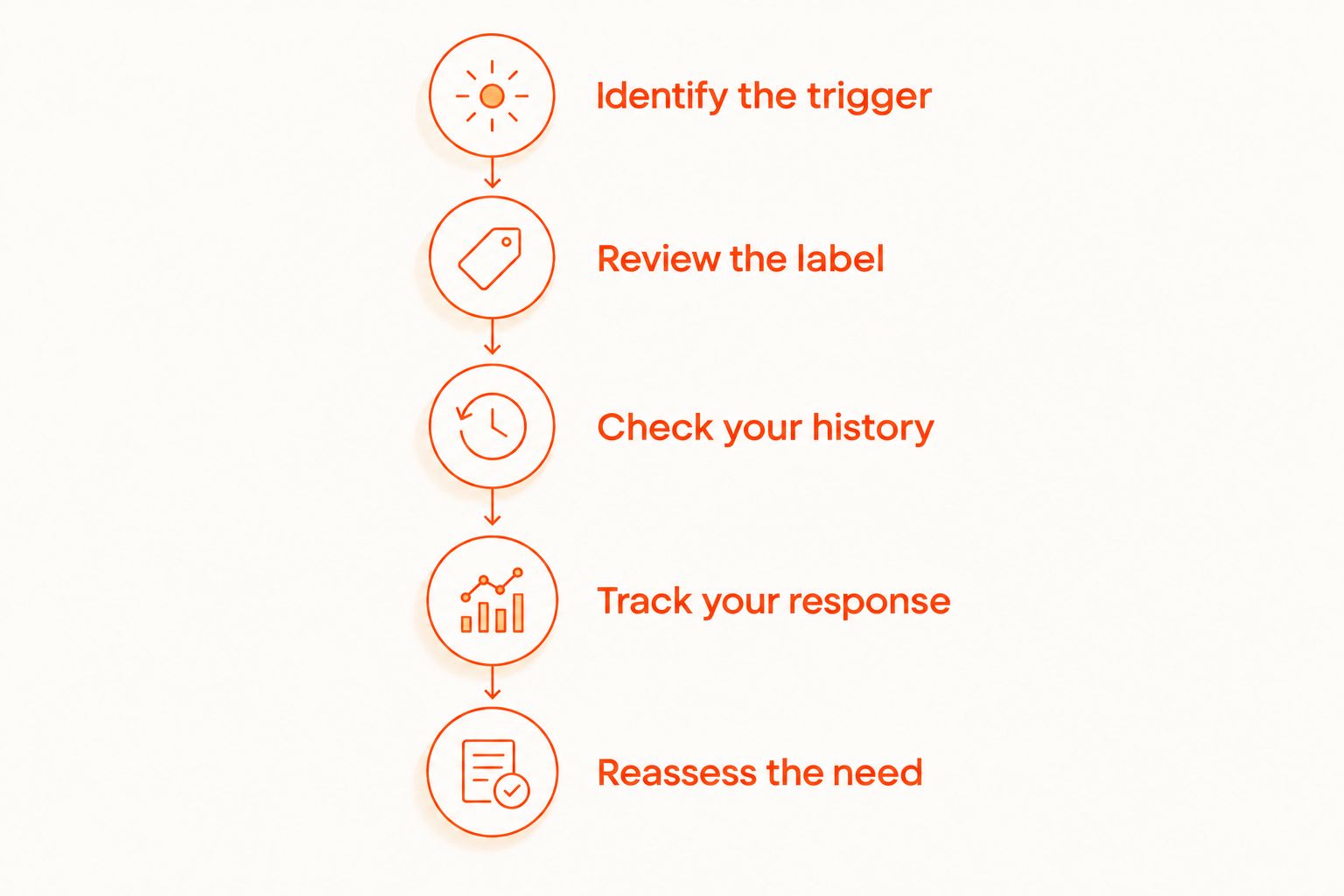
A useful 2026 symptom record connects the meal, the product, and the outcome. It does not need to be elaborate: clear notes help distinguish an ingredient related pattern from symptoms that need broader evaluation.
Tolerating a supplement today does not establish that taking it indefinitely is necessary or risk-free. Long-term use deserves a review of the original reason, the current benefit, and any changes in your health or medications.
The distinction between prescribed treatment and optional supplementation remains central to the long-term safety of digestive enzymes: ongoing replacement for a diagnosed deficiency is a different decision from taking an unneeded blend with every meal. Frequency alone cannot answer the safety question.
Do not invent a cycling schedule to make an unsuitable formula suitable. Taking breaks does not correct an allergy, eliminate an ingredient interaction, or diagnose the reason you feel bloated.
If a nonprescription product has no clear benefit, discuss stopping it rather than automatically reordering. If a prescribed treatment is not helping enough, contact your prescriber rather than switching to a supplement on your own.
Symptoms after every protein shake deserve a review of the shake and your digestion, not automatic enzyme escalation. Start with the complete ingredient list, what you mix it with, and the serving you actually consume.
Milk in the shaker adds lactose even when the powder itself contains little. Sugar alcohols and other added ingredients can also contribute to digestive symptoms in susceptible people. The trigger is not necessarily the protein itself.
Compare the pattern across foods. Symptoms after dairy suggest a different conversation from symptoms after dairy-free meals, and neither pattern confirms a diagnosis on its own.
Keep your approach controlled: change one relevant factor rather than adding several digestive products at once. A dietitian can help protect your nutrition goals while investigating meal-related discomfort.
Do not use digestive enzymes to push through increasingly uncomfortable meals during a bulk. Your goal is a sustainable eating pattern, not a supplement routine that lets you ignore worsening symptoms.
Seek medical evaluation for persistent or worsening symptoms, especially unexplained weight loss, recurrent diarrhea, or greasy stools. These findings require attention to the cause rather than a stronger digestive blend.
Severe abdominal pain, vomiting blood, black or bloody stools, or inability to keep fluids down warrant urgent medical care. Breathing difficulty, swelling of the lips or tongue, or faintness after taking a product can signal a serious allergic reaction and require emergency help.
Stop a nonprescription supplement and get advice if it causes new or worsening symptoms. For prescribed enzymes, contact your prescriber promptly about side effects or poor symptom control; emergency symptoms still require immediate care.
Do not let temporary symptom relief cancel a needed medical assessment. A supplement response does not rule out an underlying digestive condition.
Bring focused questions to a pharmacist, registered dietitian, or clinician. Ask which ingredient fits your concern, whether the formula conflicts with your medications or allergies, and what outcome would justify continued use.
Also ask whether the symptom needs evaluation before another trial. Daily discomfort is not evidence that you need a larger supplement stack, even if the packaging describes broad digestive support.
Tigerfitness offers digestive enzyme supplements alongside workout nutrition. That shopping context does not establish that a particular formula is appropriate for daily use, and product descriptions do not replace an individualized safety review.
For a 2026 supplement review, keep the objective simple: identify a reason for each product, understand its limitations, and remove unnecessary overlap. Your training routine benefits from clarity, not automatic additions.
Is taking digestive enzymes every day safe for a healthy adult?
Daily digestive enzymes are not automatically necessary or safe for every healthy adult. Safety depends on the complete formula, your health, other medicines, and the reason you are taking the product.
Can I take digestive enzymes with every meal?
Take enzymes with every meal only when that schedule matches your prescription or appropriate product directions. Needing help after nearly every meal is a reason to discuss the underlying symptoms with a clinician.
Do digestive enzymes stop your body from making its own enzymes?
Routine supplementation has not been established to make a healthy digestive system permanently stop producing enzymes. That does not prove every product is appropriate for indefinite daily use.
Are digestive enzymes the same as probiotics?
Digestive enzymes and probiotics are different: enzymes break down food components, while probiotics contain live microorganisms. They are not interchangeable solutions for unexplained bloating.
Can digestive enzymes help with bloating from protein shakes?
Digestive enzymes can help when the enzyme matches the cause, such as lactase for lactose digestion. They do not address every shake ingredient, milk allergy, or underlying digestive condition.
Should I cycle digestive enzymes or take breaks?
There is no universal cycling schedule that makes digestive enzymes appropriate for everyone. Follow prescribed treatment and review the need for nonprescription products instead of inventing a break schedule.
Should I stop taking prescribed pancreatic enzymes if I feel better?
Do not stop prescribed pancreatic enzymes without speaking to your prescriber. Feeling better can reflect effective treatment rather than resolution of the reason you need it.
Can pregnant people or children take digestive enzymes daily?
Pregnant or breastfeeding people and children need product specific professional guidance before using nonprescription digestive enzymes. A general adult supplement recommendation does not establish safety for these groups.
The most useful detail on an enzyme label is not how many ingredients it lists. It is whether an ingredient has a clear job that matches your actual concern.
Before your next bottle, finish this sentence: I am taking this enzyme because… If your answer is only that you eat a lot or want better gains, pause the purchase and clarify the need. These supplements are not intended to diagnose, treat, cure, or prevent any disease; this article provides general education, not individualized medical advice.
{"one"=>"Select 2 or 3 items to compare", "other"=>"{{ count }} of 3 items selected"}






Leave a comment