





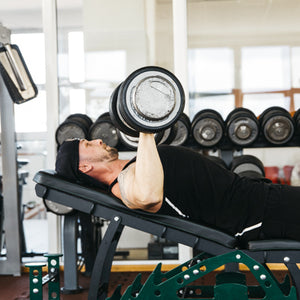

Is Nutrient Timing Worth It for Natural Bodybuilders
Table of Contents
- The Bottom Line: What Research Says About Nutrient Timing for Natural Bodybuilders
- Debunking the Anabolic Window Myth
- Total Daily Protein Intake Beats Meal Timing Every Time
- How to Calculate Daily Protein Intake for Muscle Growth
- Protein Distribution for Muscle Hypertrophy: What Actually Works
- Pre-Workout and Post-Workout Nutrition: Where Timing Matters
- Carbohydrate Timing and Glycogen Replenishment
- The Real Hierarchy: What to Prioritize Before Obsessing Over Timing
Last Updated: August 22, 2026
The Bottom Line: What Research Says About Nutrient Timing for Natural Bodybuilders
Here's what matters: is nutrient timing worth it for natural bodybuilders? The short answer is yes, but not the way most gym bros think.
The research is clear. A meta-analysis of 23 studies with 525 participants showed that consuming protein within 1 hour post-workout conferred a small but statistically significant benefit to muscle hypertrophy (peer-reviewed research). But here's the part that changes everything, that benefit is small. It matters far less than total daily protein intake, training consistency, and caloric surplus.
This guide breaks down what the science actually supports versus what's gym mythology. We'll show you the real hierarchy of nutritional importance and give you a practical framework for implementing nutrient timing without overthinking it.
Pro Tip The biggest mistake natural bodybuilders make isn't missing the anabolic window, it's treating nutrient timing as more important than total daily calories and protein. Get the big rocks in place first.
Debunking the Anabolic Window Myth
The "anabolic window" is real, but it's not a 30-minute emergency room situation.
For decades, athletes believed they had roughly 30 minutes after training to slam protein and carbs or risk losing muscle gains. The science doesn't support that urgency. According to research, muscles remain sensitized to protein intake for at least 24 hours after a training bout (peer-reviewed research). The immediacy of post-exercise protein consumption depends heavily on whether you ate before training.
Here's the practical implication: if you trained fasted, yes, getting protein in soon matters more. If you consumed a solid pre-workout meal 2-3 hours before training, your muscles are already primed with amino acids. Waiting 60-90 minutes post-workout won't kill your gains.
The real window is much wider than previously thought. Research shows that the rate of glycogen resynthesis is highest within the first hour post-exercise, but that's about performance recovery and training quality next session, not about whether you'll build muscle.
Mike Israetel, PhD in Sport Physiology at Renaissance Periodization, nailed it:
"Eating more than four meals a day is not going to move the needle hardly at all if you keep other things constant."
This quote cuts through the noise. Meal frequency matters less than total intake. The anabolic window exists, but it's measured in hours, not minutes.
Key Takeaway The anabolic window is real but wider than gym lore suggests. What matters most is total daily protein and training stimulus, not the exact timing of your post-workout shake.
Total Daily Protein Intake Beats Meal Timing Every Time
Stop counting hours between meals. Start counting grams.
Consuming protein every 3-4 hours in doses of 20-40 grams has shown the greatest benefit in improving muscle growth and strength. But notice what that research actually says, it's about distribution throughout the day, not about hitting a magic window.
A randomized controlled trial from Examine.com (2026) compared time-restricted eating to a diet without timing restrictions. Both groups gained similar amounts of muscle mass and strength. The difference? The time-restricted eating group gained less body fat (+2 kg vs. +4.4 kg). The timing didn't create muscle growth, consistency and total calories did.
Here's what separates natural bodybuilders who place in competitions from those who don't: carbohydrate intake at the start of contest preparation. Placed competitors consumed 5.1 g/kg bodyweight compared to 3.7 g/kg for non-placed competitors. That's total daily intake, not meal timing.

The hierarchy is real:
- Total daily calories (surplus for growth, deficit for fat loss)
- Total daily protein (1.6-2.2 g/kg bodyweight)
- Total daily carbs (supports training volume and recovery)
- Micronutrient adequacy
- Meal timing (optimization within the above)
Get steps 1-4 right, and timing becomes a minor tweak. Miss them, and perfect timing won't save you.
How to Calculate Daily Protein Intake for Muscle Growth
This is straightforward math, and you need to get it right.
A meal containing 0.4-0.5 g/kg bodyweight of protein prior to and subsequent to resistance training likely maximizes any theoretical benefits of nutrient timing and frequency. But that's just the pre- and post-workout meals. Your total daily intake is what actually drives muscle protein synthesis.
Calculate your daily protein target:
| Step | Formula | Example (180 lb athlete) |
|---|---|---|
| Convert bodyweight to kg | Pounds ÷ 2.2 | 180 ÷ 2.2 = 81.8 kg |
| Multiply by protein multiplier | kg × 1.6 to 2.2 g/kg | 81.8 × 1.8 = 147 grams |
| Round to practical number | Nearest 5g increment | 145-150 grams daily |
For a 180-pound natural bodybuilder, that's 145-165 grams of protein daily. Not per meal. Daily.
Now distribute it. Spreading protein across 3-4 meals outperforms 1-2 large meals at equal daily total for muscle protein synthesis. Young adults under 40 may fully activate muscle protein synthesis with 20-30g per meal, while older adults (40+) may require 30-40g per meal.
If you want to dial this in precisely, use FREE TOOLS & FITNESS CALCULATORS to track your macros and ensure you're hitting your daily targets consistently.
Watch Out The most common mistake is calculating protein per meal instead of per day. A 200-pound athlete doesn't need 200g per meal, that's a total daily target. Spread it across 3-4 meals and you're golden.
Protein Distribution for Muscle Hypertrophy: What Actually Works
Stop overthinking meal frequency. Focus on distribution.
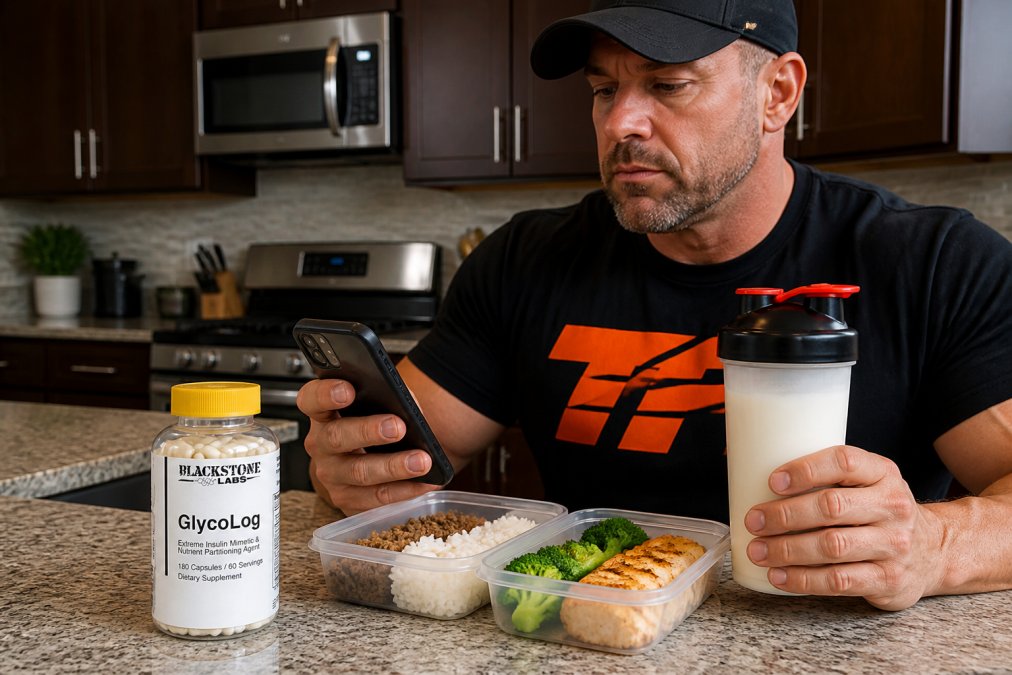
Research shows that distributing protein across 3-4 meals outperforms 1-2 large meals at equal daily total for muscle protein synthesis. The sweet spot for most natural bodybuilders is 4 meals daily, equally spaced 4 to 4.5 hours apart, with roughly 25-30% of daily carbohydrate intake consumed around training (both pre and post).
Here's a practical example from a natural bodybuilder case study: consuming 5 meals per day, equally spaced 4 to 4.5 hours apart, with meals before and after training containing ~50% of daily carbohydrate intake resulted in a weekly weight loss of approximately 0.46% during contest preparation. That's controlled, sustainable loss while preserving muscle.
The key insight: you're not trying to trigger some magic window. You're maintaining muscle protein synthesis throughout the day while training hard and managing calories. A 20g protein meal every 4 hours keeps your muscles in an anabolic state far better than a 60g meal once daily.
Your distribution should look like this:
- Meal 1 (breakfast): 25-35g protein
- Meal 2 (pre-workout): 30-40g protein + carbs
- Meal 3 (post-workout): 30-40g protein + carbs
- Meal 4 (dinner): 25-35g protein
This isn't rigid. If you prefer 3 meals, make them bigger. If you prefer 5 meals, make them smaller. The principle remains: consistent protein distribution beats sporadic large meals.
Pre-Workout and Post-Workout Nutrition: Where Timing Matters
This is where nutrient timing actually moves the needle.
Pre-workout nutrition directly impacts training performance. A mixed meal 1-3 hours before training works for most people, containing protein, carbs, and enough fluid, but keep fat and fiber moderate if they cause discomfort during training. Why? Because carbohydrate intake enhances total training volume, particularly in sessions lasting longer than 45 minutes or following an 8-hour fast.
One study had bodybuilders ingest a supplement containing 40g protein, 43g carbohydrate, and 7g creatine immediately pre- and post-exercise. They gained greater size and strength compared to a group that consumed the supplement away from the training bout. Notice: they consumed it both before and after. The timing mattered because it supported performance and recovery.
Post-workout, the science is clearer: 1.0-1.2 g/kg of carbohydrates should be consumed within the first hour for optimal glycogen replenishment (peer-reviewed research). This matters for your next training session's quality, not for whether you'll build muscle this week.
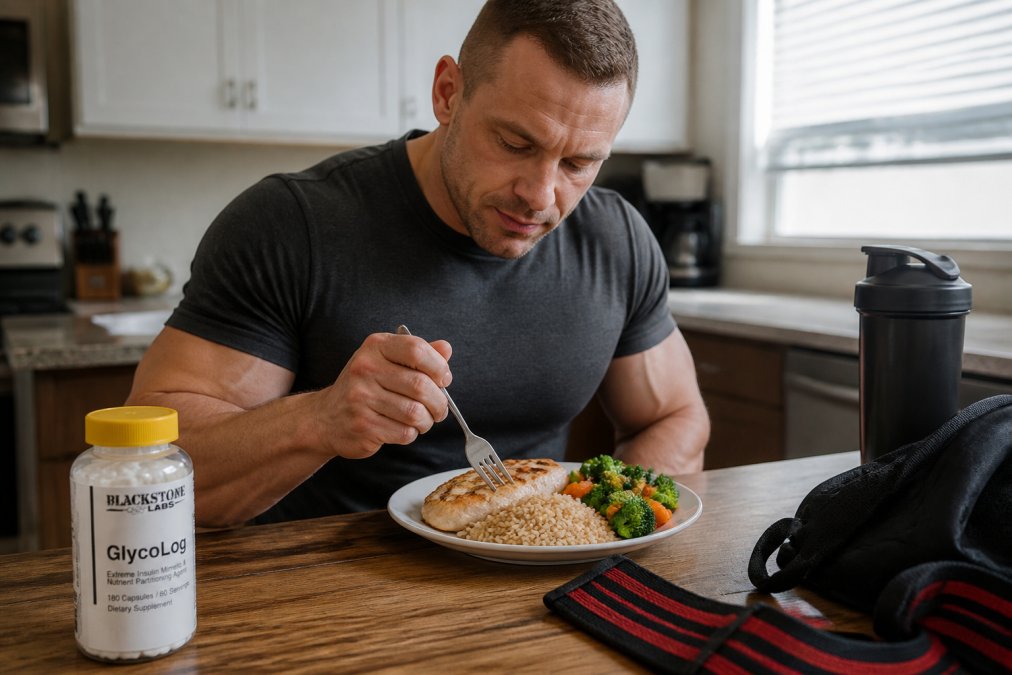
Post-workout protein timing is secondary to pre-workout. Your muscles are already primed from the pre-workout meal. Getting 30-40g of protein within 2 hours post-workout is fine. It doesn't have to be 15 minutes.
Carbohydrate Timing and Glycogen Replenishment
Carbs aren't the enemy. They're your training fuel.
The rate of glycogen resynthesis is highest within the first hour post-exercise. This matters because glycogen depletion directly impacts training volume in your next session. If you're doing high-volume bodybuilding splits (15-20 sets per muscle group), glycogen availability matters.
Here's the practical application: if you train hard for 60+ minutes, consuming 1.0-1.2 g/kg of carbs post-workout accelerates recovery. For a 180-pound athlete, that's roughly 80-110 grams of carbs within the first hour. Rice, potatoes, oats, or even a sports drink works.

But, and this is critical, this only matters if your total daily carbohydrate intake supports your training. You can't out-time a carb deficit. If you're eating 150g of carbs daily on a high-volume training split, post-workout timing won't save you.
Natural bodybuilders preparing for competition typically consume 5.1 g/kg of carbs at the start of prep, tapering down as they approach the stage. That's total daily intake driving the strategy, with timing as a supporting detail.
The Real Hierarchy: What to Prioritize Before Obsessing Over Timing
This is the part most guides miss.
Nutrient timing matters, but only after the "big rocks" are in place: calories, total protein, food quality, and training consistency. If these are off, perfect timing will not save the plan.
Here's the evidence-based hierarchy for natural bodybuilders:
Tier 1 (non-negotiable):
- Caloric surplus for growth (300-500 calories above maintenance)
- Total daily protein (1.6-2.2 g/kg bodyweight)
- Training consistency (hitting each muscle 2x per week with 10-20 weekly sets)
- Sleep and recovery (7-9 hours nightly)
Tier 2 (important):
- Total daily carbohydrate intake (3-5 g/kg depending on training volume)
- Food quality (whole foods, micronutrient density)
- Hydration (minimum 0.5-1 oz per pound bodyweight daily)
Tier 3 (optimization):
- Meal frequency (3-5 meals, distributed protein)
- Pre-workout timing (1-3 hours before training)
- Post-workout carbs (within 1-2 hours for glycogen replenishment)
- Supplement timing (creatine daily, BCAAs optional)
Most natural bodybuilders skip Tier 1 and obsess over Tier 3. That's backwards.

The 2026 consensus for natural trainees includes eating enough protein (around 1.6g/kg as the upper threshold), spreading protein across 3-4 meals, and training each muscle 2x per week with 10-20 weekly sets per muscle group. Notice what's absent: no mention of 30-minute anabolic windows or six meals daily.
Key Takeaway Nail total daily calories, protein, and training first. Nutrient timing is the final 5% optimization. Most athletes waste energy on timing while ignoring the 95% that actually matters.
The evidence is settled: is nutrient timing worth it for natural bodybuilders? Yes, but it's a supporting player, not the star. Focus on total daily intake, consistent training, and caloric management. Once those are locked in, use nutrient timing to optimize recovery and training performance.
At Tiger Fitness, we provide the tools to make this simple. Get started with our resources and nail the fundamentals that actually move the needle.
=== FAQ ANSWERS (audit these too, same rules) ===
[1] Q: Does the post-workout anabolic window really exist? A: The anabolic window is real but much wider than gym lore claims. A meta-analysis of 23 studies with 525 participants showed protein consumed within 1 hour post-workout provided a small but statistically significant benefit to muscle hypertrophy. However, your muscles remain sensitized to protein for at least 24 hours after training. What matters most is total daily protein intake, timing becomes secondary if you're hitting your daily target consistently.
[2] Q: How do I calculate daily protein intake for muscle growth as a natural bodybuilder? A: Aim for 0.8-1.0 grams of protein per pound of bodyweight daily. A 180-pound natural bodybuilder should target 144-180 grams per day. Spread this across 3-5 meals, with each meal containing 20-40 grams of protein. Research shows consuming a meal with 0.4-0.5 g/kg bodyweight of protein before and after resistance training maximizes nutrient timing benefits. Use Tiger Fitness's free fitness calculators to dial in your exact needs based on training volume and goals.
[3] Q: Is nutrient timing worth the effort if I'm hitting my daily macros? A: Not really, not compared to nailing total daily intake. A 2026 review in Proceedings of the Nutrition Society found timed eating interventions are not clearly superior to general calorie and macro matching when total intake is equal. Focus on hitting your daily protein target first. Once that's locked in, distributing protein across 3-4 meals every 3-4 hours provides a small additional benefit for muscle protein synthesis. Timing is the cherry on top, not the foundation.
[4] Q: Should I eat carbs before or after my workout? A: Both matter, but differently. Pre-workout carbs fuel training volume and intensity, critical for sessions lasting over 45 minutes. Post-workout, consume 1.0-1.2 g/kg of carbohydrates within the first hour for optimal glycogen replenishment. The rate of glycogen resynthesis is highest in that first hour. Pair post-workout carbs with protein to maximize both recovery and muscle protein synthesis.
Frequently Asked Questions
Q: Does the post-workout anabolic window really exist?
A: The anabolic window is real but much wider than gym lore claims. A meta-analysis of 23 studies with 525 participants showed protein consumed within 1 hour post-workout provided a small but statistically significant benefit to muscle hypertrophy. However, your muscles remain sensitized to protein for at least 24 hours after training. What matters most is total daily protein intake, timing becomes secondary if you're hitting your daily target consistently.
Q: How do I calculate daily protein intake for muscle growth as a natural bodybuilder?
A: Aim for 0.8-1.0 grams of protein per pound of bodyweight daily. A 180-pound natural bodybuilder should target 144-180 grams per day. Spread this across 3-5 meals, with each meal containing 20-40 grams of protein. Research shows consuming a meal with 0.4-0.5 g/kg bodyweight of protein before and after resistance training maximizes nutrient timing benefits. Use Tiger Fitness's free fitness calculators to dial in your exact needs based on training volume and goals.
Q: Is nutrient timing worth the effort if I'm hitting my daily macros?
A: Not really, not compared to nailing total daily intake. A 2026 review in Proceedings of the Nutrition Society found timed eating interventions are not clearly superior to general calorie and macro matching when total intake is equal. Focus on hitting your daily protein target first. Once that's locked in, distributing protein across 3-4 meals every 3-4 hours provides a small additional benefit for muscle protein synthesis. Timing is the cherry on top, not the foundation.
Q: Should I eat carbs before or after my workout?
A: Both matter, but differently. Pre-workout carbs fuel training volume and intensity, critical for sessions lasting over 45 minutes. Post-workout, consume 1.0-1.2 g/kg of carbohydrates within the first hour for optimal glycogen replenishment. The rate of glycogen resynthesis is highest in that first hour. Pair post-workout carbs with protein to maximize both recovery and muscle protein synthesis.
Leave a comment