Is Pre-Workout Necessary for Beginners? The Direct Answer
Here's the straight answer: is pre-workout necessary for beginners? No. You don't need it to build muscle, gain strength, or see results in the gym. But that doesn't mean it's useless. What matters is consistency, proper nutrition, sleep, and progressive overload. Pre-workout is a tool that can help you show up harder on the days you're dragging, but it's not a replacement for the fundamentals.
The real question isn't whether pre-workout is necessary. It's whether pre-workout fits your goals, your budget, and your current training maturity. A beginner who can't eat enough protein or sleep eight hours per night shouldn't waste money on pre-workout. A beginner who's nailing the basics and wants to squeeze out 2-3 more reps per set? Pre-workout might be worth testing. Below, we'll show you exactly how to make that decision, what ingredients actually work, and how to use pre-workout safely if you choose to try it.
What Is Pre-Workout and How Does It Work
Pre-workout supplements are formulated drinks designed to enhance energy, focus, endurance, and blood flow before training. They contain stimulants (usually caffeine), amino acids, and performance-enhancing compounds that work through different mechanisms. Some increase alertness through the central nervous system. Others improve vasodilation, the widening of blood vessels, which improves nutrient delivery and the muscle pump.
The category is broad. Some pre-workouts contain heavy stimulants and will spike your heart rate. Others are stim-free and rely entirely on non-stimulant ingredients like citrulline malate, beta-alanine, and creatine to improve performance. The ingredient list determines whether pre-workout will feel like a jolt of caffeine or a subtle performance boost.
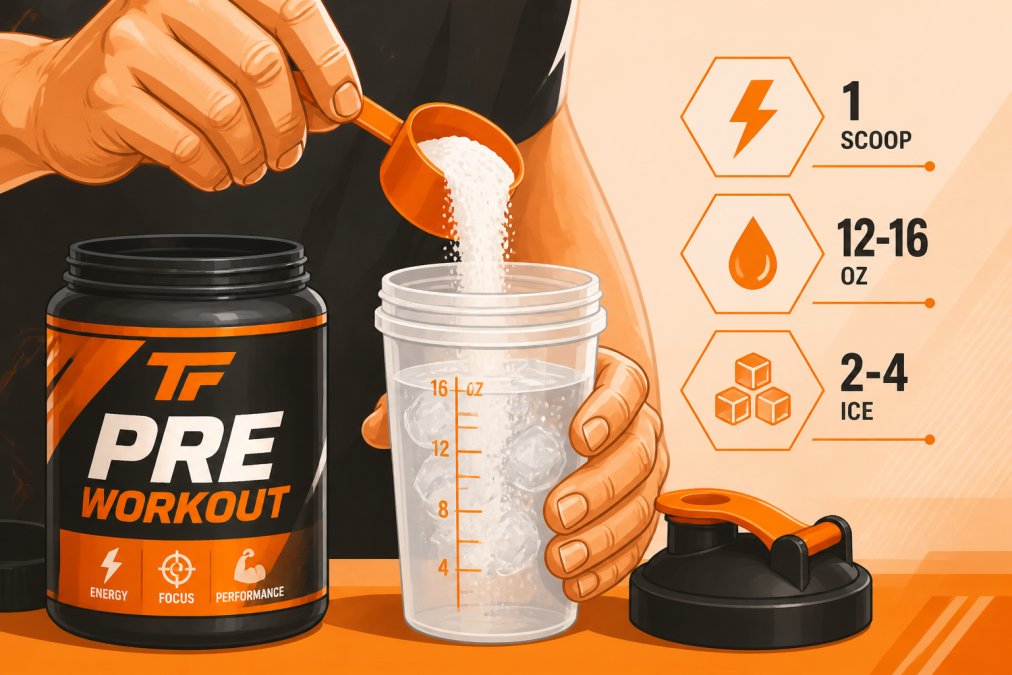
Most pre-workouts are powder-based and mixed with water. The typical serving size is one scoop mixed into 6-8 ounces of water, consumed 20-30 minutes before training. Onset is usually within 15-20 minutes for stimulant-based formulas.
Pro TipBeginners often confuse pre-workout with energy drinks. Energy drinks contain caffeine and sugar but lack the performance-specific ingredients (citrulline, beta-alanine, creatine) that actually improve training capacity. Pre-workout is engineered specifically for the gym; energy drinks are not.
Pre-Workout Benefits for Beginners: What the Research Shows
Energy and Focus
Pre-workout supplements increase mental clarity and reduce perceived effort during training through caffeine, which blocks adenosine receptors in the brain and increases dopamine. For beginners, this means less mental fog during your workout and better focus on form and tempo.
The practical benefit: you're more likely to complete all your sets with intention rather than phoning it in. You notice your form more. You're less likely to skip the last two reps because you're tired. This compounds over time. Beginners who train with better focus tend to progress faster because they're accumulating quality volume, not just showing up and going through the motions.
Caffeine tolerance builds quickly. If you use pre-workout daily, the energy boost diminishes within 2-3 weeks. This is why many athletes cycle pre-workout or use it only on heavy training days.
Endurance and Training Intensity
Beta-alanine and citrulline malate improve muscular endurance by different routes. Beta-alanine increases muscle carnosine, which buffers hydrogen ions that accumulate during high-rep training and contribute to fatigue. Citrulline malate improves blood flow and reduces ammonia accumulation, both of which delay fatigue onset.
For beginners, the practical effect is: you can perform more reps at a given weight, or the same reps feel slightly less taxing. A beginner doing three sets of ten squats might hit 10, 9, 8 reps without pre-workout. With pre-workout containing these ingredients, they might hit 10, 10, 9. That's one extra rep per workout. Over a year, that's 50+ extra reps on squats alone. That's real progress.
Beta-alanine takes 2-4 weeks of daily use to build up in muscle tissue. Citrulline works faster, within one dose, but the effect is modest for most people.
Stimulant vs Non-Stimulant Pre-Workout: Which Is Right for You
This decision matters more than you think, especially for beginners.
Stimulant-based pre-workouts contain caffeine (usually 150-300mg per serving) and sometimes other stimulants like synephrine or yohimbine. They produce noticeable energy, focus, and often a slight mood lift. The downside: jitters, increased heart rate, and sleep disruption if taken late in the day. For beginners, stimulant pre-workouts can feel overwhelming. Your heart rate spikes. Your hands shake slightly. You feel "wired."
Non-stimulant pre-workouts skip caffeine and rely on amino acids and compounds like citrulline, beta-alanine, and creatine. They don't produce the "rush" of stimulant formulas. Instead, you get improved blood flow, endurance, and recovery support without the cardiovascular spike. For beginners, especially those sensitive to caffeine or training in the evening, non-stim is the smarter choice.
The performance difference? Minimal for most beginners. A well-formulated non-stim pre-workout will improve your training capacity nearly as much as a stimulant version, you just won't feel the energy kick.
Key TakeawayFor beginners, non-[stimulant pre-workout](/products/musclesport-rhino-rampage) is the safer entry point. You get the performance benefits without the risk of jitters, elevated heart rate, or sleep disruption.
Pre-Workout Ingredients Explained: What Actually Works
Caffeine and Caffeine Tolerance
Caffeine is the most researched ingredient in pre-workout. It works. The effective dose for performance is 3-6mg per kilogram of body weight. For a 150-pound (68kg) beginner, that's 200-400mg. Most pre-workouts contain 150-300mg per serving, which lands in the effective range.
Close-up of pre-workout powder being scooped into a shaker bottle with water and ice, hands in focus showing preparation
Caffeine improves strength, power output, and muscular endurance across multiple studies. But tolerance builds fast. If you consume caffeine daily, your body adapts within 2-3 weeks. The energy boost diminishes. This is why cycling pre-workout (using it 3-4 days per week instead of daily) is smarter than daily use.
For beginners, the practical rule: use pre-workout on your heaviest or most important training days, not every session. This preserves the caffeine effect and prevents tolerance buildup.
Beta-Alanine, Citrulline Malate, and Creatine
Beta-alanine increases muscle carnosine, which buffers fatigue during high-rep training. The typical dose is 3-5 grams per day. It takes 2-4 weeks to accumulate in muscle tissue, so don't expect immediate results. One side effect: a harmless tingling sensation (paresthesia) in your skin, usually felt in the face and hands.
Citrulline malate improves blood flow and reduces fatigue markers during training. The effective dose is 6-8 grams. It works within a single dose. The benefit is real but modest: maybe one extra rep per set, better muscle pump, slightly faster recovery between sets.
Creatine monohydrate is the most researched supplement in sports nutrition. It increases strength and muscle mass when combined with resistance training. The typical dose is 5 grams daily. It works, it's cheap, and it's safe. Many beginners skip creatine and add it later, but if your pre-workout contains it, you're getting a bonus benefit.
According to the International Society of Sports Nutrition position stand on sports nutrition, caffeine, beta-alanine, and creatine all have strong evidence supporting their use for athletic performance.
How to Take Pre-Workout for the First Time: A Beginner's Protocol
Dosage and Timing
Start with half a serving. Not a full scoop. Half. This lets you assess your tolerance to caffeine and other stimulants without overdoing it. Mix it with 6-8 ounces of water and drink it 20-30 minutes before your workout.
If you tolerate half a serving well, no excessive jitters, no stomach upset, no racing heart, move to a full serving on your next training session. Stay at a full serving for 2-3 weeks, then assess whether you're still feeling the energy boost. If not, you've built tolerance. Take a week off pre-workout entirely, then resume.
On non-training days or rest days, don't take pre-workout. There's no benefit, and you're just building tolerance faster.
Common Beginner Mistakes to Avoid
Mistake 1: Taking too much, too soon. Beginners often take a full serving on day one and feel anxious, jittery, or like their heart is racing. Start with half a serving.
Mistake 2: Combining pre-workout with excessive caffeine. If you drink coffee in the morning and take pre-workout before the gym, you're stacking 300-500mg of caffeine. For beginners, this is overkill and increases the risk of jitters and sleep disruption. Choose one or the other, not both.
Mistake 3: Taking pre-workout on an empty stomach. This increases the risk of nausea and stomach upset. Eat a small meal or snack 1-2 hours before your workout.
Mistake 4: Expecting immediate strength gains. Pre-workout improves energy and focus, which can lead to better training volume and intensity. But it doesn't directly build muscle. The muscle-building happens over weeks and months of consistent training, proper nutrition, and sleep.
Mistake
Impact
Fix
Taking full serving immediately
Jitters, anxiety, elevated heart rate
Start with half serving, assess tolerance
Stacking with caffeine (coffee + pre-workout)
Excessive stimulation, sleep disruption
Choose one caffeine source per day
Taking on empty stomach
Nausea, stomach upset, poor absorption
Eat a small meal 1-2 hours before
Daily use without cycling
Tolerance buildup, diminished effect
Use 3-4 days per week, not daily
Potential Risks and Side Effects for Beginners
Jitters, Heart Rate, and Blood Pressure
Stimulant-based pre-workouts increase heart rate and blood pressure. For healthy beginners, this is temporary and reversible. But if you have a history of heart issues, high blood pressure, or anxiety, stimulant pre-workout carries real risk. Talk to your doctor before using it.
Jitters, trembling hands, anxious feeling, and racing thoughts happen when you take too much caffeine too fast, or when you're sensitive to stimulants. Start with half a serving. If you're prone to anxiety, skip stimulant pre-workouts entirely and use a non-stim formula instead.
The data on pre-workout and cardiovascular safety is reassuring for healthy individuals at normal doses. But beginners often take more than recommended, thinking "more = better results." That's wrong. Stick to the label dose.
Interactions with Common Medications
Pre-workout ingredients can interact with certain medications. Caffeine interacts with stimulant medications (ADHD medications like Adderall), some blood pressure medications, and certain antidepressants. Beta-alanine and creatine are generally safe with medications, but they do increase kidney workload slightly. If you have kidney disease, pre-workout isn't appropriate.
If you're on any prescription medication, ask your doctor or pharmacist whether pre-workout is safe for you. Don't guess.
Not everyone needs pre-workout, and not everyone wants to take supplements. Here are natural alternatives that actually work.
Caffeine from food: Coffee, tea, or dark chocolate contain caffeine. A cup of strong coffee has 95-200mg of caffeine, comparable to many pre-workouts. Drink it 30-45 minutes before training.
Carbohydrates before training: A banana, rice cakes, or oatmeal eaten 30-60 minutes before training provides glucose that fuels your workout. This improves endurance and reduces fatigue more effectively than most supplements.
Proper sleep and nutrition: This is the real foundation. If you're sleeping 6 hours per night and eating 0.8g of protein per pound of body weight, pre-workout won't save you. Sleep 8 hours, eat enough protein, and you'll have all the energy and focus you need.
Beet juice: Contains nitrates that improve blood flow and endurance. Studies show beet juice improves strength and power output similar to citrulline. Drink 8-16 ounces 2-3 hours before training.
Creatine from food: Red meat, fish, and eggs contain creatine. If you eat beef several times per week, you're getting 1-2 grams of creatine daily.
The honest truth: if you nail sleep, nutrition, and consistency, you'll progress faster than someone using pre-workout but skipping sleep and eating poorly. Pre-workout is a performance enhancer for people who've already built the foundation. If you want to dial in your nutrition and training approach, check out our FREE TOOLS & FITNESS CALCULATORS to help you determine your exact calorie and macro needs based on your goals.
Pre-workout supplements work for beginners, but they're not necessary. The real drivers of progress are consistency, proper nutrition, adequate sleep, and progressive overload. If you decide to use pre-workout, start with a non-stimulant formula. If you want stimulant pre-workout, consider options with a moderate caffeine dose and research-backed ingredients. Both approaches can deliver performance benefits for beginners.
Frequently Asked Questions
Do beginners need pre-workout to see results?
No. Pre-workout is not necessary for beginners to build muscle or gain strength. Consistent training, proper nutrition, and adequate sleep are the foundation. Pre-workout is a supplement, it can enhance focus and endurance during workouts, but it won't create results that training and diet can't. Many beginners see excellent progress without it. If you're considering pre-workout, ensure your basics are locked down first.
What are the benefits of pre-workout for someone new to the gym?
The primary benefits include increased energy levels, improved focus, better endurance during training, and enhanced blood flow for better pumps. Caffeine boosts alertness and reduces perceived effort. Ingredients like citrulline malate and beta-alanine support vasodilation and muscle endurance. For beginners specifically, these benefits can help you push slightly harder during workouts, which can accelerate progress when combined with solid training and nutrition.
What's the difference between stimulant and non-stimulant pre-workout?
Stimulant pre-workouts contain caffeine and other stimulants for energy and focus. Non-stimulant pre-workouts rely on ingredients like citrulline malate, beta-alanine, and agmatine for blood flow and endurance without caffeine. Beginners sensitive to stimulants or training later in the day benefit from non-stimulant options. For most beginners, a moderate-dose stimulant pre-workout (100-200mg caffeine) is effective. Products like MTS Nutrition Clash (stimulant) and MTS Nutrition Vasky (non-stimulant) are designed specifically for beginners.
Can I just drink coffee instead of pre-workout as a beginner?
Coffee provides caffeine for energy, but pre-workout supplements include additional performance-enhancing ingredients like citrulline malate for blood flow, beta-alanine for endurance, and creatine for strength. Coffee alone won't give you these benefits. That said, if your goal is just caffeine, black coffee is cheaper and effective. For comprehensive performance support during training, a beginner-friendly pre-workout offers more value than coffee alone.






Leave a comment