






Myprotein Alternatives for Budget Shoppers
Table of Contents
- Myprotein Alternatives: What Budget Shoppers Actually Need
- Comparison Table: Myprotein Alternatives Side-by-Side
- Cheapest Whey Protein Per Serving That Doesn't Compromise
- How to Verify Protein Supplement Purity Before You Buy
- Third-Party Supplement Testing: The Real Safety Guarantee
- Budget Protein Stacks That Actually Build Muscle
- Subscription Models vs. One-Time Purchases: Where You Save Real Money
- Conclusion: Making the Switch Without Sacrificing Results
Last Updated: August 10, 2026
Myprotein Alternatives: What Budget Shoppers Actually Need
Let me be direct: you don't need to overpay for protein. The fitness industry has conditioned you to believe that premium pricing equals premium results. It doesn't. I've spent years analyzing supplement formulations, and the truth is simpler than the marketing departments want you to know.
Myprotein alternatives for budget shoppers exist because Myprotein built their business on volume and aggressive pricing, but they're not the only player doing it right. If you're serious about building muscle without draining your bank account, you need to understand what actually matters in a protein powder, where the real savings hide, and how to verify you're getting what you paid for.

At Tiger Fitness, we've analyzed dozens of budget-friendly protein options, and the data is clear: the cheapest option isn't always the worst, and the most expensive definitely isn't always the best. What separates a smart purchase from a waste of money comes down to three factors: cost per serving, ingredient transparency, and third-party verification.
This guide breaks down the Myprotein alternatives for budget shoppers that deliver results without the premium markup. You'll learn which products actually stack up, how to spot quality at a glance, and where the real money-saving strategies actually work.
Comparison Table: Myprotein Alternatives Side-by-Side
|
Product |
Cost Per Serving |
Protein Per Serving |
Best For |
Key Advantage |
|---|---|---|---|---|
|
~$1.82 |
21g |
Bodybuilders, Competitors |
Extremely tasty, clean ingredient list |
|
|
~$2.11 |
20g |
Vegan, Plant-Based |
High quality, Vegan Protein Powder |
|
|
~$2.08 |
24g |
General population |
Proven quality, wide flavor range |
|
|
~$1.64 |
25g |
Athletes, Gen Pop |
High quality, 3rd party tested |
|
|
~$2.64 |
25g |
Cutting/competition |
Fast-absorbing, zero fat |
|
|
~$1.21 |
24g |
Budget shoppers |
Lacks flavor variety, Great pricing |
|
|
~$1.59 |
25g |
Results-focused athletes |
Full-spectrum blend, proven formulation |
The data tells you something important: the cheapest option per serving isn't always the best value. Nutrex Whey at $1.21 per serving looks unbeatable until you realize you only have 3 flavors to choose from.

The real competition for Myprotein alternatives for budget shoppers sits in the $1.35-$1.91 range, where you get legitimate whey protein isolate or concentrate with solid amino acid profiles and proven mixability.
Cheapest Whey Protein Per Serving That Doesn't Compromise
The cheapest whey protein per serving that actually works comes down to understanding what you're paying for. Most people assume cost reflects quality. Wrong. Cost reflects scale, ingredient sourcing, and marketing spend.
MTS Nutrition Machine Whey Protein runs approximately $1.59 per serving. You get 25 grams of protein, zero added ingredients, and a product that mixes cleanly. No artificial colors, no fillers, no proprietary blends hiding inferior ingredients. This is the benchmark for budget-friendly whey that actually tastes good.
Beverly International UMP sits around roughly the same per-serving cost at $1.82 but has added MCT’s/Fats to help thicken the shakes up. If you're training for strength and muscle gain and you enjoy a thick and creamy shake, then the UMP is the way to go!
Here's what separates these from the garbage tier: they use standard whey protein isolate or concentrate, not "proprietary blends" that hide cheap fillers. When you see "proprietary blend," what you're really seeing is a manufacturer protecting their cost structure. They don't want you knowing they're using 30% cheap filler and 70% actual protein.
The mistake most budget shoppers make is comparing price without comparing protein quality. A $10 tub of mystery blend protein might cost less upfront, but if it's only 15% bioavailable compared to 90% bioavailable whey isolate, you're actually paying more per usable gram of amino acids. The math doesn't work.
For serious muscle building, you need at least 20 grams of protein per serving with a complete amino acid profile. Anything less and you're wasting your training stimulus. The cheapest whey protein per serving that meets this standard starts around $1.21 and goes up from there. Below that price point, you're either getting plant-based pea protein, amino acid blends, or something with questionable ingredient sourcing, aka maltodextrin in a bottle.
Tiger Fitness stocks MTS Nutrition Machine Whey Protein at $39.99 per tub on sub, roughly $1.59 per serving depending on serving size. The formulation uses a full-spectrum whey blend designed specifically for muscle building and recovery. You're paying slightly more than the absolute cheapest option, but you're getting a product engineered for results, not just calories, plus it’s the best-tasting whey protein you’re going to find anywhere!
How to Verify Protein Supplement Purity Before You Buy
This is where most people fail. They buy based on price or label claims and never actually verify what's in the container.
Protein supplement purity starts with the ingredient list. If it reads like a chemistry textbook, that's a bad sign. Look for these red flags:
- "Proprietary blend" with no breakdown of individual ingredients
- Ingredient list longer than 10 items
- Sweeteners you can't pronounce (unless they're stevia or monk fruit)
- "Natural and artificial flavors" without specifics
- Thickening agents like xanthan gum in excessive amounts
The clean ingredient list looks like this: whey protein isolate, milk fat, soy lecithin, natural flavor, sweetener. That's it. Everything else is marketing noise.
Next, check the nutrition label against the ingredient list. If the label claims 25 grams of protein but the ingredient list shows whey concentrate (not isolate) as the third ingredient after fillers, the math doesn't add up. Whey concentrate is roughly 80% protein by weight. If it's the third ingredient, you're not getting 25 grams of actual protein per serving.
The label should tell you:
- Protein content (minimum 20g per serving)
- Carbohydrate content (lower is better for cutting, doesn't matter as much for bulking)
- Fat content (whey isolate should be under 2g per serving)
- Amino acid profile (total BCAAs, leucine content)
Most manufacturers won't list amino acid profiles on the label because they don't have to. That's where third-party testing comes in.
Third-Party Supplement Testing: The Real Safety Guarantee
Here's the hard truth: the supplement industry is self-regulated. The FDA doesn't test supplements before they hit shelves. Manufacturers are responsible for safety and accuracy. That means a company could theoretically print whatever they want on a label and nobody would catch them until someone got sick.
Third-party supplement testing is your insurance policy against that scenario.
Third-party testing means an independent laboratory, not the manufacturer, not a marketing firm, analyzes the actual product in the container. They verify:
- Protein content matches the label claim
- No banned substances are present
- No heavy metals (lead, cadmium, arsenic) exceed safe limits
- No microbial contamination
- Ingredient identity (you're actually getting whey protein, not soy filler)
The major third-party testing organizations are NSF Certified for Sport, Informed Choice, and USP. Products bearing these seals have been independently verified. That certification costs manufacturers money, which is why cheaper products often skip it.
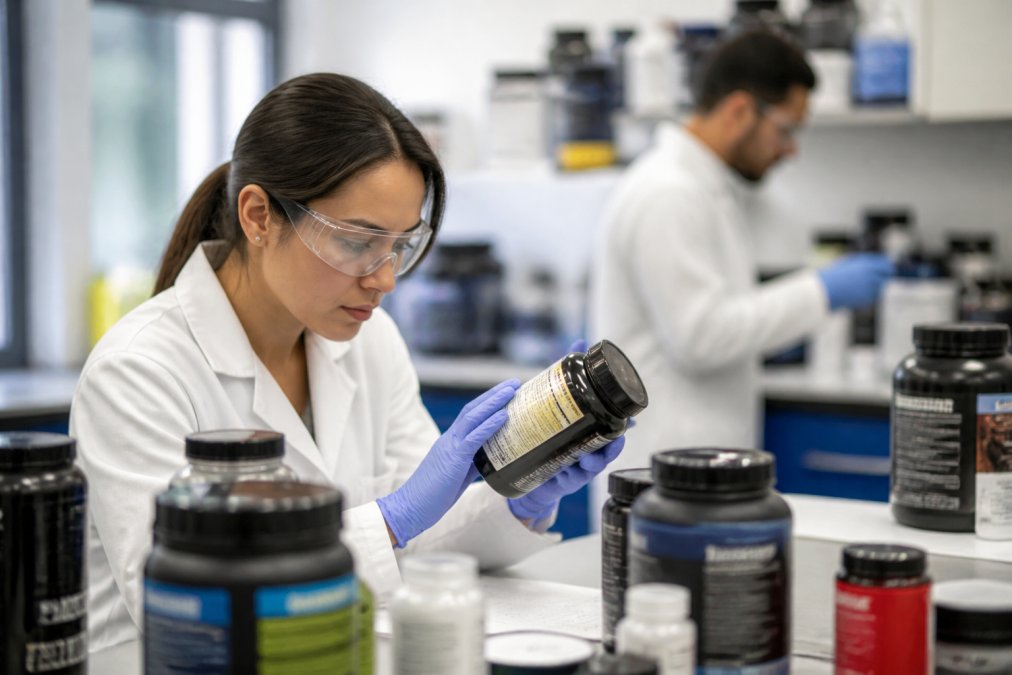
The budget-friendly Myprotein alternatives for budget shoppers that skip third-party testing aren't necessarily dangerous, but you're trusting the manufacturer's quality control. Some manufacturers have solid quality control. Others cut corners. Without independent verification, you can't tell the difference.
If third-party testing is important to you and you're on a tight budget, focus on brands that test selectively rather than every batch. Some companies test quarterly rather than every production run, which keeps costs lower while still verifying.
Watch OutAvoid products with zero third-party testing history and vague ingredient sourcing. "Natural ingredients" on a label means nothing without verification. The supplement that made headlines for containing an undisclosed banned substance? No third-party testing.
Budget Protein Stacks That Actually Build Muscle
Building muscle on a budget doesn't mean buying one cheap protein powder and hoping for results. It means stacking complementary products strategically.
A basic muscle building stack for budget shoppers looks like this:
- Protein powder: 1-2 servings daily (covers amino acid needs)
- Creatine monohydrate: 5 grams daily (supports strength and muscle gain)
- Basic multivitamin: Daily (covers micronutrient gaps)
Total monthly cost: roughly $40-60 depending on your protein choice.
MuscleTech Nitro-Tech already includes creatine, which simplifies this. You're getting 30 grams of protein plus 3 grams of creatine per serving. Add a basic multivitamin and you've covered the essentials.
The mistake most budget shoppers make is buying five different supplements- pre-workout, BCAA powder, glutamine, beta-alanine, and protein- when only two of those actually have solid research backing them for muscle growth: protein and creatine.
Here's what the research supports for muscle building:
- Adequate protein intake (0.7-1 gram per pound of bodyweight daily)
- Creatine monohydrate (5 grams daily)
- Resistance training (progressive overload)
- Caloric surplus (if you're bulking)
Everything else is secondary. You can build muscle with just protein powder and creatine. You cannot build muscle without progressive resistance training, adequate calories, and enough sleep.
Pro TipIf you're buying protein powder in bulk, buy 2-3 tubs of Machine Whey Protein Vanilla flavor and mix it into oatmeal, pancakes, or smoothies. You'll save 30% compared to other expensive versions, and you get more versatility. Vanilla whey from MTS Nutrition costs roughly $1.59 per serving and mixes into almost anything.
For Myprotein alternatives for budget shoppers looking for a complete stack, Tiger Fitness offers MTS Nutrition Machine Whey Protein plus access to free workout plans, diet guides, and fitness calculators through their training app. That's your protein source plus your programming; no need to hunt across five different websites for information.
Subscription Models vs. One-Time Purchases: Where You Save Real Money
This is where most people leave money on the table.
Subscription models for supplements work like this: you agree to automatic monthly shipments, and the company gives you a discount (usually 10-20%) compared to one-time purchases. Sounds good until you forget to cancel and suddenly you've paid for six months of protein you don't need.
One-time purchases cost more per unit but give you full control. You buy when you need it, nothing ships automatically, and you avoid the "subscription fatigue" trap.
The math:
- One-time purchase at full price: $50 per tub, one tub lasts roughly 30 days
- Subscription at 15% discount: $42.50 per tub, ships automatically every 30 days
If you stick with the subscription, you save $90 per year. If you forget to cancel for three months, you've spent an extra $127.50 on product you didn't use.
Most budget shoppers are better off with one-time purchases. You avoid subscription overhead, you maintain control, and you don't end up with a closet full of protein powder.
The exception: if you've been using the same product consistently for six months and you know you'll keep using it, a subscription makes sense. You've proven you'll actually consume it.
Tiger Fitness rewards program offers another angle. You earn points on every purchase, one-time or subscription, and those points convert to discounts on future orders. That's a better structure than subscription discounts alone because you get the benefit without the automatic shipping trap.
Key TakeawaySubscriptions save 10-20% per unit but cost you money if you cancel late. One-time purchases cost more upfront but give you full control. For budget shoppers, one-time purchases plus a loyalty rewards program beat subscription models every time.
Conclusion: Making the Switch Without Sacrificing Results
Switching from Myprotein to a Myprotein alternative for budget shoppers doesn't mean sacrificing results. It means being smarter about where your money goes.
The best alternative depends on your priorities:
- Absolute cheapest: Nutrex Whey Protein at $1.21 per serving (if you like only Chocolate or Vanilla)
- Best whey value: Core Pro Whey Protein at $1.64 per serving
- Muscle-building focus: Beverly International UMP at $1.35 per serving with included creatine
- Verified quality: MTS Nutrition Machine Whey at $49.99 per tub with full-spectrum formulation
The decision comes down to three questions:
- What's your training goal? (muscle building, cutting, general fitness)
- Do you need third-party testing verification? (competitive athlete vs. casual lifter)
- How much are you willing to spend per month?
Answer those three questions and your best option becomes obvious.
Tiger Fitness delivers the lowest prices on high-quality supplements, backed by fast shipping and a rewards program that actually rewards you for loyalty. Access free workout plans, diet guides, and fitness calculators to optimize your training alongside your nutrition. That's not just cheaper protein; it's a complete system built for results.
Frequently Asked Questions
Are budget Myprotein alternatives actually as effective as the name brand?
Yes, if they meet three criteria: at least 20g protein per serving, a complete amino acid profile including BCAAs, and third-party testing certification. The difference between a $40 tub and a $25 tub isn't the protein itself; it's marketing spend and flavor complexity. Nutrex & MTS Nutrition deliver the same amino acids for less money. What matters is bioavailability and label transparency, not the brand name on the container.
What's the cheapest whey protein per serving without cutting corners on quality?
Nutrex Whey Protein runs $1.21 per serving, while Beverly UMP costs around $1.82 per serving, depending on bulk size. Dymatize Iso 100 Isolate sits at $2.64 per serving. All three are third-party tested and deliver clean ingredient profiles. The trade-off: fewer flavor options and less marketing polish. For muscle building, the whey options outperform plant-based alternatives due to superior BCAA content.
How do I know if a cheaper protein powder is actually third-party tested?
Look for NSF Certified for Sport, Informed-Sport, cGMP FDA Inspected Facility, or USP verification badges on the label or website. These certifications mean an independent lab tested the product for banned substances and verified label accuracy. Don't rely on 'third-party tested' claims without a specific certification name; that's marketing language.
Can I save money by buying protein in bulk, or do subscription services offer better deals?
Bulk purchases win for cost-per-serving. A 2lb tub of Machine Whey, when on discounted sales, costs less than monthly subscriptions with auto-ship. However, subscriptions work if you commit to one brand and actually cancel when you switch most people forget and waste money on unwanted shipments. Calculate your actual consumption first. If you go through 2-3 tubs monthly, bulk buying saves 15-25% compared to subscription models.
Leave a comment