
NEW NULLA BAR FLAVORS
In-Stock Now!

Last Updated: November 16, 2026
Quick Summary
Rice protein powder is a respectable plant protein on total protein, but its amino acid profile is uneven. In one tested organic brown rice protein, about 36% of total amino acids were essential and 18% were branched-chain. Lysine is the limiting amino acid, so it is not a complete protein on its own.
Rice protein powder has a reputation as the weak link in the plant protein world, and the amino acid data explains why. If you are a lifter choosing a powder for muscle building, you need the actual numbers, not the label copy.
Rice protein powder is a plant protein, and its profile is respectable on total protein but uneven on individual amino acids. An analysis of an organic brown rice protein isolate and concentrate reported approximately 78% total amino acids by weight, with 36% essential amino acids and 18% branched-chain amino acids (Kalman et al., Amino Acid Composition of an Organic Brown Rice Protein). Those are the figures for one tested product, not every rice powder on the shelf.
Here is the problem with every rice protein article you have read: they tell you lysine is low and methionine is high, then stop. That is not a profile. A profile is grams per gram, per serving, with units you can actually use. So let's build one.
An analysis of an organic brown rice protein isolate and concentrate reported the figures below. They reported roughly 78% total amino acids by weight, about 36% of those as essential amino acids, and about 18% as branched-chain amino acids (Kalman et al., Amino Acid Composition of an Organic Brown Rice Protein). That is one tested product. It is not every rice powder on the shelf, and you should treat it as a reference point, not a guarantee.
To make those percentages useful, convert them. If a powder delivers 25 grams of protein per scoop and the amino acid fraction is roughly 78% of the powder weight, you are looking at roughly 19.5 grams of total amino acids in that scoop. Apply the essential share (36%) and you get roughly 7 grams of essential amino acids. Apply the BCAA share (18%) and you get roughly 3.5 grams of branched-chain amino acids. Those are back-of-the-envelope conversions from one dataset, your actual product will vary, but they show you how to read a label instead of staring at it.
Here is the standardized table format you should demand from any brand. Values are expressed per gram of protein and per 25-gram protein serving, using the Kalman dataset as the reference:
| Amino Acid | Class | Approx. g per g protein | Approx. g per 25 g protein serving |
|---|---|---|---|
| Leucine | Essential / BCAA | 0.08 | 2.0 |
| Isoleucine | Essential / BCAA | 0.04 | 1.0 |
| Valine | Essential / BCAA | 0.05 | 1.3 |
| Lysine | Essential | 0.03 | 0.8 |
| Methionine | Essential | 0.03 | 0.8 |
| Cysteine | Conditionally essential | 0.02 | 0.5 |
| Phenylalanine | Essential | 0.05 | 1.3 |
| Threonine | Essential | 0.04 | 1.0 |
| Tryptophan | Essential | 0.01 | 0.3 |
| Histidine | Essential | 0.02 | 0.5 |
| Arginine | Conditionally essential | 0.08 | 2.0 |
| Glutamic acid | Nonessential | 0.17 | 4.3 |
| Aspartic acid | Nonessential | 0.09 | 2.3 |
| Alanine | Nonessential | 0.06 | 1.5 |
| Serine | Nonessential | 0.05 | 1.3 |
| Glycine | Nonessential | 0.04 | 1.0 |
| Proline | Nonessential | 0.04 | 1.0 |
| Tyrosine | Conditionally essential | 0.04 | 1.0 |
Read that table and the story writes itself. Glutamic acid and aspartic acid dominate the nonessential side. Arginine is surprisingly strong for a plant protein. And lysine sits near the bottom of the essential column at roughly 0.8 grams per 25-gram serving, that is the number that limits the whole powder.
Watch out: these figures are product-specific. Rice variety, whether the powder is a concentrate or an isolate, and extraction method all move the numbers. Check the label for grams per serving before comparing products.
For a broader look at how to judge completeness on a label, see our guide on how to pick vegan protein powder with complete amino acids.
The one dataset with hard numbers reports about 36% of total amino acids as essential and about 18% as branched-chain. Leucine is the branched-chain amino acid that drives muscle protein synthesis, so the BCAA share matters to you, but a percentage of total amino acids does not tell you how many grams of leucine land in your shake.
Check the leucine grams per serving on the label or the lab certificate. A powder with a total protein claim and no leucine figure is asking you to trust it blind.
Approximate composition of one tested brown rice protein isolate
Source: Kalman et al., “Amino Acid Composition of an Organic Brown Rice Protein”
No, not on its own, and the reason matters more than the verdict. Cleveland Clinic states that brown rice protein does not provide all essential amino acids in adequate amounts and is not a complete protein (Cleveland Clinic, What To Know About Brown Rice Protein Powder). Product descriptions that say "all essential amino acids are present" are describing presence. Presence is not adequacy. A powder can contain a trace of lysine and still fail the completeness test.
Here is how the industry actually scores this, because "complete" is a marketing word until you put a number on it. Protein quality is often scored with PDCAAS or DIAAS. Rice protein generally scores lower than whey on these measures, largely because lysine is limiting in rice and plant proteins tend to digest less completely than dairy proteins.
That digestibility piece is the part most articles skip. An amino acid profile is a chemical analysis of what is in the powder. Digestibility is how much of it your body actually absorbs and uses. Rice protein's digestibility is generally lower than whey's, so the amino acids you absorb can be lower than label math suggests.
The practical fix is complementation, and it is not complicated. Lysine is rice's weak point; pea protein is strong in lysine. Blend them and the combined profile covers more of the essential spectrum than either does alone. A formulator guide describes a pea-and-rice blend as able to provide an amino acid profile neither ingredient achieves alone (Satori Nutrisentials, Pea & Rice Protein Blend Ratio Optimization). That guide gives no specific ratio or measured muscle-growth outcome, so treat the blend as a sound principle backed by amino acid math, not a proven hypertrophy result.
You can also complement rice with whole foods across the day. Rice and beans, rice and lentils, rice with a lysine-rich food at another meal, the body pools amino acids over the day, so you do not need every meal to be complete. What you do need is enough total protein and enough lysine across the day. If your daily protein intake is adequate and includes lysine-rich sources, a rice powder is one tool, not the whole plan.
Watch out: do not treat a single rice serving as your complete protein hit and call it done. If rice is your only powder and your only protein source at a meal, you are running a lysine deficit that limits how well the rest of the amino acids get used. Blend it, pair it, or rotate it with a lysine-strong protein.
For a broader look at how to judge completeness on a label, see our guide on how to pick vegan protein powder with complete amino acids.
Whey is generally regarded as a complete protein with high leucine content, while rice protein is not complete. Compare the leucine and essential amino acid figures on each product's supplement facts panel.
Where rice earns its place is for lifters who avoid dairy, have lactose sensitivity, or want a plant option. Plant users simply need to eat a little more protein per day to compensate.
| Factor | Brown Rice Protein | Whey Protein |
|---|---|---|
| Complete protein | No | Yes |
| Lysine | Often low | High |
| Leucine per serving | Typically lower | Typically higher |
| Dairy-free | Yes | No |
Need a broader comparison with recovery data? Read whey vs plant protein for recovery: what the data shows.
Pea protein is strong in lysine, rice is strong in the sulfur-containing amino acids, and together they cover more of the profile than either does alone. See the muscle-growth evidence for pea and rice blends to see what the research says about blends specifically. A formulator guide describes a pea-and-rice blend as able to provide an amino acid profile neither ingredient achieves alone (Satori Nutrisentials, Pea & Rice Protein Blend Ratio Optimization). The guide gives no ratio or measured outcome, so treat the blend as a sound principle, not a proven muscle-growth result.
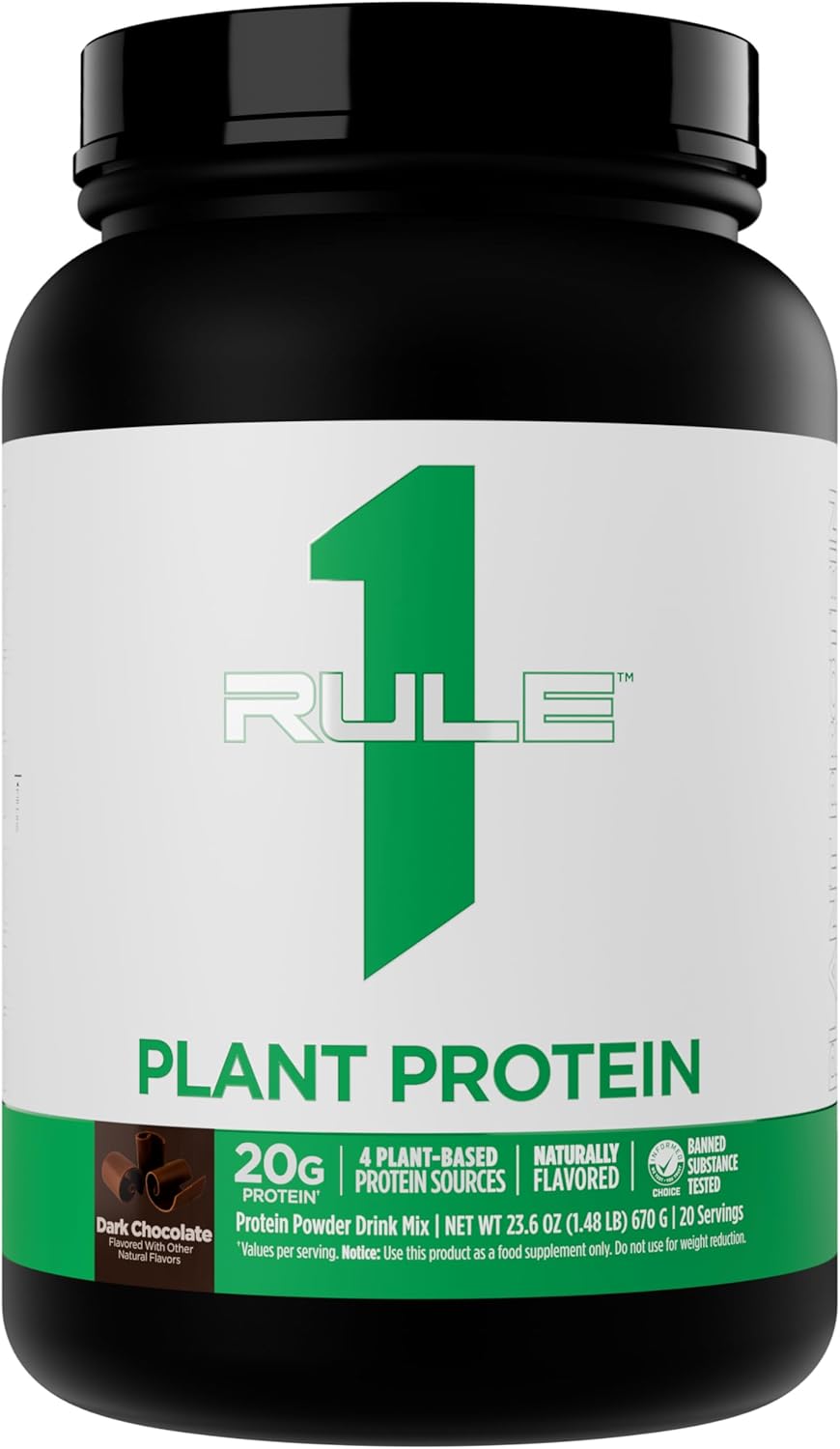
If you are ready to try a blend, look at Rule 1 Plant Protein, a plant-based powder built for daily intake and recovery. For the full category, browse rice protein.
Rice protein is a food ingredient and the research describing its amino acid composition does not establish a side-effect profile for the powder. Do not accept a claim about side effects, positive or negative, that lacks a cited study. If you have a kidney condition, a food allergy, or a medication that interacts with protein intake, talk to a physician or registered dietitian before changing your protein sources.
Read the amino acid table, not the front panel. Look for leucine grams per serving, a lysine figure, and third-party testing. If the label gives only "25 grams of protein" and nothing about the profile, you are paying for a number, not a complete product. Check the leucine count, and use the powder as one part of a daily protein plan that also includes whole food.
Use our free fitness calculators to work out your daily protein target, then pick the powder that fits the numbers.
Rice protein contains all the essential amino acids, but the amounts vary by product. An organic brown rice protein isolate and concentrate analyzed in one published study reported about 78% total amino acids by weight, 36% essential amino acids, and 18% branched-chain amino acids. Lysine is the amino acid most often described as scarce in rice protein, so check the full amino acid panel on the label before assuming a product covers your needs. Composition varies by brand and processing, so treat any single figure as a starting point, not a guarantee for every tub.
Not on its own, according to the Cleveland Clinic, which says brown rice protein does not provide all essential amino acids in adequate amounts and is not a complete protein. Lysine is the usual limiting amino acid. Pairing rice protein with pea protein or another complementary source is the standard way to balance the profile. Presence of an amino acid is not the same as an adequate amount, so the ratio matters as much as the list.
Whey is generally regarded as a complete protein with a high leucine content. Rice protein is generally lower in lysine, so compare the leucine and lysine figures on each label. Rice protein can work well for daily protein targets, but if your goal is maximizing leucine per scoop, whey has the advantage. Compare the leucine and lysine grams on the supplement facts panel rather than relying on total protein grams.
Yes. Pea protein is typically higher in lysine, while rice protein is higher in sulfur-containing amino acids such as methionine and cysteine, so the two complement each other. A formulator guide from Satori Nutrisentials states that a pea-and-rice blend can provide an amino acid profile neither ingredient achieves alone. Check the blend's amino acid disclosure before you buy, since the ratio determines the result.
{"one"=>"Select 2 or 3 items to compare", "other"=>"{{ count }} of 3 items selected"}







Leave a comment