







CREATINE MONOHYDRATE FOR VEGANS
Vegan Body Recomposition Supplement Guide 2026
Table of Contents
- What Body Recomposition Means for Vegans
- Creatine Monohydrate for Vegans: Why It Works
- Choosing a Plant-Based Protein Powder for Fat Loss
- Building a Vegan Body Recomposition Meal Plan
- Key Micronutrients and Supplements for Vegan Recomposition
- How to Integrate Supplements into Your Vegan Recomposition Plan
- Frequently Asked Questions
Last Updated: September 29, 2026
What Body Recomposition Means for Vegans
Body recomposition is the simultaneous process of reducing body fat while maintaining or increasing lean mass, according to PMC's editorial on body recomposition advances. For vegans, that definition doesn't change. The execution does.
Here's the reality: you're trying to build muscle in a caloric deficit while eating only plants. That's harder, not impossible. The global vegan supplements market hit USD 10.20 billion in 2025 and is projected to reach USD 11.17 billion in 2026 (Yahoo Finance's 2026 vegan supplements market report), which tells you plenty of people are figuring this out.
At Tiger Fitness, we've watched this space explode. The athletes getting results aren't guessing. They're hitting protein targets, lifting heavy, and supplementing what plants can't deliver in sufficient amounts. This vegan body recomposition supplement guide breaks down exactly what works.
The 2026 data is clear: research shows consuming 1-1.2 grams of protein per pound of fat-free mass can increase the extent of body recomposition (1st Phorm's body recomposition guidelines). That's your starting line.
Creatine Monohydrate for Vegans: Why It Works
Creatine monohydrate is the most researched sports supplement on the planet. For vegans, it's not optional. It's essential.
Why? Creatine is found almost exclusively in animal tissue. Vegans typically have 20-30% lower muscle creatine stores than omnivores. Supplementing brings you to baseline, then beyond.
The benefits are straightforward:
- Increased strength and power output
- Enhanced muscle protein synthesis
- Better recovery between sessions
- Support for lean mass retention during deficits
Take 5 grams daily. Timing doesn't matter much. Consistency does.
Pro Tip Vegans often respond well to creatine supplementation. You're not topping off, you're filling a tank that's been running near empty. Expect noticeable strength gains.
Choosing a Plant-Based Protein Powder for Fat Loss
Not all plant proteins are built equal. The amino acid profile matters, and so does bioavailability. This is where most vegan body recomposition supplement guides wave their hands and move on. We're not doing that.
Here's the science in plain English. Muscle protein synthesis is triggered by leucine, an essential amino acid. Research on the leucine threshold suggests you need roughly 2.5 to 3 grams of leucine per meal to maximally stimulate muscle protein synthesis in most trained lifters. Plant-based proteins may require slightly higher serving sizes to achieve this threshold. That's the real reason plant-based athletes should push protein intake toward the higher end of the 1 to 1.2 grams per pound of fat-free mass range.
Most individual plant proteins are lower in one or two essential amino acids. However, your body pools amino acids over the course of the day. What matters is total daily intake and hitting the leucine threshold often enough across the day.
So what do you actually look for in a powder?
- Protein per scoop: 20 to 25 grams minimum. If it's under 20, it's a snack, not a supplement.
- Leucine content: Look for at least 2 to 2.5 grams per serving, or plan to use 1.5 scoops.
- Amino acid profile: Pea and brown rice combined gives you a complete profile. Alone, each falls short on methionine or lysine respectively.
- Added leucine or BCAAs: Fermented vegan BCAAs help close the gap without adding volume.
- Digestive enzymes: DigeSEB, bromelain, or a protease blend. Plant proteins carry more fiber and antinutrients, which is why so many people bloat on them.
- Low sugar and filler: Under 3 grams of sugar per scoop. No maltodextrin bombs.
Tiger Fitness carries several options that hit these marks. The Core Vegan Protein uses a pea and brown rice blend with fermented vegan BCAAs and DigeSEB for digestibility. It's $49.99 and tastes like something you'd actually want to drink.

| Protein Powder | Protein Per Serving | Key Additions | Best For |
|---|---|---|---|
| Core Vegan Protein | Complete blend | Fermented BCAAs, DigeSEB | Overall value |
| Ambrosia Planta | Organic sources | SunBCAA, organic brown rice | Clean ingredients |
| NutraKey V-Pro | Complete profile | Easy digestion | Dairy sensitivity |
| GHOST Vegan Protein | Transparent label | No proprietary blends | Label transparency |
Pro Tip If you're in a deficit and training hard, split your protein across four feedings of 40 to 50 grams each rather than two big meals. You'll hit the leucine threshold more often, and that means more muscle protein synthesis across the day. This is the single biggest upgrade most vegan lifters can make without changing a single supplement.
One more thing on fat loss specifically. Protein has the highest thermic effect of any macronutrient, meaning you burn more calories digesting it. Plant protein digests a little slower than whey, which some athletes find actually helps with appetite control during a cut. Use that to your advantage. A slow-digesting pea and rice blend before bed can keep you full through the night and support recovery while you sleep.

Building a Vegan Body Recomposition Meal Plan
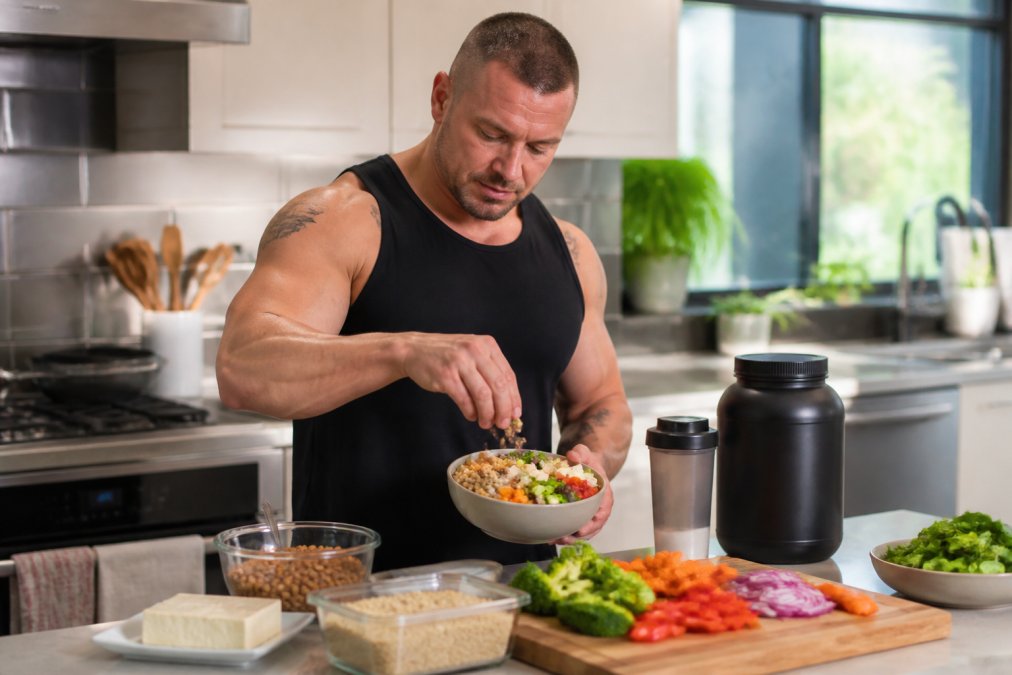
Your meal plan drives everything. Supplements fill gaps, they don't replace food.
The framework is simple:
- Calculate protein needs: 1-1.2g per pound of fat-free mass
- Set calories 200-300 below maintenance
- Fill protein from whole foods first, powder second
- Time carbohydrates around training
A 180-pound athlete at 15% body fat has roughly 153 pounds of fat-free mass. That's 153-184 grams of protein daily. From lentils, tofu, tempeh, seitan, and protein powder, you can hit that. It takes planning.
Research from Frontiers in Nutrition's VEGPREV study compared weight loss across plant-based protocols and found vegan diets effective for fat loss when protein remains adequate.
Watch Out The biggest mistake vegan athletes make is under-eating protein while in a deficit. Your body will pull from muscle if dietary protein falls short. Track your intake for the first two weeks until you know what hitting your target actually looks like.
Key Micronutrients and Supplements for Vegan Recomposition
Plants don't cover everything. This is where vegan body recomposition supplement guides usually give you a grocery list and call it a day. We're going to give you the mechanisms, the doses, and the interactions that actually matter.
Vitamin B12: Essential for red blood cell production, neurological function, and energy metabolism. Vegans cannot get this from plants, period. There is no reliable plant source. Supplement 500 to 1000 micrograms daily or 2500 micrograms weekly. Methylcobalamin and cyanocobalamin both work. If you're deficient, you'll feel it in the gym before you feel it anywhere else: flat, weak, and slow to recover.
Vitamin D: Supports testosterone production, bone density, immune function, and muscle contractile strength. Most people are deficient regardless of diet, especially in northern latitudes during winter. Get 2000 to 4000 IU daily with a fat-containing meal. Vitamin D is fat-soluble, so taking it with your protein shake or a handful of nuts improves absorption. If you want to know your actual level, ask your doctor for a 25-hydroxyvitamin D test. Guessing is for amateurs.
Omega-3 fatty acids: Plant sources like flax and chia convert poorly to EPA and DHA. The conversion rate for ALA to EPA and DHA can be low in some individuals. That's a gap. An algae-based supplement delivers what your body actually uses. Target 500 to 1000 milligrams combined EPA and DHA daily. This supports joint health, recovery, and cardiovascular function during a deficit.
Iron: Plant iron (non-heme) absorbs at roughly half the rate of animal iron (heme).
Watch Out Don't take iron and calcium at the same time. They compete for the same absorption pathways. If you're supplementing both, separate them by at least two hours. Same goes for zinc and iron. Stack smart or you're just flushing money down the toilet.
Here's the bottom line on micronutrients for vegan recomposition: B12, D, omega-3s, iron, and zinc are the five that need attention. Everything else you can get from a well-constructed diet. Get bloodwork done at least once a year so you're supplementing based on data, not guesswork.
How to Integrate Supplements into Your Vegan Recomposition Plan
Timing and synergy separate good results from great ones.
Here's your daily protocol:
Morning:
- Vitamin B12 with breakfast
- Vitamin D with a fat-containing meal
Pre-workout:
- Creatine monohydrate (5g)
- Optional: BCAAs if training fasted
Post-workout:
- Vegan protein shake within 60 minutes
- Carbohydrates to replenish glycogen
Evening:
- Omega-3 with dinner
- Iron supplement if needed (away from calcium)
Key Takeaway The supplement stack that moves the needle for vegan body recomposition: creatine monohydrate, plant-based protein powder, vitamin B12, vitamin D, and algae-based omega-3s. Everything else is optional.
Tiger Fitness offers free fitness calculators to dial in your protein and calorie targets.
Frequently Asked Questions
Can vegans gain muscle and lose fat simultaneously?
Yes. Body recomposition, which is reducing body fat while maintaining or increasing lean mass, is possible on a vegan diet. Research shows that consuming 1 to 1.2 grams of protein per pound of fat-free mass can increase the extent of body recomposition. A 12-week randomized controlled trial (VEGPREV study, Frontiers in Nutrition, 2025) compared weight loss effects across plant-based diets, including vegan protocols. The key is hitting your protein target through plant sources and supplements while following a structured resistance training program and a slight caloric deficit.
Do vegan athletes need creatine for body recomposition?
Creatine monohydrate is one of the most researched supplements for strength and lean mass. Since creatine is found primarily in animal products, vegans often have lower muscle creatine stores. Supplementing with creatine monohydrate can help support muscle protein synthesis, strength, and fat oxidation, three outcomes that matter for body recomposition. A typical dose is 3 to 5 grams daily, taken consistently. It is vegan-friendly when sourced synthetically, which most commercial creatine is.
What is the best protein powder for body recomposition?
Look for a plant-based protein powder with a complete amino acid profile and added BCAAs. Options like Core Vegan Protein, Ambrosia Planta, NutraKey V-Pro, and GHOST Vegan Protein provide pea and brown rice blends with digestive enzymes for better absorption. For fat loss, choose a powder low in added sugars and calories so it fits your deficit. Research notes that vegan bodybuilders may struggle to meet protein needs during caloric deficits and can benefit from targeted supplementation.
Are there specific micronutrient gaps vegans should supplement for muscle growth?
Yes. Key nutrients to supplement include vitamin B12, vitamin D, iron, zinc, and omega-3 fatty acids. These support energy, recovery, and hormonal health, all of which affect muscle growth and fat loss. Iron and zinc are less bioavailable from plant sources, so vegans may need higher intakes or supplements. Vitamin B12 is not found in plant foods and must be supplemented.
Leave a comment