





HOW MUCH PROTEIN CAN YOU ABSORB AT ONCE
Whey vs Plant Protein Absorption Rates: The Real Data
Last Updated: October 23, 2026
Quick Summary
When total protein is matched at 20 g, studies show no measurable difference in postprandial muscle protein synthesis between whey and plant sources, so protein absorption speed is a minor variable. Total daily protein intake and complete amino acid profiles drive the outcome, not digestion rate.
- A 2021 PMC trial found no measurable difference in muscle protein synthesis between 20 g servings of whey, soy, and plant protein.
- Whey isolate delivers roughly 10-11% leucine by weight, while pea and rice sit lower individually.
- The leucine threshold for triggering muscle protein synthesis is commonly cited around 2.5-3 g per serving.
- Plant sources report digestibility values ranging from 45% to 80%, so pick isolates over flours and blend your sources.
- Take 10-20% more total protein on a plant-based diet to offset lower digestibility.
Table of Contents
- Whey vs Plant Protein Absorption Rates: What the Data Actually Says
- Protein Absorption Rate: Digestion, Delivery, and What You're Actually Measuring
- The Head-to-Head Evidence on Whey and Plant Protein
- Plant Protein Digestibility: Why the Source and the Blend Matter
- Pea Protein and Muscle Growth: What Pea Can and Can't Do Alone
- How Much Protein Can You Absorb at Once?
- Matching Serving Sizes: Making Whey and Plant Protein Actually Comparable
- Frequently Asked Questions
Whey vs Plant Protein Absorption Rates: What the Data Actually Says
Here's the truth about whey vs plant protein absorption rates: most of what you read online is recycled marketing copy. The actual research tells a more interesting story. At Tiger Fitness, we dig into the studies so you don't have to guess.

A 2021 study published in PMC compared 20 g servings of whey, soy, and another plant protein treatment. Researchers found no measurable difference in postprandial muscle protein synthesis rates between them. That's the data, not the hype.
Below, we break down what protein absorption really means, where the differences actually live, and how to pick your powder without getting played.
Protein Absorption Rate: Digestion, Delivery, and What You're Actually Measuring
Protein absorption is the process by which your body breaks down protein into amino acids and moves them into your bloodstream. It's not one number on a label. It's a chain of events, and most articles conflate the links.
Here's the distinction that matters:
- Digestion is how fast your gut breaks protein down
- Absorption rate is how fast amino acids cross into your blood
- Amino acid availability is how much actually reaches muscle tissue
Whey is generally described as fast-digesting. Plant proteins are often framed as slower. Both statements can be true without meaning what you think they mean.
Digestion Speed Is Not Amino Acid Availability
Faster absorption does not automatically equal more muscle. That's the assumption everyone makes, and the 2021 PMC data undercuts it. When total protein was matched at 20 g, whey and plant sources produced no measurable difference in muscle protein synthesis.
What most guides miss is this: total daily protein intake and complete amino acid profiles drive the outcome. Speed is a minor variable.
The Head-to-Head Evidence on Whey and Plant Protein
Let's cut the fluff. If you want to know whether whey or plant protein absorbs faster, you have to look at what the studies actually measured, and most of them measured the wrong thing. Here's the honest breakdown of the head-to-head data.
What the Direct Comparisons Actually Show
The strongest recent data comes from a 2026 study in PMC reporting comparable metabolic effects from whey and a plant-protein blend when total protein intake was matched. When grams of protein were equalized, the outcomes converged.
An earlier 2021 PMC trial compared 20 g servings of whey, soy, and another plant treatment and found no measurable difference in postprandial muscle protein synthesis rates. Twenty grams, matched, and the muscle-building signal was statistically indistinguishable.
Here's the catch most articles bury: these studies matched total protein. That is not the same as matching leucine, and it is not the same as matching digestibility. The studies that show a whey advantage almost always use a suboptimal plant dose or a single-source plant powder. The studies that show parity almost always match protein and use a blend. That distinction is the whole ballgame.
Amino Acid Profiles and Leucine Content
Leucine is the trigger for muscle protein synthesis, and whey carries more of it per gram. A typical whey isolate delivers roughly 10-11% leucine by weight; pea and rice sit lower individually. Soy holds its own and is the closest plant match to whey on amino acid profile.
The GSSI Sports Science Exchange review on plant versus animal proteins notes differences in amino acid profile and digestibility rather than one universal rate. That's the honest framing, and it's the framing most supplement blogs ignore because 'whey is faster' sells more tubs.
What matters practically: the leucine threshold for triggering muscle protein synthesis is commonly cited around 2.5-3 g per serving. A 24 g whey scoop clears that easily. A 20 g single-source pea scoop often does not. Match the leucine, not just the grams, and the gap shrinks.
Pro Tip If you go plant, blend your sources and check the leucine number on the label. Pea plus rice covers the essential amino acids that either alone misses. That's the fix most single-source plant powders don't tell you about.
The Study Limitations Nobody Mentions
Most head-to-head trials use young, trained males, small sample sizes, and single servings. They do not reflect your 40-year-old self who trains fasted at 6 a.m. and eats three meals a day. They also rarely control for total daily protein, which is the variable that actually drives hypertrophy. Treat the absorption-rate debate as a tiebreaker, not a decision-maker.
Plant Protein Digestibility: Why the Source and the Blend Matter
Plant protein digestibility is not a single number, and anyone who quotes one is guessing. The ADPI Protein Quality Guide reports values ranging from 45% to 80% for certain plant sources, including maize and oat. Those figures are not a direct whey-versus-plant comparison, so don't let anyone spin them that way.
Here's what actually drives the variation.
Source-by-Source: Soy, Pea, Rice, and Blends
- Soy is the strongest plant performer. It is a complete protein with a digestibility score close to animal sources and a leucine content that can compete with whey at matched doses. If you tolerate it, soy isolate is the plant powder closest to whey on paper.
- Pea is lower in methionine and sits below soy on digestibility, but it is rich in lysine and BCAAs. Pea isolate outperforms pea flour because processing strips fiber and antinutrients that slow digestion.
- Rice is low in lysine and lower still on digestibility, but it complements pea almost perfectly. The pea-plus-rice combo is not marketing, it is amino acid math.
- Blends beat single sources because they combine complementary limiting amino acids and average out digestibility. A well-formulated blend can land close to whey on total amino acid delivery even if no single ingredient does.
Processing Moves the Needle More Than the Source
Isolates digest better than raw flours. Hydrolysis pre-breaks peptide bonds and speeds amino acid appearance in blood. Fiber and antinutrients like phytates and trypsin inhibitors slow digestion and reduce absorption, processing removes them. This is why a quality isolate beats a cheap single-source powder every time, and why two 'pea protein' products can behave completely differently in your gut.
Key Takeaway Stop asking 'which protein absorbs faster' and start asking 'which powder delivers enough leucine and essential amino acids at the dose I actually take.' That question has a useful answer. The other one doesn't.
The Practical Fix
If you are plant-based and serious about muscle, do three things: pick isolates over flours, blend your sources, and take enough total protein to offset lower digestibility, commonly cited as 10-20% more than an equivalent whey dose. That is the real-world adjustment, not a magic absorption rate.
Pea Protein and Muscle Growth: What Pea Can and Can't Do Alone
Pea protein supports muscle growth when you account for its limits. It's lower in methionine, so it's not a complete protein on its own. Pair it with rice and the gap closes.
Here's the practical takeaway. Pea works. It just needs help, and it needs enough total protein to offset its lower digestibility. If you're plant-based and serious about muscle, don't lean on pea alone.
Watch Out Chasing a single "fastest absorbing" powder is a waste of money. If your total daily protein is short, no absorption rate will save your gains.
How Much Protein Can You Absorb at Once?
The "30 grams per meal" ceiling is a myth. Your body doesn't dump excess protein; it slows digestion and keeps extracting amino acids over a longer window. Larger doses take longer to process, but they still get used.
For most lifters, spreading 1.6 to 2.2 g per kg of bodyweight across 3 to 5 meals covers the bases. The exact per-meal number matters less than the daily total.
Matching Serving Sizes: Making Whey and Plant Protein Actually Comparable
Fair comparisons require matched protein, not matched scoops. A plant powder with 20 g per scoop is not equivalent to a whey with 24 g. Match the grams and the comparison holds.
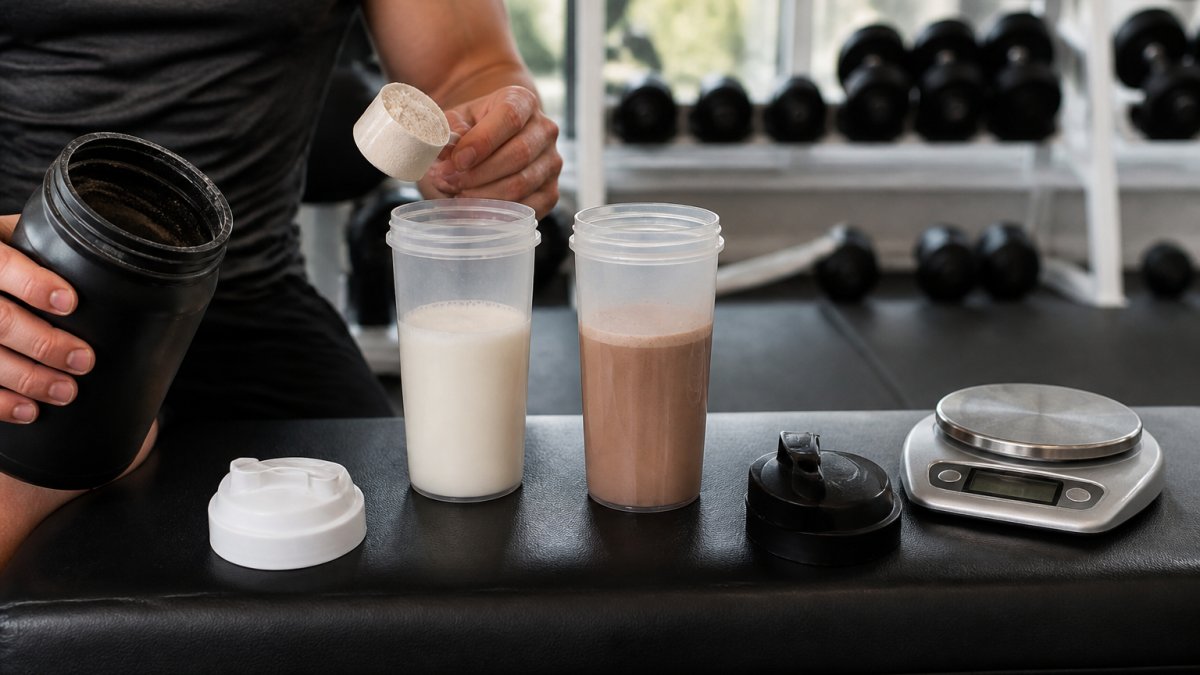
Here's how our lineup stacks up on that basis:
| Product | Protein Per Serving | Price | Best For |
|---|---|---|---|
| Rule 1 Whey Protein | 24 g | $44.99 | Fast post-workout option with 5 g BCAAs |
| ON Gold Standard 100% Whey | 24 g | $78.50 | Whey isolate and peptide blend |
| Rule 1 Plant Protein | Plant-based blend | $32.99 | Dairy-free daily intake |
| GHOST Vegan Protein V2 | 100% plant blend | $49.99 | Smooth texture, plant-based recovery |
| GHOST Vegan Protein | Plant blend | $49.99 | Transparent label, dairy-free |
For most lifters, a whey like Rule 1 Whey Protein is the straightforward pick: 24 g protein, 11 g EAAs, Informed Choice Certified. If dairy is off the table, Rule 1 Plant Protein or GHOST Vegan Protein V2 get the job done. Use our free fitness calculators to dial in your daily target.

Frequently Asked Questions
Does whey protein absorb faster than plant protein?
Whey generally digests faster, but that does not automatically translate into more muscle. A 2021 study in PMC found no measurable difference in postprandial muscle protein synthesis after 20 g of whey, 20 g of soy, or another plant protein treatment. A 2026 study reported comparable metabolic effects from whey and a plant-protein blend. Speed of protein absorption is real, but the outcome that matters is the muscle protein synthesis response, and matched doses have not shown whey to be significantly superior.
Can I build muscle with pea protein?
Yes, if you handle the dose and the blend. Pea protein is lower in methionine than whey, so a single-source pea powder is not a complete protein in the same way. Use a pea-based blend or pair it with rice protein, and push total daily protein intake to the higher end. Pea protein muscle growth research is thinner than whey research, so treat it as a workable option rather than a proven equal. Rule 1 Plant Protein at $32.99 is a straightforward plant-based entry point.
How much protein can you absorb at once?
There is no hard cliff where protein stops being absorbed. The question of how much protein can you absorb at once is really about how much drives muscle protein synthesis in one sitting versus how much gets oxidized for energy. Practical guidance is 25 to 40 g of high-quality protein per meal, spread across three to five feedings. Larger doses are still absorbed and still count toward daily intake, they just do not add proportionally more muscle-building signal.
Does plant protein provide all the essential amino acids?
Most single plant sources are low in at least one essential amino acid. Soy is the closest to complete on its own. Pea is low in methionine, rice is low in lysine, and that is why blends exist. A blend of pea and rice covers the gaps and gives you a complete protein. Check the label for total EAAs and leucine, not just the protein number, because amino acid profile is what decides the muscle protein synthesis response.
The real challenge isn't picking between whey and plant. It's hitting your daily protein consistently, and that's where we come in. Tiger Fitness stocks Rule 1 Whey Protein with its 24 g per scoop and Informed Choice certification, plus plant options like Rule 1 Plant Protein and GHOST Vegan Protein V2 for dairy-free athletes. Our free fitness calculators and diet guides help you set the target. Get started with Tiger Fitness and build your plan around the data, not the marketing.

Leave a comment