
Pick This Year's Olympia T-Shirt

Last Updated: September 15, 2026
Inflammation is your body's first response to a torn ligament, and it is supposed to happen. The problem is when it lingers. The ones who bounce back fastest treat recovery like training: they eat with a purpose. This guide to 5 natural anti-inflammatory foods for ankle sprains breaks down what actually helps.
When you roll an ankle, the ligament stretches or tears. Blood flow spikes, immune cells flood the joint, and swelling locks it down. That acute phase protects the injury. It is the chronic phase, the low-grade inflammation that drags on for weeks, that slows tissue repair and keeps you off the platform.
Diet is one lever you control. Omega-3 fatty acids, antioxidants, and micronutrients all feed the healing process. Get them wrong and you stay swollen. Get them right and you give your body what it needs to rebuild.
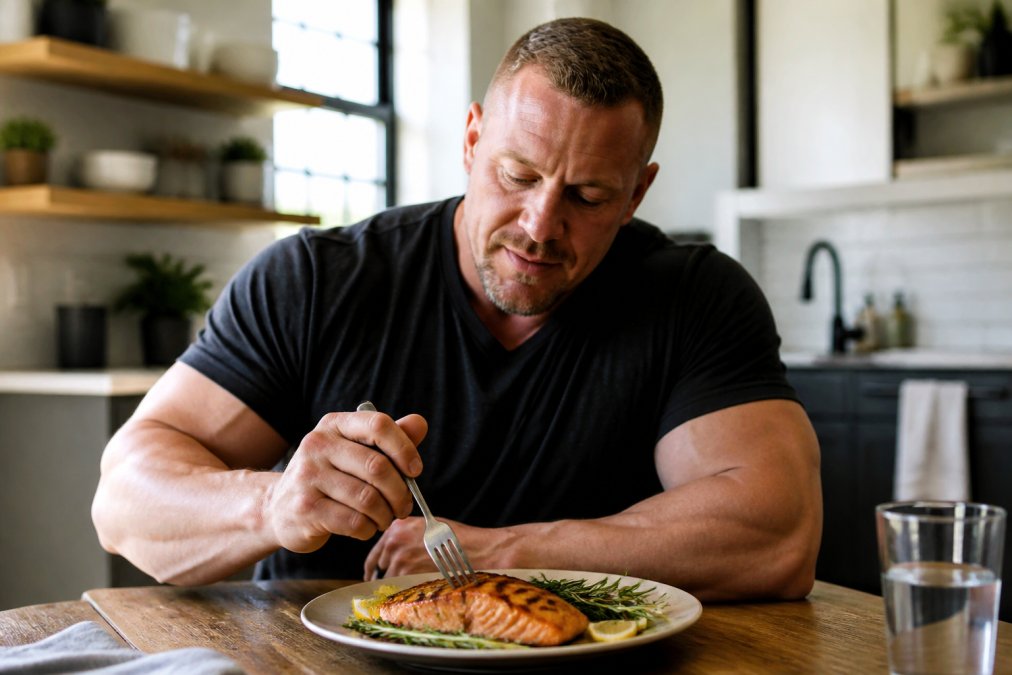
Fatty fish is the single best food source of EPA and DHA, the omega-3 fatty acids that support a healthy inflammatory response and tissue repair. Salmon, sardines, mackerel, and anchovies deliver both in a form your body uses efficiently.
POGO Physio on omega-3s and recovery notes that omega-3 fatty acids are widely cited for well-evidenced anti-inflammatory properties that limit prolonged inflammation during recovery. That matters for a sprained ankle, where lingering swelling is the enemy.
Aim for two to three servings a week. Canned sardines and wild salmon are cheap, fast, and require zero cooking skill, which helps when you are hobbling around on one foot.
Berries are the highest concentration source of anthocyanins, the plant compounds that protect joints and combat oxidative stress during ligament healing. Blueberries, strawberries, raspberries, and blackberries top the list.
Achilles Foot and Ankle on anthocyanin rich fruits identifies these four as delivering the highest anthocyanin concentration. Oxidative stress spikes after an acute injury, and antioxidants help neutralize the free radicals that come with it.
Frozen berries work just as well as fresh and cost a fraction as much. Throw a cup into Greek yogurt or a protein shake. You get antioxidants plus protein in one hit.
Leafy greens supply vitamin C, vitamin E, and magnesium, three micronutrients your body burns through during cellular regeneration and collagen production. Spinach, kale, and Swiss chard are the workhorses here.
Vitamin C is a direct cofactor in collagen synthesis, the process that rebuilds torn ligament fibers. Without enough of it, repair stalls. Magnesium supports muscle function and circulatory health around the injured joint.
Toss a handful of spinach into eggs, blend kale into a smoothie, or wilt chard as a side. If you are not eating greens daily, you are leaving recovery on the table.
Nuts and seeds give you plant-based omega-3s, zinc, and vitamin E in one package. Walnuts, chia, flax, and pumpkin seeds are the standouts for anyone who does not eat fish.
Zinc is critical for protein synthesis and immune function during the healing process. Vitamin E adds antioxidant protection. Walnuts and chia carry alpha-linolenic acid, a plant omega-3 your body partially converts to EPA and DHA.
Here is the catch most people miss: plant omega-3s convert inefficiently. If fish is off the table, you need a larger and more consistent intake of these seeds to get the same benefit.
Ginger and turmeric are the two spices with the strongest evidence behind them for inflammation support. Both are easy to work into food and both have real research backing.
Ginger has been found to be as effective as ibuprofen and other NSAIDs for treating soreness after exercise, according to Maple Place Dental's review of ginger research. That is a serious finding for anyone who would rather not live on painkillers.

Turmeric's active compound, curcumin, supports the body's natural inflammatory pathways. Pair it with black pepper to improve absorption, or take a standardized curcumin supplement if you want consistent dosing.
Speeding up ankle sprain recovery comes down to matching what you eat to the phase of healing you are in. A sprain is not one event. It is a timeline, and your plate should change as that timeline moves.
Phase 1: Acute (roughly the first 48 to 72 hours). Swelling and pain peak. Your body is flooding the joint with immune cells on purpose. Do not try to shut this down with mega-doses of anything. Eat protein at every meal to supply the amino acids for collagen synthesis, keep calories adequate, and hydrate with electrolytes. Omega-3s from fatty fish support a healthy inflammatory response without blocking it the way high-dose NSAIDs can. This is the window where the draft's earlier point matters most: acute inflammation protects the injury, so feed it, do not fight it.
Phase 2: Sub-acute (roughly day 3 through week 2). Swelling drops, range of motion starts to return, and the ligament is laying down new collagen fibers. This is where the antioxidant and micronutrient foods earn their keep. Berries, leafy greens, ginger, and turmeric help keep low-grade inflammation from dragging on. Vitamin C from greens and peppers is a direct cofactor in collagen cross-linking, so it is not optional here. Protein stays high, 1.6 to 2.2 grams per kilogram of bodyweight daily, because connective tissue is being rebuilt around the clock.
Phase 3: Remodeling (week 2 and beyond). The ligament is reorganizing and getting stronger. Keep the anti-inflammatory pattern going, keep protein high, and start reintroducing normal training load as your practitioner clears you. Nutrition does not stop mattering just because the swelling is gone.
Foods to avoid for inflammation include refined seed oils heavy in omega-6 fatty acids, processed snacks, added sugar, and excess alcohol. The Defense Health Agency's guidance on omega-6 intake warns that excessive omega-6 fats can counteract anti-inflammatory efforts, so limit them during recovery.
| Recovery Phase | What to Prioritize | Why It Matters |
|---|---|---|
| Acute (0-72 hours) | Protein at every meal, omega-3s, electrolytes | Fuels collagen synthesis, supports healthy inflammatory response |
| Sub-acute (day 3-week 2) | Berries, greens, ginger, turmeric, vitamin C | Keeps low-grade inflammation from lingering, supports collagen cross-linking |
| Remodeling (week 2+) | Continued anti-inflammatory pattern, high protein | Rebuilds and reorganizes ligament tissue |
Hydration deserves its own line. Dehydration slows circulation, and circulation is how nutrients reach the injured ligament. Drink water, and replace electrolytes if you are sweating.
Protein intake for injury recovery is the most overlooked piece of the puzzle. A sprained ankle still demands protein, because your body is rebuilding collagen and connective tissue whether you are training or not.
Most active people should target 1.6 to 2.2 grams of protein per kilogram of bodyweight daily during recovery. Spread it across four or five meals so your body gets a steady supply for protein synthesis. Whey and casein make hitting that target easy when your mobility is limited.
Here is the part nobody else is telling you: if you are popping ibuprofen around the clock, the foods in this article are working against a headwind. NSAIDs like ibuprofen and naproxen blunt the same inflammatory pathways that omega-3s and curcumin modulate. Taking both at high doses does not double the benefit, it can cancel each other out. Most practitioners recommend using NSAIDs short-term for pain control in the acute phase, then leaning on food and targeted supplements as you taper off. Talk to your doctor before stacking anything, especially if you are on blood thinners, since both fish oil and curcumin can thin the blood.
A few practical notes on stacking these foods with medication:
Nutrition can significantly influence how quickly an ankle sprain heals. A diet rich in anti-inflammatory foods like fatty fish, berries, and leafy greens helps control chronic inflammation and supplies key micronutrients such as vitamin C, vitamin E, and zinc. These nutrients support tissue repair, collagen production, and reduce oxidative stress, potentially shortening recovery time when combined with proper medical care.
Foods high in omega-3 fatty acids (fatty fish, walnuts, chia seeds), antioxidant-rich fruits (berries, tart cherries), leafy greens (spinach, kale), and anti-inflammatory spices (ginger, turmeric) can help reduce inflammation. These foods contain compounds like EPA, DHA, and anthocyanins that support a healthy inflammatory response and promote ligament healing.
Yes, limit foods that promote inflammation such as refined sugars, processed snacks, fried foods, and excessive omega-6 fatty acids from vegetable oils. These can counteract the benefits of anti-inflammatory foods and slow tissue repair. Focus on nutrient-dense whole foods instead.
Recovery time varies by severity. Mild sprains may heal in 1-2 weeks, while more severe sprains can take 6-8 weeks or longer. Proper nutrition, including adequate protein and anti-inflammatory foods, supports the healing process but does not replace medical treatment. Always follow your healthcare provider's advice.
Vitamin C supports collagen production, vitamin E provides antioxidant protection, and zinc aids tissue repair and immune function. Magnesium supports muscle and nerve function. These micronutrients, found in anti-inflammatory foods, can help speed recovery from soft tissue injuries like ankle sprains.
{"one"=>"Select 2 or 3 items to compare", "other"=>"{{ count }} of 3 items selected"}




Leave a comment