
Pick This Year's Olympia T-Shirt

Last Updated: September 4, 2026
The global healthy snacks market is projected to reach over $600 billion this decade, according to Worldmetrics 2026 Healthy Snacks Industry Statistics Report. That growth is driven by one undeniable fact: convenient healthy snacks for athletes aren't a luxury anymore, they're a competitive requirement. At Tiger Fitness, we've spent years helping lifters and competitors fuel properly, and the difference between athletes who plan their snacks and those who grab whatever is nearby shows up directly in performance and recovery.
Here's the bottom line: your training stimulus is only as good as your recovery, and your recovery hinges on consistent, quality nutrition. Strategic snacking maintains energy, supports muscle protein synthesis, and prevents the catabolic state that undoes hard training. Below, we break down how to use smart snacking to fuel performance, when to eat, what to look for, and how to build a system that works even on your busiest days.
Most athletes crush their training sessions but sabotage their results with poor food choices the other 23 hours of the day. Research from ScienceDirect's systematic review on exercise snacks confirms that brief, integrated bouts of physical activity enhance cardiorespiratory endurance by increasing peak power output and VO2max. The same principle applies to nutrition: small, consistent, high-quality snacks throughout the day create a metabolic environment that supports muscle growth and fat loss.
The convenience factor matters more than most athletes admit. When healthy options require preparation, you default to processed foods. When they're ready to grab, you stay on track. A 2024 study from the National Library of Medicine on athlete snack intake found that consuming a meal or snack immediately following a game enhances muscle protein synthesis and recovery. That post-exercise window closes fast, and convenient healthy snacks are what let you hit it every single time.
Snacking isn't just about adding calories, it's about strategically managing energy, blood glucose levels, and recovery nutrition. Each snack is an opportunity to support glycogen stores, deliver amino acids for muscle repair, and maintain stable energy for your next session.
Research from ScienceAlert on exercise snack metabolic benefits shows that brief, intense exercise snacks performed before meals can reduce post-meal blood sugar spikes, particularly in individuals with insulin resistance. Pair that with smart food choices and you create a metabolic advantage. The athletes who perform best understand that snack frequency directly impacts training intensity and recovery speed.
What matters most is the macronutrient profile of what you choose. Complex carbohydrates replenish glycogen, lean protein drives muscle synthesis, and healthy fats support hormone function. The 2026 industry data from Worldmetrics healthy snack purchasing trends shows most shoppers prioritize clean labels and convenience. For athletes, that means choosing whole foods and high quality protein sources over processed options loaded with sugar and inflammatory ingredients.
Pre-workout snack timing can make or break your session. Eat too close to training and you feel sluggish. Eat too early and you run out of fuel mid-session. The sweet spot is 45 to 90 minutes before training, depending on the size of the snack.
For training sessions within 90 minutes, focus on easily digestible carbohydrates with moderate protein. A protein bar with around 20 grams of protein and 30 to 40 grams of carbs works well. Ostrim meat sticks paired with fruit deliver protein and fast-acting carbs without weighing you down. The goal is to top off glycogen stores without causing digestive distress during heavy sets.

Avoid high-fat and high-fiber foods in the hour before training. They slow gastric emptying and can leave you feeling heavy and lethargic. Save those for meals further from your workout. If you train fasted or early morning, a smaller snack like a BUILT Puff bar at 140 calories with 17 grams of protein provides amino acids without bloat.
Protein is the most satiating macronutrient and the primary driver of muscle protein synthesis. For athletes, high protein snacks for muscle growth aren't optional, they're the foundation of recovery between meals. Each snack should deliver 15 to 30 grams of quality protein to stimulate muscle synthesis and keep you in an anabolic state throughout the day.
Ostrim meat sticks deliver up to 14 grams of protein per stick with minimal fat and zero preservatives. They're made from real meat sources like beef, elk, turkey, chicken, and ostrich, making them a clean, portable protein source. Protein bars like the HTLT CICO Bar, designed by Greg Doucette, pack 20 grams of protein with low sugar and added fiber for satiety. The Mammoth Protein Bars offer a soft, dessert-inspired texture that makes hitting your protein targets feel like a treat rather than a chore.

| Snack Option | Protein per Serving | Calories | Best Use Case |
|---|---|---|---|
| Ostrim Meat Sticks | 14g | ~70-90 | On-the-go, low-carb, keto |
| HTLT CICO Bar | 20g | ~200 | Meal replacement, cutting |
| BUILT Puff Bar | 17g | 140 | Sweet craving, low-calorie |
| Myprotein Crispy Bar | 20g | ~220 | Post-workout recovery |
The post-exercise window is when your muscles are most receptive to nutrients. Consuming high protein snacks within 30 to 60 minutes after training maximizes muscle protein synthesis and accelerates recovery. This is non-negotiable for anyone serious about building muscle.
How to track macros for beginners doesn't have to be complicated. Start with protein, it's the most important macro for athletes and the easiest to prioritize. Set a daily protein target based on your body weight, roughly 0.8 to 1 gram per pound, then build the rest of your intake around that number.
Use a food scale and a tracking app for the first two weeks. This isn't permanent, it's calibration. Most people underestimate portion sizes by 30 to 40 percent, and those errors compound daily. After two weeks of accurate tracking, you'll be able to eyeball portions with reasonable accuracy, and that skill stays with you for life.
Focus on hitting your protein target first, then adjust carbs and fats based on energy levels and performance. If you're dragging through workouts, increase carbs. If you're gaining unwanted body fat, reduce fats and processed carbs. The ScienceDirect systematic review on exercise snack effectiveness confirms that reducing body fat percentage while maintaining performance is achievable with the right nutritional approach. Tiger Fitness provides FREE TOOLS & FITNESS CALCULATORS to help you dial in your numbers without guesswork.
This is where most athletes fail. They know what to eat, but they don't have it available when they need it. The solution is building a stash of portable, shelf-stable snacks that require zero preparation and travel anywhere. But 'shelf-stable' has limits, and in a team setting, your snack choice affects more than just your own performance.
The Heat Problem: Keeping Snacks Safe and Edible
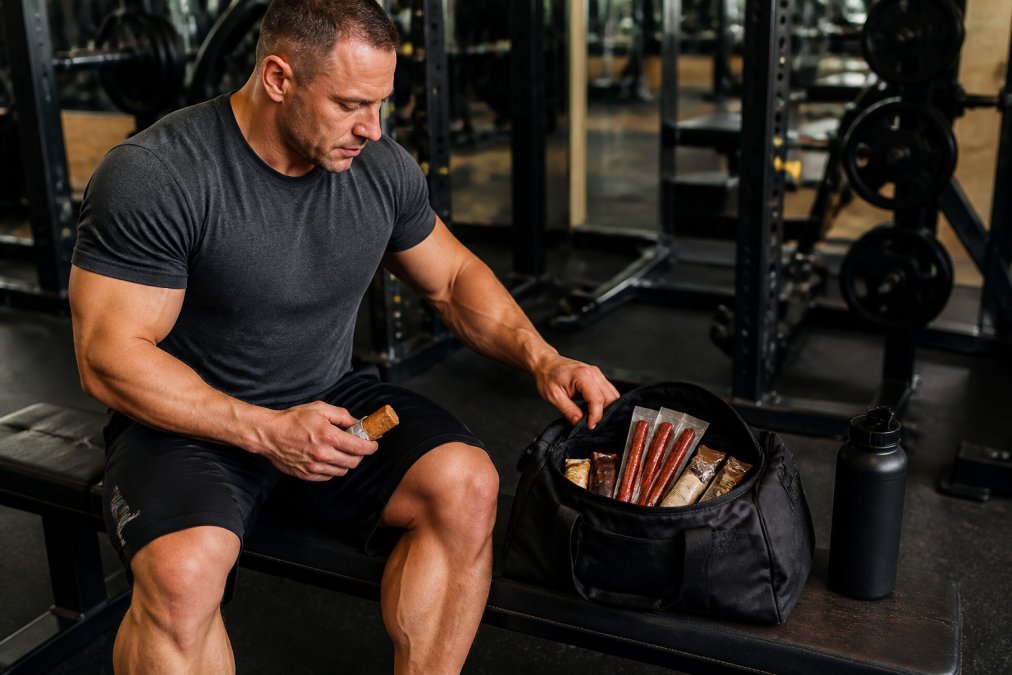
A protein bar left in a car during a July tournament in the South isn't a snack anymore; it's a melted mess. Heat doesn't just ruin texture; it can degrade the quality of certain ingredients, like chocolate coatings or collagen peptides. For meat-based snacks, the risk is different. While shelf-stable until opened, extreme heat can cause the fat to separate or the texture to become oily. The fix isn't to avoid these foods; it's to manage the environment.
The Allergy Factor: Navigating the Team Locker Room
This is the angle most articles miss. In a team environment, your snack isn't just personal fuel; it's part of a shared space. Nut allergies are common and severe. Bringing peanut butter protein bars into a locker room or team bus can create a dangerous situation for a teammate. The solution isn't to isolate yourself; it's to be strategic.
The Bottom Line on Practicality
A portable snack is only useful if it's edible when you need it. That means planning for the weather and respecting your teammates' health. A stash of Ostrim meat sticks in your gym bag is a solid start. But pairing that with a small cooler for summer months and choosing nut-free options for team travel is what separates a prepared athlete from a reactive one. You don't leave your training to chance; don't leave your fuel to chance either.
Your snack strategy needs to match your actual schedule, not an idealized version of it. Map out your day and identify the gaps between meals where energy drops or hunger spikes. Those are your snack windows, and each one needs a planned option ready to go. But a strategy built on convenience alone is fragile. The most resilient systems are built on two pillars: bulk preparation and the psychological edge of routine.
The Sunday Session: Bulk Prep That Saves Money and Sanity
Buying single-serve snacks is the most expensive way to fuel. The premium you pay for convenience is significant. The fix is a 30-minute weekly session dedicated to portioning bulk purchases. This isn't about cooking elaborate meals; it's about smart assembly.
The Psychological Edge: Routine Reduces Stress
Most articles talk about macros and timing, but they miss the mental game. Consistent snacking isn't just about physiology; it's about psychology. When you know your next fuel source is secured and ready, you remove a variable of uncertainty. This is critical during high-pressure competition.
The Final Word on Strategy
A snack strategy that works is one that is affordable, repeatable, and mentally reinforcing. Bulk preparation makes it cost-effective. Routine makes it automatic. And the psychological benefit of being prepared gives you an edge that doesn't show up in a nutrition label. You train your body to perform; train your environment to support that performance. Plan ahead, portion in bulk, and make your snack strategy a non-negotiable part of your competition ritual.
A convenient healthy snack for athletes delivers quality macronutrients protein, carbs, and fats in a portable, ready to eat format. It should require no prep time, survive travel without refrigeration, and fit your training schedule. Look for options with at least 10-15g of protein, minimal added sugars, and whole food ingredients. Meat sticks like Ostrim or macro-friendly protein bars check these boxes and stay fresh in a gym bag for hours.
Consuming a snack with 20-30g of protein within the post-exercise window stimulates muscle protein synthesis and speeds recovery. Research shows that eating a meal or snack immediately after training enhances muscle repair. Convenient high protein snacks make this timing realistic, especially when a full meal is impractical. Portable options like beef sticks or protein bars deliver the amino acids your muscles need without forcing you to cook right after a hard session.
Pre-workout snacks should combine easily digestible carbohydrates with moderate protein, eaten 30-60 minutes before training to top off glycogen stores. Post-workout, prioritize protein with some carbs to trigger muscle repair and replenish energy. Convenient healthy snacks like a turkey stick with fruit or a layered protein bar fit both windows. The key is having them on hand so timing never slips, because a missed snack window can cost you performance and recovery.
Yes, when chosen strategically. Snacks high in protein and fiber increase satiety, helping you control total caloric intake while maintaining energy for training. Research shows that exercise snacks, brief bouts of activity paired with smart nutrition, reduce body fat percentage in healthy adults. Convenient options with 140-200 calories, like BUILT Puff bars or Ostrim sticks, provide portion control and keep you satisfied between meals without wrecking your daily macros.
Building muscle and performing at your peak requires more than just training hard. The benefits of convenient healthy snacks for athletes are clear: stable energy, better recovery, and consistent progress toward your goals. Tiger Fitness carries the largest selection of high-protein snacks at the lowest prices, backed by fast shipping and a rewards program that saves you money on every order. Get started with Tiger Fitness and build a snack strategy that fuels your performance.
{"one"=>"Select 2 or 3 items to compare", "other"=>"{{ count }} of 3 items selected"}


Leave a comment