
NEW NULLA BAR FLAVORS
In-Stock Now!

Best overall for trying whey isolate: RAW Grass Fed Isolate Protein. Best dairy-free, nonvegan option: Spoken Grass-Fed Beef Protein. Best plant-based option: RAW Vegan Protein. This 2026 ranking matches protein sources to your dietary needs; no powder is guaranteed to prevent bloating or stomach discomfort.
The best protein powder for sensitive stomach problems depends on what causes your symptoms. Lactose intolerance, milk allergy, and discomfort after a large shake are different problems. Buying the same protein source under a different name does not necessarily change the ingredient you react to.
Tigerfitness sells whey, plant-based, and other protein options. Tigerfitness protein powder shoppers should choose by protein source and ingredient tolerance, not promises of effortless digestion.
Start with your existing food tolerances. If milk reliably causes symptoms, that history matters more than a flavor description or a claim about fast absorption. If you have a diagnosed allergy, follow your clinician’s advice rather than experimenting with an allergen.
Use these criteria to build your 2026 shortlist before comparing tubs:
An ingredient list helps you identify differences; it does not diagnose an intolerance. Sugar alcohols and certain fermentable fibers can cause gas or diarrhea in susceptible people, but their presence does not make every formula unsuitable. Conversely, a short ingredient list can still contain your specific trigger.
The order below reflects practical shopping choices, not measured digestive outcomes. Start with the row that matches your dietary restrictions, even when it is not the first row.
| Rank and product | Best for | Standout feature | Key limitation |
|---|---|---|---|
| 1. RAW Grass Fed Isolate Protein | Whey-isolate shoppers | 25 grams of protein per scoop | Milk-derived; not suitable for milk allergy |
| 2. Spoken Grass-Fed Beef Protein | Dairy-free, nonvegan diets | Explicitly described as a dairy-free beef protein | Not vegan; dairy-free does not establish tolerance to every ingredient |
| 3. RAW Vegan Protein | Plant-based diets | 20 grams of protein per scoop | Plant-based does not guarantee digestive comfort |
Do not read this table as a lactose-free certification or an allergy-safety assessment. Check the current label, allergen statement, and preparation directions for the exact product you choose.
RAW Grass Fed Isolate Protein is a micro-filtered whey isolate with 25 grams of protein per scoop, according to its product description. It is the default starting point here for shoppers who want whey isolate and do not have a milk allergy.
The reason to consider isolate is its protein form—not the assumption that grass-fed sourcing prevents stomach upset. Whey isolate generally has less lactose than concentrate, but the finished formula and your individual tolerance still determine whether it fits.
RAW Grass Fed Isolate Protein pros:
RAW Grass Fed Isolate Protein cons:
Best for: Lifters who tolerate milk protein and want to assess a whey-isolate formula rather than another general whey blend.
If your current powder already uses isolate, switching to RAW Grass Fed Isolate Protein does not by itself explain or solve your symptoms. Compare the complete formulas and what you mix into the shake before deciding that the protein source is responsible.
Verdict: Buy if whey isolate matches your needs and the exact label passes your ingredient check; skip for milk allergy.
Spoken Grass-Fed Beef Protein is described as a dairy-free alternative for athletes and active individuals. It offers a different protein source for shoppers who want to move away from milk-derived powders without choosing a plant-based product.
That distinction earns its place in this 2026 ranking. Dairy-free is a relevant dietary attribute; it is not proof that a finished formula will agree with every sensitive stomach.
Spoken Grass-Fed Beef Protein pros:
Spoken Grass-Fed Beef Protein cons:
Best for: Shoppers avoiding dairy who still want an animal-derived protein powder.
Choose Spoken Grass-Fed Beef Protein because its source fits your diet, not because beef protein is universally easier to digest. If you already tolerate a plant-based powder comfortably, there is no digestive reason established here to replace it with beef protein.
Verdict: Buy for a dairy-free, nonvegan approach after checking the full label; skip if you avoid animal-derived ingredients.
RAW Vegan Protein is a vegan protein powder with 20 grams of protein per scoop, according to its product description. It is the clearest fit in this shortlist for shoppers whose first requirement is a plant-based formula.
Its position below whey and beef does not mean plant protein is worse for digestion. It serves a different dietary need, and that need should override the numbered order when you shop.
RAW Vegan Protein pros:
RAW Vegan Protein cons:
Best for: Vegan lifters and other shoppers who specifically want plant-based protein.
Read the protein-source ingredients rather than assuming all vegan powders use the same blend. Also check the exact flavor: a tolerated protein base does not establish tolerance to every ingredient added around it.
Verdict: Buy when plant-based nutrition is your priority and the ingredients fit; hold if you have not checked your specific allergens.
Your dietary restrictions should narrow the shortlist first. Flavor comes afterward. Otherwise, you risk choosing an appealing shake built around an ingredient you already know does not suit you.
Use this decision sequence:
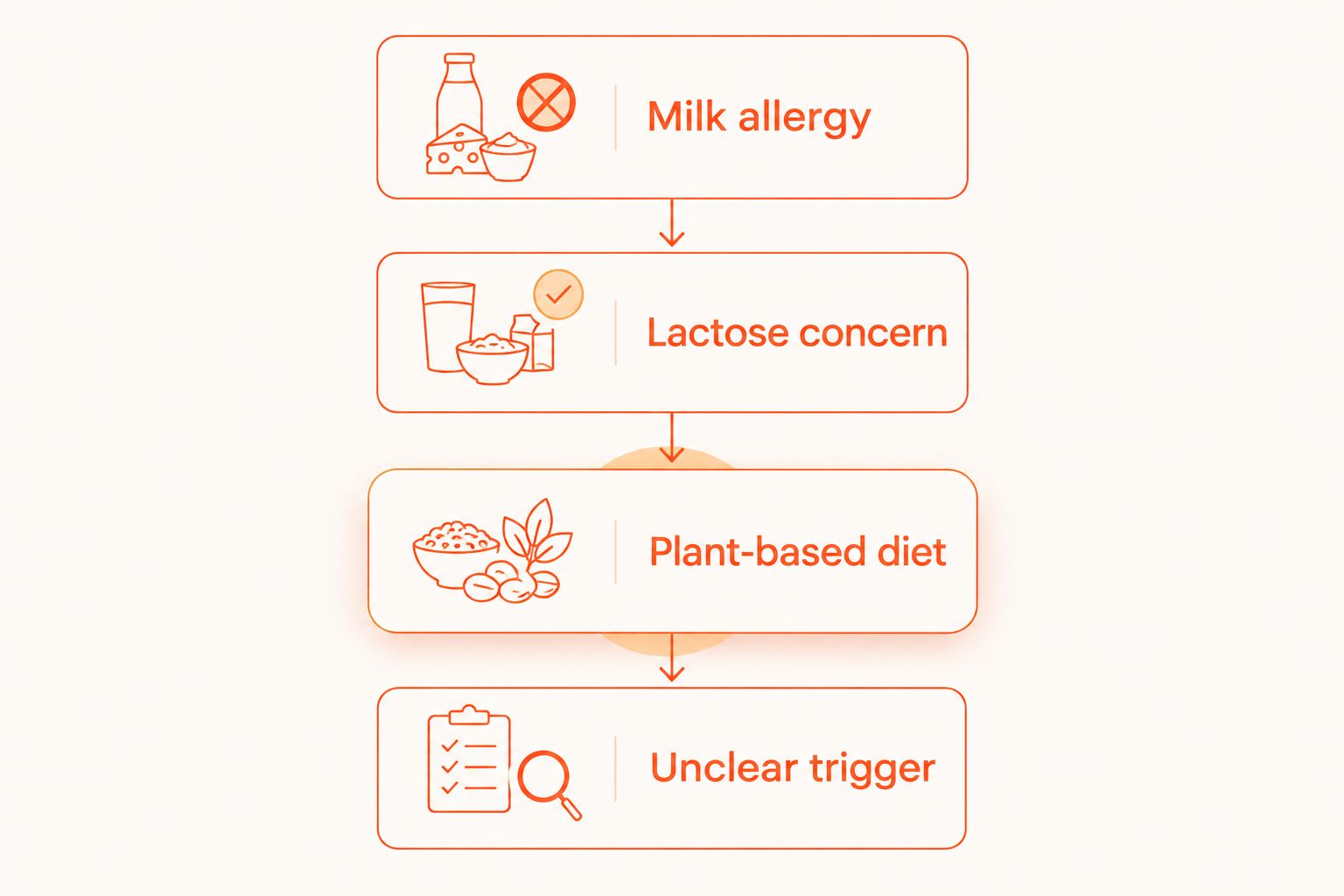
For 2026 shopping, compare current labels rather than relying on an old tub or a remembered ingredient list. A familiar product name is not a substitute for checking the formula you are about to use.
These Tigerfitness protein powder options cover the three dietary routes above. Select the source that fits your needs, then inspect the exact product information before buying.


Introduce 1 new product at a time. This is a practical way to keep your observations interpretable, not a medical testing protocol. Do not use home trials to challenge a known allergy.
When choosing a protein powder for sensitive stomachs, separating protein source from the rest of the shake matters: changing the powder, milk, fruit, and added fiber together makes the cause of a different response harder to identify.
Follow the product’s serving and mixing directions. Use a mixing liquid you already tolerate, and keep other ingredients consistent rather than building a new, heavily loaded smoothie around the new powder.
If you suspect milk is contributing to symptoms, adding regular milk to a dairy-free powder defeats the purpose of that comparison. The complete drink—not just the scoop—needs to match the dietary restriction you are trying to respect.
Keep 3 entries per shake: the product and amount, the mixing liquid and add-ins, and any symptoms with their timing. Those notes give you something concrete to discuss with a registered dietitian or clinician.
Do not deliberately keep drinking a product that repeatedly causes discomfort just to finish the container. Stop using the suspect product and seek advice when symptoms persist or recur.
Persistent abdominal pain, recurrent vomiting, blood in the stool, or unexplained weight loss need medical evaluation. Hives, throat swelling, or trouble breathing after a shake require urgent medical help.
A powder comparison cannot identify the cause of ongoing gastrointestinal symptoms. None of these products should be used to diagnose, treat, cure, or prevent disease.
This 2026 ranking prioritizes protein-source fit, stated product attributes, and clear limitations. RAW Grass Fed Isolate Protein leads for whey-isolate shoppers; Spoken Grass-Fed Beef Protein covers dairy-free animal protein; RAW Vegan Protein covers plant-based diets.
The order does not represent a clinical digestion test, a measured bloating score, or a guarantee of comfort. No single product wins across lactose intolerance, milk allergy, and unrelated digestive complaints.
Choose RAW Grass Fed Isolate Protein as the default only if you want whey isolate and tolerate milk protein. Choose Spoken Grass-Fed Beef Protein when dairy-free, nonvegan nutrition is the requirement. Choose RAW Vegan Protein when plant-based nutrition comes first.
For Tigerfitness shoppers, the right next move is a label comparison—not a larger supplement stack. Match your known restrictions, avoid a known trigger, and keep the rest of your shake simple enough to assess.
What’s the best protein powder for a sensitive stomach in 2026?
RAW Grass Fed Isolate Protein is the default whey-isolate pick in this shortlist, not a universal digestive solution. Spoken Grass-Fed Beef Protein fits dairy-free, nonvegan diets, while RAW Vegan Protein fits plant-based diets.
Is whey isolate easier to tolerate than whey concentrate?
Whey isolate generally contains less lactose than whey concentrate, which matters when lactose is the issue. It remains milk-derived, and the finished formula still needs a label check.
Can I use whey isolate if I have a milk allergy?
No. Whey isolate is milk protein and is not an appropriate substitute for someone with a milk allergy. Ask your clinician about suitable alternatives.
Is vegan protein powder always better for bloating?
No. A vegan formula avoids animal-derived protein but does not guarantee symptom-free digestion. Check its specific plant proteins, sweeteners, fibers, and other ingredients.
Does grass-fed protein mean it is easier to digest?
No. Grass-fed sourcing alone does not establish better digestive tolerance. Protein type, the finished formula, and your individual response matter more for this decision.
Should I mix protein powder with water instead of milk?
Use a liquid you already tolerate and follow the product’s mixing directions. If you are avoiding dairy, adding dairy milk to the shake reintroduces it regardless of the powder’s protein source.
Should I add digestive enzymes when a protein shake causes bloating?
Do not automatically add digestive enzymes before assessing the shake’s ingredients and your symptoms. Lactase targets lactose digestion, but it does not make milk protein safe for someone with a milk allergy.
The powder can be dairy-free while the shake is not. Before replacing another container, look at what goes into the blender alongside it. Your mixing liquid and add-ins deserve the same ingredient check as your protein powder.
{"one"=>"Select 2 or 3 items to compare", "other"=>"{{ count }} of 3 items selected"}







Leave a comment