



Is vegan protein powder as effective as whey protein? 2026
Yes. In 2026, vegan protein powder can support muscle gain and recovery as effectively as whey when you get enough total protein and essential amino acids from your diet. Whey typically provides more leucine per gram and is easier to digest as a protein source, so a plant-based powder deserves a closer look at its amino acid profile. This guide shows you what to compare before choosing either one.
TL;DR
- Is vegan protein powder as effective as whey protein? Yes, when total protein and essential amino acid intake meet your needs.
- Whey generally supplies more leucine per gram; plant protein requires a closer label check.
- Soy protein is a complete plant protein; pea and rice have different amino acid strengths.
- Tiger Fitness suits lifters comparing a plant-based rice protein powder with whey options.
Why this matters
Your muscles respond to the protein and essential amino acids you consume, not the word vegan or whey on a tub. For lifters, the useful question is whether your usual meals and shakes deliver enough protein across the day. A scoop that looks similar to another on the front label can differ in its protein content and amino acid mix.
In 2026, start with your daily intake rather than declaring one powder the winner. If you are choosing among plant sources, the vegan protein amino acid guide is a useful next check. Tiger Fitness is best for lifters who want to compare plant-based rice protein with whey protein from the same retailer. That is a shopping advantage, not a claim that every powder produces identical results.
Is vegan protein powder as effective as whey protein?
Yes, if the plant protein helps you meet your protein and essential amino acid needs. Whey has a convenient nutritional advantage: it contains all essential amino acids and is relatively rich in leucine, an amino acid involved in stimulating muscle protein synthesis. That advantage matters most when a shake supplies a large share of your protein or when your overall intake is low.
Vegan protein powder is a category, not a single ingredient. Soy, pea and rice protein have different amino acid profiles. A comparison based only on scoop size misses the point: compare grams of protein per serving, then consider the source of that protein and what you eat throughout the day.
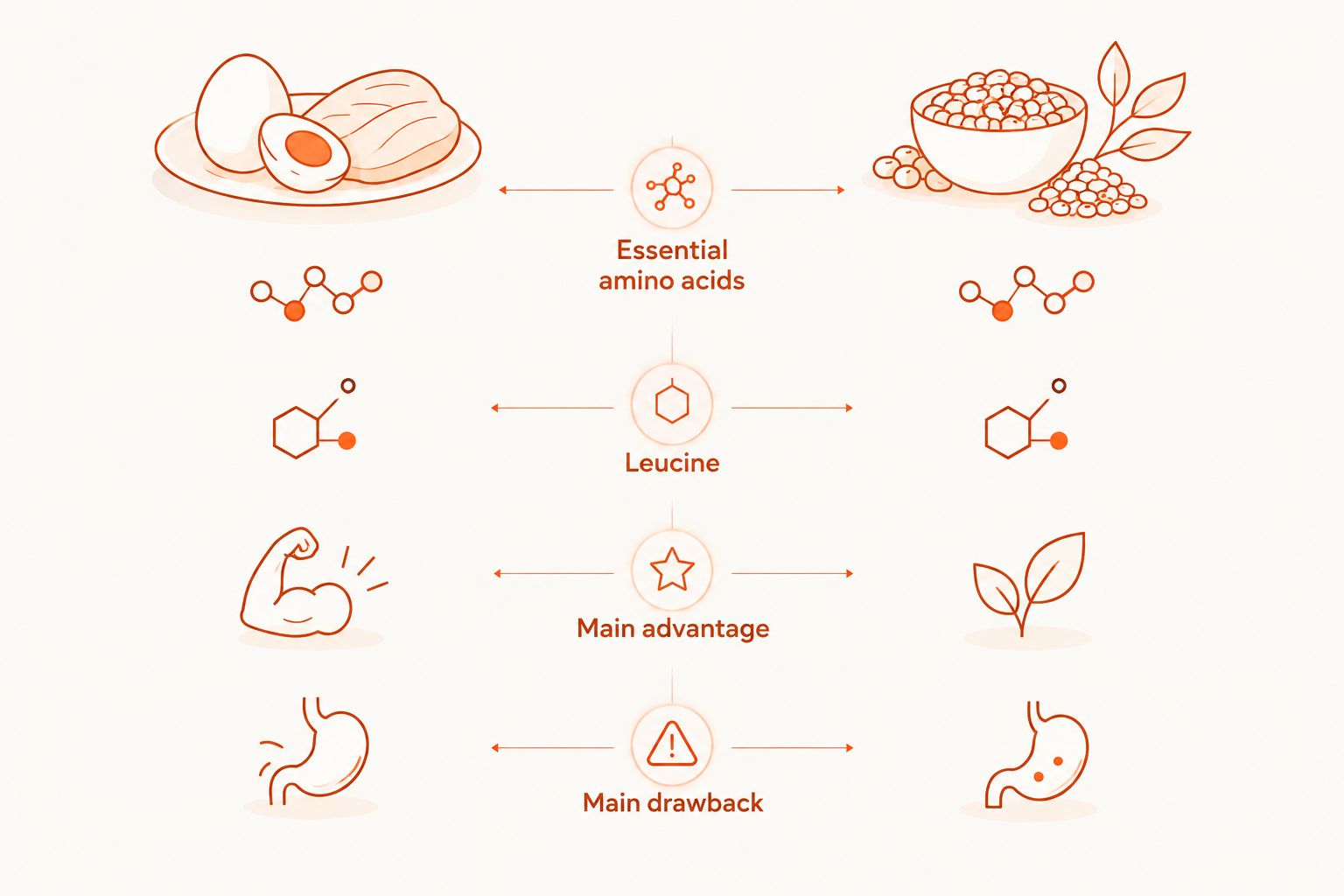
| What to compare | Whey protein | Vegan protein powder |
|---|---|---|
| Best for | Lifters who consume dairy and want a complete protein source | Lifters avoiding dairy or animal products |
| Essential amino acids | Contains all essential amino acids | Depends on the source; soy contains all essential amino acids |
| Leucine | Generally higher per gram than many plant proteins | Varies by source and serving |
| Main advantage | Straightforward amino acid profile | Fits a vegan diet and offers a dairy-free option |
| Main drawback | Does not fit a vegan diet; some people avoid dairy | Requires more attention to the protein source and label |
The table compares protein sources, not individual products. A whey label does not tell you whether dairy agrees with you; a vegan label does not tell you that the powder contains enough protein for your goals. Read the nutrition panel before making either assumption.
The International Society of Sports Nutrition position stand on protein and exercise identifies 1.4–2.0 grams of protein per kilogram of body weight per day as sufficient for most exercising people seeking to build or maintain muscle. It also describes 20–40 grams of protein per feeding as a useful general range. Those are research-based reference points for healthy exercising adults, not a requirement to drink a shake or a promise of a specific result in 2026.
What does the research comparison actually tell you?
Protein research supports looking beyond the name of the source. Training, total daily protein and the amino acids supplied by the full diet all affect the comparison. A study that gives one group less protein cannot isolate whether the result came from whey versus plants or simply from different protein intakes.
That does not erase whey’s amino acid advantage per gram. It puts the advantage in context. If you consistently eat enough protein and a varied diet, a vegan powder can do the job. If you rely on a single shake while the rest of your diet is low in protein, examine that shake’s contents more carefully.
Soy protein: a complete plant-based option
Best for: Vegans who want a plant protein containing all essential amino acids. Soy is a complete protein, which makes it a direct nutritional comparison with whey on that specific measure. It remains a different protein source, so compare the actual grams of protein on the label rather than treating equal scoop sizes as equal servings.
The trade-off is preference and suitability. Soy will not work for someone who avoids it because of an allergy, and it does not solve a dislike of a product’s taste or texture. For a lifter who eats soy and wants to avoid dairy, it is a practical place to start in 2026.
Pea protein: useful, but check the full diet
Best for: Lifters seeking a plant-based powder who are willing to check its amino acid profile alongside their meals. Pea protein contributes protein and essential amino acids, but it is lower in methionine relative to some other protein sources. That does not make a pea shake ineffective; it means you should not judge your entire diet by a single ingredient.
Its strength is flexibility in a varied eating plan. Its drawback is that a pea-only powder is not interchangeable with whey gram for gram on every amino acid. If you regularly eat other protein sources, assess your daily pattern before deciding a blend is necessary.
Rice protein: dairy-free, with a lysine consideration
Best for: Lifters avoiding dairy who prefer a rice-based powder and get protein from other foods as well. Rice protein contributes to your daily total, but it is relatively low in lysine compared with some other protein sources. Check the rest of your diet instead of expecting rice protein alone to cover every amino acid equally well.
Tiger Fitness lists NOW Sports Sprouted Brown Rice Protein as a plant-based option. It is relevant if rice protein fits your diet; it is not evidence that this particular product matches a whey product in a head-to-head training trial. Its clear limitation for this comparison is the same one that applies to rice protein generally: consider lysine intake across your meals.
Whey protein: convenient amino acid profile, but not vegan
Best for: Lifters who consume dairy and want a complete protein with a relatively high leucine content. Whey makes the amino acid check simple, but it does not fit a vegan diet. If dairy is something you avoid, its nutritional profile is not a reason to ignore that constraint.
Tiger Fitness also lists MTS Nutrition Machine Whey Protein. The URL identifies it as a whey protein option; compare its current nutrition label with any plant powder before choosing. Do not assume that similarly sized scoops contain the same amount of protein. Neither the product name nor the protein source replaces the serving information on the package.
Why effectiveness varies
Two people can use the same powder and get different value from it because the powder fills different gaps in their diets. In 2026, these are the factors to check first:
- Total daily protein: A powder helps when it closes a gap between what you eat and the protein intake that fits your training. Extra scoops do not substitute for a training plan.
- Protein per serving: Serving size is not the same as protein content. Read the grams of protein on the nutrition panel when comparing powders.
- Essential amino acids: Whey and soy contain all essential amino acids. Pea and rice bring different strengths and limitations, so consider the rest of your food intake.
- Leucine content: Whey is generally richer in leucine per gram than many plant proteins. A plant powder’s source and serving matter when you compare it with whey.
- Dietary fit: A whey powder is not useful to someone following a vegan diet. A plant-based powder is not useful if its ingredients conflict with an allergy or other dietary restriction.
- Resistance training: Protein supports the work you do in the gym; switching powders is not a replacement for consistent, progressively challenging workouts.
None of those factors proves that one named product beats another. They give you a way to decide whether a powder suits your actual intake, training and dietary needs.
How to choose a powder for your workouts
- Set a daily protein goal. For a healthy adult doing regular exercise, use the International Society of Sports Nutrition’s 1.4–2.0 grams per kilogram of body weight per day range as a reference, then account for your training and individual needs. Ask a qualified clinician or dietitian for individual guidance if a medical condition affects your diet.
- Estimate what food already provides. Count the protein in your normal meals before deciding that you need a powder. The right question is how much protein your shake needs to add, not how many shakes someone else drinks.
- Compare protein, not scoop size. Check grams of protein per serving on each label. A scoop includes ingredients other than protein, and the size of a scoop does not tell you the full amino acid profile.
- Match the source to your diet. Choose whey if you consume dairy and value its straightforward amino acid profile. Choose soy, pea, rice or an appropriate blend if you want a plant-based option, then check how it fits with the rest of your protein sources.
- Keep lifting and reassess your intake. If your meals change or your training goals shift, revisit your protein plan. Do not credit or blame a powder for every change in gym performance.
A useful serving-level reference is the 20–40 grams of protein per feeding range discussed in the International Society of Sports Nutrition position stand on protein and exercise. It is not an instruction to take that amount from powder. Meals count, and the amount that fits you depends on your wider diet and training.
Related questions
Can you build muscle with vegan protein powder alone?
Yes, vegan protein powder can contribute to muscle gain, but powder alone does not build muscle. Resistance training and adequate total food and protein intake matter. If most of your protein comes from one plant source, check whether your full diet supplies the essential amino acids you need.
Do you need to combine pea and rice protein in the same shake?
No, you do not need to combine pea and rice in the same shake. Their amino acid profiles differ, which can make a blend useful, but your body also gets amino acids from the other protein foods you eat. Judge the full day of eating rather than one mixing ritual.
Is whey always better after a workout?
No, whey is not always better after a workout. It has an amino acid advantage per gram over many plant powders, but a vegan powder can contribute effectively when your serving and overall diet provide enough protein and essential amino acids. The choice still needs to fit what you eat consistently.
FAQ
Is vegan protein powder as effective as whey protein for building muscle?
Yes, vegan protein powder can support muscle building as effectively as whey when your training, total protein intake and essential amino acid intake are adequate. Whey generally supplies more leucine per gram, so compare the plant powder's source and serving.
What's the best vegan protein source to compare with whey?
Soy is a useful starting point because it contains all essential amino acids. Pea and rice also contribute protein, but their different amino acid profiles make the rest of your diet important.
Does rice protein work for muscle gain?
Yes, rice protein can contribute to the daily protein intake that supports muscle gain alongside resistance training. Rice protein is relatively low in lysine, so consider the protein sources in your other meals.
Is pea protein as good as whey after lifting?
Pea protein can support your post-workout protein intake, but it does not have the same amino acid profile as whey. Compare protein per serving and your total daily intake rather than assuming equal scoops are equivalent.
How much protein should someone who lifts weights eat?
The International Society of Sports Nutrition identifies 1.4–2.0 grams of protein per kilogram of body weight per day as sufficient for most exercising people seeking to build or maintain muscle. Individual dietary needs differ, especially when a medical condition affects protein intake.
Do I have to drink protein powder right after a workout?
No, you do not have to drink a shake immediately after training. What you eat across the day, including protein-containing meals, matters more than treating a shake as mandatory.
Can I switch between whey and vegan protein powder?
Yes, you can use either source if it fits your diet and helps you meet your protein needs. Read each product's nutrition label because protein per serving differs between powders.
One last thing
The most useful comparison is not vegan versus whey on the front of a tub. Compare the protein your diet still needs with the protein a serving actually provides, then check whether its source fits your dietary requirements. In 2026, Tiger Fitness offers a place to make that comparison; the label and your full day of eating make the decision.
Leave a comment