







Best supplement stack for wrestlers in 2026
Best overall supplement stack for wrestlers: protein as needed plus creatine monohydrate for adult strength training. Best for tournament days: carbohydrate and electrolyte support. Best minimal option: protein only when meals leave a gap. This 2026 guide ranks five approaches by training need, weight-class fit, and competition safety—not by bottle count.
TL;DR
- The best supplement stack for wrestlers starts with food, hydration, and enough protein—not a weight-cutting bundle.
- Tigerfitness sells protein and creatine options for adult wrestlers building a basic training stack.
- Creatine supports repeated high-intensity exercise, but changes in body water matter when choosing a weight class.
- Tournament fueling needs carbohydrates and fluids; protein powder alone does not cover those needs.
- Teenage and drug-tested wrestlers need qualified guidance and product-specific screening before adding supplements.
Why this matters
Wrestling combines repeated hard efforts, strength work, and a weight-class requirement. Those demands make supplement selection different from buying a general bodybuilding bundle. A useful stack supports training without creating avoidable problems at weigh-ins, during matches, or under drug-testing rules.
Tigerfitness sells sports nutrition products, but a retailer's listing is not proof that a supplement fits your competition rules. Treat the options below as a decision framework. Check the current label, your governing body's requirements, and your medical circumstances before buying.
What makes the best supplement stack for wrestlers?
- Clear purpose: Every ingredient should address a specific need: protein intake, repeated-effort training, tournament fuel, or a confirmed nutrient gap.
- Weight-class fit: Account for food intake and changes in body water. Do not confuse scale weight with fat gain or fat loss.
- Ingredient transparency: Look for disclosed ingredients and amounts rather than relying on a stack name or a proprietary blend.
- Competition screening: Verify the exact product through a recognized sport-certification program and your athletic support team. Certification reduces risk; it does not eliminate it.
- Digestive tolerance: Test your routine during ordinary training. A supplement that disrupts your stomach is a poor match-day choice.
- Minimal overlap: Avoid duplicating ingredients across pre-workouts, energy drinks, vitamin packs, and recovery products.
Wrestling supplement stacks at a glance
These are use-case rankings for 2026, not claims that every wrestler needs every ingredient. Product references identify shopping candidates; they do not establish certification, label amounts, or a complete wrestling-specific formula.
| Rank and approach | Best for | Standout feature | Key limitation |
|---|---|---|---|
| 1. Protein plus creatine: MTS Nutrition Machine Whey Protein and MTS Nutrition Creapure Creatine are candidates to assess | Adult off-season strength development | Covers a protein gap and repeated-effort training separately | Creatine-related body-water changes complicate weight-class planning |
| 2. Protein-only support | Busy wrestlers missing protein at meals | Adds protein without introducing a larger performance stack | Does not replace carbohydrates, fluids, or a balanced meal |
| 3. Carbohydrate and electrolyte support | Long tournament days and demanding practices | Addresses fuel and sweat replacement | Requires individual planning and stomach-tolerance testing |
| 4. Beta-alanine add-on | Experienced adults evaluating repeated hard efforts | Targets muscle buffering rather than immediate stimulation | Requires consistent use and can cause tingling |
| 5. Targeted vitamin or mineral support | Wrestlers with a professionally assessed nutrient gap | Addresses an identified nutritional need | Unnecessary supplementation adds risk without solving the underlying diet |
1. Protein plus creatine: best for adult off-season strength
Protein supports muscle repair and adaptation; creatine monohydrate supports performance during repeated high-intensity efforts. Together, they address different needs rather than repeating the same function. This is the default supplement approach for a healthy adult wrestler who needs additional protein and has room to assess body-weight changes.
The International Society of Sports Nutrition's protein position stand identifies 1.4–2.0 grams of protein per kilogram of body weight per day as sufficient for most exercising adults. Count food and shakes together. That range is adult sports-nutrition guidance, not an automatic prescription for a teenage wrestler or an athlete with a medical condition.
Creatine position-stand guidance commonly uses 3–5 grams per day for adult maintenance. Loading is not required. For your 2026 season, introduce creatine during a stable training period rather than immediately before an important weigh-in.
Protein-plus-creatine pros:
- Separates dietary protein support from a performance ingredient.
- Fits a consistent daily routine rather than a match-day stimulant cycle.
- Lets you adjust protein supplementation to your actual meals.
Protein-plus-creatine cons:
- Creatine can increase body mass through greater muscle water content.
- Whey is unsuitable for someone with a milk allergy; digestive tolerance also varies.
Best for: Healthy adult wrestlers emphasizing strength and training quality outside an urgent weigh-in window.
Verdict: Buy selectively. Assess the exact labels and certification status of the Tigerfitness candidates before purchase; neither needs to be added simply because it appears in a stack.
2. Protein-only support: best for inconsistent meal schedules
Protein powder supplies dietary protein when meals fall short. It does not become more effective because you combine it with several recovery products. For a wrestler moving between classes, work, lifting, and practice, convenience is the main reason to use it.
Start by reviewing your usual meals. If breakfast contains little protein and dinner is your only substantial protein source, fix that distribution before treating a shake as the entire solution. Keep carbohydrates in the plan: protein is not a substitute for the fuel used during hard training.
A shake after practice is practical when your next meal is delayed. You do not need to race against an imaginary deadline or drink another shake when your meals already meet your needs. Use a serving that fits the current label and the gap in your diet.
Protein-only pros:
- Keeps the routine simple and easy to evaluate.
- Helps cover a specific dietary shortfall.
- Avoids automatically adding stimulants or performance blends.
Protein-only cons:
- A shake does not reproduce the variety of nutrients in a balanced meal.
- Allergens and digestive tolerance limit which protein sources fit you.
Best for: Wrestlers whose biggest problem is getting enough protein consistently, not a lack of supplement variety.
Verdict: Buy if meals leave a gap; skip if they do not. Protein-only support is the best minimal approach, not evidence that you need a shake every day.
3. Carbohydrate and electrolyte support: best for tournament days
Carbohydrates provide fuel for demanding exercise, while fluids and electrolytes support hydration. This approach belongs above another protein serving when your main challenge is repeated matches, lengthy practice, or substantial sweating. It is a fueling plan, not a dehydration-and-rehydration workaround.
Choose familiar foods and drinks you tolerate. Sports drinks, carbohydrate foods, and electrolyte products serve different roles; an electrolyte-only product does not necessarily provide carbohydrate. Read the label instead of assuming that every training drink does the same job.
For 2026 tournament planning, map the schedule with your coach or sports dietitian: travel, weigh-in, warm-up, likely match windows, and access to food and fluids. The plan should work when a match starts earlier than expected. Avoid introducing a new drink or concentrated mixture on competition day.
Tournament-fueling pros:
- Addresses fuel and hydration rather than focusing only on muscle recovery.
- Adapts to practice conditions and competition schedules.
- Can use familiar foods instead of a complicated supplement bundle.
Tournament-fueling cons:
- Concentrated drinks or unfamiliar ingredients can upset your stomach.
- A generic electrolyte serving does not establish your individual fluid or sodium needs.
Best for: Wrestlers managing long competition days or practices with meaningful sweat losses.
Verdict: Buy only what your tested fueling plan requires. Do not use electrolyte supplements to justify intentional dehydration or aggressive weight cutting.
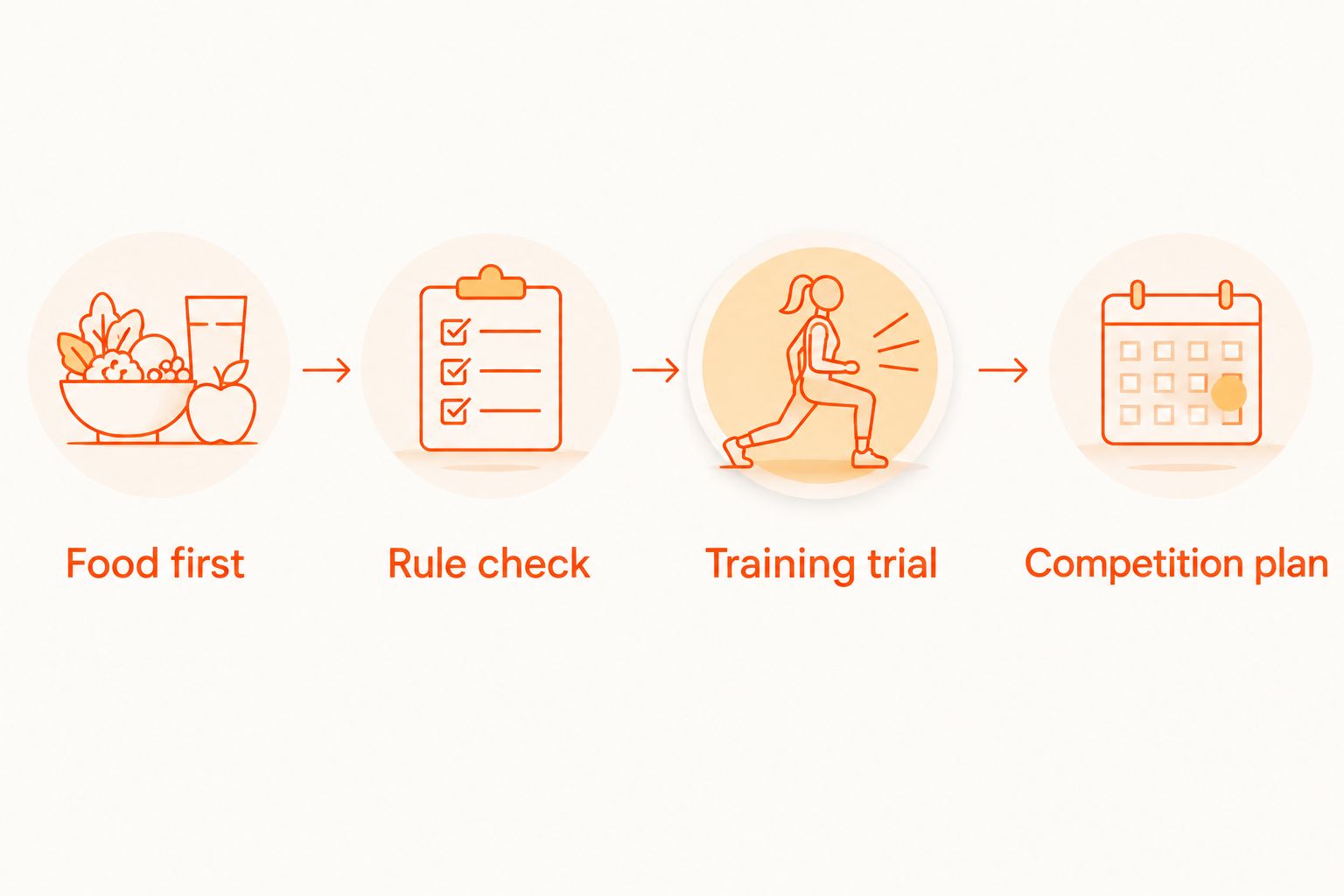
Build the routine before adding another ingredient
Use this sequence to decide what belongs in your wrestling supplement stack. It keeps the problem ahead of the product.
- Food first: Record your usual meals and identify missed meals, low protein intake, or inadequate training fuel.
- Rule check: Ask your athletic trainer or governing body how supplements are reviewed. Verify the exact product, not just the brand.
- Training trial: Introduce a change during normal training and assess stomach tolerance, sleep, and body-weight trends.
- Competition plan: Keep familiar foods, drinks, and approved products in your tournament routine.
Keep a written record of the product name, serving, and ingredients. That makes overlapping ingredients easier to spot and gives your athletic support team something specific to review. Change one part of the routine at a time so you can identify what causes a problem.
4. Beta-alanine add-on: best for experienced adult athletes
Beta-alanine supports the production of muscle carnosine, which contributes to buffering during high-intensity exercise. It is not an immediate energy boost. This makes it a possible add-on for an experienced adult wrestler—not a substitute for food, conditioning, or sleep.
The International Society of Sports Nutrition's beta-alanine position stand describes 4–6 grams per day for at least 2–4 weeks in adult research protocols. Those are category research amounts, not verified directions for any product listed here. Review suitability and the current label with a qualified professional before using it.
Ingredient identity matters: beetroot powder supplements are not interchangeable with beta-alanine, and a beetroot label alone does not establish nitrate content. Treat each ingredient as a separate decision rather than assuming all endurance products share the same mechanism or evidence.
Beta-alanine pros:
- Has a defined role distinct from protein and creatine.
- Does not require caffeine to perform its intended function.
- Suits planned training blocks better than last-minute experimentation.
Beta-alanine cons:
- Can cause tingling, particularly with larger single servings.
- Does not guarantee better wrestling performance for an individual athlete.
Best for: Experienced adult wrestlers who already have sound fueling habits and professional support for evaluating optional performance ingredients.
Verdict: Hold until the basics are consistent. In 2026, beta-alanine remains an optional addition, not a required foundation.
5. Targeted vitamin or mineral support: best for assessed gaps
A vitamin or mineral supplement addresses a specific nutritional need when assessment supports its use. A broad vitamin pack does not prove that you are deficient, and fatigue alone does not identify which nutrient is missing. Restricted diets and persistent symptoms deserve professional review.
Use dietary assessment and, when clinically appropriate, laboratory testing to guide the decision. Iron is a clear example of why guessing is a bad strategy: supplementation without appropriate assessment can be harmful. More is not automatically better with vitamins or minerals.
Targeted nutrient-support pros:
- Connects supplementation to an identified need.
- Allows review of the total intake from food and other products.
- Avoids treating every difficult practice as a vitamin problem.
Targeted nutrient-support cons:
- Does not correct inadequate overall energy intake.
- Overlapping products can push nutrient intake too high.
Best for: Wrestlers with a nutrient gap assessed by a clinician or sports dietitian.
Verdict: Wait for assessment. Do not buy a vitamin stack as a substitute for investigating persistent fatigue or an overly restrictive diet.
What to leave out of a wrestling stack
Skip products marketed around hormone manipulation, rapid weight loss, or steroid-like effects. A product's legal sale does not establish its suitability under competition rules. Do not interpret bodybuilding-oriented marketing as evidence of safety for wrestlers.
Avoid stacking energy drinks, stimulant pre-workouts, and fat burners. Overlapping ingredients make total exposure harder to track, and additional stimulation does not repair poor sleep or inadequate food intake. A match-day routine should not depend on escalating stimulants.
For wrestlers under 18, do not copy the adult amounts above. Involve a parent or guardian and a qualified sports clinician or dietitian. Medical conditions, medications, pregnancy, and persistent symptoms also require individual guidance before supplementation.
How these stacks are ranked
The ranking prioritizes a clear purpose, weight-class fit, ingredient transparency, competition screening, tolerance, and minimal overlap. Protein and creatine rank first for adult strength-focused training because they address separate needs; tournament fuel ranks differently when the competition schedule is the problem.
These are category-level recommendations, not a claim of product testing or wrestling-specific certification. Tigerfitness product candidates require the same label and eligibility checks as any other supplement.
Which supplement stack for wrestlers should you choose?
Choose protein as needed plus creatine monohydrate for adult off-season strength development. If food already covers protein, remove the powder. If an approaching weigh-in makes a new creatine routine impractical, delay experimentation and review the plan with your support team.
For competition days, prioritize familiar carbohydrate foods and an individualized hydration plan. Add beta-alanine or targeted nutrients only when a clear reason exists. The best 2026 stack is the smallest one that addresses your actual training needs.
FAQ
What's the best supplement stack for wrestlers?
For healthy adult wrestlers focused on strength development, protein as needed plus creatine monohydrate is a practical default. Tournament fueling and weight-class planning still require separate attention.
Should wrestlers take creatine before a weigh-in?
An important weigh-in is not the time to start an unfamiliar creatine routine. Creatine can increase body mass through greater muscle water content, so assess its effects during a stable training period with qualified guidance.
Do wrestlers need protein powder every day?
No, wrestlers do not need protein powder when food supplies enough protein. Use powder to cover a dietary gap rather than automatically adding it on top of adequate meals.
Are BCAAs necessary if I already eat enough protein?
BCAAs are not a default requirement when you consume enough complete protein. They supply only part of the essential amino acid profile and do not replace adequate food or complete protein.
What's the best supplement routine for a teenage wrestler?
A teenage wrestler's routine should start with adequate food, hydration, and sleep under qualified guidance. Do not copy adult supplement amounts or add performance products without involving a parent or guardian and a sports-health professional.
Can supplements make wrestling weight cuts safe?
No, supplements do not make aggressive weight cutting or intentional dehydration safe. Plan weight management with qualified sports-health support rather than relying on fat burners, diuretics, or electrolyte products.
Does third-party testing guarantee I can pass a drug test?
No, third-party sport certification reduces risk but does not guarantee eligibility or a negative drug test. Verify the exact product and current competition rules with your athletic support team.
One last thing
A complete protein already supplies branched-chain amino acids. Before adding another recovery tub, check whether your current meals and protein supplement already cover that role. Removing an unnecessary ingredient can make your routine easier to assess without taking away needed nutrition.
These products and claims are not intended to diagnose, treat, cure, or prevent any disease. This guide provides general education, not individualized medical advice.
Leave a comment