






BEST SUPPLEMENTS FOR BODY RECOMPOSITION
Body Recomposition Meal Prep Ideas: 7-Day Plan
Table of Contents
- Why Body Recomposition Meal Prep Beats Eating Out
- Protein Intake for Body Recomposition: The Number That Matters
- High Protein Meal Prep Recipes for Recomposition
- Carbs, Fats, and Vegetables: Building the Rest of the Plate
- A 7-Day Body Recomposition Meal Prep Plan
- Best Supplements for Body Recomposition (And What They Actually Do)
- Budget-Friendly and Equipment-Free Meal Prep Options
- Frequently Asked Questions
Last Updated: September 27, 2026
Why Body Recomposition Meal Prep Beats Eating Out
Body recomposition meal prep means cooking and portioning your own food in advance so you control protein, carbs, and calories instead of guessing. If you're chasing fat loss and lean muscle at once, you can't roll the dice on restaurant food three times a day.
Key Takeaway Body recomposition requires eating at or near caloric maintenance with high protein. Meal prep is the only reliable way to hit those numbers day after day without guessing.
Protein Intake for Body Recomposition: The Number That Matters
Protein decides whether recomposition works or falls apart.
The recommended intake for building lean muscle is 1.6 to 2.2 grams of protein per kilogram of body weight, according to Healthy Fresh Meals nutritional guidelines for muscle gain. For a 200-pound guy, that's roughly 145 to 200 grams per day. Most lifters eat half that and wonder why their physique is stuck.
How to Split Your Protein Across the Day
Spread it out. Four to five feedings of 40 to 50 grams each beats two massive doses, because muscle protein synthesis responds to repeated stimulation. A standard daily target in a 2,200-calorie recomposition plan is around 150 grams of protein, per ProMealPlan's dietitian-crafted template. Split that into five meals of 30 grams and you're set.
High Protein Meal Prep Recipes for Recomposition
High protein meal prep recipes for recomposition follow one rule: lean protein first, then build the plate around it. Chicken, 93% lean beef, turkey, white fish, eggs, and whey cover almost everyone. Cook in bulk, season aggressively, and portion by weight.
Breakfast: The Meal Most Lifters Skip
Breakfast is the meal most lifters skip, and it costs them. You wake up catabolic after eight hours without food, so skipping it puts you behind on protein before the day starts.
Lunch and Dinner: Component-Based Batch Cooking
Component-based batch cooking is the practice of batching proteins, carbs, and vegetables separately instead of pre-assembling full meals, a method Julie Lohre's recomposition guidance recommends for flexible macro adjustments. This is the single best system I've used. Cook three pounds of chicken, a tray of roasted potatoes, and a pile of greens. Then assemble meals in different ratios depending on whether it's a training day or a rest day.
Pro Tip Weigh your protein after cooking, not before. A raw 8-ounce chicken breast loses roughly 25% of its weight during cooking, so a "6-ounce" cooked portion is actually closer to 8 ounces raw. Guessing here is how people accidentally eat 40 extra grams of protein and blow their calorie target.
Carbs, Fats, and Vegetables: Building the Rest of the Plate
Carbohydrates fuel muscle growth, and cutting them too hard is the most common recomposition mistake I see. The recommended range is 3.5 to 5 grams of carbs per kilogram of body weight, per Healthy Fresh Meals muscle gain guidelines. For a 200-pound lifter, that's 320 to 450 grams on training days.
Carb Prep: Cooked Weights and Portion Math
Dry rice roughly triples in weight when cooked. One cup dry jasmine rice (about 180 g) yields about 3 cups cooked (about 540 g). A 1-cup cooked portion of rice is roughly 45 g of carbs. A medium russet potato (about 170 g raw) is roughly 35 g. A cup of cooked oats is about 55 g.
Fat Prep: Portion It, Don't Eyeball It
Healthy fats fill the remainder of your calories, roughly 0.5 to 1 gram per kilogram of body weight, 45 to 90 g per day for a 200-pound lifter. Fat is calorie-dense and easy to overshoot: one tablespoon of olive oil is 14 g of fat and 120 calories, a single avocado is roughly 240 calories, a handful of almonds is 160.
Vegetable Prep: The Volume Play
Vegetables are your volume play, fiber, micronutrients, and nutrient density for almost no calories. Two cups of roasted broccoli is about 60 calories and 5 g of fiber. Cheapest satiety you can buy.
- Cut uniform. Broccoli florets, pepper strips, and zucchini half-moons all need to be roughly the same size so they cook evenly.
- Dry them first. Pat vegetables dry before tossing in oil. Wet vegetables steam instead of roast and turn to mush.
- 425°F, single layer. Crowding the pan steams them. Use two sheet pans if you have to.
- 20-25 minutes, flip once at the 12-minute mark.
- Season after roasting, not before. Salt draws out moisture and prevents browning.
| Macro | Target Per kg Body Weight | Cooked Portion Reference | Role in Recomposition |
|---|---|---|---|
| Protein | 1.6-2.2 g | 8 oz cooked chicken ≈ 70 g protein | Protein synthesis, satiety |
| Carbs | 3.5-5 g | 1 cup cooked rice ≈ 45 g carbs | Fuel, insulin sensitivity |
| Fats | 0.5-1 g | 1 tbsp olive oil ≈ 14 g fat | Hormone production |
| Fiber | 25-38 g daily | 2 cups roasted broccoli ≈ 5 g fiber | Satiety, digestion |
Pro Tip Buy frozen vegetables when fresh is expensive or out of season. They're picked and flash-frozen at peak ripeness, so the micronutrient content is often equal to or better than fresh produce that's been sitting on a truck for a week. They also roast fine straight from frozen, just add 5-7 minutes to the cook time.
A 7-Day Body Recomposition Meal Prep Plan
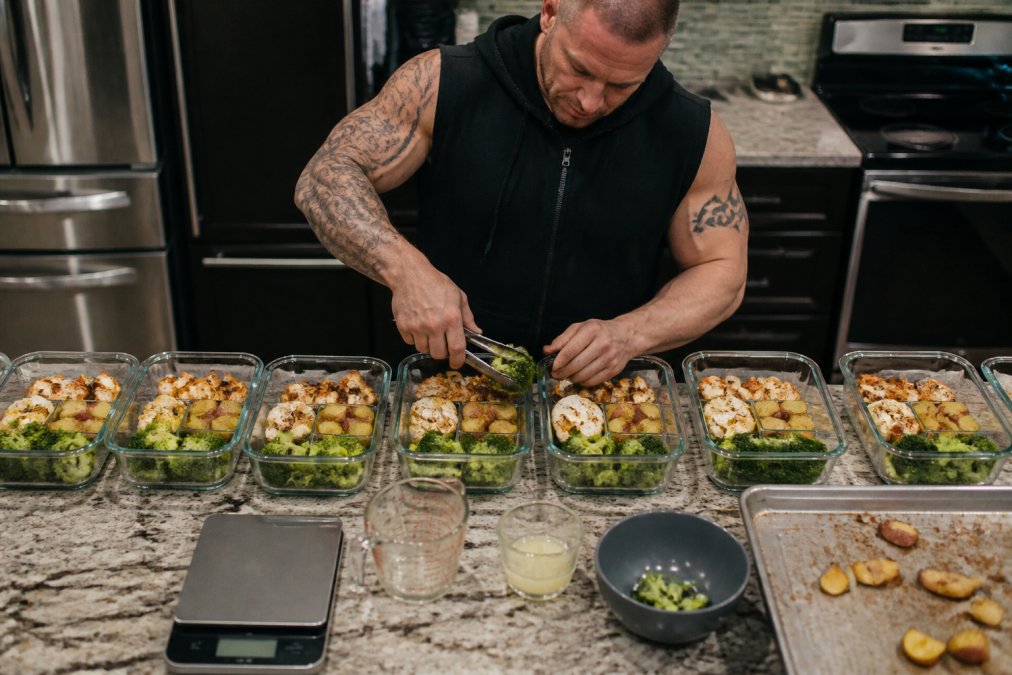
A 7-day body recomposition meal prep plan runs on the component system: batch three proteins, two carb sources, and two vegetable blends on Sunday, then assemble daily to match training load. Here's the structure for a 200-pound lifter eating around 2,200 calories and 180 grams of protein per day.
The Sunday Batch (Feeds the Whole Week)
- Protein: 5 lbs raw chicken breast (yields ~3.75 lbs cooked), 3 lbs 93% lean ground beef, 2 dozen whole eggs hard-boiled
- Carbs: 4 cups dry jasmine rice (yields ~12 cups cooked), 4 lbs russet potatoes roasted in 2 tbsp olive oil
- Vegetables: 2 sheet pans of mixed broccoli, bell peppers, and zucchini roasted at 425°F for 20-25 minutes
- Fats: Portion out 1 oz almonds per day (about 23 almonds), plus 1 tbsp olive oil reserved per training day
Total cook time: roughly 90 minutes if you run the oven and rice cooker simultaneously. Store proteins, carbs, and vegetables separately and assemble daily.
Daily Macro Targets
| Day | Calories | Protein | Carbs | Fat | Training Load |
|---|---|---|---|---|---|
| Monday | 2,300 | 185 g | 260 g | 55 g | Heavy lower |
| Tuesday | 2,300 | 185 g | 260 g | 55 g | Heavy upper |
| Wednesday | 2,000 | 185 g | 175 g | 60 g | Rest |
| Thursday | 2,300 | 185 g | 260 g | 55 g | Moderate |
| Friday | 2,300 | 185 g | 260 g | 55 g | Heavy full body |
| Saturday | 2,100 | 185 g | 200 g | 60 g | Light cardio |
| Sunday | 2,200 | 185 g | 220 g | 60 g | Rest / re-batch |
Sample Training Day (Monday)
- Meal 1 (7 AM): 3 whole eggs + 1 cup egg whites scrambled, 1 cup cooked oats, 1 cup blueberries
- Meal 2 (11 AM): 8 oz cooked chicken breast, 1.5 cups cooked rice, 2 cups roasted vegetables
- Meal 3 (3 PM, pre-workout): 6 oz cooked 93% lean beef, 1 cup cooked rice, 1 cup vegetables
- Meal 4 (post-workout): 2 scoops whey protein in water, 1 large banana
- Meal 5 (8 PM): 8 oz cooked chicken breast, 1 cup roasted potatoes, large salad with 1 tbsp olive oil
That lands near 185 g protein, 260 g carbs, and 55 g fat. Adjust by 1 oz protein and 1/2 cup carbs to hit your numbers.
Sample Rest Day (Wednesday)
- Meal 1: 3 whole eggs, 1/2 cup oats, 1 cup egg whites
- Meal 2: 8 oz chicken, 1/2 cup rice, 3 cups vegetables
- Meal 3: 6 oz lean beef, 2 cups vegetables, 1/2 avocado
- Meal 4: 2 scoops whey, 1 oz almonds
- Meal 5: 8 oz chicken, large salad, 1 tbsp olive oil
Protein stays locked at 185 g. Carbs drop by roughly 85 g. Fat ticks up slightly so calories don't crash. Protein is the constant, carbs are the lever.
The Refeed Rule
One day per week, your hardest training day, push carbs to 300-350 g while keeping protein and fat the same. This isn't a cheat day; it's a strategic glycogen reload that supports training performance and leptin signaling. One refeed every 7-10 days works well during recomposition.
Key Takeaway Protein is fixed every single day. Carbs flex with training load. Fat fills the gap. If you only remember one thing from this plan, remember that hierarchy.
Best Supplements for Body Recomposition (And What They Actually Do)
The best supplements for body recomposition support the process, they don't replace it. No pill out-trains a bad diet. But a few earn their place.
Watch Out Don't stack multiple stimulant-based fat burners while running a recomposition deficit. Elevated cortisol from chronic stimulant use works against the hormonal environment you're trying to build. If you're already lean and dieting hard, adding more stimulants is the fastest way to stall progress and wreck your sleep.
Budget-Friendly and Equipment-Free Meal Prep Options
You don't need a $400 meal prep system or a commercial kitchen. A college student with a microwave and a rice cooker can run this plan.
Best For Budget-conscious lifters and anyone without full kitchen access. Rotisserie chicken plus pre-cooked rice pouches gets you a full recomposition meal for under $5 with no cooking at all.
Frequently Asked Questions
What foods should I eat for body recomposition?
Build every meal around lean protein first: chicken breast, lean beef, fish, eggs, Greek yogurt, or whey. Research recommends 1.6 to 2.2 grams of protein per kilogram of body weight for building lean muscle. Add complex carbohydrates like potatoes, oats, and rice at 3.5 to 5 grams per kilogram, plus vegetables for fiber and micronutrients. A standard 2,200-calorie recomposition plan often lands near 150 grams of protein per day. Keep ingredients unprocessed and consistent so you can actually track what you are eating.
How do you calculate macros for body recomposition?
Start with protein: 1.6 to 2.2 grams per kilogram of body weight, per nutritional guidelines for muscle gain. Set carbohydrates at 3.5 to 5 grams per kilogram to fuel training. Fill the remaining calories with healthy fats. Unlike a traditional bulk, body recomposition usually keeps you at or near maintenance calories rather than a 10 to 20 percent surplus, because you are trying to lose fat and build muscle at the same time. Weigh yourself weekly and adjust carbs up or down based on the scale and your lifts.
Can you achieve body recomposition without counting calories?
You can get close if you eat the same high-protein meals on repeat, because consistency does most of the tracking for you. That is exactly why component-based batch cooking works: you prep proteins, carbs, and vegetables separately, then adjust portion sizes by eye. The catch is that without numbers, you are guessing, and guessing is how most people stall. Counting for two to three weeks teaches you what a proper portion looks like, then you can loosen up. Dietary adherence matters more than perfect math.
Is it possible to build muscle and lose fat simultaneously?
Yes, and body recomposition meal prep is built for it. The catch is that it demands high protein, hard training, and staying at or near maintenance calories rather than a big surplus. Research from the National Institutes of Health shows home meal preparation leads to higher quality dietary intake than eating out, which is the foundation of any recomposition plan. Results are slower than a dedicated bulk or cut, but you skip the fat gain and the rebound. Give it 12 to 16 weeks before judging progress.
Leave a comment