







Can Testosterone Boosters Cause Acne? 2026 Answer
Yes, testosterone boosters can cause acne, and it comes down to biology rather than bad luck: any ingredient that raises androgen activity tends to raise sebum (oil) production right along with it. Not every testosterone booster carries the same risk in 2026 — the ingredient list decides that, not the label copy.
TL;DR
- Testosterone boosters can cause acne when they contain DHEA or other androgen precursors that raise sebum output.
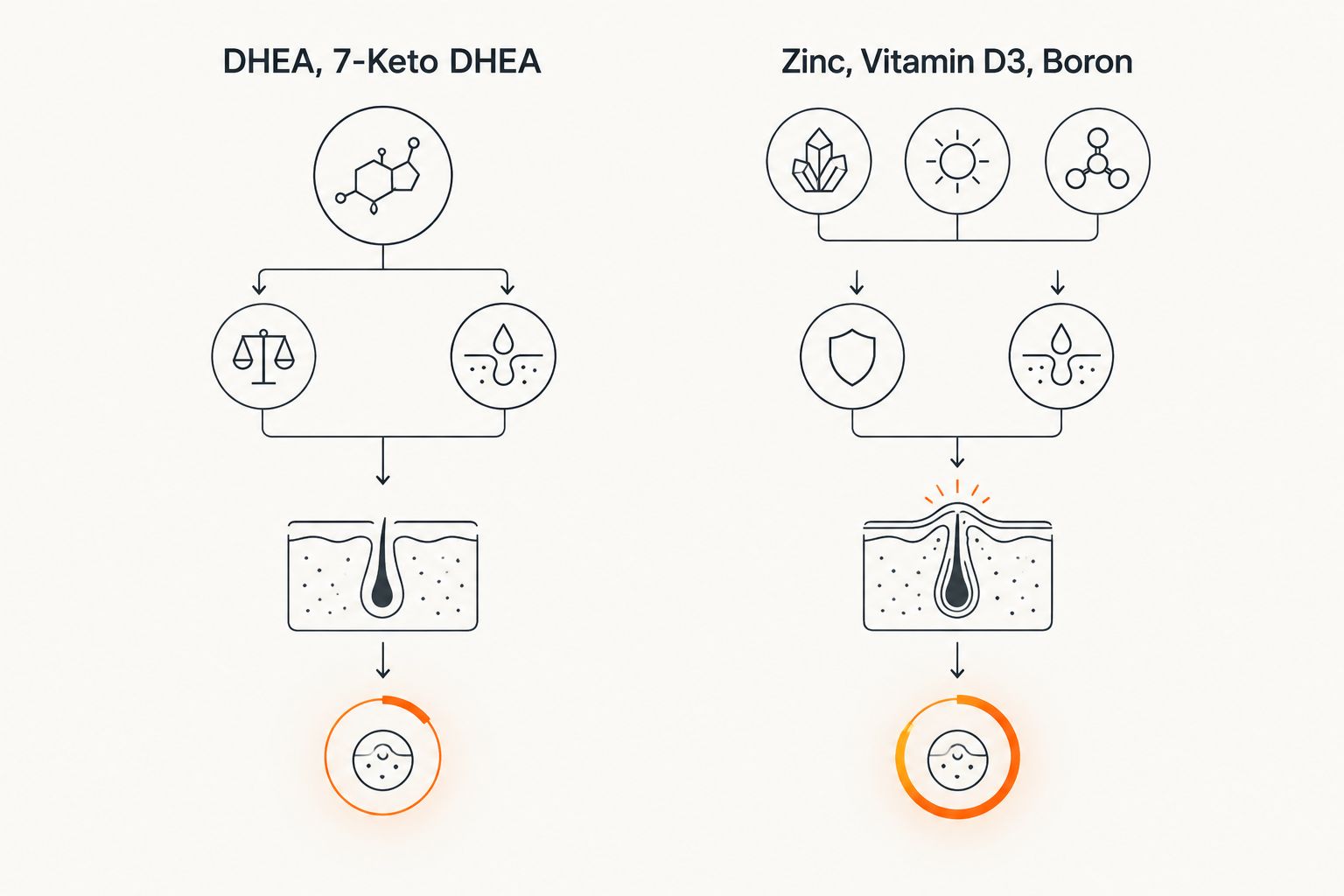
- DHEA-based formulas like Hi-Tech Pharma Testosterone 21 carry more acne risk than mineral-based boosters using zinc or vitamin D.
- Breakouts from a testosterone booster usually show up on the back, chest, and shoulders before the face.
- Skin typically clears once androgen levels return to baseline after you stop the product.
- Comparing ingredient dosages before buying is the fastest way to gauge acne risk in 2026.
Why this matters
Acne isn't printed on the label, but it's one of the most common questions lifters ask before starting a testosterone booster. Androgens — testosterone, DHT, and precursors like DHEA — bind to receptors in your sebaceous glands and tell them to produce more oil. More oil plus clogged pores equals breakouts, the same chemistry behind teenage acne and the truncal acne seen in bodybuilding circles.
If you're comparing options before you buy, testosterone boosters ranked by ingredient dosage in 2026 is a useful starting point before deciding which formula fits your skin tolerance.
Can testosterone boosters cause acne?
Testosterone boosters can cause acne when they contain ingredients that raise androgen or DHT activity, and the risk scales with how strong that ingredient is. A zinc-and-vitamin-D formula behaves nothing like a DHEA-based product once it hits your skin.
| Ingredient category | Common examples | Acne risk in 2026 | Verdict |
|---|---|---|---|
| DHEA / androgen precursors | Hi-Tech Pharma Testosterone 21 | Higher — converts into stronger androgens that spike sebum output | Watch your skin closely |
| Herbal test support | tribulus, fenugreek, D-aspartic acid | Low to moderate | Reasonable starting point |
| Vitamin/mineral-based | zinc, vitamin D3, boron | Lowest — no direct androgen conversion | Safer for acne-prone skin |
| Estrogen-control add-ons | ingredients found in PureBlood by Cleanform Nutrition | Situational — manages estrogen, doesn't offset androgen-driven oil | Pair, don't rely on alone |
Which testosterone booster ingredients are most likely to trigger breakouts
- DHEA and 7-Keto DHEA — direct androgen precursors and the biggest driver of oil-gland activity in most testosterone boosters. Skip if you already deal with cystic acne.
- Fenugreek and tribulus terrestris — mild androgen-support herbs with a lower reported skin impact. Hold as a reasonable middle ground.
- Boron and zinc — support testosterone metabolism without pushing raw androgen levels sharply higher. Buy if breakouts are a dealbreaker for you.
- D-aspartic acid — works on hormone signaling rather than androgen precursors directly, generally lower skin impact. Hold.
- Multi-ingredient formulas like Blackstone Labs Apex Male combine several of these categories, so read the label instead of assuming one ingredient dictates the whole formula.
How to lower your breakout risk while taking a testosterone booster
- Shower right after training — sweat sitting on skin while androgens are active makes clogged pores worse.
- Avoid stacking two DHEA-based products at once; doubling androgen precursors compounds the oil-gland signal.
- Use a non-comedogenic moisturizer and sunscreen instead of heavy, pore-clogging formulas.
- Keep dairy and high-glycemic foods in check — both are linked to acne flare-ups independent of any supplement.
- Consider hormone-support products like PureBlood by Cleanform Nutrition, which some lifters run alongside stronger boosters to manage estrogen. It doesn't erase androgen-driven acne, but it addresses a different part of the hormone picture.
Testosterone support products

Formula designed to help men support healthy testosterone levels.
$49.95

Why testosterone booster acne varies from person to person
- Genetic androgen sensitivity — some sebaceous glands respond harder to the same DHT signal than others.
- Dose and stacking — running a testosterone booster alongside another androgen-based product multiplies total androgen exposure.
- Skin type — naturally oily skin has more sebaceous gland density to activate in the first place.
- Diet — high-dairy and high-glycemic diets independently raise acne risk, then stack on top of a booster's effect.
- Hygiene and sweat retention — tight workout gear plus sweat plus active androgens is a reliable breakout combo.
- Hydration — dehydrated skin can overproduce oil to compensate, adding another layer to the same mechanism.
Does creatine cause acne like testosterone boosters do?
Creatine itself has no established link to acne since it doesn't raise androgen levels the way a DHEA-based testosterone booster does. The mix-up usually happens because lifters stack creatine with a test booster or pre-workout that does affect hormones.
Do pre-workouts cause breakouts too?
Pre-workouts can cause breakouts, but usually through sweat and caffeine-driven dehydration rather than androgen activity. That's a different mechanism than the DHEA-driven acne some testosterone boosters cause, though the two can overlap when someone stacks both categories.
Will your skin clear up after you stop taking a testosterone booster?
Skin usually clears once androgen levels return to baseline after stopping a testosterone booster, mirroring how hormonal acne fades as hormone swings settle. How long that takes depends on how strong the ingredient stack was and how long you ran it.
FAQ
Can testosterone boosters cause acne in 2026?
Yes, testosterone boosters can cause acne in 2026 when they contain DHEA or other androgen precursors that raise sebum production. Mineral-based formulas using zinc and vitamin D carry a lower reported skin impact.
What's the best testosterone booster for someone worried about acne?
A vitamin and mineral-based formula built around zinc, vitamin D3, and boron is the safer starting point for acne-prone lifters. Save DHEA-based options for later once you know how your skin responds.
Is testosterone booster acne the same as steroid acne?
Testosterone booster acne and steroid acne share the same androgen-driven mechanism, just at different intensities. Steroids push androgen levels far higher, so the breakouts tend to be more severe and show up faster.
Does whey protein cause acne the same way testosterone boosters do?
Whey protein acne runs on a different pathway tied to insulin-like growth factor rather than androgen receptors. The two can still overlap if you're running both a testosterone booster and a high-dose protein regimen.
How long does testosterone booster acne take to clear up?
Breakouts typically fade once androgen levels normalize after stopping the product, similar to how hormonal acne settles once hormone swings level out. There's no fixed timeline since it depends on the ingredient dose and how long you ran it.
Do natural testosterone boosters cause less acne than prohormones?
Natural testosterone boosters generally carry a lower acne risk than prohormones because they don't introduce a synthetic androgen source. Prohormones push androgen activity harder, so breakouts tend to be more noticeable.
Where does testosterone booster acne usually show up first?
Testosterone booster acne usually shows up on the back, chest, and shoulders before the face, since those areas carry a higher density of androgen-sensitive sebaceous glands. That's the same truncal pattern seen with steroid-related acne.
One last thing
Most lifters check their face in the mirror and assume their skin is fine — meanwhile their back is breaking out mid-cycle because androgen-sensitive sebaceous glands are denser on the back, chest, and shoulders than on the face. If your face looks clear but your back tells a different story, that's the ingredient working on your hormones, not a skincare routine failing you.
Leave a comment