







Can Whey Protein Cause Acne? Yes for Some (2026)
Yes. Whey protein can worsen acne in some acne-prone people in 2026, but current evidence does not prove that whey causes acne in everyone. The strongest human evidence consists of small case reports, while the proposed explanation centers on whey’s insulin response, insulin-like growth factor 1 signaling, dairy exposure, and individual susceptibility. If your breakouts began after adding whey, test the connection systematically rather than assuming every protein powder will affect your skin.
TL;DR
- Can whey protein cause acne? Yes, it can worsen breakouts in susceptible people, but the evidence remains limited.
- Whey isolate removes much of the lactose, but it remains a dairy protein and can still coincide with acne.
- A controlled whey-free trial is more useful than changing protein, skincare, diet, and supplements at the same time.
- Tiger Fitness is best for comparing whey and non-dairy protein formats; protein products do not treat acne.
Why this matters
If whey is new to your routine, identify the exact form and serving pattern; this whey protein powder for beginners guide explains the basic category. Acne often changes alongside training volume, sweat, diet, sleep, skincare, and supplement use, so timing alone does not prove that whey is responsible.
A historical 2012 Cutis case series described acne flares in 5 teenage male athletes using whey protein. That report matters because symptoms improved after whey was stopped in the reported cases, but it had no control group and cannot establish how often the reaction occurs. Large, controlled whey-specific studies are still missing in 2026.
The American Academy of Dermatology treats diet as a possible acne influence rather than a universal cause. Its public guidance discusses associations involving cow’s milk and high-glycemic foods, while also emphasizing that acne needs proper care. Whey comes from milk, but research on milk consumption cannot automatically be applied to every whey powder.
The Tiger Fitness protein store gives lifters access to dairy and non-dairy formats, but product selection is only one part of this question. Persistent, painful, cystic, or scarring acne needs a dermatologist rather than another supplement change.
Can whey protein cause acne?
Whey protein can aggravate acne in a susceptible person, but the evidence does not support calling it a universal acne cause in 2026. The most useful evidence combines small clinical reports, established acne biology, and a repeatable pattern in which breakouts follow whey exposure and improve when that exposure ends.
| Evidence | What it supports | What it cannot prove |
|---|---|---|
| 2012 Cutis case series involving 5 teenage athletes | Whey use and acne flares can occur together | How common the reaction is |
| Whey’s insulin-stimulating effect | A plausible link to acne-related signaling | That an insulin response will cause a breakout |
| Research on milk and acne | Dairy exposure can matter for some people | That all whey products have the same effect |
| Removal and reintroduction pattern | A personal trigger can be identified | That whey explains acne in the wider population |
A case report is an early warning signal, not a prevalence estimate. It tells you the reaction is possible. It does not tell you that whey users generally develop acne or that every breakout after a shake came from the shake.
How could whey protein affect acne?
Acne develops when follicles become blocked by oil and dead skin cells, followed by inflammation. Hormones, genetics, medications, cosmetics, friction, and diet can all influence that process. Whey is relevant because it is rapidly digested and produces an insulin response.
Insulin and insulin-like growth factor 1 participate in signaling pathways connected with oil production and skin-cell growth. Those pathways are active in acne, which gives researchers a plausible explanation for whey-related flares. A plausible mechanism is not the same as proof: a post-workout insulin response does not guarantee acne, and many people use whey without a visible skin change.
Whey is also a milk-derived ingredient. A person who notices breakouts after milk, whey shakes, and other dairy-heavy foods has a different pattern from someone who reacts only to one flavored powder. The first pattern points toward dairy exposure; the second demands a closer look at the full ingredient label and other changes made at the same time.
Whey concentrate: more milk components remain
Whey concentrate retains more lactose, fat, and other milk components than a highly filtered isolate. That makes concentrate the first format to remove when you suspect lactose or broader dairy sensitivity. Its advantage is that it remains a straightforward protein source for people who tolerate dairy; its disadvantage is that it gives you more milk-related variables to investigate.
Do not assume the word concentrate proves the cause. Check the complete formula, serving pattern, and foods mixed into the shake. Verdict: hold whey concentrate during a controlled trigger test, then review the result.
Whey isolate: less lactose, but still dairy
Whey isolate is filtered to remove more lactose and fat than concentrate. That makes it a practical comparison for someone who tolerates milk proteins but reacts poorly to lactose. It does not become dairy-free, and filtration does not remove whey’s rapid digestion or insulin-stimulating character.
A page such as MTS Nutrition Machine Whey Protein should be evaluated from its current ingredient panel rather than from the product category alone. Formulas can combine protein types, flavor systems, sweeteners, and other ingredients. Verdict: try isolate only when you want to separate lactose exposure from whey exposure; skip it during a fully dairy-free test.
Plant protein: the clearest dairy-free comparison
Rice, pea, soy, and blended plant proteins remove whey and dairy from the experiment. Their main advantage is clarity: if your skin improves after replacing whey with a non-dairy protein while the rest of your routine stays stable, dairy or whey becomes a stronger suspect. Their drawback is that flavor, texture, digestion, and amino-acid profiles differ by source and formula.
Plant protein is not an acne treatment. It is a replacement protein format that can help isolate a suspected dietary trigger while you maintain your nutrition plan. Verdict: use a clearly labeled non-dairy protein for the cleanest whey-elimination test.
| Protein format | Main advantage during testing | Main limitation | Best for |
|---|---|---|---|
| Whey concentrate | Keeps your normal routine familiar | Leaves several milk components in place | Lifters without a dairy-related pattern |
| Whey isolate | Reduces lactose compared with concentrate | Still contains whey and milk-derived protein | Testing lactose tolerance separately |
| Plant protein | Removes whey and dairy from the comparison | Changes more than one nutritional variable | Testing a suspected whey or dairy trigger |
Why whey-related breakouts vary
Two people can use the same powder and have different skin outcomes. These factors explain why:
- Baseline acne: Existing oily, inflamed, or acne-prone skin makes a new flare easier to notice.
- Serving frequency: Repeated daily exposure creates a different test than an occasional shake, even though no universal acne threshold exists.
- Protein format: Concentrate, isolate, milk-protein blends, and plant proteins do not contain the same dairy components.
- Complete diet: Milk, high-glycemic foods, total calorie intake, and whey can change together during a mass-gain phase.
- Other products: New pre-workouts, vitamins, medications, hormones, skincare products, or performance-enhancing substances can confound the timeline.
- Training conditions: Sweat does not directly cause acne, but tight clothing, unwashed gear, friction, and delayed showering can irritate acne-prone areas.
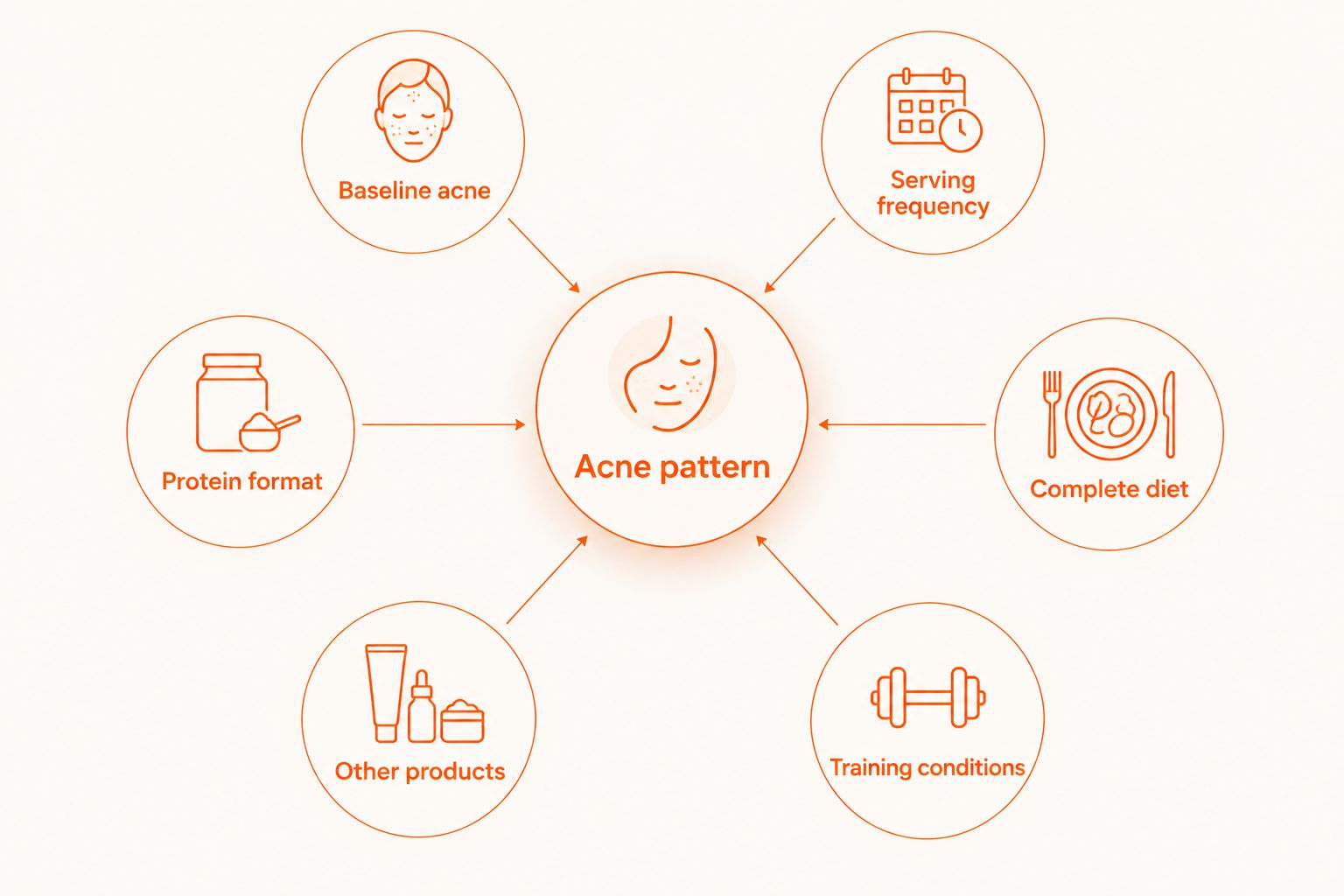
The key is pattern consistency. One breakout after one shake is weak evidence. A flare that repeatedly begins during whey use, improves without it, and returns after reintroduction is stronger personal evidence, although a dermatologist remains the right person to diagnose the skin condition.
How to test whether whey is affecting your skin
Use a controlled process in 2026. Do not change your protein powder, face wash, moisturizer, training split, and diet on the same day; that leaves you with no idea which change mattered.
- Record a 14-day baseline. Write down your whey product, serving frequency, other dairy intake, skincare routine, medications, supplements, and breakout locations. Take comparable photos every 7 days under the same lighting.
- Remove whey for 6 weeks. Keep the rest of your routine as stable as practical. Acne does not reset overnight, so a multiweek window is more useful than judging the result after 2 days.
- Match your protein intake. Replace the removed shake with food or a non-dairy protein that fits your diet. The goal is to test whey, not accidentally cut total calories and several foods at once.
- Review the pattern. Compare lesion frequency, inflammation, and affected areas with the baseline. Improvement strengthens the case for a dietary trigger but does not identify the exact mechanism.
- Consider reintroduction only for mild breakouts. If you want stronger personal evidence, reintroduce the same whey product without changing other variables. Do not deliberately repeat an exposure that caused painful, cystic, widespread, or scarring acne.
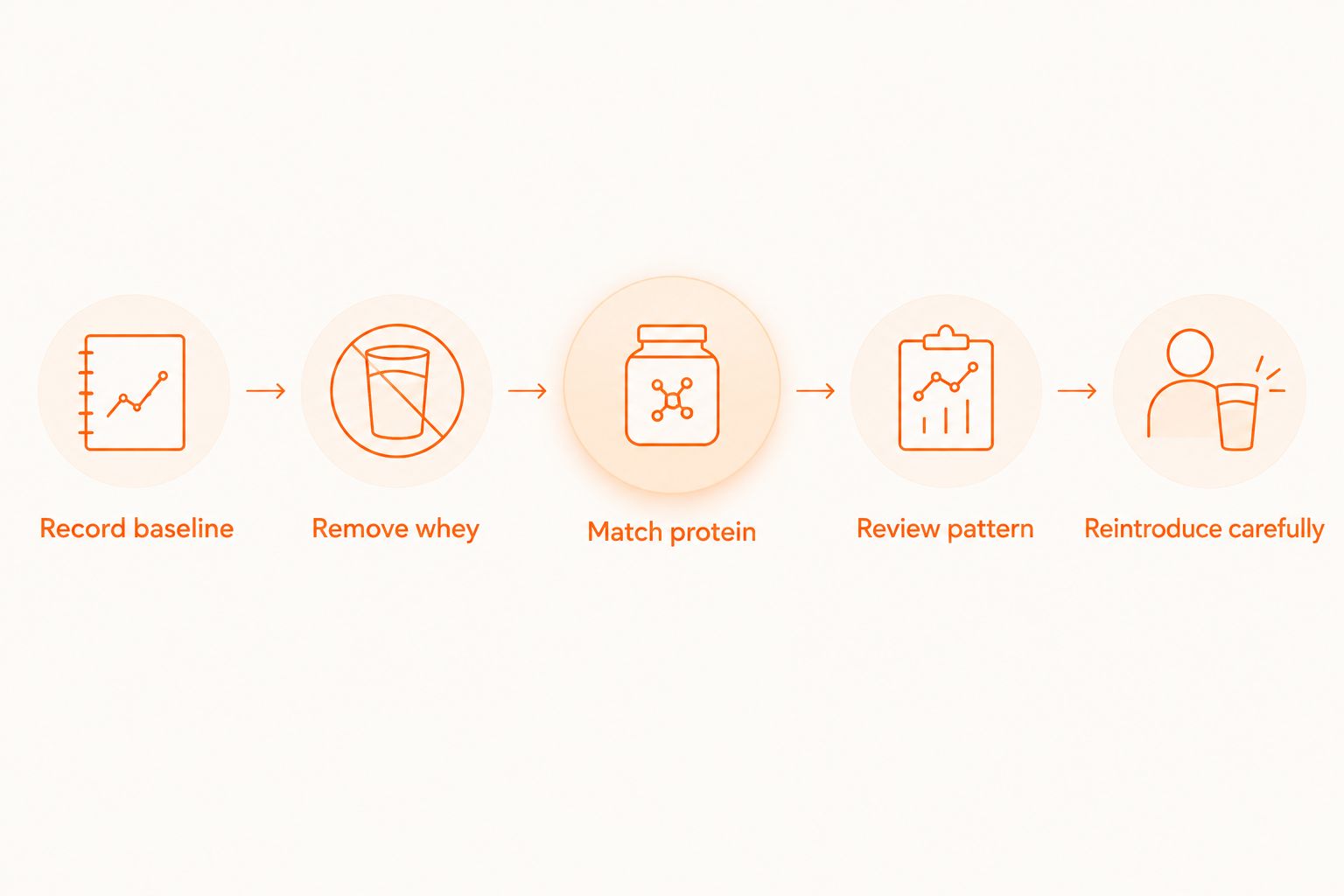
This process is a nutrition test, not medical treatment. See a dermatologist when acne is painful, deep, rapidly worsening, leaving dark marks or scars, or affecting your confidence. Do not stop prescribed nutrition, medication, or medically necessary supplements without speaking with the clinician managing them.
Protein formats to compare at Tiger Fitness
Tiger Fitness is best for lifters comparing whey isolate with a non-dairy protein while testing a suspected dietary trigger. The benefit is access to both formats in one supplement store. The limitation is that no retailer or protein label can determine whether whey is causing your acne; that requires a controlled pattern review and, when needed, medical care.
Protein formats to compare

Whey protein isolate designed for lean muscle recovery and performance.
$64.95

Plant-based sprouted brown rice protein designed to support muscle recovery and performance.
$24.26
Neither product is intended to diagnose, treat, cure, or prevent acne or any disease. Read the current ingredient panel and allergen information before choosing a replacement.
Does whey protein isolate cause acne too?
Yes, whey protein isolate can still coincide with acne because it remains whey and still produces an insulin response. Isolate removes more lactose and fat than concentrate, so it helps test whether lactose is the issue, but it cannot rule out a response to whey itself.
How long after stopping whey will acne improve?
There is no guaranteed clearance time because acne severity, lesion type, skincare, medication, and other triggers differ. Use a consistent 6-week observation window in 2026, document the result, and seek dermatology care sooner for painful, cystic, or scarring acne.
Is plant protein better for acne-prone skin?
Plant protein is the better comparison when you need to remove whey and dairy from your diet test. It is not automatically better for every person or an acne cure; check the full formula because sweeteners, flavors, and other ingredients still vary.
FAQ
Can whey protein cause acne in 2026?
Yes, whey protein can worsen acne in some susceptible people, but the available evidence does not show that it causes acne in every user. Small case reports and a plausible biological pathway support testing the connection individually.
Can whey protein cause back and chest acne?
Whey-related flares can appear on the face, back, or chest because acne can affect any area with active oil glands. Friction, tight workout clothing, and unwashed gear can aggravate those areas.
Does whey isolate prevent protein-related breakouts?
No, whey isolate does not guarantee clear skin because it remains a milk-derived whey protein. It removes more lactose and fat than concentrate, which makes it useful for testing lactose separately.
Should I stop protein powder if I develop acne?
Stop the suspected whey product temporarily rather than assuming every protein powder is a problem. Keep other variables stable and use food or a non-dairy protein to maintain your nutrition plan.
Can sweeteners in protein powder cause acne?
A breakout linked to one formula does not prove that its sweetener is responsible. Compare complete ingredient lists and avoid changing several products at once.
Does creatine cause acne like whey protein?
Creatine is not a dairy protein and does not share whey’s lactose exposure. If whey and creatine started together, test one variable at a time instead of blaming the entire supplement stack.
When should acne be checked by a dermatologist?
See a dermatologist when acne is deep, painful, rapidly worsening, widespread, or leaving scars or persistent dark marks. Early treatment helps reduce the risk of lasting skin changes.
Can women get acne from whey protein?
Yes, women can experience a whey-associated flare, just as men can. Menstrual changes, hormonal contraception, skincare, and diet can also affect the timeline and should be recorded during a trigger test.
One last thing
Do not judge whey by the front label alone in 2026. A powder can be concentrate, isolate, a blend, or a formula containing several added ingredients, and those differences affect the quality of your self-test. Record the exact product and serving pattern, change one variable, and let the pattern—not gym-floor assumptions—drive your next move.
Leave a comment