







Is Whey Protein Bad for Your Kidneys? No — 2026
For adults with normal kidney function, whey protein is not shown to damage the kidneys when it helps meet an appropriate total protein intake. The 2026 answer changes if you have chronic kidney disease, reduced kidney function, one kidney, recurring kidney stones, or clinician directed protein limits: get an individualized target before adding whey.
TL;DR
- Is whey protein bad for your kidneys? Not for adults with normal kidney function using an appropriate total protein intake.
- CKD changes the answer: protein targets depend on disease stage, diabetes status, dialysis, and clinician guidance.
- Tiger Fitness suits healthy lifters comparing whey protein, but kidney concerns require medical review before buying.
- Kidney screening uses blood and urine tests; symptoms alone cannot confirm normal function in 2026.
Key kidney and protein numbers
1.4-2.0 g/kg/day
Active adult protein range
ISSN 2017 position stand
0.8 g/kg/day
CKD protein target
KDIGO 2024 guideline for CKD G3-G5
3 months
CKD persistence criterion
Reduced function or kidney damage must persist
Why This Matters
The claim that protein damages kidneys often blends evidence from healthy adults with guidance written for people who already have kidney disease. Those are different groups with different protein targets. The related guide to whey protein powder for people with kidney concerns covers the same distinction from a shopping perspective.
Healthy kidneys adapt to the nitrogen waste created when your body metabolizes protein. A temporary increase in filtration after a protein rich meal does not, by itself, prove kidney injury. Kidney disease changes that calculation because damaged kidneys have less filtering capacity and may require a controlled protein intake.
Tiger Fitness is best for healthy lifters comparing whey protein; anyone with known kidney impairment needs a clinician set protein target first. Whey protein is a convenient food supplement, not a treatment for kidney disease or any other medical condition.
In 2026, the practical move is simple: separate supplement questions from medical questions. If your kidney function is normal, judge whey by your total protein target, diet, tolerance, and training goals. If your kidney function is reduced or unknown despite risk factors, start with blood and urine testing rather than choosing a powder first.
Is Whey Protein bad for your kidneys?
No, Whey Protein is not considered harmful to healthy kidneys when total protein intake remains appropriate for the individual. People with CKD, persistent albumin in the urine, a single kidney, dialysis treatment, or recurring kidney stones need individualized advice because standard sports nutrition targets may not fit their medical needs.
| Kidney status | Relevant protein guidance | Whey protein verdict |
|---|---|---|
| Normal kidney function | Active adults commonly use the ISSN range of 1.4-2.0 g/kg/day from all sources | Generally acceptable within the total target |
| CKD stages G3-G5 without dialysis | KDIGO 2024 suggests about 0.8 g/kg/day | Use only if it fits the clinician-set limit |
| CKD at risk of progression | KDIGO 2024 advises avoiding intake above 1.3 g/kg/day | High protein supplementation may conflict with care |
| Dialysis | Protein needs differ from non-dialysis CKD | Follow the renal care team's target |
| One kidney or recurring stones | Needs depend on function, urine findings, and medical history | Ask a clinician before making whey routine |
Normal kidney function: 1.4-2.0 g/kg/day for active adults
The International Society of Sports Nutrition stated in its 2017 position stand that 1.4 to 2.0 grams of protein per kilogram of body weight per day is sufficient for most exercising adults. That number covers total protein from meat, fish, dairy, eggs, plants, bars, drinks, and powders combined. It is not a separate allowance for whey protein on top of your diet.
Research in healthy, resistance trained adults has not established that higher protein diets within studied ranges cause kidney damage. The important qualifier is healthy: a sports-nutrition study that excludes participants with kidney disease cannot establish safety for someone with CKD.
Your body also does not send whey protein through a different kidney pathway than protein from ordinary food. Digestion breaks dietary protein into amino acids, and nitrogen containing waste is processed and excreted. Whey can make it easier to overshoot your target because it is quick to consume, but the powder itself is not uniquely toxic to kidneys.
Verdict: Adults with confirmed normal kidney function can use whey protein as part of an appropriate daily protein intake in 2026. Track the full day, not just the scoop in your shaker.
CKD stages G3-G5: about 0.8 g/kg/day
The KDIGO 2024 clinical practice guideline suggests maintaining protein intake around 0.8 grams per kilogram of body weight per day for adults with CKD stages G3 through G5. It also advises avoiding high protein intake above 1.3 grams per kilogram per day in adults with CKD who are at risk of progression.
That target is lower than the 1.4 to 2.0 g/kg/day range commonly used in sports nutrition. Adding whey without counting food can consume a meaningful part of a restricted daily allowance, which is why a nephrologist or renal dietitian should set the target.
Dialysis is a separate case. Dialysis can change protein needs, so the lower non-dialysis target should not be copied without guidance. Diabetes, nutritional status, age, body composition, and the risk of muscle loss can also change the plan.
Verdict: If you have CKD, do not treat a general bodybuilding protein target as your personal target. Use whey only when your renal care team confirms that it fits your daily allowance.
Why Whey Protein guidance varies
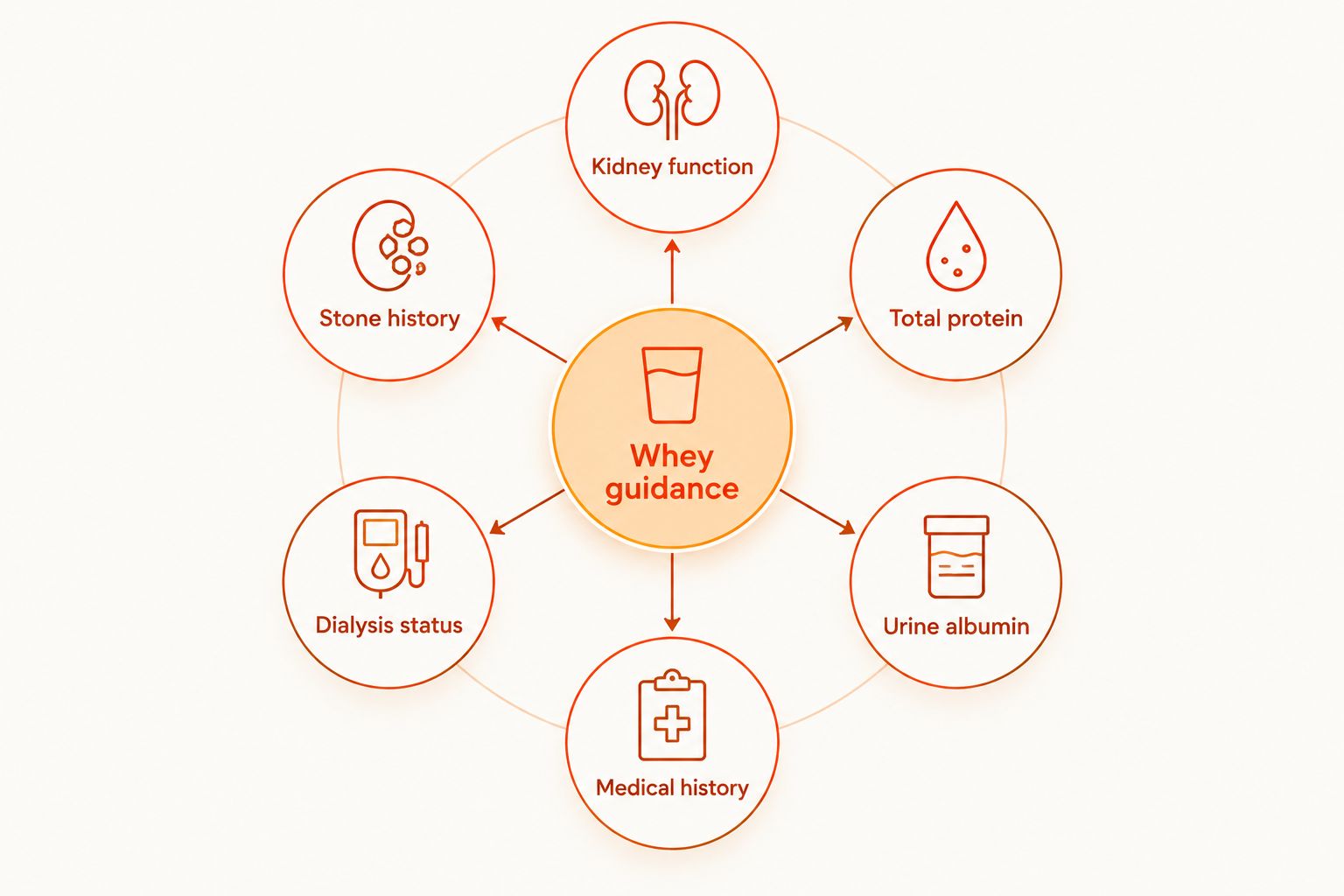
The answer depends less on the word whey and more on your kidney function, total intake, and medical history. These six factors determine whether adding a shake makes sense:
- Kidney function: Estimated glomerular filtration rate, or eGFR, shows how well the kidneys filter blood.
- Total protein: Whey counts alongside every other protein source eaten during the same day.
- Urine albumin: Albumin in urine can signal kidney damage even when eGFR has not fallen below the CKD threshold.
- Medical history: Diabetes and high blood pressure are major kidney risk factors and change the need for monitoring.
- Dialysis status: Dialysis patients follow different nutrition guidance from people with non-dialysis CKD.
- Stone history: Recurring kidney stones require individualized fluid and dietary guidance based on the stone type and urine results.
A family history of kidney disease also supports earlier screening, especially when combined with diabetes or high blood pressure. Feeling healthy is not enough to rule out early CKD because kidney disease can progress without obvious symptoms.
The 2026 rule is direct: known normal function supports a standard sports nutrition approach; known impairment requires a medical nutrition approach. If you do not know which group you are in and have kidney risk factors, testing settles the question more reliably than changing powders.
How do you know whether your kidneys are healthy?
Kidney status is assessed with blood and urine tests, not by how you feel after a shake. A clinician usually reviews serum creatinine and calculates eGFR, then checks a urine albumin-to-creatinine ratio, commonly shortened to UACR.
Chronic kidney disease is generally identified when kidney abnormalities persist for at least 3 months. An eGFR below 60 mL/min/1.73 m² for that period can meet the definition, as can persistent markers of kidney damage such as albuminuria even when eGFR is higher.
Useful information to bring to an appointment includes:
- Every protein supplement and serving you currently use.
- Your estimated daily protein from food and supplements combined.
- Any history of kidney stones, diabetes, high blood pressure, or kidney disease.
- Prescription drugs and over-the-counter products you use regularly.
- Previous creatinine, eGFR, and urine albumin results if available.
One unusual test result does not always establish chronic disease. Creatinine is affected by muscle mass and other factors, so clinicians interpret it with medical history, urine findings, and repeat testing when appropriate. Do not stop prescribed care or diagnose CKD from a single number on a patient portal.
Blood urea nitrogen can also rise when protein intake rises, but that result alone does not prove kidney damage. The pattern across eGFR, urine albumin, blood pressure, medical history, and repeated results provides the useful answer.
When does a Whey supplement fit?
Once a clinician has not restricted your protein intake, whey becomes a convenience decision. It can help fill the gap between the protein in your regular meals and your daily target, especially when preparing another meal is impractical.
The benefit is easy protein tracking. The drawback is equally clear: an unplanned shake can push total intake beyond your target, and whey is unnecessary when food already covers that target. People with milk allergy must avoid whey, while lactose tolerance can vary by formula and individual.
Tiger Fitness carries MTS Nutrition Machine Whey Protein for shoppers whose kidney function and protein targets make whey appropriate. This is a retail option, not a kidney-safety endorsement; check the label against your dietary needs and medical guidance.
The Tiger Fitness whey protein selection also includes blends, isolates, and ready-to-drink formats. None of those formats overrides a renal protein limit. Choose based on ingredients, dietary fit, and how the serving fits your full-day protein total.
Whey protein options

A Whey protein blend intended to support recovery and daily protein intake.
$62.99

Whey Protein isolate for lean muscle recovery and performance.
$64.95

Grass-fed micro-filtered whey isolate with 25 grams of protein per scoop.
$54.99
How much Whey Protein can you take per day?
The relevant number is 1.4 to 2.0 g/kg/day of total protein for most exercising adults, based on the ISSN position stand, rather than a universal number of whey scoops. Subtract the protein you already get from meals and snacks before deciding whether whey fills a real gap.
That range is sports-nutrition guidance for healthy adults, not a prescription for everyone. A person with CKD may have a target around 0.8 g/kg/day, while someone receiving dialysis needs a plan set by the renal care team.
Can Whey Protein cause kidney stones?
Whey protein has not been established as a standalone cause of kidney stones. Stone risk depends on stone type, urine chemistry, fluid intake, sodium intake, other dietary factors, medications, and medical history, so a person with recurring stones needs advice based on testing rather than a blanket yes or no.
Do not assume that switching from concentrate to isolate removes stone risk. Both remain protein sources, and neither substitutes for a stone-prevention plan from a qualified clinician.
Is Creatine the same kidney risk as Whey Protein?
No, creatine and whey raise different questions. Whey contributes to total dietary protein, while creatine supplementation can affect serum creatinine interpretation because creatinine is a breakdown product related to creatine metabolism.
A higher creatinine result does not automatically prove kidney injury, but it still requires proper interpretation. The guide on whether creatine can cause kidney damage explains why supplement use should be disclosed before kidney testing.
FAQ
Is Whey Protein bad for your kidneys in 2026?
No, whey protein is not shown to damage healthy kidneys when it fits an appropriate total protein intake. CKD, reduced kidney function, dialysis, one kidney, or recurring stones require individualized guidance.
How much Protein should an active adult eat per day?
The ISSN position stand gives 1.4 to 2.0 g/kg/day as a sufficient range for most exercising adults. That total includes protein from both food and supplements.
How much Protein is recommended with chronic kidney disease?
KDIGO 2024 suggests about 0.8 g/kg/day for adults with CKD stages G3-G5 and advises avoiding intake above 1.3 g/kg/day when progression is a concern. A clinician must adjust the target for the individual.
Is Whey Isolate easier on the kidneys than Whey Concentrate?
Whey isolate is not automatically easier on the kidneys gram for gram of protein. Total protein intake and existing kidney function matter more than the whey format.
What kidney tests should you ask about before using whey?
Serum creatinine with eGFR and a urine albumin to creatinine ratio are common kidney assessments. A clinician interprets them with your history and may repeat testing when needed.
Can you take Whey Protein with one kidney?
Having one kidney does not create one universal protein rule, but it does justify individualized medical guidance. Kidney function, urine findings, blood pressure, and medical history determine the plan.
Does Tiger Fitness sell kidney-safe Whey Protein?
Tiger Fitness sells whey protein, but no powder can be labeled universally kidney-safe for every shopper. People with kidney disease or clinician-directed limits should confirm their protein target before choosing one.
One Last Thing
The most useful 2026 question is not whether whey is good or bad in isolation. Ask whether your kidneys are healthy and whether the shake fits your total daily protein target.
Tiger Fitness can help you compare whey protein formats after that question is settled. It cannot replace eGFR, urine albumin testing, or individualized renal nutrition guidance, and no protein supplement is intended to diagnose, treat, cure, or prevent kidney disease.
Related Guides
Leave a comment