
NEW NULLA BAR FLAVORS
In-Stock Now!

Yes, most healthy adults can take vitamin D and magnesium together, including with the same meal; there is no routine requirement to separate them. The main caveats are your total doses, kidney function, and medications—not the fact that you take these nutrients at the same time.
You can take vitamin D and magnesium at the same time if both supplements are appropriate for you. Magnesium participates in the enzyme processes involved in vitamin D metabolism. That biological relationship does not establish a universal supplement ratio or mean everyone needs both products.
For your 2026 supplement routine, choose a schedule you can follow consistently. Taking both with a meal is practical; separating them is also acceptable when that better fits medication instructions or digestive comfort.
| Schedule | Best for | Advantage | Limitation |
|---|---|---|---|
| Together with a meal | Adults who need both and prefer a simple routine | Keeps supplement timing straightforward | Does not remove dose limits or medication interactions |
| Vitamin D with a meal, magnesium later | Adults who prefer separate routines | Lets you adjust magnesium timing independently | Adds another step without a proven universal benefit |
| Clinician-directed schedule | Adults with relevant medical conditions or prescriptions | Accounts for individual treatment needs | Requires instructions specific to your health and medications |
A well-planned supplement routine fills gaps. It does not keep adding ingredients because they appear together in a wellness post.
Before adding either nutrient, track your vitamin and mineral intake across food, multivitamins, and individual supplements. Otherwise, a reasonable-looking combination can hide an unnecessarily high daily total.
Vitamin D helps your body absorb calcium and supports normal bone and muscle function. Magnesium contributes to normal nerve and muscle function and participates in vitamin D metabolism.
The practical distinction is nutrient dependence versus supplement dependence. Your body needs adequate magnesium, but that magnesium can come from food. You do not automatically need a magnesium capsule beside every vitamin D dose.
Likewise, taking magnesium does not establish that you need extra vitamin D. Your diet, health history, and a clinician's assessment determine whether supplementation makes sense.
For bodybuilders and fitness enthusiasts, neither nutrient replaces enough food, progressive training, or recovery. Correcting an inadequate intake supports normal function; taking more than you need is not a shortcut to stronger workouts or faster gains.
For a 2026 reference point, the National Institutes of Health Office of Dietary Supplements lists 600 IU, or 15 micrograms, daily as the recommended dietary allowance for adults through age 70. Adults older than 70 have a recommended allowance of 800 IU, or 20 micrograms, daily.
These are total-intake reference values, not automatic supplement prescriptions. Vitamin D from food and supplements both contributes to your intake, and individual treatment plans differ.
The adult tolerable upper intake level is 4,000 IU, or 100 micrograms, daily. Treat that as a ceiling for routine intake without medical supervision—not a target to reach. A clinician can prescribe a different regimen for a specific reason.
Read the serving size before calculating your total. The amount per softgel and the amount per suggested serving are not necessarily identical.
Do not increase vitamin D just because you also take magnesium. Magnesium does not cancel the risks of excessive vitamin D, including elevated blood calcium.
The NIH Office of Dietary Supplements lists adult magnesium recommended allowances ranging from 310–420 mg daily, depending on age and sex. Those amounts include magnesium from food, beverages, and supplements; pregnancy changes the applicable reference values.
For adults, the upper intake level for magnesium from supplements and medications is 350 mg daily. This limit does not include magnesium naturally present in food, and clinician-directed treatment can differ.
That distinction matters. A total dietary requirement and a supplemental upper limit describe different things, so they should not be treated as competing recommendations.
Check the elemental magnesium amount in the Supplement Facts panel. The weight of a magnesium compound on the front of a package is not necessarily the amount of magnesium you receive.
Higher supplemental intakes can cause diarrhea, nausea, or abdominal cramping. Taking magnesium alongside vitamin D does not prevent those effects.
Your 2026 supplement plan should reflect your intake and health—not a fixed ratio promoted online. These factors determine whether taking both is useful:
Low energy, cramps, or poor recovery do not identify a specific nutrient deficiency on their own. Do not use a workout symptom as a dosing test.
Use this sequence before introducing the combination. It keeps the decision focused on need, safety, and consistency rather than an elaborate timing protocol.
A meal containing fat improves vitamin D absorption, according to the NIH Office of Dietary Supplements. You do not need to build a special high-fat meal around a supplement.
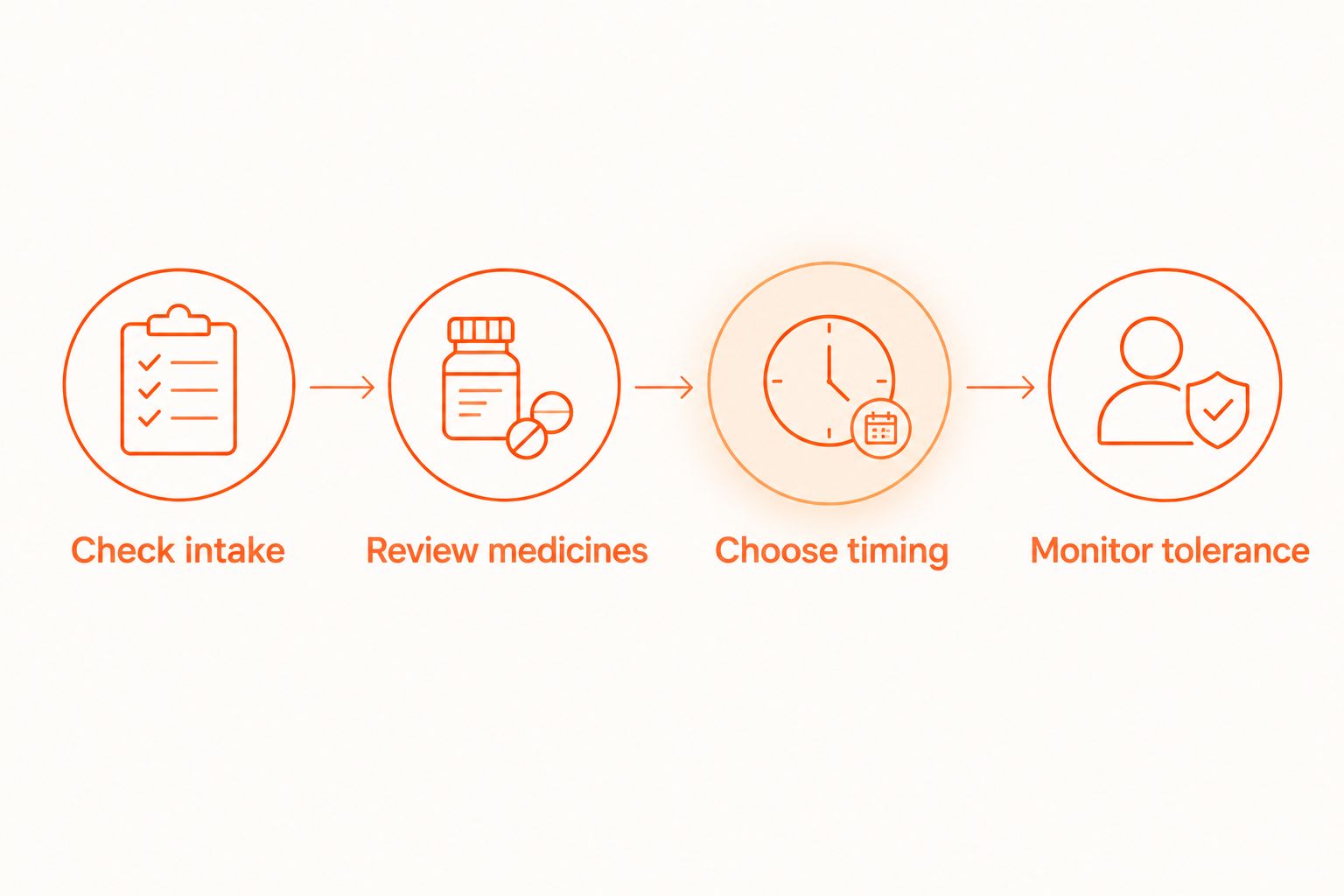
You do not need to take either nutrient immediately before or after training. Anchor the routine to a regular meal if that makes it easier to remember, while following any prescribed schedule.
Tiger Fitness is best for fitness enthusiasts shopping for vitamin D and magnesium supplements as part of a broader sports-nutrition routine. The retailer offers separate products, but choosing a retailer does not determine whether you need either nutrient or which dose fits your health.
These are examples, not a ranked treatment recommendation. Neither product is established here as a better choice for absorption, workout results, or deficiency correction.
| Product | Best for | Relevant feature | Limitation to check |
|---|---|---|---|
| NOW Foods Vitamin D-3 | Shoppers seeking a vitamin D supplement without intentionally adding magnesium | Supplies cholecalciferol, or vitamin D3 | Confirm the current strength and serving directions before choosing |
| Hi-Tech Pharma Magnesium Glycinate | Shoppers specifically seeking magnesium in glycinate form | Provides magnesium glycinate | Confirm elemental magnesium per serving and review medication interactions |
At Tiger Fitness, compare the current Supplement Facts panels rather than choosing by the product name alone. Separate bottles let you adjust each nutrient independently; the trade-off is that you must track both serving sizes and totals.

Get individual advice before adding magnesium if you have kidney disease. Reduced kidney function can impair magnesium clearance, increasing the risk of harmful accumulation.
Also review the combination before use if you have high blood calcium, receive treatment for a nutrient deficiency, are pregnant, or take prescription medicines. An adult supplement schedule is not automatically suitable for a child.
Magnesium can reduce the absorption of certain antibiotics and oral bisphosphonates. The required separation depends on the medicine, so use its instructions or a pharmacist's guidance rather than a generic supplement timetable.
Vitamin D needs additional review with some medicines, including thiazide diuretics, because of blood-calcium concerns. Bring the full supplement list—not just the newest bottle—to that discussion.
Seek urgent medical help for severe weakness, confusion, fainting, or an irregular heartbeat after supplement use. Do not assume a serious symptom is simply an adjustment to your new routine.
There is no established universal supplement ratio for vitamin D and magnesium. In 2026, use the separate nutrient reference values and your individual needs rather than trying to match IU of vitamin D to milligrams of magnesium.
A ratio can look precise while ignoring what you eat, what other products contain, and whether either supplement is necessary. Magnesium from meals still contributes to your needs even though it does not appear beside vitamin D on a bottle.
Do not add more magnesium to make a high vitamin D dose seem safer. Review the vitamin D dose itself.
Neither morning nor evening is a universally required time to take vitamin D and magnesium together. A meal-based schedule is practical for vitamin D, while magnesium timing should also account for digestive comfort and medications.
Taking the combination at bedtime does not guarantee better sleep. If an evening routine is convenient and appropriate for you, use it; if breakfast is easier, there is no need to invent a nighttime requirement.
Adequate vitamin D and magnesium support normal muscle function, but combining supplements does not guarantee better recovery. Correcting an inadequate intake is different from adding more when your needs are already met.
For your 2026 training plan, keep nutrition, sleep, and workload management ahead of supplement timing. Persistent cramps, unusual fatigue, or declining performance deserve assessment rather than repeated dose increases.
Can I take vitamin D and magnesium together every day?
Yes, most healthy adults can take vitamin D and magnesium together daily when both are appropriate and total intake stays within suitable limits. Count food and other supplements, and review medications and kidney health first.
How much magnesium can I take with vitamin D?
There is no single magnesium dose required alongside vitamin D. The adult upper intake level for magnesium from supplements and medications is 350 mg daily unless a clinician directs otherwise; magnesium naturally present in food is excluded from that limit.
Should I take magnesium before vitamin D?
You do not routinely need to take magnesium before vitamin D. You can take them with the same meal, provided your medication instructions and individual health needs allow it.
Can vitamin D and magnesium upset my stomach?
Magnesium supplements can cause diarrhea, nausea, or abdominal cramping. Taking vitamin D at the same time does not prevent those effects; review the dose and product directions if symptoms occur.
Do I need vitamin K2 when taking vitamin D and magnesium?
Taking vitamin D and magnesium does not automatically mean you need a vitamin K2 supplement. Assess vitamin K separately, especially if you take warfarin or another vitamin K antagonist.
Can I get magnesium from food instead of supplements?
Yes, food can supply magnesium, including legumes, nuts, seeds, whole grains, and leafy greens. Taking vitamin D does not automatically create a need for supplemental magnesium.
Does magnesium prevent vitamin D toxicity?
No, magnesium is not protection against vitamin D toxicity. Excessive vitamin D can raise blood calcium, so review the vitamin D dose rather than trying to offset it with another supplement.
The most useful check is the amount per serving, not the time on the clock. Before adding another bottle to your Tiger Fitness supplement routine, photograph the Supplement Facts panels of everything you already take and total the overlapping nutrients.
That simple step catches a problem that timing advice misses: taking the same nutrient from several products without realizing it.
This article provides general education, not individualized medical advice. The products and claims discussed are not intended to diagnose, treat, cure, or prevent any disease.
{"one"=>"Select 2 or 3 items to compare", "other"=>"{{ count }} of 3 items selected"}







Leave a comment