


BEST TIME TO DRINK A PROTEIN SHAKE AFTER A WORKOUT
Homemade Protein Shake Recipes for Recovery
Table of Contents
- Why Homemade Protein Shake Recipes Beat Store-Bought Recovery Drinks
- Protein Shake Ingredients for Muscle Recovery: What Actually Matters
- 1. Chocolate Peanut Butter Recovery Shake
- 2. Berry Vanilla Recovery Smoothie
- 3. Banana Oat Power Shake
- 4. Greek Yogurt and Spinach Green Recovery Shake
- Post-Workout Protein Shake Recipes for Different Training Goals
- How to Make a Protein Shake Without Protein Powder
- Frequently Asked Questions
Last Updated: October 4, 2026
Why Homemade Protein Shake Recipes Beat Store Bought Recovery Drinks
A 2017 study in the journal article indexed by PubMed Central showed that a high protein, high fiber shake built from real ingredients works as a genuine grab and go recovery option. That's the whole argument for making your own. When you build homemade protein shake recipes for recovery, you control the protein dose, the sugar, and the junk. We've watched lifters spend $6 a bottle on recovery drinks that list 12 grams of protein and 30 grams of sugar.
Here's the problem: most store-bought "recovery" drinks are candy with a nutrition label. They're built for shelf life, not for your training. You can make something better in three minutes with ingredients already in your kitchen.
Below, we'll show you exactly how to build four shakes that actually support muscle recovery, plus how to hit your protein goals without powder if that's your situation.
Key Takeaway The best recovery shake is the one you'll actually make. Simple ingredients, enough protein, and a flavor you look forward to beat a fancy formula you skip.
Protein Shake Ingredients for Muscle Recovery: What Actually Matters
Protein is the non-negotiable. Everything else is support. Your recovery shake needs a real protein source first, then carbs to refill glycogen, then flavor to make it drinkable.
Here's what actually matters, with numbers instead of vague advice.
Protein dose. Research on resistance training consistently shows that roughly 20 to 40 grams of high quality protein per serving stimulates muscle protein synthesis in most trained adults.

Carbohydrates. Glycogen is the fuel you burn during training, and it's what you're refilling post-workout.
Fluids and electrolytes. You lose water and sodium when you sweat.
Fat. Fat slows digestion, which is fine for a meal-replacement shake but not ideal immediately post-workout when you want fast absorption.
Timing. The old "30-minute anabolic window" is overstated. Total daily protein and total daily calories matter more than hitting an exact minute.
What most guides miss is total daily protein. If you want to dial in those daily targets without guessing, our FREE TOOLS & FITNESS CALCULATORS can help you run the numbers.
the International Society of Sports Nutrition position stand on protein and exercise has long noted that hard-training athletes need more protein than the standard daily allowance.
Key Takeaway Protein first (20-40 g), carbs second (40-80 g for most lifters), fluids and electrolytes third, fat last. Hit those numbers and your shake is doing real recovery work, not just tasting good.
1. Chocolate Peanut Butter Recovery Shake
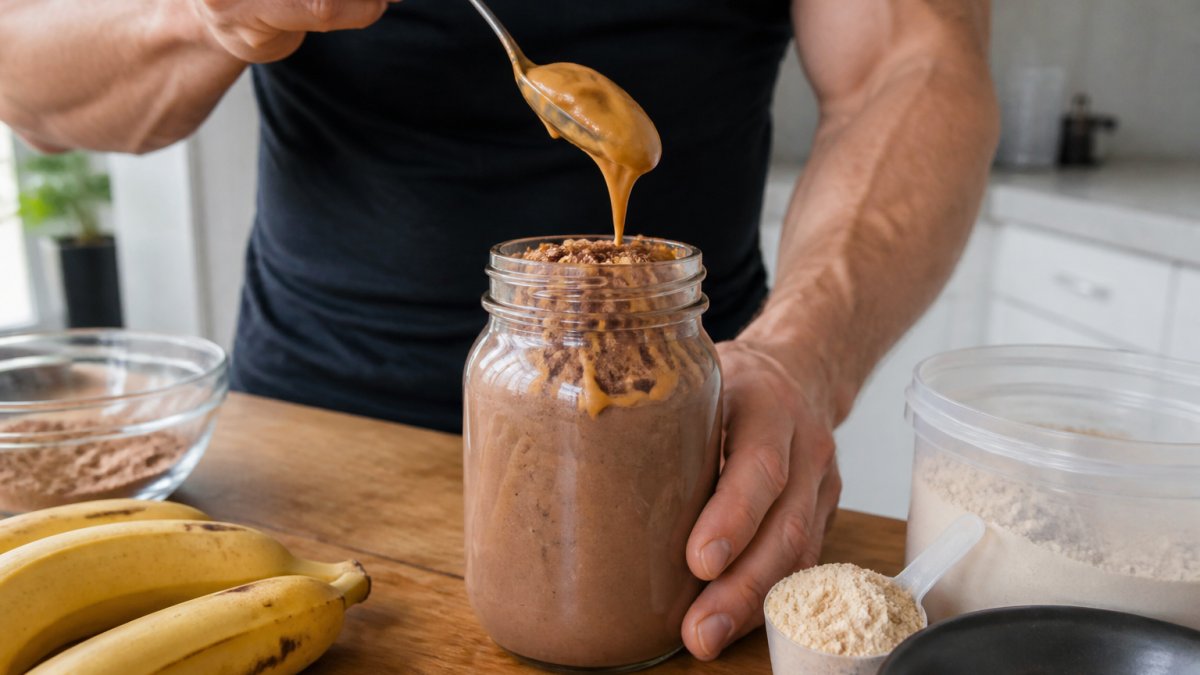
This is the one we make most. It tastes like a dessert and does real work. Chocolate peanut butter is the classic combination for a reason: it's rich, satisfying, and easy to get down after a hard session.
How to Make It
- Add 1 scoop chocolate protein powder to a blender.
- Add 1 tablespoon natural peanut butter.
- Add 1 frozen banana and 1 tablespoon unsweetened cacao powder.
- Pour in 10 to 12 ounces cold milk or water.
- Blend 30 seconds until smooth and creamy.
For the protein, we reach for Machine Whey Protein, a whey blend with flavors built to taste like ice cream shakes. For the chocolate, NOW Real Food Organic Raw Cacao Powder is unsweetened and USDA Organic, so you get deep chocolate flavor without added sugar.


Pro Tip Freeze your banana in slices, not whole. It blends smoother and won't stall your blender. A common mistake is using a rock-hard whole banana that leaves chunks in the shake.
2. Berry Vanilla Recovery Smoothie
Berries and vanilla make a lighter shake for days when a heavy chocolate drink feels like too much. The fruit adds carbs and antioxidants, and vanilla keeps it clean.
How to Make It
- Add 1 scoop vanilla protein powder to a blender.
- Add 1 cup frozen mixed berries.
- Add 1/2 cup plain Greek yogurt for extra protein and creaminess.
- Pour in 8 to 10 ounces cold milk or a milk alternative.
- Blend until smooth. Add ice for a thicker texture.
The Greek yogurt is the difference-maker here. It adds protein and gives the smoothie a creamy texture without needing much else. If you want it sweeter without sugar, a small pinch of NOW Foods Better Stevia Organic Extract does the job.
3. Banana Oat Power Shake
This shake is built for volume and staying power. Oats add slow carbs, banana adds fast carbs and potassium, and the combination keeps you full for hours.
Beverly International UMP Ultimate Muscle Protein →
- Add 1 scoop protein powder to a blender.
- Add 1 fresh or frozen banana.
- Add 1/2 cup rolled oats.
- Add 1 tablespoon peanut butter.
- Pour in 12 ounces cold milk and blend until smooth.
The oats make this thicker, so give it a full minute in the blender. This is the shake we'd pick before a long training block or as a meal replacement when time is tight. For a slower digesting protein that keeps amino acids releasing over hours, Beverly International UMP Ultimate Muscle Protein delivers 20 grams of protein in a 130-calorie scoop, with an 80:20 ratio of slow-digesting casein to fast digesting whey found naturally in milk.
4. Greek Yogurt and Spinach Green Recovery Shake
Don't knock it until you try it. Spinach in a shake is tasteless when you pair it with the right fruit, and it adds micronutrients you're probably missing.
- Add 1 cup plain Greek yogurt to a blender.
- Add 1 large handful fresh spinach.
- Add 1 frozen banana and 1/2 cup frozen mango or pineapple.
- Pour in 8 ounces cold water or milk.
- Blend 45 seconds until no green flecks remain.
The fruit hides the spinach completely. If you're dairy-free, swap the yogurt for a plant-based protein and use a milk alternative. GHOST Vegan Protein V2 is a 100% plant-based blend built for recovery with a smooth texture.
Watch Out Don't skip the blending time on green shakes. Under-blended spinach leaves gritty flecks that ruin the texture and make the shake hard to finish.
Post-Workout Protein Shake Recipes for Different Training Goals
Your recovery needs change with your training. A heavy strength session and a long run don't demand the same shake.
| Goal | Protein Focus | Add This | Best Shake |
|---|---|---|---|
| Muscle gain | Higher protein dose | Oats, peanut butter | Banana Oat Power Shake |
| Fat loss | High protein, lower carb | Water, berries | Berry Vanilla Smoothie |
| Endurance | Carbs plus protein | Banana, fruit | Banana Oat Power Shake |
| Joint and tendon support | Protein plus collagen | Collagen blend | Chocolate Peanut Butter Shake |
| Dairy-free | Plant protein | Milk alternative | Green Recovery Shake |
For lifters chasing strength and connective tissue support, Spoken Grass-Fed Whey + Collagen Protein blends 100% grass-fed whey with added collagen peptides and Tendoforte®, providing powerful support for muscle repair, tendon strength, joint health, and overall performance.
What is the Best time to drink a protein shake after a workout?
The best time is within a couple of hours of training, but total daily protein matters more than exact timing. If you train fasted or have another session coming, drink it sooner. Otherwise, get it in when it's convenient and hit your daily number.
How to Make a Protein Shake Without Protein Powder
You can build a real recovery shake with zero powder.
Here's the honest math on whole food protein sources, per typical serving:
- Plain Greek yogurt: about 20 grams of protein per 1 cup (nonfat). Thick, blends well, and adds creaminess.
- Cottage cheese: about 24 grams of protein per 1 cup. Blends smoother than people expect if you give it a full minute.
- Pasteurized liquid egg whites: about 26 grams of protein per 1 cup. Neutral flavor, blends clean, but don't use raw unpasteurized whites.
- Milk: about 8 grams of protein per 1 cup. Skim milk adds protein without much fat.
- Peanut butter: about 7 grams of protein per 2 tablespoons. Also brings fat and calories, so measure it.
- Rolled oats: about 5 grams of protein per 1/2 cup dry. Mostly carbs, but contributes.
Now stack them. A no-powder shake that actually hits a recovery dose:
- Add 1 cup plain Greek yogurt (20 g protein).
- Add 1 cup skim milk (8 g protein).
- Add 1 frozen banana and 1/2 cup rolled oats.
- Add 1 tablespoon peanut butter.
- Blend 45 to 60 seconds until smooth.
That lands you around 35 grams of protein and roughly 60 to 70 grams of carbs, right in the recovery window without a single scoop of powder. It's also thicker and more filling than a powder shake, which is either a feature or a problem depending on your appetite.
The trade-off is real: whole food shakes carry more calories and more volume per gram of protein. If you're cutting weight, powder is more efficient. If you're bulking or just prefer real food, whole food shakes are a legitimate tool.
If you're dairy-free, swap the Greek yogurt and milk for a soy or pea based yogurt and a fortified plant milk. Soy milk is the closest plant option to dairy milk on protein, about 7 to 8 grams per cup.
Pro Tip Blend cottage cheese and egg whites together for a powder-free base that hits 40-plus grams of protein with almost no fat. Add cocoa powder and a frozen banana and it tastes like a chocolate shake, not a science experiment.
Key Takeaway Powder is convenient, not mandatory. Stack Greek yogurt, milk, cottage cheese, or egg whites to hit 20-40 grams of protein per shake, just watch the extra calories and carbs that come with whole food sources.
Frequently Asked Questions
Is a Protein shake good for recovery?
Yes, if it delivers enough protein and the right supporting nutrients. A 2017 study published in PubMed Central developed a high protein, high fiber smoothie as a grab and go breakfast option by optimizing ingredients, including soy, showing that blended shakes can work as real recovery nutrition. The key is hitting 20 to 40 grams of quality protein per serving. Shakes work well because they are liquid, absorb quickly, and are easy to consume when appetite is low after hard training. Pair protein with carbs like banana or oats for better glycogen refill.
Can you make a High Protein shake without Protein powder?
Absolutely. Greek yogurt, cottage cheese, milk, and peanut butter are all high-protein ingredients that work in a shaker or blender. A cup of Greek yogurt alone gives you around 20 grams of protein. Combine Greek yogurt with milk, frozen banana, and a spoon of peanut butter and you have a homemade protein shake without protein powder that hits 30-plus grams. It tastes thicker and more like a real meal than a powder-and-water shake, and you get the micronutrients from whole-food ingredients.
When should you drink a protein shake after a workout?
The best time to drink a protein shake after a workout is within a couple of hours of finishing your session, but total daily protein matters more than hitting an exact minute. If you trained fasted or went hours without eating, drink it sooner. If you ate a solid meal an hour before training, you have more flexibility. Aim for 20 to 40 grams of protein per shake. Consistency across the day beats obsessing over a narrow post-workout window.
What should you put in a protein shake for recovery?
Start with a protein source: whey, a whey-casein blend, plant-based protein, Greek yogurt, or cottage cheese. Add a carb source like frozen banana, berries, or oats to replenish glycogen. Toss in a healthy fat such as peanut butter or almond butter for sustained energy. For flavor, use unsweetened cacao powder or a pinch of stevia instead of sugar. Liquid-wise, milk adds protein and creaminess, while water keeps calories lower. Blend with ice for a thicker texture.
Are homemade protein shakes as effective as store-bought shakes?
In most cases, yes, and often better. Homemade shakes let you control the protein dose, sugar content, and ingredient quality. Store-bought recovery drinks frequently carry added sugars, preservatives, and a higher price per serving. A homemade shake built with a quality protein powder, frozen fruit, and milk delivers the same protein and carbs for less money. The one advantage store-bought has is convenience, but a blender and five minutes solve that.
Leave a comment