







How Long Does It Take for a Fat Burner to Work? Weeks (2026)
A caffeine-containing fat burner can make you feel more alert within about 1 hour, but that feeling is not evidence of fat loss. There is no reliable number of days after which a fat burner will produce visible results: judge your 2026 cut by your weight trend over several weeks, alongside your food intake and training, rather than by the first dose.
TL;DR
- How long does it take for a fat burner to work? Caffeine can affect alertness within about 1 hour; fat loss has no guaranteed onset.
- A stimulant kick is not proof that a fat burner is reducing body fat.
- Tiger Fitness is best for lifters comparing fat-burner options while keeping nutrition and training at the center of their cut.
- Compare weekly weight trends and check total caffeine intake before adding a fat burner to your routine.
How long does it take for a fat burner to start working?
Expect a possible same-day stimulant effect, not same-day fat loss. Caffeine can affect alertness within about 1 hour. A change in body fat requires a sustained energy deficit, and no supplement label can tell you exactly when that change will become visible on your scale or in the mirror.
| What you notice | When to assess it | What it tells you |
|---|---|---|
| Alertness or a change in appetite after a caffeine-containing dose | The same day | You felt an ingredient effect; you have not measured fat loss. |
| A change in daily scale weight | Over multiple days | Weight changed, but food, fluid and body fat can all affect the reading. |
| A sustained change in weight trend | Across several weeks | Your overall plan is producing a measurable change; the scale alone cannot isolate the supplement's contribution. |
Start by checking whether your formula contains caffeine. The fat burners ranked by stimulant content guide gives you a relevant comparison, but the serving label on the product you use determines what you are taking. For a 2026 cut, record that serving alongside any coffee, energy drink or pre-workout instead of evaluating each source of caffeine in isolation.
Why this matters
The question has two different meanings: when will you feel something, and when will you lose fat? Those are not interchangeable. You can feel more awake and see no sustained change in weight; you can also make progress without feeling a supplement at all.
The National Institutes of Health Office of Dietary Supplements explains in its weight-loss supplement guidance that evidence differs across ingredients and that products can have side effects or interact with medicines. That is a better basis for a decision than a promise that a capsule will work by a particular day. If your nutrition plan is not producing a sustained deficit, an energy rush does not fix the plan.
Caffeine-containing fat burners: about 1 hour to feel an effect
Caffeine is the ingredient most likely to make a fat burner feel active soon after you take it. Alertness can change within about 1 hour, though your response depends on the dose, what else you consumed and your sensitivity. Feeling energized is a useful observation if you wanted help getting through a workout. It is not a measurement of calories burned or body fat lost.
Best for: an adult who wants to assess a clearly labeled stimulant formula and can account for other caffeine sources. The upside is that an alertness effect is easier to recognize than the effect of a nonstimulant ingredient. The downside is that caffeine can disrupt sleep or cause unwanted effects, particularly when you combine products. Verdict: Compare the label before you take the dose.
If you already use pre-workout, do not assume a fat burner is a separate decision simply because it has a different name. Read both Supplement Facts panels. In your 2026 training log, note when you took each product and whether sleep or workout quality changed; a stronger sensation is not automatically a better cut.
Nonstimulant fat burners: no immediate effect to rely on
A formula without caffeine does not give you caffeine's alertness signal. That does not establish that it is working slowly, and it does not establish that it will produce fat loss later. Evaluate its listed ingredients individually rather than treating nonstimulant as a guarantee of effectiveness or safety.
Best for: someone avoiding added caffeine who still wants to inspect a fat-burner formula. The upside is that it does not add caffeine if the label confirms none is present. The downside is that you cannot use a noticeable stimulant effect as a quick check, and evidence for weight-loss ingredients varies. Verdict: Judge the overall weight trend, not whether you feel a dose.
Nighttime fat burners: a label claim is not a timeline
A product described as a nighttime fat burner is meant to fit an evening routine. That description does not prove it burns fat while you sleep, and it does not establish when you should expect results. Check its complete ingredient list, serving directions and warnings before taking it near bedtime; do not assume every product sold for nighttime use has the same formula.
Best for: someone comparing products by intended timing rather than looking for a pre-workout energy effect. The upside is a clearly stated place in a routine. The downside is that product positioning tells you nothing by itself about effectiveness, stimulant content or your personal response. Verdict: Read the label and protect your sleep schedule.
| Option | Best for | Potential advantage | Main limitation |
|---|---|---|---|
| Caffeine-containing formula | Someone seeking an alertness effect as well as a fat-burner product | You can notice caffeine's effect the same day. | Alertness does not measure fat loss; total caffeine needs attention. |
| Nonstimulant formula | Someone avoiding added caffeine | It need not add a caffeine dose if the label confirms none. | No immediate sensation verifies that it works. |
| Nighttime-positioned formula | Someone choosing around an evening routine | Intended timing is easy to identify. | The name alone cannot establish ingredients or results. |
These are ways to sort labels, not rankings of fat-loss results. A nighttime product could contain ingredients you would rather avoid, and a daytime product could be a poor match for someone who already drinks several caffeinated beverages. Choose by the actual formula and your routine, not by the speed suggested by the name.
Why fat-burner results vary
No responsible timeline starts with the bottle alone. Check the factors you can observe and control:
- Your food intake. A sustained calorie deficit drives weight loss. If portions or drinks change while you start a supplement, the supplement is not the only variable.
- Your starting caffeine intake. Coffee, energy drinks and pre-workout can contribute to the same day's total. Account for all of them before adding another source.
- The ingredient list. Fat burners are not one standard formula. Compare ingredients and serving directions instead of transferring an experience with one product to another.
- Sleep. A stimulant that keeps you awake is a poor trade for an effect you only recognize as extra energy. Note changes in sleep when you assess a formula.
- Consistency of measurement. A single weigh-in is less useful than readings taken under similar conditions and reviewed as a trend.
- Changes to training. If you alter workouts and start a supplement together, your results cannot tell you which change contributed what.
In 2026, use those factors to make a practical decision: if the product makes it harder to follow your routine, stop treating the stimulant sensation as a sign of progress. If the routine is steady, track outcomes before deciding whether the product deserves a place in it.
How to tell whether your cut is working
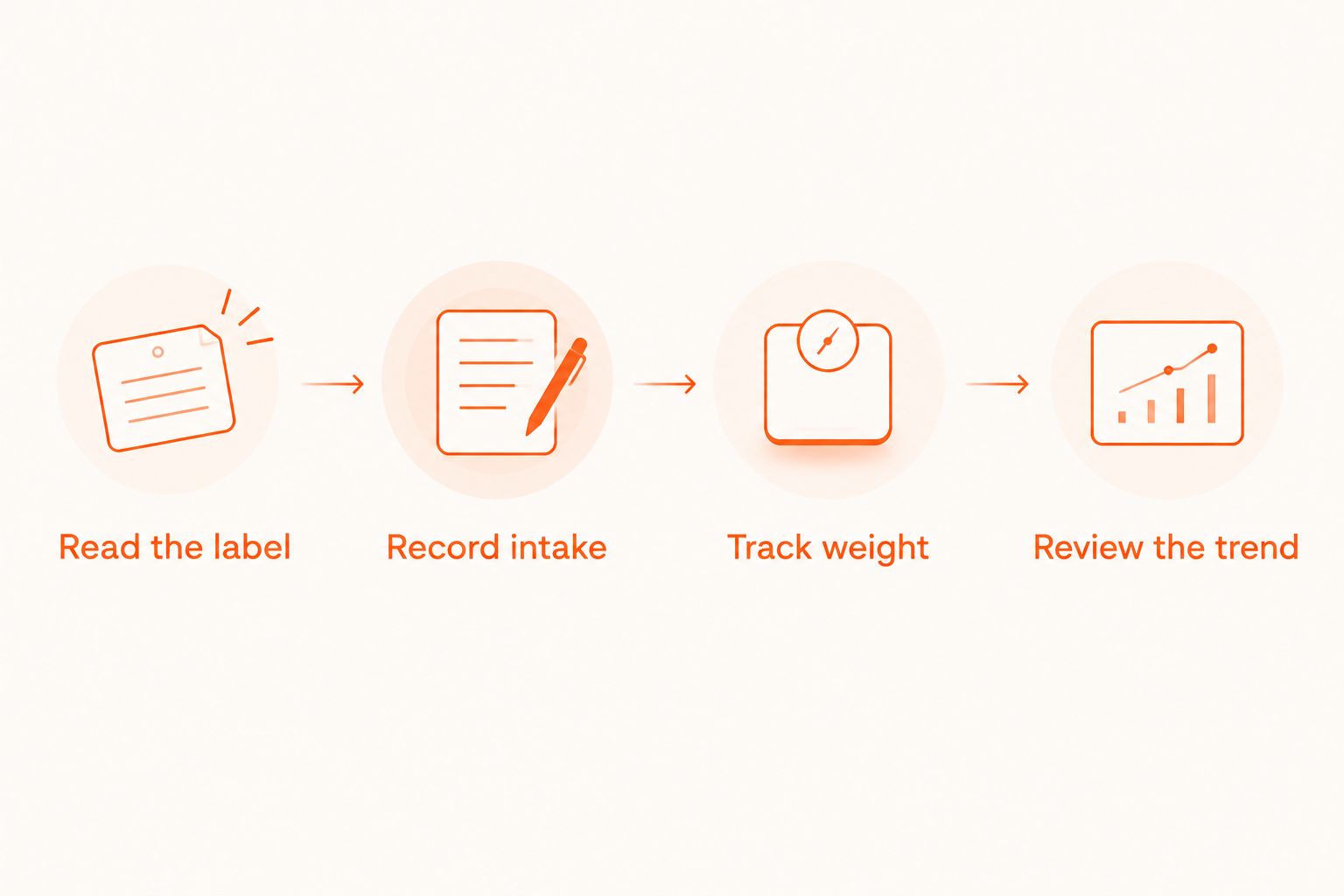
Use a repeatable check rather than a dramatic before-and-after weigh-in. This process measures your overall plan; it does not claim to prove that a fat burner caused the result.
- Read the label. Record the serving you take, its listed caffeine amount if provided, the directions and any warnings. Do the same for other supplements you use that day.
- Record intake. Keep a food log detailed enough to spot changes in portions and snacks. If intake changes at the same time as the supplement, keep that context attached to your results.
- Track weight. Weigh yourself under similar conditions and compare a 7-day average with the next 7-day average. This is a tracking method, not a promise that fat loss will appear in 7 days.
- Review the trend. Look across several weeks. Note workout performance, sleep and how consistently you followed your food plan alongside the weight trend.
A 2026 supplement decision is easier when your records separate what you took from what happened. If weight moves, you know the full routine needs evaluation. If it does not, examine food intake and adherence before concluding that a stronger stimulant is the answer.
The Centers for Disease Control and Prevention describes 1 to 2 pounds per week as a gradual, steady weight-loss pace in its adult weight-management guidance. That is general guidance for a weight-loss plan, not an expected result from a fat burner. A faster change on one weigh-in does not, by itself, identify how much body fat you lost.
What should you check before choosing a product?
Tiger Fitness lists fat-burner products including EHPlabs OxyShred Thermogenic Fat Burner and Alani Nu Fat Burner. Their names and descriptions identify how they are marketed; they do not establish how quickly either one will affect your weight. Compare their current Supplement Facts panels, directions and warnings before choosing between them.
Fat burners to compare


Tiger Fitness is best for lifters comparing fat-burner options while keeping nutrition and training at the center of their cut. The retailer gives you products to compare, not a guaranteed fat-loss deadline. If two formulas look similar from their front labels, the ingredient panels and warnings are the deciding information.
The U.S. Food and Drug Administration says 400 milligrams of caffeine per day is an amount not generally associated with dangerous effects for most adults; it also stresses that sensitivity varies. That figure is not a target and does not make a fat burner safe for every person. For your 2026 label check, count caffeine from drinks and other supplements as well as the product you are considering. If you take medication, have a health condition, are pregnant or notice concerning symptoms, ask a clinician about the specific ingredients before using them.
Can you feel a fat burner working without losing weight?
Yes. Caffeine can change how alert you feel within about 1 hour without producing a measurable reduction in body fat. Compare your weight trend and food log over several weeks instead of using a stimulant sensation as the verdict.
How many weeks should you track before judging results?
Track across several weeks, using 7-day weight averages to reduce the influence of individual weigh-ins. That is a practical way to assess your cut, not a tested onset period for a fat burner. If you change your diet, workouts and supplement at once, you cannot assign the outcome to the supplement alone.
Does a stronger stimulant mean faster fat loss?
No. A stronger stimulant sensation is not evidence of faster fat loss. Read the listed ingredients and account for all caffeine sources rather than increasing a dose to chase a feeling.
FAQ
How long does it take for a fat burner to work?
A caffeine-containing fat burner can affect alertness within about 1 hour, but there is no guaranteed timeline for fat loss. Assess your weight trend across several weeks while tracking food intake and training.
Does feeling energized mean a fat burner is burning fat?
No. Feeling energized shows that you noticed an ingredient effect, not that you measured body-fat loss. Use a sustained weight trend to assess your overall plan.
Can a fat burner work without a calorie deficit?
A fat burner does not replace the sustained calorie deficit needed for weight loss. Food intake and activity remain central to the outcome.
How do I tell whether a fat burner contains caffeine?
Read the current Supplement Facts panel and ingredient list for the specific product. Check your other drinks and supplements too, because they can add to your daily caffeine intake.
Are nonstimulant fat burners guaranteed to work more slowly?
No. The absence of a caffeine sensation does not establish either a slower or a faster fat-loss effect. Evidence and safety depend on the actual ingredients.
What is a reasonable weight-loss pace to discuss with a clinician?
The CDC describes 1 to 2 pounds per week as a gradual, steady pace in its adult weight-management guidance. It is not a promise of what any fat burner will deliver.
Should I take a fat burner and pre-workout together?
Check both labels and add up their caffeine contributions before combining them. The FDA says 400 milligrams per day is not generally associated with dangerous effects for most adults, but individual sensitivity varies.
One last thing
The quickest effect is also the easiest to misread. An alertness change within about 1 hour answers when you might feel caffeine; it does not answer when you will lose fat. For a 2026 cut, make your food log and weight trend the test, and treat the supplement label as a safety check rather than a countdown to results.
Leave a comment