
Pick This Year's Olympia T-Shirt

Last Updated: September 12, 2026
Getting stronger is the number one health goal for 42.3% of people heading into 2026, according to the Life Time 2026 Wellness Survey. But most people chase that goal by adding weight too fast and end up hurt. How to improve workout intensity safely comes down to one principle: increase the demand on your body in small, measured steps while your recovery keeps pace. The Mayo Clinic's exercise guidelines recommend capping weekly activity increases at 10%. That's the ceiling, not the target.
Safe progression isn't slow, it's sustainable, and sustainable beats aggressive every time.
The 10% rule is a simple guardrail: never increase weekly training load by more than 10% over the previous week. Squat 10,000 pounds total volume this week, next week tops out at 11,000. This prevents the acute fatigue spiral that leads to injury, and applies to weight, reps, sets, and cardio duration equally.
Intensity is how hard you work in a single effort, measured as a percentage of your one-rep max. Volume is total work: sets times reps times load. A set of 5 at 80% is high intensity, low volume; a set of 20 at 50% is the reverse. Confusing the two is why people plateau, you can't max out both and recover.
Progressive overload means systematically increasing demand over time so your body adapts. Research in Sports Medicine on resistance intensity found that 60% of 1RM drives maximal gains in untrained lifters, while 80% of 1RM is most effective for trained individuals. Your training age decides your intensity zone. Ignore that and you'll either undertrain or burn out.
You have four dials to turn, and you should turn them one at a time:
A common mistake is turning all four dials in the same week. Pick one, run it for two to three weeks, then reassess.
Tracking workout intensity means recording the actual numbers behind each session: load, reps, sets, RPE, and heart rate data. Without a training log, you're guessing, and guessing is how you stall. The American College of Sports Medicine's 2026 resistance training update emphasizes that structured tracking and intentional volume are what separate progress from spinning your wheels. If you want to know where your starting numbers actually stand, the FREE TOOLS & FITNESS CALCULATORS give you a baseline to build from instead of pulling percentages out of thin air.
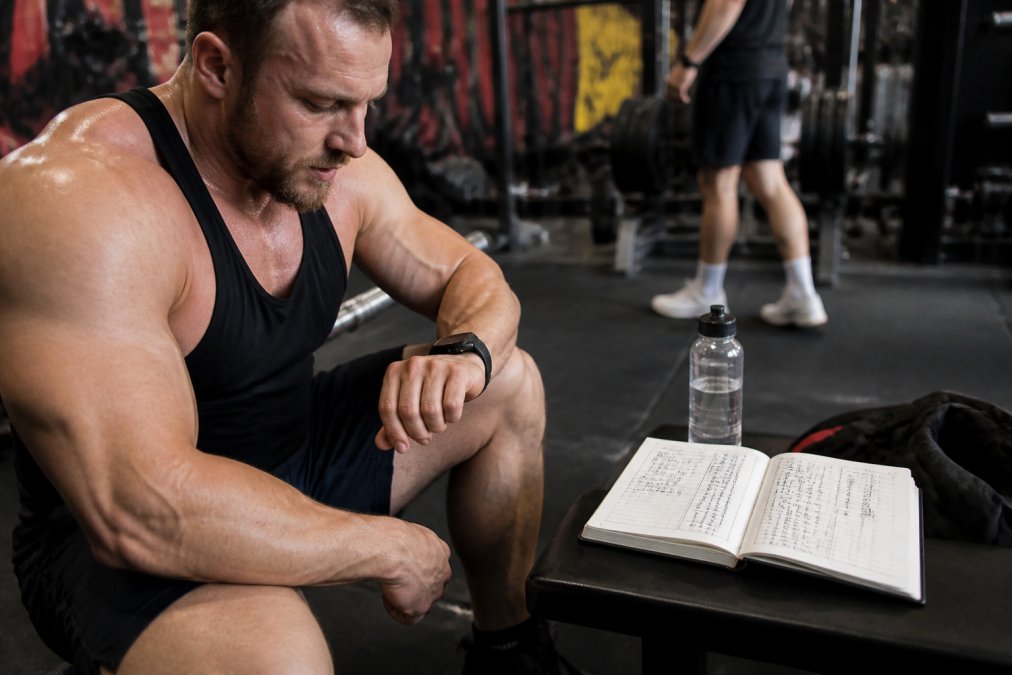
Heart rate variability (HRV) measures the variation in time between heartbeats. Higher HRV signals a recovered nervous system; a sharp drop signals accumulated fatigue. Resting heart rate works the same way, if your RHR jumps 5 to 7 beats above baseline, back off before overtraining syndrome sets in.
Overtraining syndrome is cumulative physical burnout where performance declines despite continued training, not acute fatigue, which resolves with a day or two of rest. Watch for these signals:
Harvard Health Publishing notes that over-reliance on intensity without proper recovery leads to injury and stalled progress. Form always precedes load.
A deload is a planned week of reduced training volume or intensity to let recovery catch up. Most lifters need one every 4 to 8 weeks. Cut volume by 40-50% while keeping intensity moderate, or keep volume and drop load to 60% of your usual working weight. You won't lose muscle in a week. You'll come back stronger.
Recovery is where adaptation actually happens, not in the gym. Sleep, nutrition, hydration, and nervous-system readiness are the four levers that determine whether your next session builds you up or breaks you down. The American Heart Association's activity recommendations call for 150 minutes of moderate aerobic activity weekly, with 300 minutes providing additional benefit. Pair that with strength work and you've got a full recovery supporting program.
Heart rate variability (HRV) measures the variation in time between heartbeats. Higher HRV signals a recovered nervous system; a sharp drop signals accumulated fatigue. Resting heart rate (RHR) works the same way. Most wearables (Whoop, Oura, Garmin, Apple Watch) log both overnight, so you wake up with a number instead of a feeling.
How to actually use the data:
That's the difference between "listen to your body" and knowing what it's saying. Subjective feel lies. Numbers don't.
A deload is a planned week of reduced training volume or intensity to let recovery catch up. Most lifters need one every 4 to 8 weeks, or sooner if HRV and RHR say so. How to run one without losing gains:
You won't lose muscle in a week, measurable loss takes 2-3 weeks of detraining. You'll come back stronger, and your joints will thank you.
Recovery capacity shifts with age, training age, and hormonal profile, program like you're 22 when you're 42 and you'll be hurt by 45. Here's how recovery needs change across decades, and what supplements have real evidence.
Ages 20-29: Testosterone and growth hormone are peaking. You can handle 5-6 training days per week, higher volume per muscle group, and shorter rest. Recovery is fast, often 24-48 hours per muscle group. The risk isn't under-recovery; it's ego. Most injuries here come from adding weight faster than tendons and ligaments adapt.
Ages 30-39: Hormonal output starts a slow decline. Recovery windows stretch to 48-72 hours per muscle group. You can still train hard, but be deliberate about sleep and nutrition. This is the decade most lifters first need a real deload schedule instead of training until they crash.
Ages 40-49: This is where the rules change. Testosterone drops more noticeably, joint wear accumulates, and connective tissue recovery lags behind muscle recovery. Practical adjustments:
Ages 50+: Muscle protein synthesis response blunts with age, anabolic resistance. You need more protein per meal (0.5 g/kg vs. 0.4 g/kg) and more total daily protein for the same anabolic response. Training frequency can stay at 3-4 days per week, but manage intensity with RPE rather than percentages of a max that may be stale. Balance work and fall-prevention training become non-negotiable.
Supplements don't replace sleep and food, but a handful have solid research behind them for recovery:
What doesn't have strong evidence for recovery: BCAAs (redundant if you eat enough protein), glutamine (minimal effect in well-fed athletes), and most "test boosters" (marketing over mechanism).
You can't train like you're 22 forever, but you can train smart for decades. Adjust frequency, volume, and deload cadence to your decade, prioritize protein and sleep, and use supplements to fill gaps, not to paper over bad habits. The ACSM fitness trends report shows strength training and wellness are driving the next wave of growth in fitness, and wearable tech is playing a central role in tracking intensity and recovery metrics. Use that tech to inform your age-adjusted plan, not to replace it.
The gap between lifters who progress for years and those who stall by month three isn't talent. It's whether they respect recovery as much as the barbell.
Watch for persistent fatigue, declining performance, disrupted sleep, and elevated resting heart rate. The signs of overtraining syndrome include muscle soreness that lingers beyond 72 hours, mood swings, and a plateau in strength gains despite consistent training. If you notice these, cut volume by 40-50% for a week and prioritize sleep. Mayo Clinic recommends limiting weekly activity increases to 10% to prevent this. A training log helps you spot these patterns before they derail your progress.
Progressive overload is the foundation of getting stronger without getting hurt. Instead of jumping weight dramatically, add small increments, extra reps, or an additional set only after your form stays solid. Research from Sports Medicine shows 60% of 1RM works for untrained lifters, while trained individuals need around 80% of 1RM for maximal gains. The key is gradual progression. Track every session so you know exactly when to push and when to hold steady.
Use heart rate variability (HRV), resting heart rate, and a training log. Wearables that measure HRV give you objective data on central nervous system fatigue. If your HRV drops significantly or resting heart rate climbs, your body needs recovery. Also log RPE (rate of perceived exertion) for each session. A simple 1-10 scale works. When RPE creeps above 8 for multiple sessions in a row, back off. This prevents the performance plateau that comes from chronic overreaching.
Most lifters need 48-72 hours before training the same muscle group hard again. Clinical perspectives for 2026 suggest a full-body workout every four days with cardio on intervening days works well for strength and hypertrophy. Sleep quality, nutrition, and age all affect this window. Older athletes may need closer to 72 hours. Use active recovery like walking or mobility work on off days. If you're still sore or your performance drops, you haven't recovered yet.
Improving workout intensity safely is a discipline, not a hack. Tiger Fitness gives you the tools to do it right: a full selection of third-party tested supplements, free workout plans and diet guides, and fitness calculators that keep your progression honest. Get started with Tiger Fitness and build intensity that lasts.
{"one"=>"Select 2 or 3 items to compare", "other"=>"{{ count }} of 3 items selected"}




Leave a comment